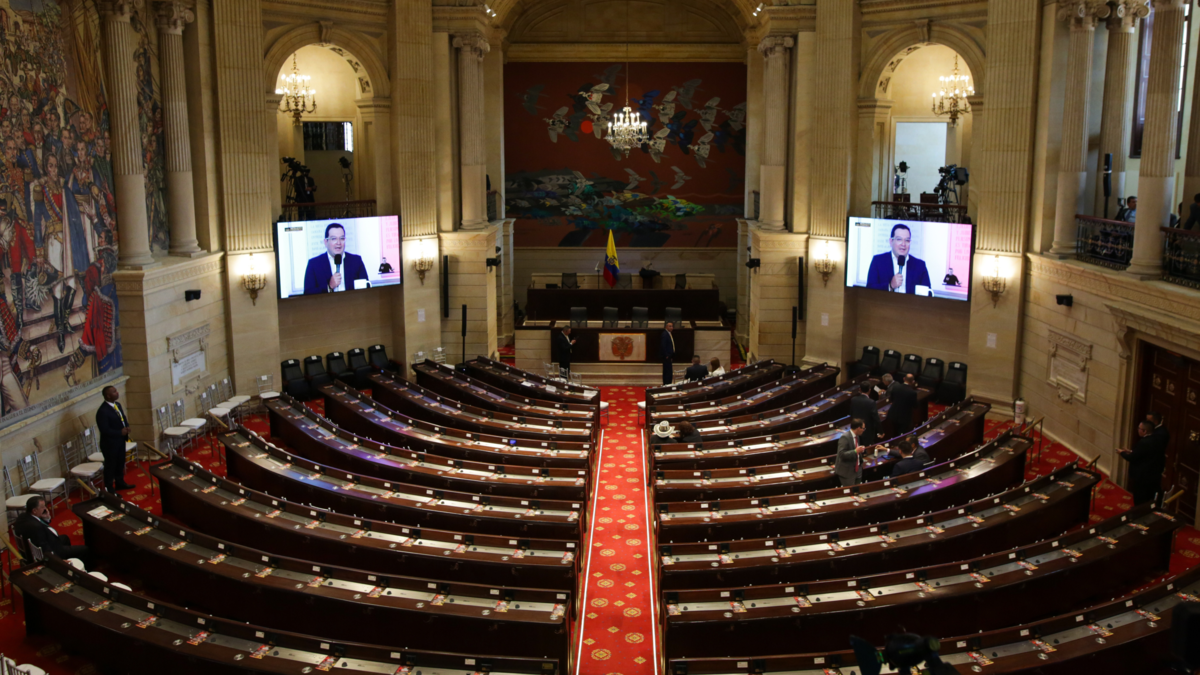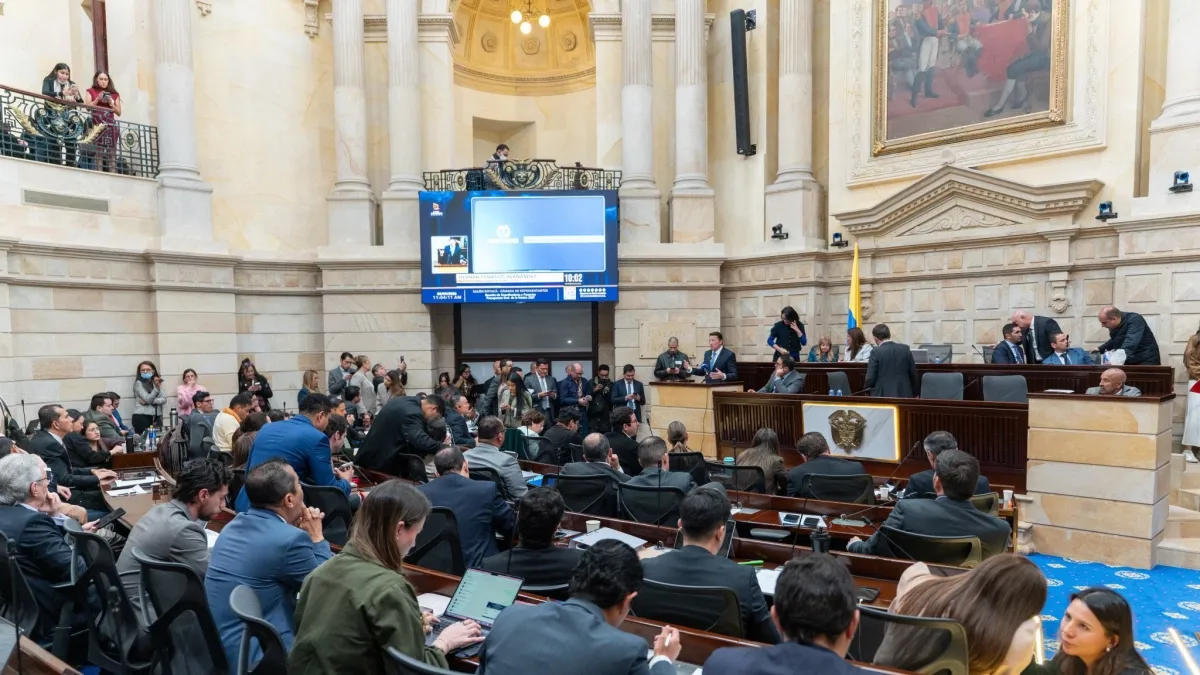
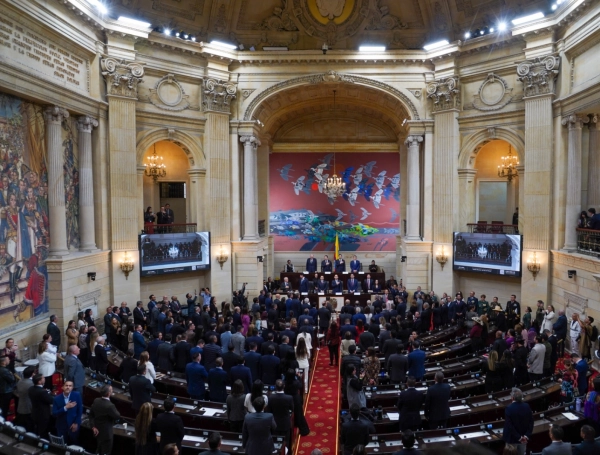
BOGOTÁ — The Neoclassical heart of Colombian democracy beat with profound historical resonance on Wednesday, November 25, 2026, as the nation gathered to commemorate the centennial of the National Capitol Building (Capitolio Nacional). Specifically centering on the iconic Elliptical Salon (Salón Elíptico)—the dramatic backdrop for legislative debates, presidential inaugurations, and watershed moments in the nation’s political trajectory—the day-long celebration united the highest tiers of government, historical preservationists, and the public in an homage to institutional resilience.
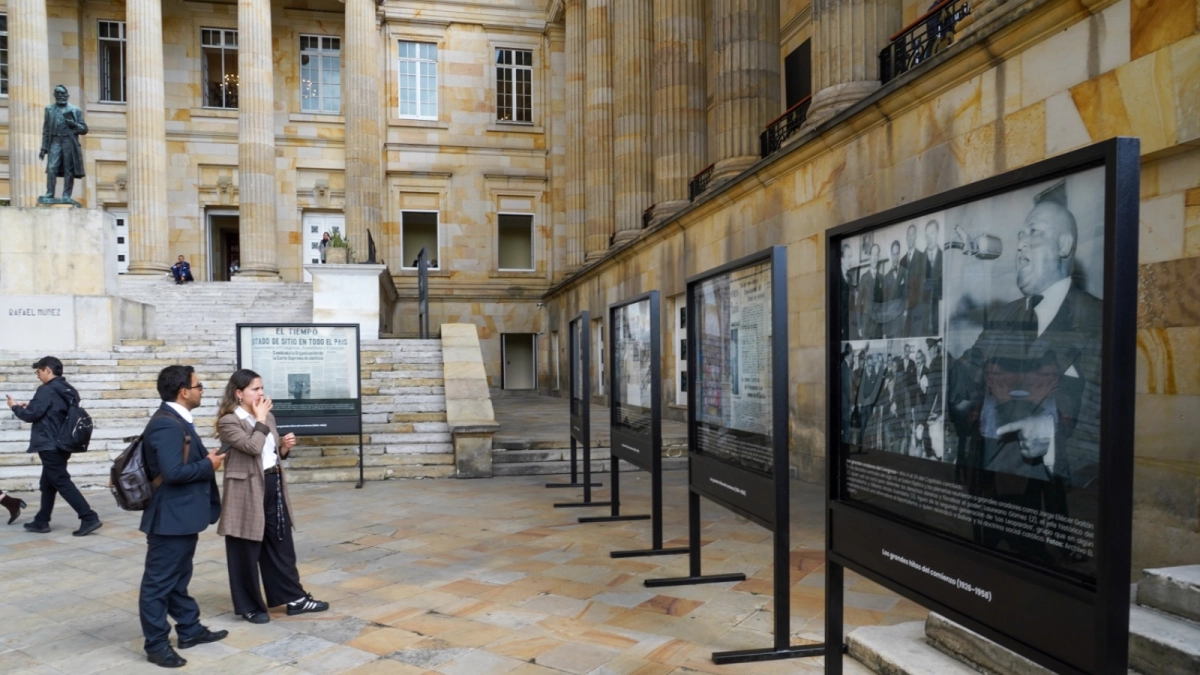
The high-profile event was jointly hosted by the Congress of the Republic, the administration of President Abelardo De La Espriella, the Office of the Attorney General of the Nation (Procuraduría General de la Nación), and the historic newspaper EL TIEMPO. Conceived under the institutional banner of the "La Procu Evoluciona" strategy, the centennial festivities combined solemn legislative protocols, the unveiling of a commemorative plaque in the historic Patio Mosquera, and the inauguration of an extensive 50-station photographic exhibition curated from the archives of EL TIEMPO.
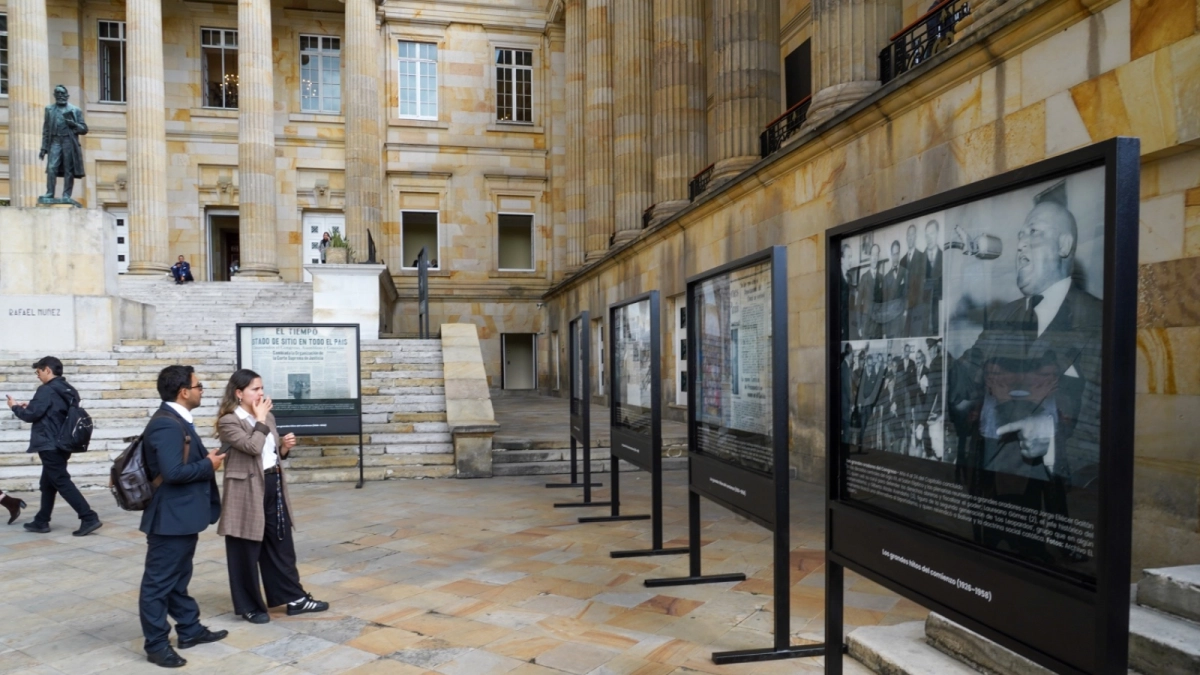
Far more than a celebration of mortar and stone, the centennial served as a collective reflection on Colombia’s tumultuous yet enduring republican experiment. As the nation confronts contemporary political polarization, the Capitol building stood during Wednesday’s ceremonies as a physical testament to a central political truth: while governments rise and fall, constitutional institutions endure.
Main Facts: A Landmark Anniversary for a Monumental Edifice
The centennial celebrations marked 100 years since the Capitolio Nacional achieved full operational status following its protracted, obstacle-laden construction. Located on the southern flank of Bogotá’s historic Plaza de Bolívar, the building is the architectural embodiment of Colombia’s legislative power, housing both the Senate and the Chamber of Representatives.

The anniversary program featured several core events:
- The Solemn Session: Held in the Salón Elíptico—where the plenary of the Chamber of Representatives convenes—drawing congressional leaders, cabinet ministers, and judicial authorities.
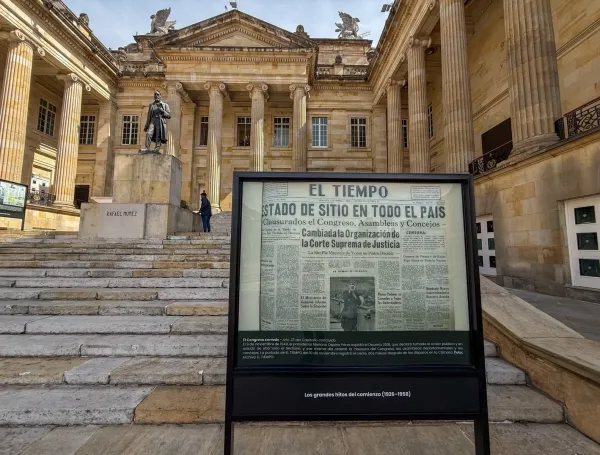
- The Photographic Exhibition: A meticulously curated gallery comprising 50 distinct historical stations utilizing EL TIEMPO’s rich archival vault, showcasing pivotal moments in Colombian history, including rare images from the 1958–1959 trials of former head of state General Gustavo Rojas Pinilla.
- Institutional Unveiling: The dedication of a permanent plaque in the Patio Mosquera to honor a century of civic debate and democratic stewardship.
- High-Level Addresses: Speeches delivered by Attorney General Gregorio Eljach, Senate President Honorio Henríquez, Chamber President Nicolás Barguil, and Interior Minister Alejandro Ordóñez, each emphasizing the necessity of democratic dialogue and consensus-building.
Chronology: A 78-Year Journey Through War, Crisis, and Triumph
While the centennial marks a century of sustained utilization, the creation of the Capitolio Nacional is a sprawling historical saga that spanned nearly eight decades. Its construction timeline reflects the broader fractures, ambitions, and economic struggles of 19th- and early 20th-century Colombia.
The Genesis (1846–1848)
The conceptual origins of the Capitol date back to 1846, when a legislative act ordered the construction of a permanent home for the nation’s supreme powers on the southern side of the Plaza de Bolívar. The project was aggressively championed by then-President Tomás Cipriano de Mosquera and conceptualized by the visionary Danish architect Thomas Reed. The symbolic first stone was laid in 1848, initiating what would become an architectural odyssey.
Decades of Interruption (mid-to-late 19th Century)
Progress on the monumental stone structure was severely disrupted by a succession of civil wars, severe economic depressions, and volatile political realignments. Because construction was halted repeatedly, the Colombian Congress was forced to wander through various temporary meeting places across Bogotá.
Despite these interruptions, the project refused to die. As the decades rolled on, the architectural leadership shifted across international and domestic talents. Following Thomas Reed, the Italian architect Pietro Cantini stepped in to modify and guide the construction, followed later by the French architect Gastón Lelarge.
Completion and The Human Cost
As Attorney General Gregorio Eljach observed during his keynote address, the Capitol was never the pet project of a single administration or a solitary political party. It was an enduring State objective.

"This house took almost eighty years to rise," Eljach stated during the solemn session. "Foreigners dreamed it, presidents defended it, and Colombian hands finished it."
The building’s final phases relied heavily on the ingenuity, labor, and craftsmanship of local Colombian engineers, stonemasons, and workers who brought Reed’s neoclassical vision to fruition. By the time it was fully integrated into the daily life of the republic a century ago, it had evolved far beyond a mere government office; it stood as a physical monument to the perseverance of the Colombian spirit.
Supporting Data: Archival Windows into Colombian History
A vital component of the centennial celebrations was the integration of historical documentation, spearheaded by EL TIEMPO. The newly opened photographic exhibition offers citizens an unvarnished window into the nation’s past, proving that the Capitol has witnessed both the finest hours of Colombian democracy and its most severe stress tests.
Among the most striking archival materials featured in the 50-station gallery are photographs dating from 1958 and 1959—roughly thirty-three years after the building’s completion. These images document the unprecedented judicial proceedings of the only political trial ever conducted against a former Colombian head of state: General Gustavo Rojas Pinilla. Charged with abuse of authority and illicit enrichment during his presidency, Rojas Pinilla faced accountability inside a nation striving to re-establish civilian democratic norms following a period of military dictatorship.

By placing these stark historical images on public display within the halls of power, organizers underscored that the Capitol is an active archive. Every legislative vote, constitutional reform, and political crisis is absorbed into the building’s institutional memory.
Official Responses: Voices of the Centennial
The ceremonies drew profound commentary from the leaders of Colombia’s contemporary political and judicial landscape, bridging the gap between historical reverence and modern governance.
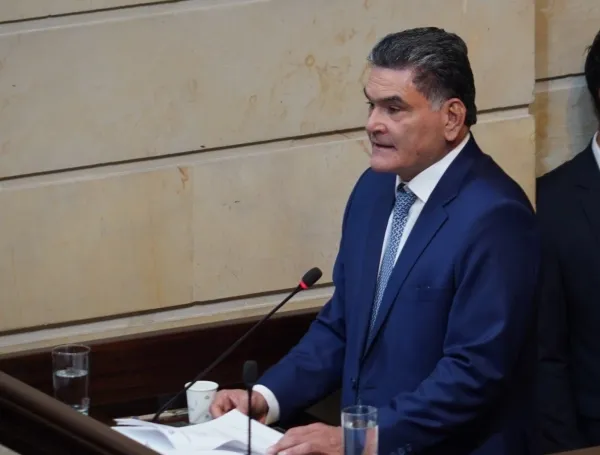
- Gregorio Eljach (Attorney General): Emphasizing the supra-partisan nature of the building, Eljach remarked, "Governments pass, and institutions remain." He utilized the platform to issue a stark warning about the necessity of national unity, invoking the historic wisdom of conservative leader Álvaro Gómez Hurtado. "Colombia needs today a minimum of consensuses, a framework of deep coincidences, or, as Álvaro Gómez said, an Agreement on the Fundamental."
- Honorio Henríquez (President of the Senate): Henríquez extended an open invitation to the citizenry, encouraging Colombians to visit the Capitol. He described the building as "a place where differences find space for dialogue," urging the public to engage directly with the history embedded in its stone walls.
- Nicolás Barguil (President of the Chamber of Representatives): Speaking directly to the philosophical underpinnings of the legislature, Barguil noted the symbolic weight of the structure’s architecture. "These columns sustain the idea that differences are transmitted with the word and with the vote, and not with weapons," he declared during the plenary session.
- Alejandro Ordóñez (Minister of the Interior): Looking toward the future, Minister Ordóñez framed the centennial as a generational responsibility. He challenged contemporary public servants to consider the legacy they are leaving behind: "We must think of the Colombia we must deliver to our children: a homeland where they can grow safely, form a family, and build their future with the certainty that their effort will make sense (…) A homeland where serving the State is a responsibility fulfilled with decency."
Implications: Bridging the Divide Between Citizenry and State
Beyond the pomp of the anniversary, the centennial of the National Capitol highlights a critical ongoing challenge for modern Colombia: bridging the historical disconnect between the citizenry and the machinery of governance.
Historically viewed by many as an elite fortress—guarded heavily and distant from the daily struggles of ordinary Colombians—initiatives like "La Procu Evoluciona" and the permanent integration of public photographic galleries aim to democratize the space. By opening its doors and sharing its archival memory, the Congress and supporting institutions are attempting to transform the Capitol from an exclusive seat of power into a shared cultural patrimony.

Furthermore, the timing of the centennial—amidst complex legislative debates, electoral threshold controversies, and ongoing high-stakes political oversight—serves as a timely reminder of institutional permanence. As Colombia navigates its complex socio-political landscape in 2026, the neoclassical columns of the Capitolio Nacional stand as an enduring reminder that democratic institutions, forged through decades of sacrifice and compromise, remain the ultimate guarantors of national stability.