Main Facts
In an era where global commerce faces profound social, environmental, and economic shifts, the definition of corporate success is undergoing a fundamental transformation. Profit alone is no longer the sole metric of a healthy enterprise; instead, corporate resilience, ecological stewardship, and community enrichment have emerged as the true benchmarks of viability.
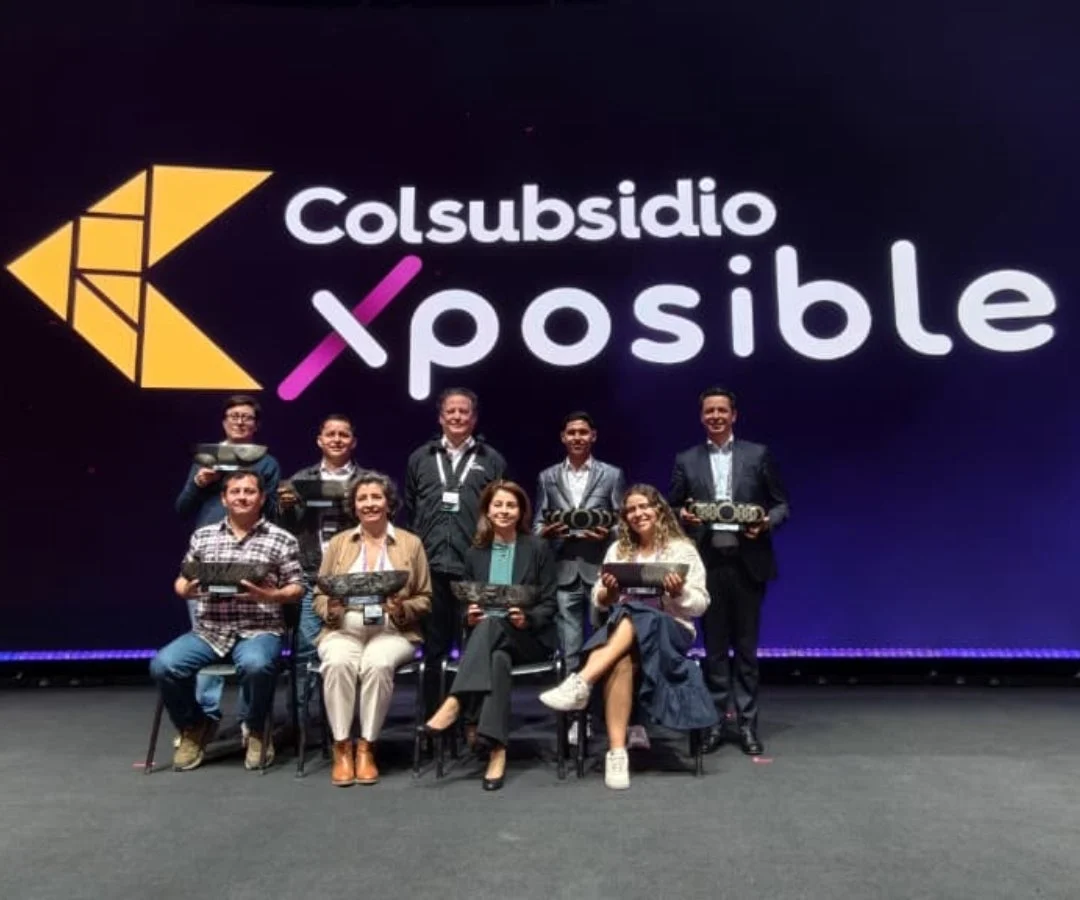
Within the heart of Colombia’s dynamic economy, micro, small, and medium-sized enterprises (MSMEs)—commonly known as MIPYMES—drive regional development, generate critical employment, and embody the indomitable spirit and innovative capacity of the nation. Recognizing this vital ecosystem, Xposible Colsubsidio celebrated its latest milestone by honoring eight pioneering Colombian initiatives that have successfully integrated sustainability into their core business models.
The awards ceremony took place during the Xposible Crecer business camp at the Chamorro City Hall in Bogotá, drawing over 500 business leaders, entrepreneurs, and innovators. Over its eight-year trajectory, the Colsubsidio community has recognized more than 140 sustainable projects nationwide, highlighting efforts that spark tangible social, economic, and environmental transformation.
The eight recognized MSMEs span diverse industries—ranging from financial inclusion and circular economy models to regenerative agriculture and cutting-edge educational technology—proving that sustainability is not a luxury for large corporations, but an operational necessity for businesses of all sizes.
Chronology and Evolution of the Initiative
A Legacy of Sustainable Recognition
- 2016–2023 (The Foundation Years): Since its inception, the Xposible Colsubsidio platform set out to identify and elevate enterprises that transcend traditional business metrics. Over these years, the community expanded steadily, recognizing over 140 sustainable projects across Colombia and validating the premise that ecological and social responsibility can coexist with commercial profitability.
- September 24 (The Xposible Crecer Camp): Gathering over 500 companies at the Chamorro City Hall in Bogotá, the event served as a collaborative crucible for business networking, knowledge sharing, and strategic foresight. The summit culminated in the official recognition of eight visionary MSMEs that turned sustainable challenges into operational triumphs.
- Looking Ahead (The 2026 Horizon): Positioned within the framework of forward-looking business strategy, this cohort sets a new standard for how Colombian enterprises must operate to remain competitive, resilient, and deeply connected to their regional ecosystems over the coming decade.
Supporting Data and Detailed Profiles of the Honored Initiatives
The Colombian MSME sector represents the backbone of the national economy. Within this landscape, agriculture alone contributes approximately 10.9% to the country’s Gross Domestic Product (GDP), underscoring why ecological preservation and soil health are paramount to national prosperity. The eight recognized initiatives leverage these realities to create localized, scalable, and profound impacts:
1. Financial Inclusion: Banco Contactar
- Initiative: MujerEs (A specialized program and credit line designed exclusively for micro-entrepreneurs and women-led ventures).
- Impact: Strengthened the financial inclusion of 14,223 women across more than 700 municipalities in Colombia. By offering preferential interest rates, specialized financial advisory services, and personalized accompaniment, Banco Contactar has transformed the economic autonomy of female entrepreneurs in both urban and rural centers.
2. Circular Economy and Waste Management: Ecoworks
- Initiative: Pacífico Sin Plástico (Plastics-free Pacific, an initiative articulating circular economy models with remote coastal communities).
- Impact: Originating in Bogotá, Ecoworks champions traditional waste pickers while tackling marine pollution. Through this specific project, the company recovered over 1,500 tons of plastic waste from the Colombian Pacific coast while generating vital, stable income streams for local inhabitants.
3. Soil Restoration and Organic Agriculture: Horti Organic
- Initiative: Sustainable agricultural management and large-scale organic waste transformation.
- Impact: Boasting more than 25 years of operational history, Horti Organic dedicates its enterprise to the integral management of organic waste, converting refuse into high-grade agricultural inputs designed to restore and condition exhausted farming soils.
4. Amazonian Forest Conservation: Cooperativa Multiactiva Agroforestal del Itilla
- Initiative: Community-led sustainable forest management.
- Impact: Situated in the municipality of Calamar, Guaviare, this grassroots forestry and peasant organization implemented sustainable management practices across 6,291 hectares. Their model successfully marries the critical conservation of the Amazon rainforest with sustainable income generation for local families, protecting vital ecosystems while fueling the rural economy.
5. Agroindustrial Export and Regenerative Farming: Ciproba & Sifora
- Ciproba (Pereira): Specializes in exporting and commercializing Latin American agroindustrial goods. By boosting the international supply chain for blackberries (mora), the company helped 54 producer families increase their economic incomes by 33%.
- Sifora (Boyacá): A regenerative agriculture pioneer that cultivates, transforms, and exports organic fruits—such as cape gooseberries (uchuva) and passion fruit (gulupa)—in fresh, dehydrated, and lyophilized formats. Sifora actively guides Boyacá agricultural producers in transitioning their conventional farms into profitable, regenerative units connected to lucrative international markets.
6. Technological Innovation and Education: ScienceBot & MentuLabs
- ScienceBot (San José del Guaviare): Recognized as the first robotics school in the department of Guaviare. It successfully brought robotics, programming, and artificial intelligence tools to 650 children and youth, while training 220 local teachers to bridge the digital divide in marginalized regions.
- MentuLabs (Bogotá): An educational innovation laboratory applying artificial intelligence to empower mathematics teachers in public schools. The enterprise has driven significant pedagogical advancements, optimizing student learning outcomes in underserved classrooms across the capital district.
Official Responses and Perspectives
The recognition ceremony was marked by deep reflections on the transformative power of purposeful entrepreneurship. Speaking on behalf of the organizing institution, Laura González Pacheco, Subdirector of Planning and Innovation at Colsubsidio, emphasized the institutional philosophy driving the initiative:
"At Colsubsidio, we believe that MSMEs are fundamental to driving development, and accompanying them on this journey means contributing to a more solid and sustainable business fabric," stated González Pacheco.
She further elaborated on the nexus between economic growth and communal well-being: "We promote a vision where economic growth connects directly with human well-being and environmental stewardship, strengthening capacities so that each enterprise can advance—according to its own reality—toward more sustainable management. When an MSME grows with purpose, it not only strengthens its business; it expands its capacity to generate employment, well-being, and opportunities, becoming a key actor in building a more prosperous, competitive, and sustainable country."
Industry experts at the Xposible Crecer camp echoed these sentiments, noting that sustainability can no longer be categorized as a peripheral corporate social responsibility (CSR) project. Instead, it must serve as the primary operational lens through which resource allocation, supply chain logistics, and long-term strategic decisions are evaluated.
Implications for the Future of Colombian Business
The achievements of these eight enterprises carry profound implications for the future trajectory of Colombia’s economy and society:
- Decentralization of Innovation: The recognition of projects in Guaviare, Boyacá, Pereira, and the Pacific coast demonstrates that innovation and high-impact sustainability are not exclusive to major metropolitan hubs like Bogotá or Medellín. Regional entrepreneurship is actively solving hyper-local challenges with globally competitive solutions.
- The Business Case for Regeneration: By proving that environmental restoration (such as soil conditioning, Amazonian forestry, and organic transition) directly correlates with economic viability (e.g., Sifora’s export models and Ciproba’s income hikes), these MSMEs dismantle the outdated myth that sustainability is a financial burden.
- Closing the Educational and Financial Gaps: Initiatives like Banco Contactar’s MujerEs and technological interventions by ScienceBot and MentuLabs prove that capital and knowledge democratization are essential precursors to systemic economic mobility.
- A Call to Action: Xposible Colsubsidio’s ongoing platform issues a clear directive to the wider Colombian business community: adopting a sustainable vision is a matter of leadership, determination, and survival. As global markets increasingly demand ethical sourcing and climate accountability, the Colombian enterprise fabric—anchored by resilient MSMEs—stands ready to lead the charge toward a regenerative and equitable economic future.