
By Global Investigative Desk
Published: November 9, 2026
Main Facts: The Anatomy of a Digital Crisis
A comprehensive and disturbing investigative report conducted in Spain has laid bare a massive, systemic failure in content moderation by one of the world’s most popular social media platforms. TikTok, a platform overwhelmingly frequented by minors, has been exposed as a breeding ground and distribution hub for child sexual abuse material (CSAM).

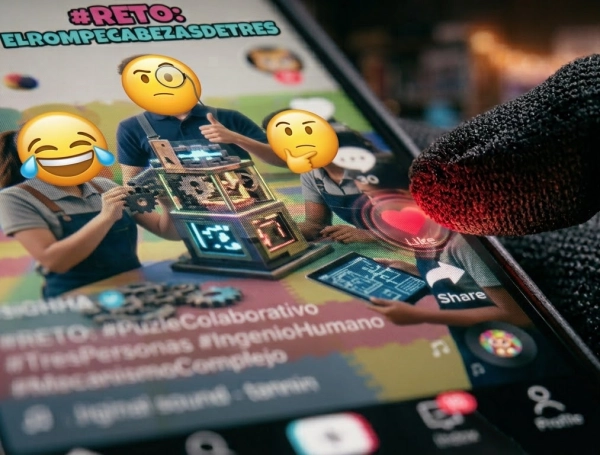
The investigation, spearheaded by the renowned Spanish fact-checking and investigative portal Maldita.es, reveals the existence of an expansive, interconnected network operating openly in plain sight. Using rudimentary evasion tactics—such as overlaying long texts, embedding explicit imagery within innocuous photos of children, or masking prohibited content with emojis—bad actors successfully bypassed the platform’s automated filters.
Even more alarming is the finding that TikTok’s core recommendation algorithm did not merely fail to detect the illicit content; it actively amplified it. By drawing users seamlessly from one compromised profile to another, the algorithm funneled vulnerable audiences straight into channels dedicated to the trafficking and consumption of illegal material.

The raw metrics uncovered during the investigation underscore the staggering scale of the crisis:
- 1,183 explicit videos documenting child sexual abuse were cataloged.
- 48 million cumulative views were racked up by these illicit videos.
- 26,000 distinct profiles were identified as potential pedophiles or distributors interacting with, sharing, or monetizing the material.
- 7,700 of these active, offending profiles operated specifically in the Spanish language.
When Maldita.es reported a sample of 50 explicit videos to the Spanish Prosecutor’s Office—which subsequently forwarded them to TikTok—the platform’s response was characterized by watchdogs as an abysmal failure. TikTok managed to remove a mere five videos, accounting for just 10 percent of the reported sample. Three days after formal notification, 40 percent of the accounts responsible for posting the explicit content remained fully active and operational.

Chronology: A 35-Day Deep Dive into the Underside of TikTok
The uncovering of this transnational network was not a stroke of luck, but the result of a rigorous, month-long tracking operation.
- September to October 2026: For 35 continuous days, investigative journalists at Maldita.es mapped out the ecosystem of abuse operating on TikTok. They documented how the platform’s standard features—specifically, live-streaming and algorithmic recommendations—were systematically weaponized.
- Mid-2026 (August): The crisis in Spain mirrors vulnerabilities exploited globally. In August 2026, local authorities in Itagüí, Antioquia (Colombia), filed formal complaints with the Prosecutor’s Office regarding a TikTok profile used to distribute sexual exploitation material featuring a minor, allegedly orchestrated by the account administrator herself. Concurrently, Human Rights Watch released a damning report indicating that 44 percent of documented child recruitment cases by illegal armed groups in 2025 relied on social media platforms like TikTok and Facebook.
- Late October 2026: As data compilation concluded, Maldita.es compiled definitive proof of systemic failures and escalated a formal evidentiary package to Spanish authorities, triggering immediate regulatory panic.
- November 9, 2026: Public release of the investigative findings, sending shockwaves across Europe and Latin America, and sparking intense scrutiny over corporate accountability, digital safety laws, and the monetization of child exploitation.
Supporting Data: Live Streams, Tunnels to Encrypted Apps, and Corporate Profit
The scope of the investigation goes far beyond pre-recorded short-form videos. Investigators found that TikTok’s "Live" feature has become a lucrative frontier for severe child abuse.

The Economics of Live-Streamed Abuse
During their 35-day observation window, Maldita.es documented 91 live-streaming broadcasts featuring minors, some transmitting directly from inside school premises. During these streams, viewers sent paid virtual "gifts"—monetary transactions from which TikTok takes a direct commission—in exchange for the children performing sexually suggestive acts. In one particularly harrowing instance documented by the researchers, an infant was subjected to abuse live on camera.
The Conversion Funnel: From TikTok to Encrypted Apps
TikTok rarely serves as the final transaction point for hard-core CSAM. Instead, it operates as the top of a marketing funnel.

- Discovery: Users encounter teaser content, suggestive dances, or cleverly masked images on TikTok.
- Contact: Bios and comment sections display specific alphanumeric keywords, contact handles, or hidden links.
- Migration: Consumers and pedophile rings migrate to heavily encrypted messaging applications with enhanced privacy features, namely Telegram and Zangi, where high-definition illegal material is bought, sold, and traded away from public view.
Clara Jiménez Cruz, director of Maldita.es, did not mince words when addressing the platform’s posture: "You cannot even compare TikTok to the rest of the platforms when it comes to child sexual abuse," she warned, dubbing the platform "the home of the pedophile."
Official Responses and Regulatory Backlash
The publication of the investigation has mobilized legal and governmental machinery across Europe, placing immense pressure on TikTok’s corporate leadership.

The European Union and Spain Take Action
Under the European Union’s landmark Digital Services Act (DSA), major technology platforms are legally mandated to mitigate systemic risks to minors and act "with promptness" to remove or disable access to illegal content. Legal experts and watchdogs argue that TikTok is in systemic, continuous breach of these regulations.
In response to the dossier, the Spanish Ministry of Youth and Children officially submitted a formal request to the General Prosecutor’s Office, demanding an exhaustive criminal investigation. Furthermore, the Spanish government signaled that it would not hesitate to request the complete suspension of TikTok’s services within Spain should the platform be definitively proven to be in chronic violation of child protection rights.

Colombia’s Ongoing Battle with Digital Exploitation
While the focal point of the Maldita.es investigation was Spain, the operational realities documented align with severe security challenges across Latin America.
In March 2025, the Colombian National Police successfully dismantled a transnational network specializing in child sexual exploitation that spanned Bogotá, Medellín, and Caldas. Investigators revealed that the syndicate relied heavily on TikTok, Facebook, and WhatsApp to produce, market, and distribute abusive media.
Despite mounting international pressure, multi-jurisdictional scandals, and clear evidence of criminal exploitation, TikTok’s corporate response to inquiries from Maldita.es and international media outlets has been widely criticized as dismissive. Rather than addressing specific system failures or detailing concrete corrective measures, the platform’s representatives merely requested more information.
Implications: The Failure of Artificial Intelligence and Corporate Negligence
The central paradox highlighted by this scandal is technological capability versus corporate will.

Modern artificial intelligence and machine learning models are powerful enough to detect unauthorized copyrighted audio within milliseconds, moderate complex political discourse, and identify nuanced text patterns across billions of daily uploads. Security experts point out that if TikTok possessed the corporate intent, advanced AI tools could easily be deployed to proactively scrub CSAM, isolate pedophile rings, and completely neutralize illegal repositories.
Instead, critics argue that engagement-driven algorithms prioritize retention, watch time, and viral metrics above child safety. Every minute an abusive video remains online—and every virtual "gift" purchased during a compromised live stream—generates revenue for the platform, even as it inflicts irreversible trauma on vulnerable children.

Furthermore, thousands of global brands continue to place lucrative programmatic advertisements daily on a platform now heavily scrutinized for harboring one of the largest digital networks of child exploitation in recent history.
As investigations widen, lawmakers, child advocacy groups, and judicial authorities are moving past voluntary corporate self-regulation. The demand is now unified: treat digital platforms hosting CSAM not as passive bulletin boards, but as active accomplices, subjecting them to severe legal penalties, mandatory algorithmic transparency, and the ultimate sanction—complete market exclusion.