BUENOS AIRES — In what official Vatican and local organizers have described as the most multitudinous mass of his pontificate thus far, Pope León XIV addressed an estimated two million faithful gathered at the iconic Monument of the Spaniards in Buenos Aires.
The Monday morning liturgy marked the pinnacle of the pontiff’s apostolic journey to Argentina—his first since ascending to the Throne of Saint Peter—and served as a powerful pulpit to address the contemporary fractures facing the modern home, elevating the family as the indispensable motor of spiritual resilience.
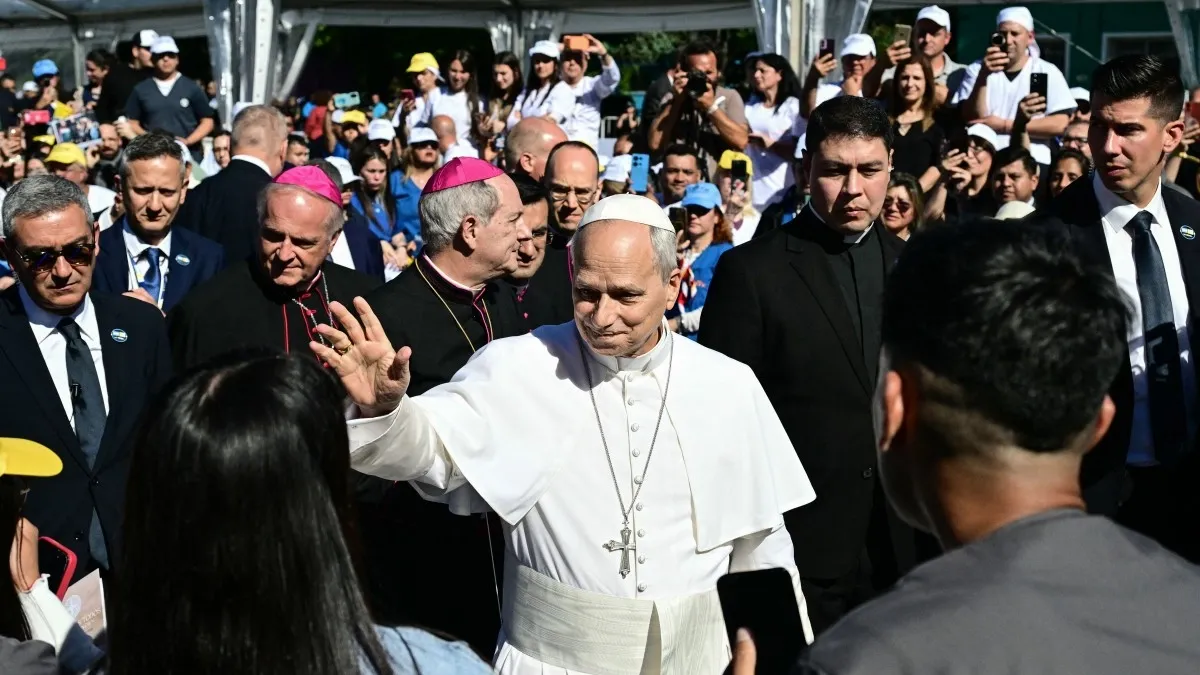
The scale of the gathering shattered previous expectations. Powered by a national holiday declared specifically to allow citizens to participate in the historic celebrations, the massive turnout stood in stark contrast to the sparse crowds observed during the Pope’s prior stop in Uruguay. For Argentina, a nation deeply intertwined with the Catholic identity yet politically and socially polarized, the event became an overwhelming display of religious fervor, civic mobilization, and historic remembrance.
Main Facts
- Massive Attendance: Official sources and local media estimates placed the crowd at approximately two million people, who flooded the Palermo neighborhood and surrounding grand avenues from the early hours of Sunday night.
- Core Message: Pope León XIV dedicated his homily to the concept of the family as the primary engine of faith, while frankly acknowledging the socioeconomic and domestic pressures straining modern households.
- Political Presence: Argentine President Javier Milei, accompanied by his cabinet and presidential secretary Karina Milei, attended the liturgy from the front rows. Vice President Victoria Villarruel, a vocal Catholic, was notably absent.
- Historical Resonance: The visit marks the first papal trip to Argentina in nearly forty years, following the landmark 1987 visit by John Paul II. It also carried profound emotional weight due to the memory of the late Pope Francis, an Argentine who never returned to his homeland during his 12-year papacy prior to his passing in April 2025.
Chronology of the Historic Day
Sunday Night and Dawn: The Anticipation
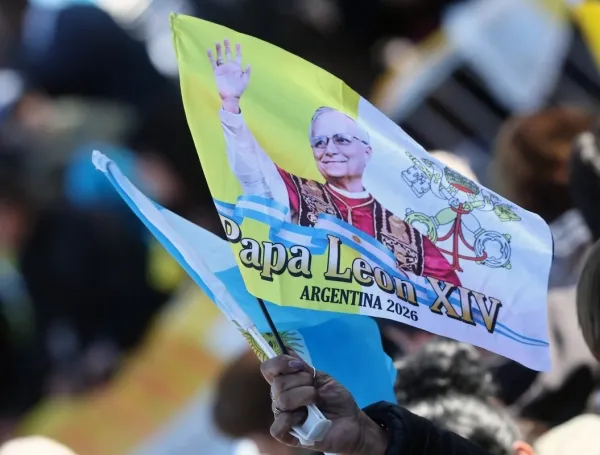
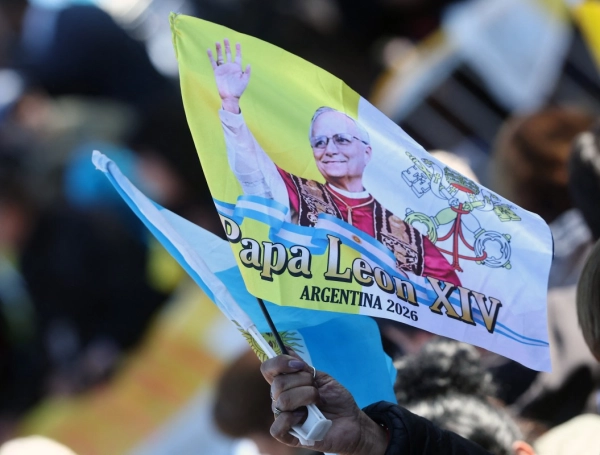
The prelude to the mass was defined by an extraordinary grassroots mobilization. Despite chilly night air, hundreds of faithful began staking out their spots around the Monument of the Spaniards in the upscale neighborhood of Palermo as early as Sunday evening. By sunrise on Monday, a sea of humanity—adorned predominantly in the white and yellow colors of the Vatican flag alongside the light blue and white of Argentina—had occupied every available square meter.

Morning: The Papal Motorcade and Early Stops
Before arriving at the altar in Palermo, Pope León XIV traveled straight from Claypole, located in the southern suburbs of the greater Buenos Aires area. Earlier that morning, the pontiff made a deeply symbolic, private pastoral visit to the "Pequeño Cottolengo Don Orione de Claypole," a residential care center for vulnerable populations.
Upon reaching the capital, the Holy Father boarded the papamóvil (popemobile) to navigate a thunderous, two-kilometer victory lap along Avenida Libertador. Giant LED screens broadcasted his arrival as thousands of believers lined the route, many weeping openly, waving papal banners, and chanting unified slogans of devotion: "¡Esta es la alegría del pueblo argentino, que viva el papa León!" ("This is the joy of the Argentine people, long live Pope León!").
11:30 AM: The Homily and Liturgy
By 11:30 AM, under a completely clear blue sky, the mass commenced. More than 2,500 priests had pre-positioned themselves throughout the vast open-air sector to distribute communion to the endless expanse of attendees.
During the service—which lasted over an hour and oscillated between moments of profound, pin-drop silence and thunderous cheers—the Pope delivered his central address. He invoked the legacy of his predecessor, Pope Francis, reminding the crowd of the late pontiff’s teachings on domestic prayer and the sacramental life of the home.

Following the final blessing, the Pope engaged with dignitaries and special guests before concluding his packed agenda in the capital.
Supporting Data and Demographics
The logistics behind the mass at the Monument of the Spaniards required unprecedented coordination between Vatican security details, federal forces, and the government of the Autonomous City of Buenos Aires.
- The Crowd: While independent cross-referencing placed the peak attendance close to two million, Vatican comitiva sources confirmed it as the largest single gathering of León XIV’s papacy.
- The Holiday Factor: The decision by the Argentine government to institute a national holiday proved decisive in liberating the workforce and student bodies, enabling families to travel from interior provinces to the capital.
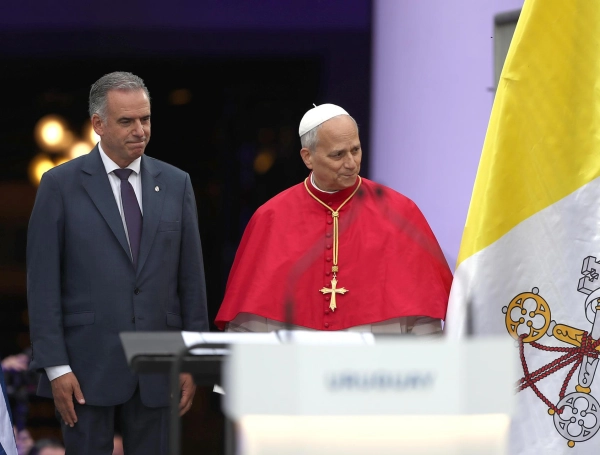
- Special Invitations: Out of 3,000 exclusive VIP passes allocated near the main stage, 2,500 were reserved for the local Church infrastructure (dioceses, parishes, and charitable networks), while the remaining 500 were split between the national executive branch and the Buenos Aires city government.
- Clergy Deployment: Over 2,500 consecrated ministers were deployed across the perimeter to manage the sacramental needs of the massive congregation.
Official Responses and Political Presence
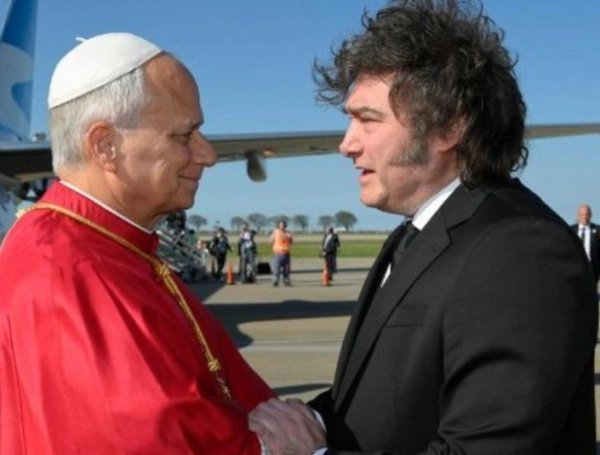
The intersection of state power and religious devotion was starkly visible beneath the massive, multi-day-constructed stage. Seated in the front rows of the VIP sector were President Javier Milei and his closest political adviser and sister, Karina Milei, alongside Buenos Aires City Head of Government Jorge Macri.
While President Milei’s libertarian administration has previously experienced ideological friction with traditional progressive Catholic doctrines—particularly regarding social welfare and economic restructuring—the tone of the event remained strictly pastoral and unifying. The presence of the executive branch underscored a pragmatic diplomatic détente and a mutual recognition of the Church’s unshakeable social gravity in Argentina.
Notably absent from the ceremony was Vice President Victoria Villarruel. Although publicly known as a devout Catholic whose traditionalist views often align closely with ecclesiastical conservatism, her absence raised quiet eyebrows among political analysts, though no official institutional friction was cited.
The emotional high-water mark for the secular political sphere—and the crowd at large—occurred minutes before the liturgy began, when loudspeakers mentioned the late Pope Francis. The ensuing wave of applause was deafening. For a nation that spent over a decade grappling with the complex reality of having an Argentine pontiff who never crossed its borders, the tribute to Francis served as a moment of collective healing and closure.
Implications of the Papal Visit
Pope León XIV’s address in Buenos Aires carries profound domestic and regional implications for the Catholic Church in South America:
1. Re-centering the Family Amid Economic Precariousness
By choosing to focus his homily squarely on the domestic sphere, the Pope directly addressed the anxiety plaguing contemporary Argentine society. In a country continuously weathering economic turbulence, inflation, and structural instability, León XIV did not offer abstract theological lectures; instead, he targeted the tangible decay of social fabric:
"Our families often live complex situations: a lack of stability, social difficulties, precarious work, domestic violence, painful separations, addictions that destroy the future of the young and deteriorate family relationships."
By framing the family not merely as a passive victim of structural crises, but as the active "motor of faith" and the primary sanctuary (templo donde habita el Espíritu), the pontiff issued a rallying cry for spiritual self-reliance and communal solidarity.

2. Revitalizing Southern Cone Catholicism
The overwhelming success of the Buenos Aires mass effectively erased any negative optics left by the subdued public engagement in Uruguay. For the Vatican, Argentina remains an indispensable demographic and spiritual anchor in the Southern Cone. The sheer magnitude of the turnout demonstrates that, despite secularization trends and the growth of evangelical denominations across Latin America, the institutional and emotional pull of the Catholic Church remains uniquely potent when catalyzed by a unified national moment.
3. A New Chapter in Church-State Dynamics
For President Milei’s administration, hosting the highest-profile religious event in decades provides a momentary bridge to traditionalist sectors of the populace. As Argentina continues to navigate volatile economic reforms, the moral authority projected by León XIV—calling for dignity in labor, protection for the vulnerable, and the preservation of the family unit—establishes a subtle yet powerful ethical framework against which future government policies will inevitably be measured by the faithful.