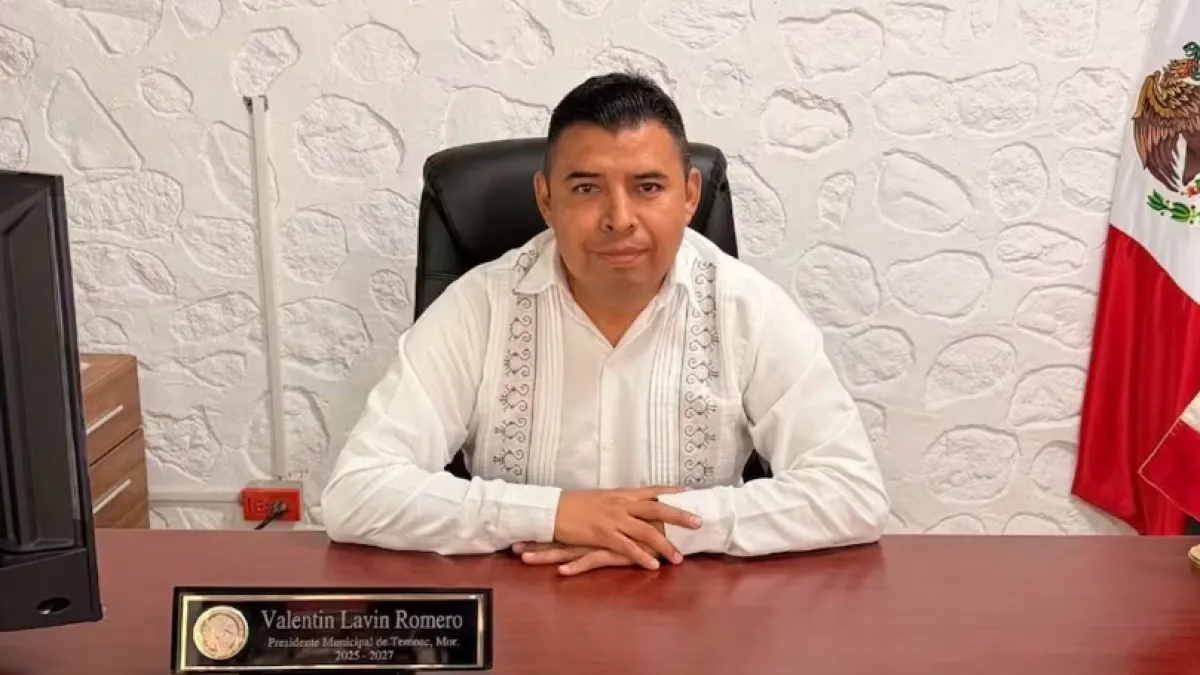
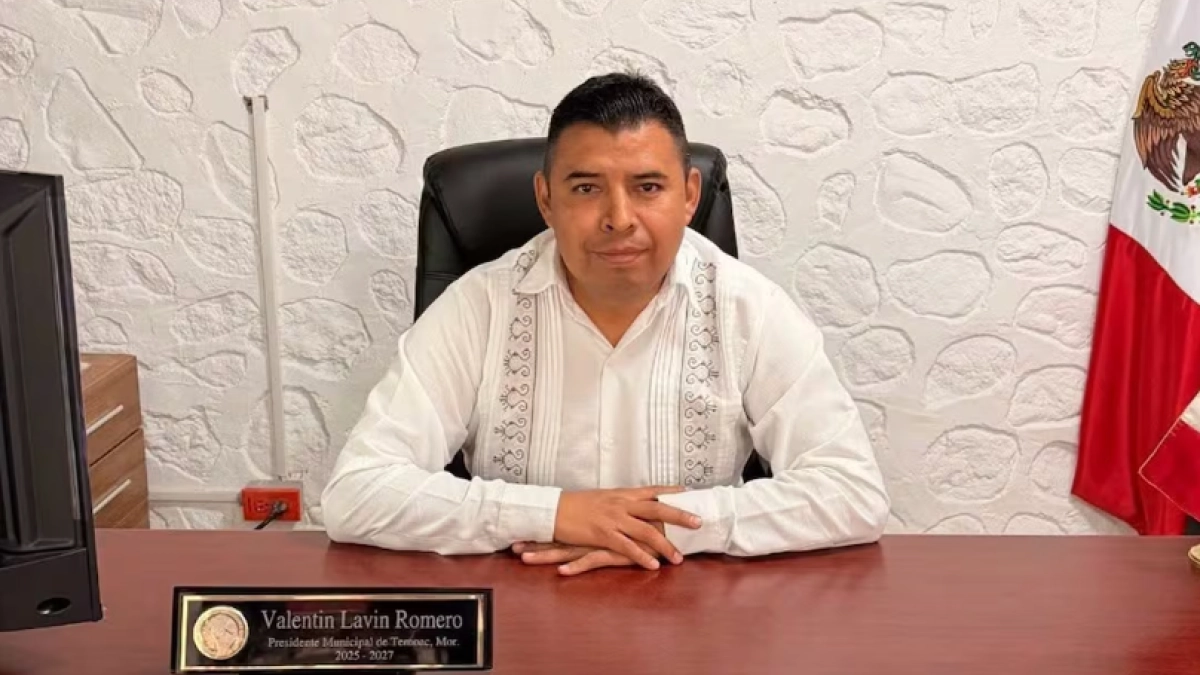
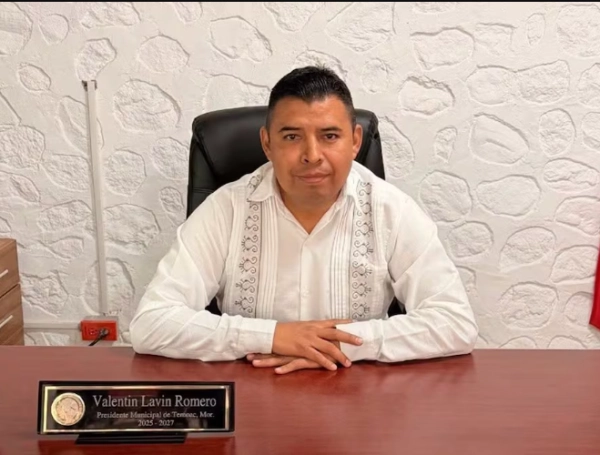
Temoac, Morelos, Mexico – July 22, 2026 – In a brazen act that has sent shockwaves across Mexico, Valentín Lavín Romero, the mayor of the municipality of Temoac in the eastern part of Morelos state, was brutally assassinated inside the municipal palace around midday today. The attack, carried out by sicarios on a motorcycle, marks a severe escalation of political violence in a region already grappling with widespread organized crime. Authorities have swiftly launched an investigation, deploying military forces and initiating a vast security operation to apprehend those responsible.
The assassination of Mayor Lavín Romero, a member of the Green Ecologist Party of Mexico (PVEM), not only claims the life of a public servant but also underscores the perilous landscape faced by local leaders in areas besieged by criminal organizations. This incident is particularly chilling as it was the second attempt on the mayor’s life this year, raising critical questions about the efficacy of protection measures and the deep entrenchment of illicit activities within governmental structures.
A Daring Daylight Assassination Shakes Temoac
The attack unfolded with terrifying speed and precision, characteristic of organized crime operations. At approximately 12:32 PM, two assailants, riding a motorcycle, stormed the municipal palace of Temoac. Their target was clear: Mayor Valentín Lavín Romero. Inside the building, they unleashed a volley of gunfire, leaving the mayor fatally wounded. The immediate aftermath plunged the small municipal seat into chaos, transforming a hub of local governance into a crime scene.
Following the assassination, the perpetrators wasted no time, fleeing the scene on their motorcycle. Reports indicate their escape route led them towards the nearby community of Popotlán, disappearing into the intricate network of local roads and communities that often provide cover for such operations. The audacity of the attack – executed in broad daylight within a government building – speaks volumes about the impunity with which criminal groups operate in certain parts of Mexico.
Emergency services and security forces were immediately dispatched to the scene. Paramedics attempted to render aid to the fallen mayor, but their efforts were in vain. Simultaneously, a robust security deployment commenced, with military personnel and state police rapidly converging on the municipal palace to secure the area and initiate the preliminary stages of the investigation. The grim discovery of Mayor Lavín Romero’s body inside the presidency building confirmed the tragic loss.
A Timeline of Terror in Temoac
The events of July 22, 2026, represent a dark chapter for Temoac, a municipality often overlooked but now thrust into the national spotlight due to this horrific act of violence.
The Attack Unfolds
The tranquility of Temoac was shattered just after noon. Eyewitnesses, though likely few given the speed of the attack, would have observed the motorcycle carrying two individuals approaching the municipal palace. The assailants, described as sicarios, or hitmen, bypassed whatever security measures might have been in place, indicating either a sophisticated plan or a perceived vulnerability of the target. Their entry into the building and the subsequent gunfire would have created a scene of terror and confusion among staff and any citizens present. The precise timing, 12:32 PM, suggests a calculated decision, perhaps to maximize impact or exploit a moment of reduced vigilance.
Immediate Aftermath and Security Response
News of the attack spread rapidly, primarily through informal channels and social media, before official confirmations were released. Videos recorded by residents and passersby quickly circulated, depicting the intense security presence descending upon the municipal headquarters. Heavily armed military personnel and state police vehicles swarmed the area, establishing perimeters and initiating search operations.
The Morelos State Attorney General’s Office confirmed the mayor’s death in a press statement, assuring the public that "all lines of investigation" would be pursued. Personnel from the Ministerio Público of the Regional Eastern Prosecutor’s Office, the Criminal Investigation Agency (AIC), and the Coordination of Forensic Services were dispatched to the scene to conduct initial investigations, gather evidence, and perform the difficult task of removing the mayor’s body. The deployment extended beyond the immediate crime scene, encompassing a wider operational sweep across Temoac and its surrounding municipalities in a frantic search for the two motorcycle-riding assassins. This rapid and extensive response highlights the gravity with which authorities are treating the assassination of a sitting mayor.
A Pattern of Violence: Contextualizing the Attack
The assassination of Valentín Lavín Romero is not an isolated incident but rather a stark reminder of the deeply entrenched violence plaguing Mexico, particularly at the municipal level. It resonates within a broader context of political instability, the pervasive influence of organized crime, and a concerning trend of impunity.
Mexico’s Alarming Trend of Political Assassinations
Mexico has, for many years, been one of the most dangerous countries in the world for politicians, especially those at the local level. Mayors, city council members, and candidates are frequently targeted by criminal organizations seeking to control territories, influence elections, and secure protection for their illicit activities. These groups aim to install sympathetic officials or remove those who obstruct their operations, often resorting to intimidation, extortion, and extreme violence. The period leading up to and during election cycles is particularly fraught with danger, though assassinations like Lavín Romero’s demonstrate that the threat persists throughout a politician’s tenure. This continuous cycle of violence erodes democratic institutions and fosters a climate of fear that stifles legitimate governance.
Morelos: A Hotbed of Criminal Activity
The state of Morelos, located just south of Mexico City, has long been a critical battleground for various criminal organizations. Its strategic geographical position makes it a transit point for drugs, arms, and other contraband, connecting the capital with southern states. This has led to intense rivalries between cartels, resulting in widespread violence, extortion, kidnappings, and homicides. Municipalities like Temoac, while seemingly small and provincial, can become vital pieces in the larger puzzle of territorial control. Local governments often find themselves caught between the demands of their constituents and the brutal pressures exerted by criminal groups. The presence of multiple factions, including remnants of older cartels and newer, more localized gangs, further destabilizes the region, making it exceptionally challenging for any mayor to operate without facing significant threats.

Mayor Lavín Romero’s Troubled Tenure and Previous Attempts
The fact that this was the second armed attack Valentín Lavín Romero faced this year paints a grim picture of his time in office. While specific details of the January attempt were not immediately available, its occurrence suggests that the mayor had been a marked man for some time. Surviving a previous attack often indicates a deep-seated conflict or persistent threat, yet protective measures or the resolution of the underlying issues appear to have been insufficient. Such repeated targeting points to a determined adversary, possibly one with significant resources and a clear motive for his removal. His political affiliation with the PVEM, a party that has seen its share of local controversies and alliances, might also be a factor, though direct links to his party affiliation and the attack remain speculative at this stage of the investigation.
The Shadow of Organized Crime: Family Ties Under Scrutiny
Perhaps one of the most significant and troubling details emerging from the preliminary reports is the connection between Mayor Lavín Romero’s family and organized crime. The article explicitly states that his mother-in-law, a former municipal treasurer, had been arrested on two separate occasions due to alleged links with criminal organizations. This revelation adds a complex layer to the investigation. The involvement of a close family member, especially one who held a sensitive financial position within the municipal government, raises questions about potential corruption, internal conflicts, or whether the mayor himself was being pressured or targeted due to these associations. In Mexico, it is not uncommon for criminal groups to infiltrate local governments through family members, allies, or direct coercion, effectively turning public institutions into extensions of their illicit networks. This angle will undoubtedly be a primary focus for investigators, as it could illuminate the motive behind the assassination and expose deeper systemic issues within Temoac’s local administration.
Temoac: A Small Municipality, A Large Target
Temoac is a relatively small municipality, often characterized by its agricultural activities and quiet way of life. However, its location within Morelos places it within a broader geographic corridor that criminal groups find valuable. Control over local governments in such areas grants cartels sway over public resources, permits, land use, and the ability to operate illicit businesses with less scrutiny. A small municipality’s police force may also be easier to intimidate or corrupt, making it an attractive target for criminal infiltration. The assassination of a mayor in such a context is not merely a personal tragedy but a strategic move by criminal elements to assert dominance and send a clear message to any who might oppose them.

Official Reactions and the Promise of Justice
The assassination of a public official, particularly a mayor, demands a robust and unequivocal response from all levels of government. The immediate actions and public statements made by state and federal authorities are crucial for demonstrating resolve and reassuring a shaken populace.
State Authorities Vow Thorough Investigation
The Morelos State Attorney General’s Office, under whose jurisdiction the crime falls, was quick to issue a formal statement confirming Mayor Lavín Romero’s death and pledging a comprehensive investigation. The presence of personnel from various specialized units – including the Public Ministry, the Criminal Investigation Agency, and Forensic Services – underscores the commitment to a methodical approach. Their mandate is to meticulously collect evidence, interview witnesses, analyze security footage (if available), and pursue all credible leads. The promise to "exhaust all lines of investigation" suggests an acknowledgment of the complex factors potentially at play, from political rivalries to the pervasive influence of organized crime and the troubling family links. The effectiveness of this investigation will be closely watched, not only by the residents of Temoac but by the entire nation, as a test of the state’s capacity to deliver justice in high-profile cases of political violence.
Federal Government’s Stance
While the initial response largely came from state authorities, the federal government is expected to weigh in, given the severe implications of a mayor’s assassination. Although no direct quote from the federal government was provided in the initial reports, a standard federal response typically involves condemning the violence, reiterating a commitment to combating organized crime, and offering support to state investigations. Such interventions often include intelligence sharing, deployment of federal security forces, or a general pledge to strengthen the rule of law. The federal administration often emphasizes that these acts are attempts to destabilize the government and undermine democracy, vowing to ensure that justice is served and that no impunity is tolerated. The coordination between state and federal agencies will be critical in a case of this magnitude, particularly if the investigation points to powerful criminal organizations with operations extending beyond state borders.

Far-Reaching Implications for Governance and Security
The killing of Mayor Valentín Lavín Romero carries profound and far-reaching implications, extending beyond the immediate tragedy for his family and the community of Temoac. It touches upon the very foundations of democratic governance and the ongoing struggle against criminal elements in Mexico.
Erosion of Local Governance and Public Trust
The assassination of a mayor, the highest local authority, severely undermines the integrity of local governance. It creates a vacuum of leadership and can paralyze municipal functions, at least temporarily. More importantly, it erodes public trust in institutions designed to protect and serve them. When a mayor can be killed inside his own office, citizens are left with a sense of vulnerability and a belief that the state cannot guarantee their safety, much less the safety of their elected representatives. This fear can lead to disengagement from the political process, a reluctance to report crimes, and a broader disillusionment with democracy itself. The challenge for Temoac now is to restore stability, elect new leadership, and rebuild the shattered confidence of its residents.
The Chilling Effect on Public Servants
The repeated targeting and ultimate assassination of mayors and other public officials create a chilling effect on those who choose to serve. The constant threat of violence can deter qualified individuals from seeking public office, particularly in high-risk areas. For those already in power, it can lead to self-censorship, a reluctance to challenge criminal interests, or even complicity, as officials might prioritize their safety over their duties. This environment compromises good governance, as decisions may be influenced by fear rather than the welfare of the community. It also makes it incredibly difficult to implement anti-corruption measures or security reforms, as these efforts directly confront the powerful criminal groups responsible for such violence.

Challenges for Law Enforcement
The assassination presents significant challenges for law enforcement agencies. Beyond the immediate task of apprehending the perpetrators, there is the larger, systemic issue of addressing the root causes of such violence. This includes dismantling criminal networks, combating corruption within state institutions, and ensuring that justice is consistently delivered. The investigation into Mayor Lavín Romero’s death will be a critical test of these capabilities. If the assassins are not brought to justice, it further emboldens criminal elements and reinforces the perception of impunity. The deployment of military forces, while necessary for immediate security, also highlights the extent to which civilian police forces may be overwhelmed or compromised, pointing to a need for deeper security sector reforms.
Conclusion: A Call for Justice in a Fractured Landscape
The assassination of Valentín Lavín Romero is a stark and painful reminder of the immense challenges facing Mexico in its fight against organized crime and political violence. It is a tragedy that cuts deep, affecting not only a family and a community but also the broader democratic fabric of the nation. As investigations unfold, the world will be watching to see if justice can be served in Temoac. The pursuit of the assassins, the uncovering of their motives, and the potential exposure of larger criminal networks will be crucial steps in demonstrating that even in the face of such audacious violence, the rule of law can and must prevail. The incident serves as a poignant call for strengthened security, unwavering political will, and concerted efforts to protect those who dedicate their lives to public service in a fractured and dangerous landscape.