
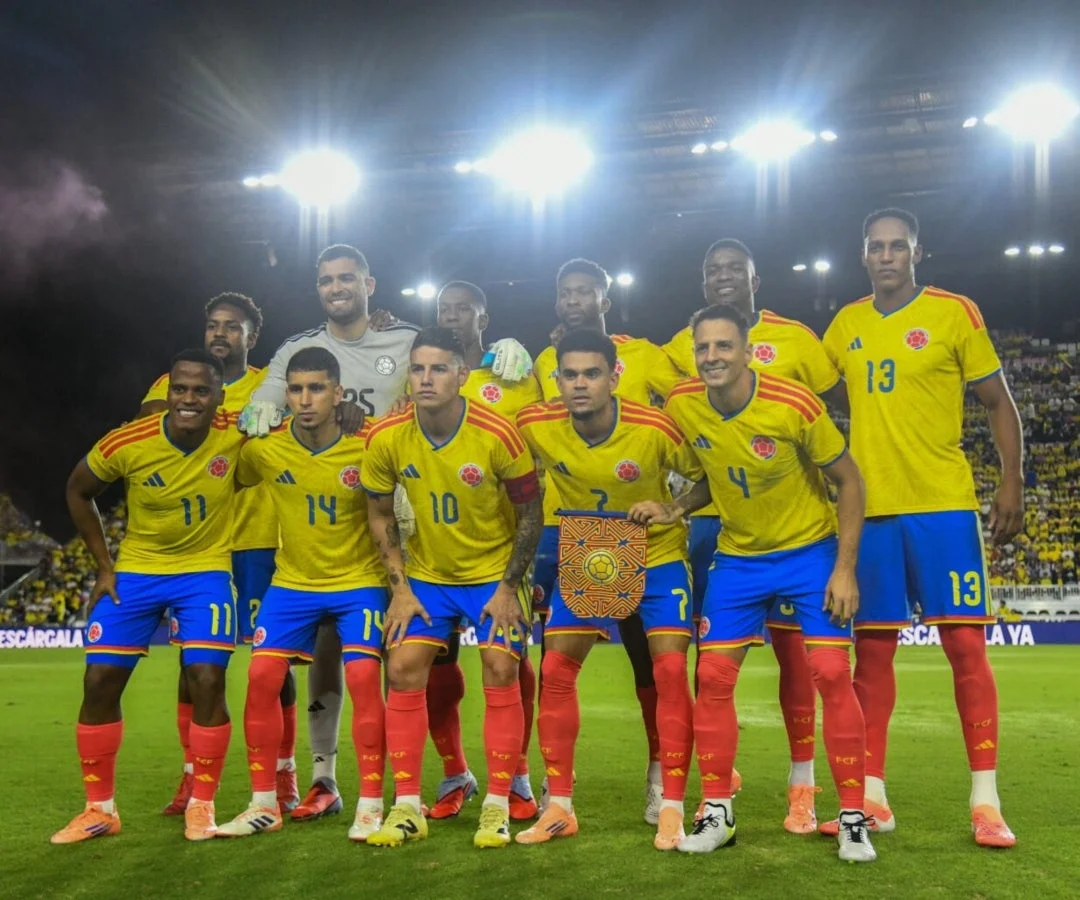
The 2026 FIFA World Cup has reached its fever pitch as the knockout stages commence, and one of the most intriguing fixtures features a South American powerhouse facing off against a perennial European underdog. When the Selección Colombia takes to the pitch at BC Place in Vancouver to face Switzerland, more than just a spot in the quarter-finals will be at stake. This match represents the fifth chapter in a sporadic but deeply symbolic rivalry that spans four decades.
While Switzerland and Colombia may not share the geographical proximity of traditional derbies, their history is punctuated by moments of tactical brilliance, heartbreaking tragedy, and significant shifts in the landscape of international football. As both nations prepare for this high-stakes encounter, we examine the roots of this matchup, the statistics that define it, and the implications for the winner on the world’s grandest stage.
Main Facts: The Current Landscape
Colombia enters the Round of 16 with a slight historical edge over the Swiss "Nati." In their four previous encounters, Colombia has secured two victories, one draw, and suffered only one defeat. Despite this favorable balance, the two sides have not met in a competitive or friendly capacity for nearly 19 years, making this 2026 clash a journey into the unknown for both coaching staffs.
The match in Vancouver marks only the second time these two nations have met in a World Cup setting. Their first meeting on the world stage remains one of the most poignant moments in Colombian sporting history—the 1994 group stage finale in California. For Switzerland, this match is an opportunity to prove their consistency after a decade of punching above their weight in European competitions. For Colombia, led by a generation of talent hungry to surpass the legendary 2014 squad, it is a chance to reassert South American dominance.
Chronology: Four Decades of Intercontinental Competition
1985: The Dawn of the Ochoa Uribe Era
The first recorded meeting between the two nations took place on February 1, 1985, at the Estadio Nemesio Camacho El Campín in Bogotá. This was a period of transition for Colombian football. The legendary Gabriel Ochoa Uribe, the most successful coach in the history of the Colombian domestic league, had recently taken the reins for his second stint with the national team.
In a hard-fought friendly, Switzerland took the lead twice, testing the resolve of a Colombian side that was still finding its identity. However, the "Cafeteros" showed the resilience that would eventually become their trademark, clawing back to secure a 2-2 draw. This match is often cited by historians as the beginning of the tactical discipline that would eventually lead Colombia to qualify for three consecutive World Cups in the 1990s.
1991: The Miami Seesaw
Six years later, on February 3, 1991, the two teams met on neutral ground in Miami, Florida. By this time, Colombia had become a global sensation following their impressive showing at Italia ’90. Under the guidance of Francisco Maturana, the team played a style of "tiki-taka" avant la lettre, characterized by short passes and rhythmic possession.
Colombia appeared to be cruising to a comfortable victory after goals from the legendary "El Pitufo" Anthony de Ávila and the powerhouse midfielder Freddy Rincón gave them a 2-0 lead. However, the Swiss displayed the tactical organization and physical stamina for which European teams are known. In a dramatic second-half turnaround, Switzerland exploited lapses in the Colombian defense to score three unanswered goals, finishing with a 3-2 victory. It remains Switzerland’s only win against Colombia to date.
1994: Bittersweet Victory in Palo Alto
The most significant encounter occurred on June 26, 1994, during the FIFA World Cup in the United States. Colombia had entered the tournament as one of the favorites to win the title, following a historic 5-0 demolition of Argentina in the qualifiers. However, internal pressure and external threats from cartels back home had shattered the team’s morale. After losses to Romania and the United States, Colombia was already mathematically eliminated before they faced Switzerland in the final group game.
Despite the crushing disappointment, Colombia played with pride. Goals from Hermann "Carepa" Gaviria and Harold Lozano secured a 2-0 victory at Stanford Stadium. However, the win was overshadowed by the dark cloud hanging over the team. This was the final match ever played by Andrés Escobar, the "Gentleman of the Field," who was tragically murdered in Medellín just days after returning home. For many Colombians, the history of the Switzerland rivalry is inextricably linked to the memory of Escobar.
2007: The Pinto Renaissance
The most recent meeting took place on March 25, 2007, once again in Miami. Colombia, then coached by Jorge Luis Pinto, was in the midst of a rebuilding phase after missing out on the 2002 and 2006 World Cups.
The match served as a showcase for a new generation of talent. Colombia dominated the proceedings, winning 3-1. Goals from Edixon Perea, Jhon Viáfara, and the diminutive playmaker Andrés Chitiva highlighted a gap in quality that day. Switzerland, while disciplined, struggled to contain the speed and flair of the Colombian attack. Since that day in 2007, the two teams have moved in different orbits, until the 2026 draw brought them back together.
Supporting Data and Tactical Evolution
To understand the magnitude of the 2026 matchup, one must look at the data reflecting the growth of both programs.
- Goal Differential: In their four meetings, Colombia has scored 9 goals while Switzerland has scored 6.
- FIFA Rankings (Historical Context): Since 2010, Switzerland has maintained a remarkably consistent presence in the FIFA Top 20, often outranking traditional powers like Italy or Germany. Colombia, meanwhile, has experienced more volatility, peaking at 3rd in the world in 2014-2016 before a recent resurgence.
- Tactical Shifts: In 1994, the match was a clash between Switzerland’s rigid 4-4-2 and Colombia’s fluid 4-2-2-2. In 2026, the tactical battle is expected to be much more modern. Colombia, under their current technical direction, utilizes a high-intensity 4-3-3 that relies on explosive wingers like Luis Díaz. Switzerland has evolved into a tactically flexible unit, often utilizing a three-man backline that transitions into a five-man defense when under pressure.
The "Vancouver Factor" also plays a role in the data. BC Place features an artificial surface (highly advanced for the World Cup) and a retractable roof. Historical data suggests that South American teams, accustomed to the natural grass of the CONMEBOL qualifiers, sometimes face a 5-10% decrease in pass accuracy on hybrid or artificial surfaces compared to European teams that train more frequently in indoor or all-weather facilities.
Official Responses: Voices from the Camp
As the teams arrived in British Columbia, the atmosphere in the press rooms was one of mutual respect tempered by the high stakes of the knockout round.
Néstor Lorenzo, Colombia Manager:
"We are aware of the history, but history doesn’t play the match. Switzerland is a team that knows how to suffer and how to win against the giants. We remember the 1994 game—not just for the result, but for what it meant to our country. We play for the memory of those who came before us, but our focus is entirely on the organization of the current Swiss team. They are compact, they are disciplined, and they do not give you gifts."
Luis Díaz, Colombia Captain:
"For us, this is a final. We have seen the videos of 2007 and 1994. We know that Colombia has usually had the upper hand, but this Swiss team is different. They have players in the best leagues in the world. We need to be patient. In Vancouver, the fans will be with us—it will feel like Barranquilla in the north."
Murat Yakin, Switzerland Manager (or 2026 successor):
"Colombia brings a passion and a technical level that is difficult to replicate in Europe. We have analyzed their group stage matches; they are very dangerous in transition. Our goal is to neutralize their midfield and ensure that we don’t let the game become a chaotic, end-to-end affair. We have a debt to settle with our history against them."
Implications: Beyond the 90 Minutes
The result of this match will have far-reaching implications for both nations.
For Colombia:
A victory would propel Colombia into the quarter-finals for only the third time in their history (following 2014 and potentially 2026’s bracket path). It would validate the long-term project of the FCF (Federación Colombiana de Fútbol) to integrate youth prospects with veteran leadership. Furthermore, a win in Vancouver would solidify Colombia’s status as the primary challenger to the Brazil-Argentina duopoly in South America.
For Switzerland:
The Swiss are fighting to break the "Round of 16 Curse." Despite qualifying for the knockout stages in almost every major tournament over the last two decades, they have often struggled to reach the final eight. Defeating a high-profile South American opponent would be a statement of intent, signaling that Switzerland has finally transitioned from a "tough opponent" to a legitimate title contender.
The Legacy of 1994:
As the match falls within the 32nd anniversary window of the 1994 World Cup, the emotional weight cannot be ignored. A victory for Colombia would be seen as a symbolic closing of a circle—winning a World Cup knockout match against the same opponent they faced during their darkest hour.
As the whistle blows in Vancouver, the eyes of Bogotá and Bern will be fixed on the screen. The statistics favor Colombia, but the clinical nature of modern Swiss football suggests that this fifth encounter will be the most closely contested in their 41-year history. In the high-altitude of expectations, only one will survive to continue their journey toward the golden trophy.