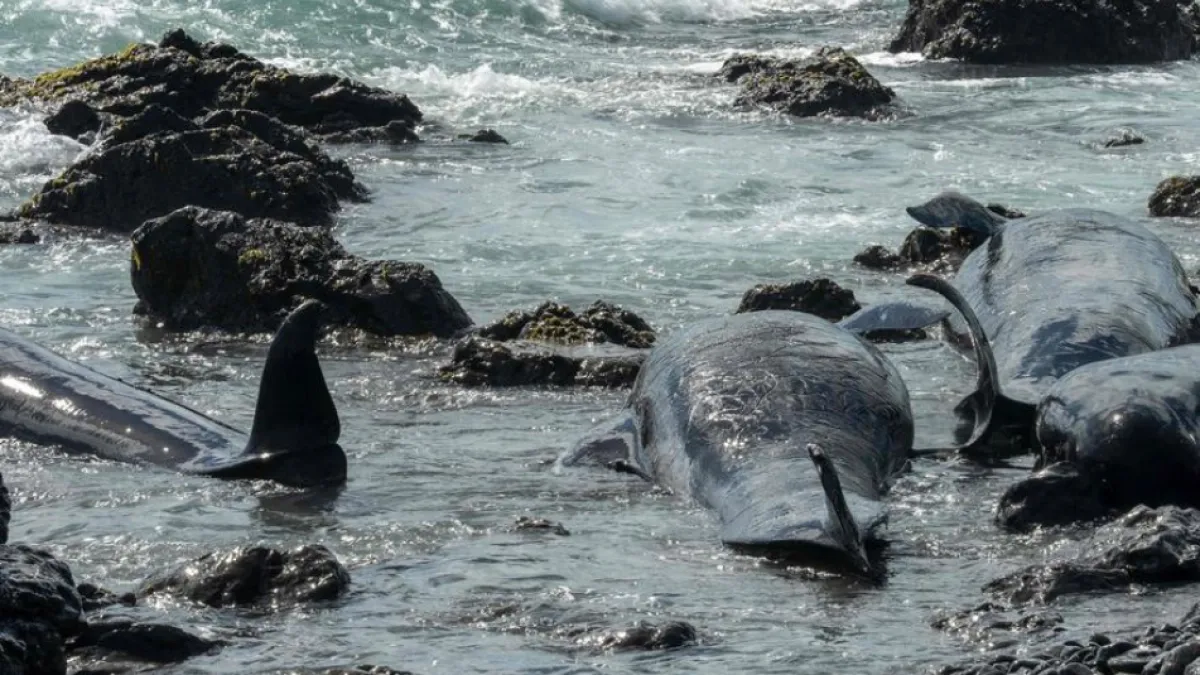
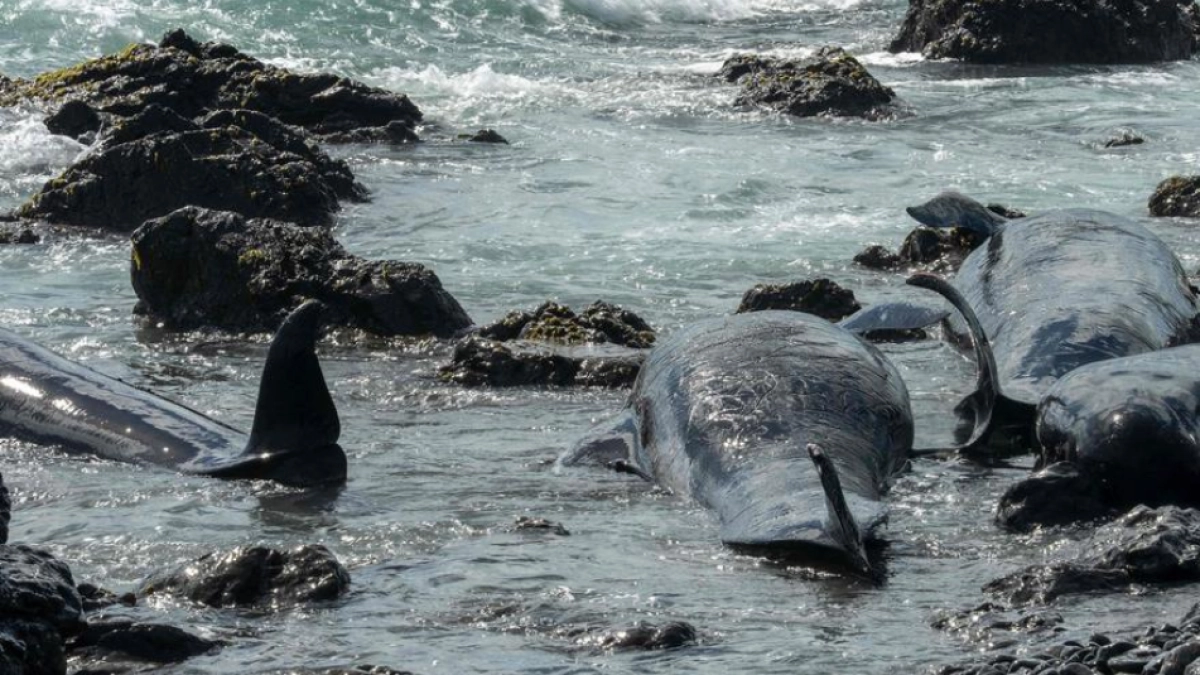
NGAWI, NEW ZEALAND — In a tense and emotionally charged operation, conservation officers, indigenous Māori volunteers, and specialized marine veterinarians are locked in a race against time along the rugged southern coastline of New Zealand’s North Island. Following a devastating mass stranding event near Ngawi, close to Cape Palliser, authorities are mobilizing every available resource to save the last remaining survivors of a pod of long-finned pilot whales (Globicephala melas).
While the tragic loss of several animals has already been confirmed, four resilient members of the pod continue to cling to life. As the tide shifts, a coordinated rescue coalition stands ready on the shores, hoping to guide the vulnerable cetaceans back into the deep waters of the open ocean before it is too late.
Main Facts
The unfolding tragedy centers on a remote stretch of beach near Ngawi, situated just off Cape Palliser—hailed as the southernmost tip of New Zealand’s North Island. The animals caught in this harrowing event are long-finned pilot whales, a species notorious for mass strandings across the shores of Oceania.
According to official updates released by the New Zealand Department of Conservation (DOC), multiple members of the pod perished after becoming hopelessly trapped in the shallow surf and rocky shoreline. While the exact total of fatalities remains unverified as teams focus their immediate energy on live rescues, the confirmation that four whales are still breathing has galvanized a massive community and institutional response.
The primary objective for the joint task force is straightforward yet exceptionally challenging: stabilize the surviving animals, monitor their physiological and psychological stress levels, and execute a coordinated re-floating operation during the peak of the incoming high tide.
Chronology of Events
The Discovery and Initial Response
The crisis began when local residents and early morning beachgoers spotted the dark silhouettes of dozens of massive marine mammals struggling in the surf near Ngawi. The alarm was raised immediately, triggering emergency protocols within New Zealand’s environmental protection networks.
By mid-morning, representatives from the Department of Conservation arrived on the scene, joined rapidly by frontline responders from Project Jonah, a premier New Zealand organization dedicated to the rescue and welfare of stranded marine mammals. Recognizing the sheer scale of the incident, authorities swiftly implemented an integrated command structure to manage the chaotic environment of the beach.
Mobilization of the Community and Specialists
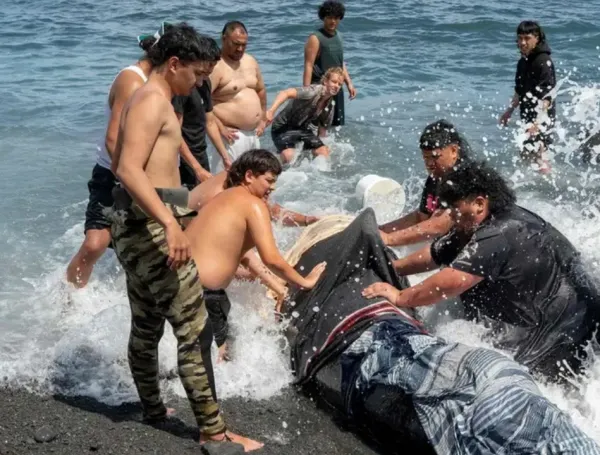
As news of the stranding rippled through the region, scores of local volunteers—predominantly members of the indigenous Māori community—converged on the coastline. Armed with buckets, wet sheets, and water pumps, the community response was immediate and vital. Keeping stranded cetaceans cool, moist, and calm is critical to their survival, as the immense body weight of pilot whales can crush their internal organs when unsupported by water, while direct sun exposure quickly leads to overheating and fatal sunburns.
By afternoon, specialized marine mammal veterinarians mobilized by Project Jonah reached the site. Their immediate task was to triage the four surviving whales, conducting rapid health and stress assessments to determine whether the animals possessed the physical stamina required to endure the grueling re-floating process and the turbulent open ocean beyond the breakers.
The Waiting Game: Preparing for High Tide
With the assessment phase underway, rescue coordinators established a meticulous timeline centered entirely around the marine environment’s natural rhythms. Rescuers, veterinarians, and volunteers have spent hours comforting the surviving whales, shielding them from the elements, and waiting for the critical window: the high tide.
As the water level rises, it lifts the immense weight off the animals’ bodies, restoring blood circulation and granting rescuers the buoyancy necessary to gently maneuver the cetaceans into deeper channels. However, the operation remains fraught with uncertainty, as shifting sands, heavy surf, and the fragile biological state of the whales threaten to complicate the final push into the sea.
Supporting Data and Context
Understanding the Species: Globicephala melas
The long-finned pilot whale (Globicephala melas) is not actually a whale in the biological sense, but rather one of the largest species of oceanic dolphin. Known for their highly sociable and complex social structures, pilot whales typically travel in tight-knit pods numbering from a dozen to several hundred individuals.
This intense social cohesion, which serves them well in the deep ocean, often proves fatal during strandings. Because pilot whales maintain lifelong familial bonds and follow a dominant matriarch, if the leader navigates into shallow waters or becomes disoriented, the rest of the pod will faithfully follow—even if it leads directly onto a lethal beach.
A Geographic Hotspot for Strandings
New Zealand boasts one of the highest rates of marine mammal strandings in the world. Beaches along the country’s extensive coastlines—particularly Farewell Spit at the top of the South Island, Stewart Island, and the rugged capes of the North Island like Cape Palliser—frequently bear witness to these tragic events.
International news agencies, including reports relayed by DW, EFE, and Reuters, have continuously monitored the Ngawi incident, highlighting how common yet baffling these phenomena remain within the Oceanian region. Despite decades of scientific study, the exact mechanisms driving healthy pods of whales onto dry land continue to elude researchers, cementing marine strandings as one of nature’s most persistent and heartbreaking mysteries.
Official Responses
The Department of Conservation (DOC) has served as the primary voice for the rescue operation, keeping the public informed through official statements and social media updates while directing boots-on-the-ground efforts.
In a statement released via their official channels, the DOC confirmed the grim reality of the site while expressing cautious hope for the remaining survivors:
"Several whales have died after becoming trapped on the coast near Ngawi, near Cape Palliser. However, four of them are still alive, and we are preparing to try to return them to the sea during the high tide."
Complementing the government response, non-governmental organizations like Project Jonah have praised the rapid mobilization of the local population. In statements to regional media, Project Jonah coordinators emphasized that the success of any coastal rescue relies heavily on the synergy between trained wildlife experts and willing community members who can provide the relentless physical labor required to comfort distressed marine giants for hours on end.
Furthermore, local Māori tribal authorities (iwi) have been actively involved, offering cultural guidance, performing traditional observances to respect the spirits of the fallen animals, and ensuring that the dignity of both the living survivors and the deceased whales is maintained throughout the rescue operation.
Implications
The mass stranding near Ngawi forces a renewed examination of the complex relationship between human activity, changing environmental conditions, and marine wildlife health. While scientists continue to debate the root causes of these natural tragedies, the implications of such events extend far beyond a single day on a New Zealand beach.
Ecological and Scientific Ramifications
Every stranding event represents a critical data-gathering opportunity for marine biologists and veterinarians. Necropsies performed on the deceased whales will provide invaluable insights into broader oceanic health, including the presence of biotoxins, acoustic trauma from human maritime activities, infectious diseases, and the bioaccumulation of heavy metals or plastics in the marine food web. Understanding these factors is vital for marine conservation strategies on a global scale.
The Mystery of the Shifting Triggers
Despite exhaustive research, science still lacks a definitive answer to why mammals with advanced sonar and navigation systems repeatedly find themselves trapped in shallow coastal zones. While leading hypotheses point toward a combination of factors—such as geomagnetic anomalies, sudden drops in tide, navigational errors by aging or sick pod leaders, military sonar testing, seismic activity, and severe weather patterns—the absence of a single, identifiable trigger makes prevention nearly impossible.
This ongoing uncertainty underscores a sobering reality: until researchers can pinpoint the exact catalysts behind mass strandings, conservation efforts will largely remain reactive rather than preventative.
The Triumph of Community Resilience
As the rescue teams at Cape Palliser push forward into the high tide, the Ngawi incident stands as a powerful testament to human empathy and environmental stewardship. Regardless of whether all four surviving whales successfully navigate back to the open ocean or succumb to the severe physiological stress of their ordeal, the mobilization of Māori volunteers, conservation officers, and veterinary professionals highlights a profound societal commitment to protecting vulnerable marine life.
For now, the eyes of New Zealand and the international conservation community remain fixed on the surging tides of Ngawi, holding out hope that science, community dedication, and nature will align to grant these magnificent creatures a second chance at life in the deep blue.
By Digital Reach Desk Published: October 28, 2026 Main Facts: A Planet Heating Beyond Historical Thresholds In a stark and sobering wake-up call for global climate policy, the World Meteorological Organization (WMO)—a specialized agency of…
Bogotá, Colombia — In the quiet, predawn hours of Tuesday, November 3, 2026, a strong seismic event jolted millions of residents awake across various regions of Colombia. The earthquake, initially reported as a moderate tremor,…
PARIS – France is currently navigating one of its most challenging summers in recorded history. As a series of relentless heatwaves grip the nation, authorities have raised alarms over the compounding effects of extreme temperatures,…