**By Laura Nathalia Quintero
*
Breaking News Desk*
Executive Summary: A Seismic Shift in American Politics
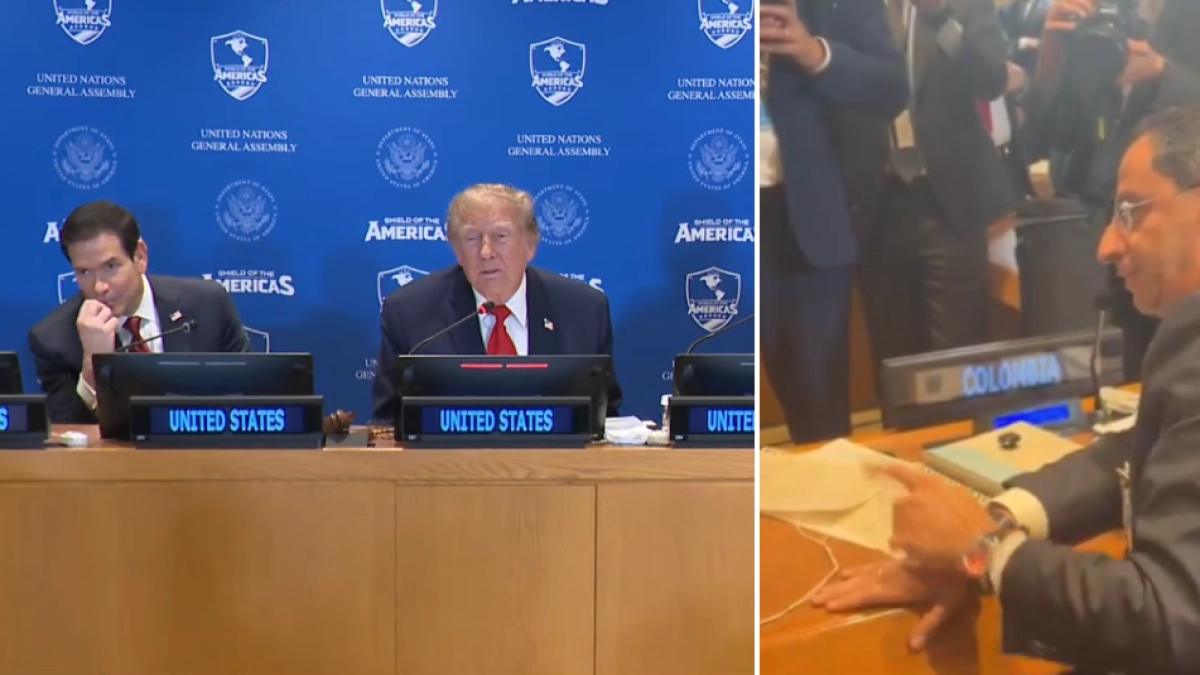
The outcome of the United States midterm elections has delivered a profound political shockwave to the administration of President Donald Trump. In a historic reversal of fortunes, the Democratic Party has seized control of both chambers of Congress, decisively ending two years of unchecked executive authority. According to final projections from major networks including CNN and NBC News, the opposition secured an overwhelming majority in the House of Representatives and a commanding presence in the Senate.
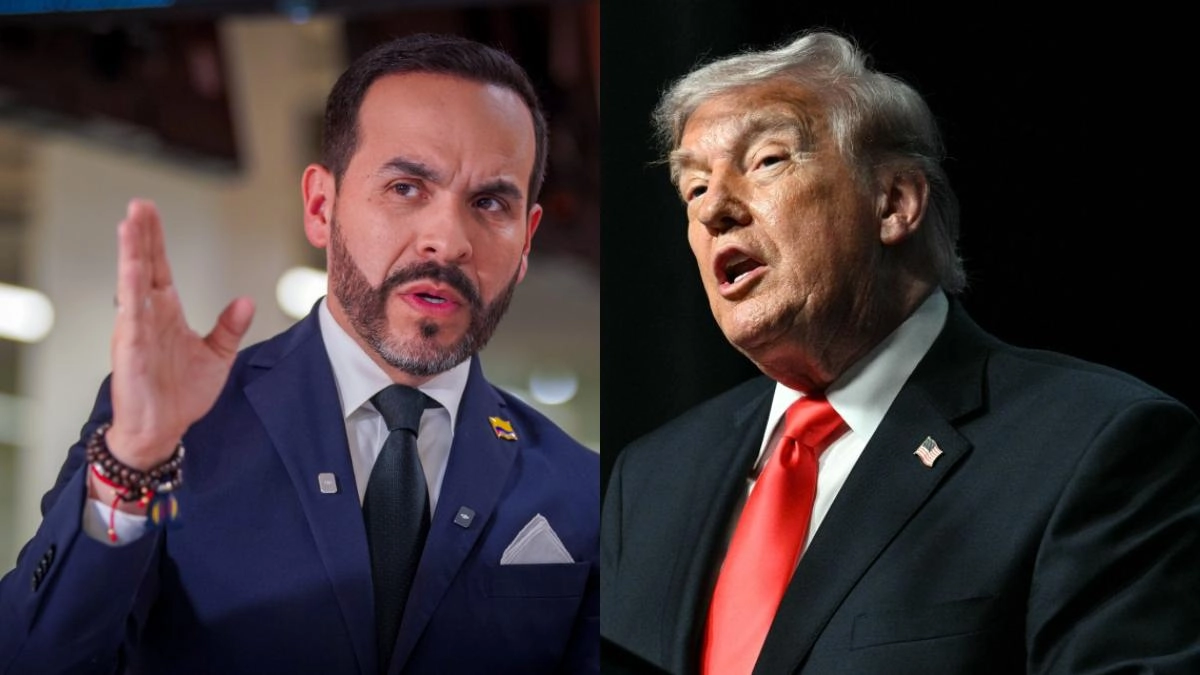
This dramatic shift alters the institutional balance of power in Washington D.C., introducing an era of divided government, intense legislative oversight, and forced bipartisan compromise. For President Trump, the results represent a severe political setback—one that directly constrains his domestic agenda, complicates executive appointments, and introduces new variables into U.S. foreign policy. Beyond America’s borders, this realignment carries significant implications for Latin America, most notably for traditional allies like Colombia, where security cooperation, federal funding, and diplomatic channels now face a newly empowered legislative filter.
Main Facts: The Numbers Behind the Democratic Sweep
The political landscape of Capitol Hill was redrawn overnight as voters expressed widespread dissatisfaction with the current economic trajectory and administrative policies.
In the House of Representatives, NBC News projections showed the Democratic opposition capturing a staggering 258 seats, far surpassing the 218 threshold required for a working majority. The Republican Party was left with a diminished footprint of 177 seats.

In the Senate, the balance of power tilted similarly in favor of the Democrats, who secured 54 seats compared to the Republicans’ 44, even as lingering races in Alaska and Mississippi continued to be tabulated.
Political analysts and risk experts have pointed to multiple catalysts driving this electoral earthquake. Jorge Yarce, an internationalist and political analyst at the Universidad Central, emphasized the decisive role played by economic anxiety and the immigrant electorate. Speaking with Citytv of the Casa Editorial EL TIEMPO, Yarce noted that persistent inflation, hovering near 5.5 percent over the preceding year, heavily penalized the ruling party at the ballot box.
"Definitivamente el voto latino tuvo mucho que ver en estas elecciones," Yarce stated, highlighting how immigrant and Hispanic communities mobilized against strict border enforcement policies and the aggressive tactics of Immigration and Customs Enforcement (ICE). This discontent materialized even in traditionally conservative strongholds like Texas, where Democratic candidates made surprising gains.
Chronology and Context: From Unchecked Power to Divided Government
To understand the weight of the midterms, experts look back at the first half of Trump’s presidential term. Adam Isacson, director for defense oversight at the Washington Office on Latin America (WOLA), appearing on EL TIEMPO’s Primer Plano, pointed out that Trump enjoyed a virtually unobstructed path for the initial two years.
"Dos años realmente sin veeduría alguna sobre las acciones del Ejecutivo… en que Donald Trump ha tenido una carta blanca para hacer lo que quiere en la política exterior," Isacson explained. With the Republican party previously holding both houses of Congress, the executive branch operated with minimal legislative friction.
The midterm elections acted as an immediate referendum on this model of governance. Muni Jensen, a political risk expert who also joined Primer Plano, categorized the vote as a direct national verdict on the administration’s performance.
"Es una encuesta sobre el Gobierno de Trump y yo creo que también empiezan hoy las elecciones del 2028," Jensen remarked, emphasizing that issues ranging from inflation and tariff debates to gas prices and executive overreach drove voters to the polls.
Despite the legislative defeat, constitutional scholars and analysts emphasize that the presidency retains potent structural authorities. Trump remains Commander-in-Chief of the Armed Forces and retains operational control over the Department of Homeland Security and ICE. Because Republicans successfully locked in federal funding for border security and ICE through 2029 prior to losing the congressional majorities, those agencies will continue to operate with guaranteed financial lifelines.
Supporting Data and Institutional Implications
The transformation of Congress means that every major presidential initiative must now clear a Democratic blockade. The confirmation of federal judges, cabinet secretaries, sub-secretaries, and diplomatic ambassadors will be subjected to intense Senate scrutiny.

Furthermore, the executive branch will face stringent reporting requirements, subpoena threats, and budgetary interrogations. Isacson noted that while Trump can still set broad policy strokes, he will face continuous resistance regarding "las asignaciones financieras aprobadas por el Congreso," "las solicitudes de información, las solicitudes de documentos y los requisitos de comparecer ante comisiones."
Faced with these realities, President Trump’s initial reactions were mixed. In an interview with The New York Times, he adopted a pragmatic tone, stating he was "totalmente dispuesto a aceptar esos resultados" and expressing hope that "podremos trabajar con ellos. Probablemente lleguemos a algún acuerdo."
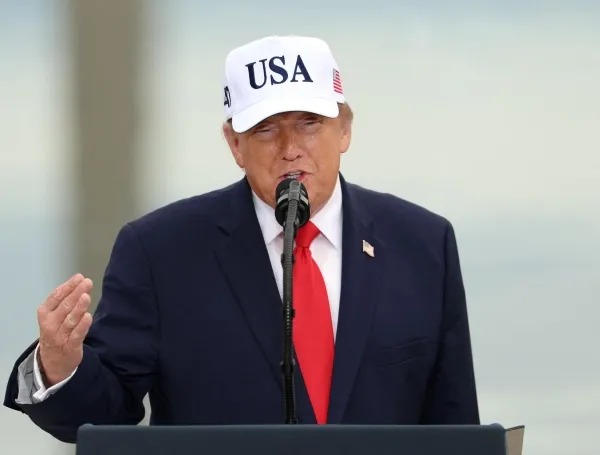
However, channeling his signature rhetoric on Truth Social, Trump simultaneously sought to distance himself from the defeat, claiming that Republicans would have secured a sweeping victory had his name appeared directly on every ballot. He also openly criticized regional figures, including Texas Governor Greg Abbott, for conservative down-ballot losses, punctuating his frustration with an image of his iconic red cap overlaid with the word "veto."
Official Responses and Domestic Reactions
The historic nature of the election also brought milestone personal victories, such as the election of Analilia Mejía, a politician of Colombian descent who secured a seat in the U.S. Congress, signaling the growing political integration and influence of the Latino diaspora.
Prominent political figures across the ideological spectrum weighed in on the results immediately:
- Barack Obama publicly congratulated the Democratic Party, declaring that "the people sent a clear message" regarding the direction of the country and the protection of democratic norms.
- International Reactions: Foreign actors closely monitored the shift. In Europe, the Russian government expressed cautious optimism that the altered political dynamics in Washington might still foster ongoing diplomatic dialogue regarding peace efforts in Ukraine.
- The Executive Branch: The White House has initiated internal strategy sessions to adapt to a gridlocked Washington, recognizing that survival for the remainder of the term relies heavily on finding narrow zones of bipartisan consensus—particularly on infrastructure, trade adjustments, and targeted foreign aid packages.
Implications for Colombia and Latin America
For countries in the Global South, particularly Colombia, the shift in Washington’s power dynamics introduces a complex mix of institutional continuity and strategic recalibration.

Historically, U.S.–Colombian relations have relied on a bipartisan foundation, maintaining stability regardless of which party controlled the White House or Capitol Hill. Jorge Yarce underscored this historical precedent, noting that bilateral support survived multiple ideological shifts in Bogotá through the administrations of Álvaro Uribe, Juan Manuel Santos, and Iván Duque.
However, Yarce noted that relations faced severe friction during the administration of Gustavo Petro, before recovering a more traditional diplomatic equilibrium under the current government of President Abelardo de la Espriella.
The Battle for Federal Funding
The most immediate impact of the Democratic congressional victory will be felt in the allocation of federal funds. Financial packages, foreign aid, and counter-narcotics assistance destined for Colombia must pass through the House of Representatives.
"La aprobación de los fondos federales, esas partidas que está prometiendo el gobierno de los Estados Unidos, pasa obligatoriamente por la Cámara de Representantes," Yarce explained. He expressed cautious optimism that historical institutional ties will override partisan impulses: "Esperaríamos que allí la histórica amistad de Colombia con los Estados Unidos se vea reflejada más que las relaciones partidistas… Compartimos propósitos comunes, como la lucha contra el crimen transnacional."
Shifts in Security Strategies
While broad support for Colombia remains strong within the Democratic Party, the nature of that support is expected to evolve. Adam Isacson pointed out that while many Democrats favor maintaining or even expanding aid to Bogotá, they harbor deep reservations regarding the Trump administration’s heavy-handed security methodologies.
Within the Democratic caucus, there is notable resistance to classifying all regional criminal syndicates strictly as monolithic terrorist organizations to be countered exclusively through military force. Instead, congressional Democrats generally advocate for a comprehensive, multi-institutional state approach that prioritizes human rights, environmental protections, and adherence to international law.

"Prefieren que sea un esfuerzo de todo un Estado, que se respetan las reglas de derechos humanos, la ley internacional y que no debe ser solamente un tema para los militares y los policías," Isacson emphasized. Nevertheless, he cautioned that the Democratic Party still needs to solidify a cohesive Latin American security doctrine, balancing progressive factions that favor diplomatic engagement against moderate wings that support robust military pressure.
Muni Jensen reiterated that maintaining active channels with both American political parties remains an existential diplomatic necessity for Bogotá. "Para Colombia, seguir con esa tarea que siempre ha tenido, que es mantener una relación bipartidista, es algo fundamental," she concluded during her analysis on Primer Plano.
Conclusion
The 2026 midterm elections have fundamentally altered the American political landscape, erecting legislative guardrails around Donald Trump’s presidency and empowering a resurgent Democratic Party. As Washington transitions into an era of fierce legislative negotiation and institutional oversight, the ripple effects will be felt far beyond domestic tax and immigration policies. For traditional allies like Colombia, navigating this new era will require sophisticated diplomacy, a reinvigoration of historic bipartisan ties, and careful adaptation to a shifting security and financial paradigm in the United States Congress.