Introduction: A New Hierarchy in Higher Education
The landscape of global higher education has undergone a significant transformation, as evidenced by the release of the Times Higher Education (THE) World University Rankings 2027. Widely regarded as one of the two most prestigious and influential barometers for academic excellence alongside the QS World University Rankings, the 2027 edition offers a nuanced look at how institutions are navigating a rapidly shifting geopolitical and economic environment.
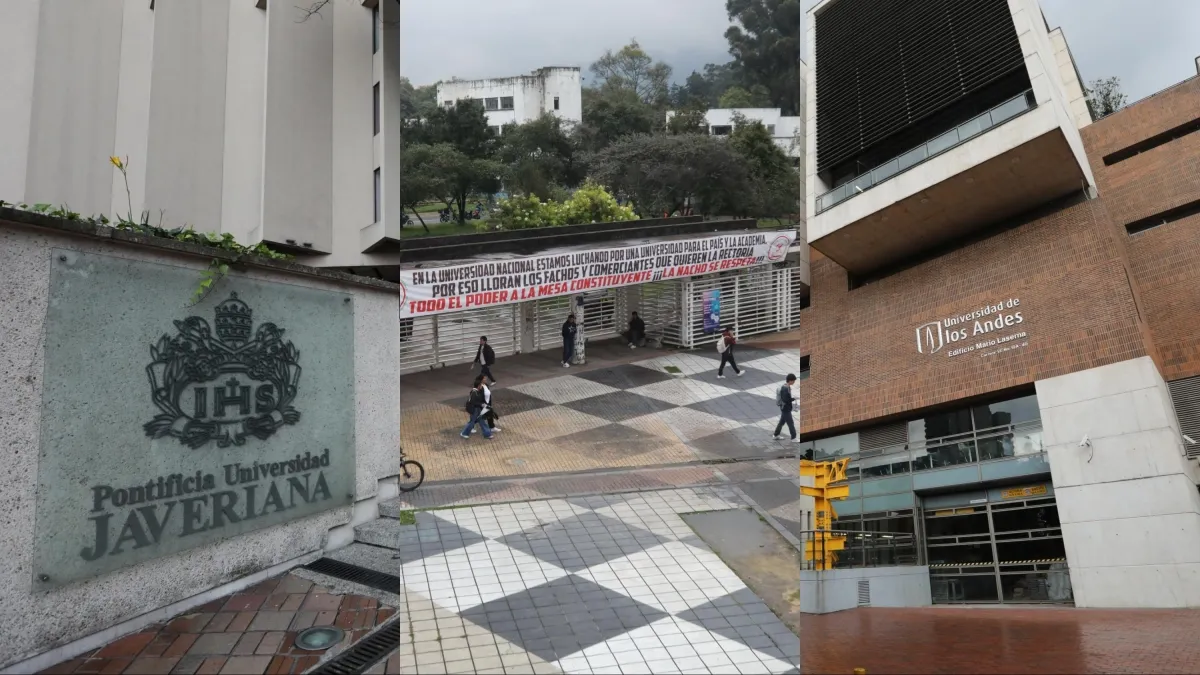
In Colombia, the rankings bring a notable shift in the national hierarchy. The Universidad de los Andes has reclaimed its position as the country’s top institution, securing a place in the 801-1,000 global range. This achievement marks a substantial improvement from the previous year, when the university was positioned in the 1,001-1,200 bracket. By climbing into the top 1,000, Los Andes distinguishes itself as the only Colombian institution to break into this elite global tier, a milestone that underscores its commitment to research output and academic reputation.
The Colombian Landscape: A Chronology of Performance
The movement within the Colombian university sector over the last two years reveals a dynamic, albeit challenging, environment. In the 2026 edition, the national leaderboard was headed by the Universidad de la Costa (Barranquilla), which has now shifted to the second position, currently residing in the 1,001-1,200 range.
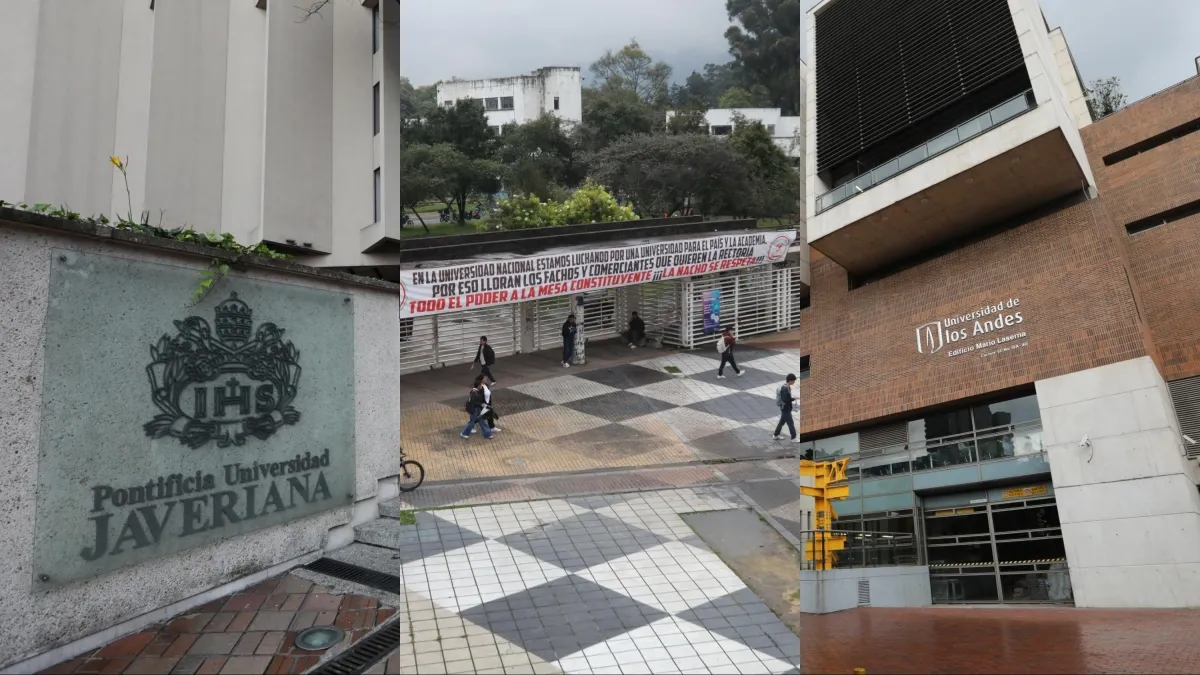
The broader rankings for Colombia display a mix of steady growth and unexpected volatility. Following the top two, four institutions—Universidad Icesi, the University of Cartagena, the University of Antioquia, and the Universidad de la Sabana—now share the 1,401-1,600 bracket. Further down the list, in the 1,601-1,800 range, we find the Universidad del Rosario, the Universidad Nacional de Colombia, and the Universidad del Norte.
The performance of the Universidad Nacional is particularly noteworthy. After languishing in the 1,500+ group last year, the institution has clawed its way up from 11th to 8th place nationally, landing in the 1,601-1,800 range. This represents a tangible, if incremental, recovery for the nation’s largest public university.
Notable Risers and Fallers
The volatility of the 2027 rankings is best illustrated by the significant leaps taken by specific institutions. The University of Cartagena surged from the 15th position to 4th in the national rankings, while La Sabana moved from 22nd to 6th, and the Universidad del Norte climbed from 24th to 9th. Conversely, the list saw some prominent institutions slip: Eafit dropped from 8th to 15th, the Universidad CES descended from 6th to 14th, and the Universidad Antonio Nariño moved from 5th to 10th.

This year also saw a changing of the guard in terms of participation. The Universidad Simón Bolívar and the Universidad del Atlántico made their debut in the list, while the Universidad Distrital Francisco José de Caldas and the Universidad del Cauca fell out of the rankings. Despite these shifts, Colombia maintained a consistent presence with 24 institutions represented, the same number as in 2026.
Understanding the Methodology: Ranges and Comparisons
It is critical for stakeholders to understand that, in global rankings, precise positions are often secondary to broad "bands" once an institution falls outside the top tier. A ranking of 1,001-1,200 signifies that the institution falls within that specific segment of the world’s best.
Furthermore, the 2027 edition introduced a broader scale—expanding the lowest group from 1,500+ to 2,000+—which makes year-over-year comparisons inherently complex. While the rankings do not always provide exact ordinal data, they serve as an essential diagnostic tool for identifying trends in research, teaching, and international outlook within the national academic ecosystem.

Global Titans: Oxford’s Record and the Rise of Asia
On the global stage, the University of Oxford continues its historic dominance, claiming the top spot for the eleventh consecutive year. However, this year’s victory was razor-thin; the gap between Oxford and the Massachusetts Institute of Technology (MIT), which secured second place, was a mere 0.1 points.
Oxford’s sustained success is attributed to its unparalleled productivity in research, robust international co-authorship, and a high proportion of PhD candidates among its staff. MIT, meanwhile, excelled in metrics regarding the student-to-faculty ratio, the impact of its citations, and the overall strength of its research output.
The Asian Ascendance
The most profound narrative in the 2027 rankings is the rapid ascent of Asian institutions. Tsinghua University (China) has surpassed ETH Zürich (Switzerland) to secure 11th place, marking the first time an Asian institution has outperformed the best in continental Europe. Tsinghua’s climb is fueled by an influx of international faculty and students, though it continues to work toward improving international co-authorship metrics.

The trend is further solidified by Peking University (13th) and the National University of Singapore (15th). This shift signals a major transition in the geography of knowledge, where the historic dominance of North American and European universities is being increasingly contested by well-funded, ambitious institutions in the East.
The Crisis of the West: Diminishing Returns and Financial Pressure
While the United Kingdom and the United States continue to occupy the majority of the top 20 spots, the data reveals a worrying trend of "stagnation through reputation." While their brand power remains strong, most other indicators—including research quality and institutional funding—are showing signs of decline.
The United Kingdom, in particular, is grappling with a funding crisis. With 25 institutions in the top 200 (a decrease of one from the previous year), the sector is under extreme duress. Professor Ming Chen of Sheffield Hallam University noted that the "business model" of modern higher education in the UK has reached a breaking point. The reliance on international student fees and the failure to secure adequate public funding have forced universities to cut programs, reduce research scope, and undertake significant staff restructuring.

Similarly, the United States, which holds seven of the top ten spots, has seen a general decline in metrics related to research strength and international student enrollment. While institutions like the University of California, San Diego, have managed to move up the ranks, the broader trend shows that 46 percent of US institutions in the top 200 experienced a decline in their standing.
Implications: The "Iron Law" of Higher Education
The divergent paths of the Western and Eastern university systems highlight what analysts call the "Iron Law" of higher education: stellar performance in research is only sustainable with consistent, robust, and often public, financial support.
For countries like Colombia, these findings offer a dual lesson. First, the success of institutions like Los Andes, which has managed to break into the top 1,000, demonstrates that local efforts to internationalize research and faculty can yield results. Second, the global trend suggests that without a sustained national strategy for funding research, even the most prestigious institutions can find themselves at a disadvantage as global competition intensifies.

As we look toward the 2028 cycle, the focus for Colombian universities will likely shift from mere participation to the strengthening of specific pillars: increasing the impact of scientific citations, fostering deeper international collaborations, and ensuring that the financial models supporting these institutions are resilient enough to weather the global shifts in education economics.
The 2027 THE World University Rankings do more than just list the "best" schools; they provide a mirror for the global academic community. For Colombia, it is a moment to celebrate progress while recognizing the systemic challenges that lie ahead in an increasingly interconnected and competitive global knowledge economy.