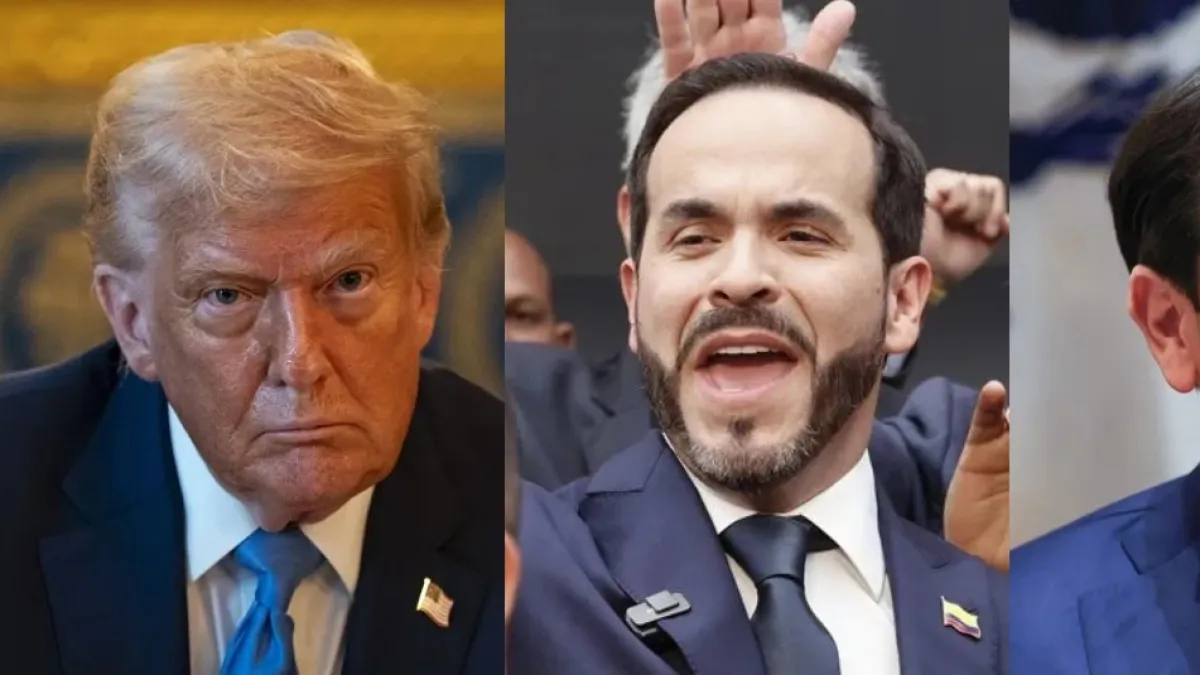
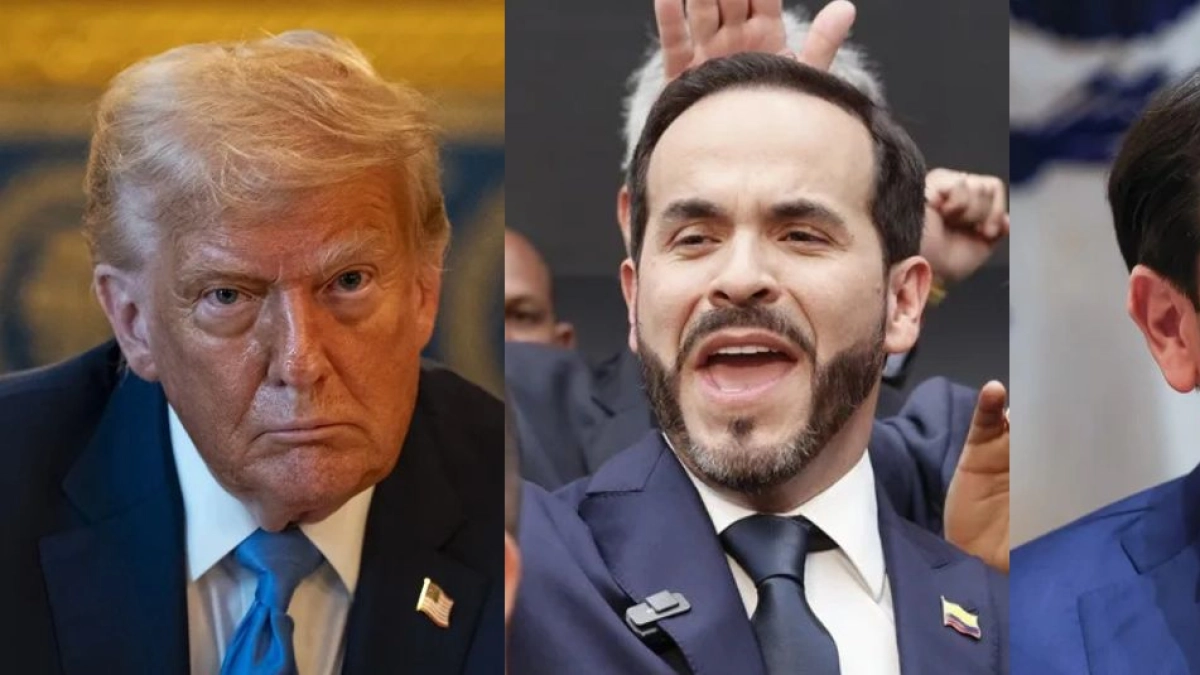
WASHINGTON — In a clear manifestation of shifting geopolitical priorities under the administration of U.S. President Donald Trump, the Department of State has formally notified Congress of its intent to reprogram $52 million in foreign military assistance. These funds, originally allocated to bolster defense partnerships in Europe, Africa, and the Middle East, will now be redirected to strengthen security cooperation with key South and Central American partners: Colombia, Ecuador, Peru, and Panama.
The decision underscores a broader strategic pivot by Washington away from traditional theaters of engagement, long dominated by Middle Eastern commitments, toward its own hemisphere. Amid mounting concerns over transnational criminal networks, narco-terrorism, and the expanding economic and physical footprint of global adversaries like China in Latin America, the Trump administration is moving rapidly to recalibrate its foreign assistance architecture.
Main Facts
The core of the recent announcement centers on the reallocation of funds originating from the Foreign Military Financing (FMF) program—a U.S. government initiative that provides grants and loans to partner nations to facilitate the acquisition of U.S.-manufactured military equipment, services, and training.
The Recalibration: The $52 million in question was initially earmarked for Slovakia, North Macedonia, Tunisia, and Iraq. While the Department of State has emphasized that this move does not constitute a complete termination of FMF support for those countries, exact remaining balances for each have not been publicly detailed.
The Beneficiaries: The funds will be distributed among Colombia, Ecuador, Peru, and Panama. Although precise country-by-country breakdowns have not yet been disclosed by the administration, the infusion comes at a crucial juncture for governments in the region grappling with surging domestic and regional security challenges.
Stated Objectives: According to official communications from the Department of State, the repurposed capital is explicitly intended to combat "narco-terrorism" within the hemisphere and safeguard vital regional infrastructure, most notably the Panama Canal.
Strategic Counterweights: Acknowledging the geopolitical underpinnings of the decision, the Department of State noted that the funds will serve to "prevent adversaries from establishing strategic positions in our hemisphere"—a thinly veiled reference to China’s growing commercial and diplomatic penetration across Latin America.
Chronology of Events
The reallocation of these funds does not occur in a vacuum; it is the latest milestone in an accelerated diplomatic and security dialogue between Washington and key Andean and Central American leaders.
August 2026: The Trump administration signals a massive escalation in regional commitment by announcing its intention to mobilize a historic security assistance package of up to $1 billion for Colombia, dwarfing traditional baselines of military aid.
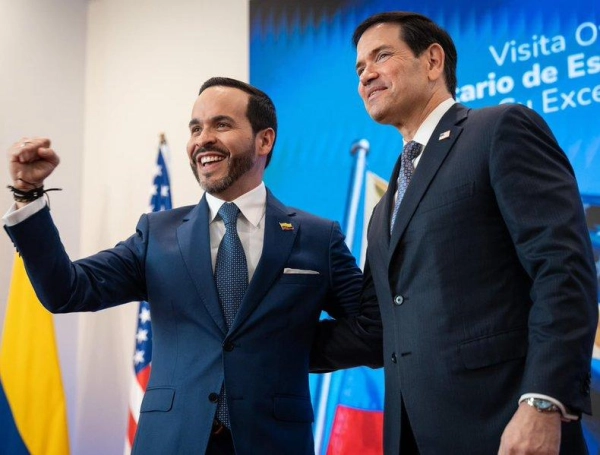
September 9, 2026: U.S. Secretary of State Marco Rubio travels to Barranquilla, Colombia, holding high-level bilateral meetings with Colombian President Abelardo de la Espriella. During the visit, Rubio faces pointed questions from the press regarding the legislative mechanics and source of the promised $1 billion package, assuring reporters that existing budgetary lines can and will be leveraged.
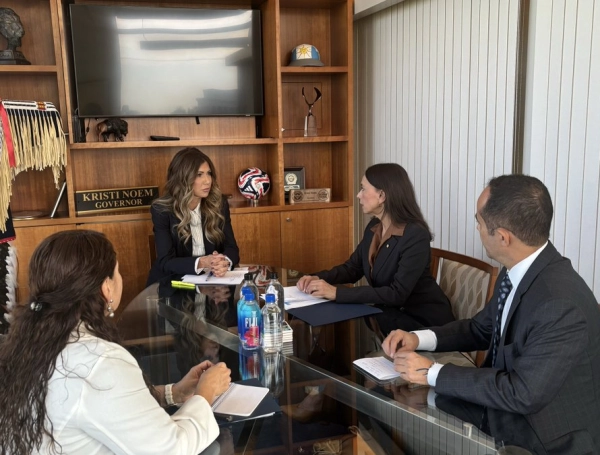
September 11, 2026: Concurrently, high-level regional integration continues as Colombian Ambassador to the United States María Consuelo Araújo represents her nation in strategic talks convened by Kristi Noem, Trump’s special envoy for the newly minted "Shield of the Americas" initiative.
September 15, 2026: The Department of State formally serves notice to the U.S. Congress regarding the reprogramming of the $52 million from Slovakia, North Macedonia, Tunisia, and Iraq to Colombia, Ecuador, Peru, and Panama. This notification arrives on the heels of renewed U.S. scrutiny regarding counter-narcotics compliance and bilateral cooperation frameworks in the region.
Supporting Data and Historical Context
To fully understand the gravity of the State Department’s latest maneuver, one must examine the historical distribution of U.S. foreign military aid. For the past decade, approximately 80 percent of all FMF funds globally were funneled into the Middle East, cementing Washington’s post-9/11 security focus.
Latin America and the Caribbean, by contrast, frequently competed for residual security assistance or smaller-scale cooperative grants tailored to specific humanitarian or anti-narcotics benchmarks. The decision to pull resources away from NATO allies like Slovakia and North Macedonia, as well as longstanding North African and Middle Eastern security partners like Tunisia and Iraq, reflects a ruthless prioritization by the current White House.
Furthermore, the injected $52 million operates alongside the broader, ongoing discussions concerning the $1 billion security package floated in August. While administration officials have clarified that this $52 million batch may or may not constitute a direct tranche of the larger billion-dollar initiative, it nonetheless provides an immediate down payment on the sweeping "Plan Patriota Siglo XXI" presented by President de la Espriella’s administration.
Official Responses and Strategic Priorities
During his visit to Colombia’s Caribbean coast, Secretary Rubio addressed the operational reality of funding modern security needs without stalling legislative bottlenecks. He explained that Washington possesses various pre-approved foreign assistance accounts that, subject to congressional notification and statutory guidelines, can be dynamically shifted to match emerging threats.
"For example, there are already funds in our annual budget for security in Colombia. Those funds are already there. What we are discussing now is how those funds will be allocated and what specific needs they will address," Rubio stated during his press briefing in Barranquilla.
For President de la Espriella’s government, the timing could not be more critical. Presenting the "Plan Patriota Siglo XXI," Bogotá has laid out an ambitious, extensive wishlist for military modernization. The plan outlines urgent requirements across multiple operational domains:
The technological upgrade of tactical aircraft and early-warning radar networks.
The large-scale acquisition of advanced unmanned aerial systems (drones) and specialized counter-drone defense systems.
The refurbishment and expansion of rotary-wing fleets (helicopters) vital for mobility in rugged terrain.
The enhancement of national air defense systems, tactical ground mobility, operational intelligence-gathering capabilities, and military cyber-defense architectures.
Sustained logistical and financial lifelines to guarantee baseline maintenance and equipment operational readiness.
While the exact proportion allocated to Colombia from the newly freed $52 million remains under wraps, the maneuver offers tangible evidence that Washington is willing to cannibalize existing global commitments to resource its southern neighbors.
Geopolitical Implications
The decision carries profound implications both for the recipient nations and for the traditional partners experiencing budgetary drawdowns.
The Transnational Security Matrix: By tying military financing directly to the containment of narco-terrorism and the protection of strategic chokepoints like the Panama Canal, the United States is signaling that border security and regional stability in the Americas are now viewed through the lens of core U.S. national security.
The Great Power Competition: For years, security analysts have warned that Beijing’s economic statecraft, infrastructure investments, and dual-use space facilities in Latin America pose a strategic challenge to Washington. By redirecting military resources to the region, the Trump administration is attempting to solidify security architectures that discourage Latin American states from integrating too closely with Chinese military or technological supply chains.
Friction with Traditional Allies: Trimming resources from European NATO members—even smaller ones like Slovakia and North Macedonia—alongside vital partners in North Africa and the Middle East (Tunisia and Iraq), could trigger quiet diplomatic friction. European capitals currently navigating their own security anxieties on the continent’s eastern flank may view the reallocation as an unwelcome symptom of American inward-looking or purely hemispheric retrenchment.
As implementation moves forward, all eyes will be on Capitol Hill to monitor whether congressional committees raise procedural objections to the fund transfers, and on Bogotá, Quito, Lima, and Panama City to see how these newly secured assets are deployed on the ground in the ongoing battle against transnational crime.
By María Paula Lozano Digital Reach Newsroom Published: September 21, 2026 – 3:07 PM Updated: September 21, 2026 – 5:22 PM Main Facts A violent meteorological system swept across the central region of Argentina on…
New York, NY – July 18, 2026 – In a move that could ignite an unprecedented diplomatic crisis, New York City Mayor Zohran Mamdani has confirmed that his administration is actively exploring the legal authority…
Biddeford, Maine – Five days after Colombian national Joan Sebastián Durán Guerrero, 26, was fatally shot by an agent of U.S. Immigration and Customs Enforcement (ICE) in Biddeford, Maine, the incident remains shrouded in controversy…