By Global Technology & Automotive Desk
Published: October 23, 2026
Main Facts
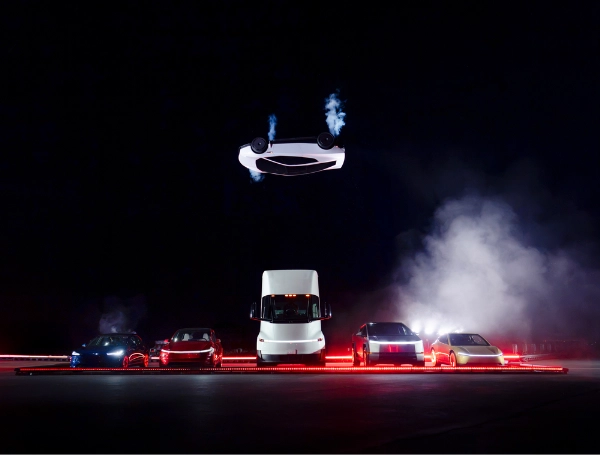
Elon Musk once again captivated the global imagination, though perhaps not in the way thousands of eager reservation-holders originally anticipated. During a high-stakes, highly theatrical presentation at the SpaceX Rocket Test and Development Center in McGregor, Texas, the tech billionaire showcased what was billed as the long-awaited Tesla Roadster.
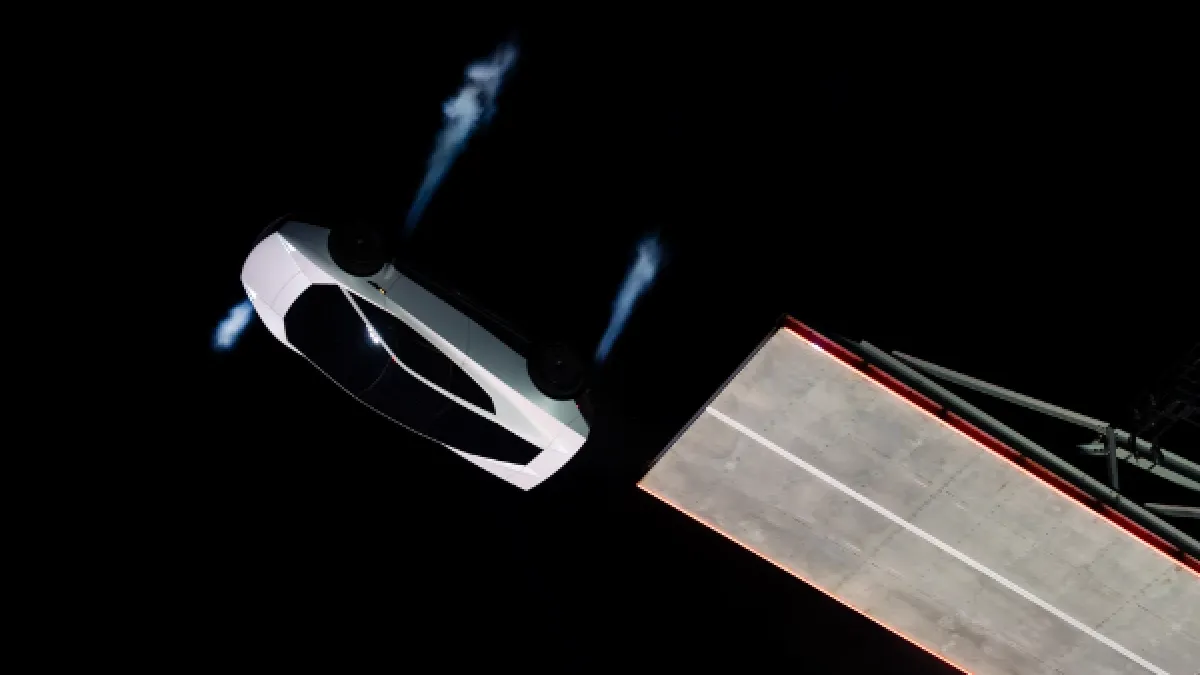
Yet, the event proved to be far more than a standard vehicle introduction. Instead of revealing a conventional commercial convertible, Musk delivered a stunning technological cross-pollination between Tesla’s automotive engineering and SpaceX’s aerospace propulsion systems.
The vehicle deployed from a custom launch platform with a theatrical flair reminiscent of a toy commercial, instantly dominating global headlines. However, automotive experts and physicists quickly pointed out that the machine—while an engineering marvel—dista significantly from a practical, street-legal automobile or a traditional flying car. Powered by cold-gas thrusters and cutting-edge computerized systems, the new Roadster blurs the definitive line between science fiction and reality, forcing the automotive industry to reconsider the absolute boundaries of vehicle dynamics.
Chronology: The Evolution of an Impossible Promise
The journey toward the 2026 Roadster unveiling has been marked by repeated delays, escalating expectations, and persistent skepticism from the traditional automotive sector:
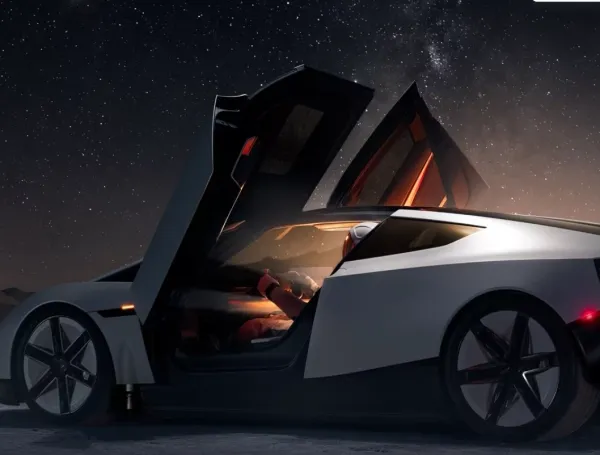
- Late 2017: Elon Musk first surprises the world by unveiling the next-generation Tesla Roadster prototype, claiming it will be the fastest production car in the world, with mind-bending acceleration and a 620-mile range. Thousands of customers place hefty financial deposits to secure a reservation.
- 2018–2023: The launch date is pushed back multiple times. Musk hints at a "SpaceX package," casually suggesting on social media that the sports car might actually incorporate rocket thrusters and even feature short hops.
- 2024–2025: Amid fierce competition from a rapidly expanding global electric vehicle market—particularly aggressive manufacturing surges from Chinese automakers—Tesla keeps core details of the Roadster under tight wraps, intensifying public curiosity.
- October 23, 2026: The official unveiling takes place at the SpaceX facility in McGregor, Texas. Musk abandons conventional car-show formats, utilizing compressed-air technology and live physics demonstrations to prove that the machine can break conventional aerodynamic limits.
Supporting Data & Technological Breakdown
The engineering behind the new Tesla Roadster relies on a fusion of terrestrial automotive design and aerospace rocketry. Far from relying on traditional wings, rotors, or propellers, the vehicle utilizes extreme physics to manipulate air pressure, gravity, and momentum.
1. Propulsion and Performance Metrics
- Acceleration: Musk estimates that the vehicle can rocket from 0 to 100 km/h in a staggering fraction of a second—practically launching off the line—and reach top speeds exceeding 340 km/h.
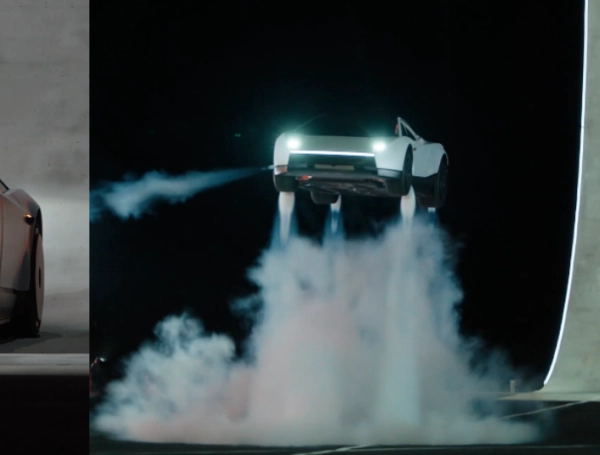
- The Cold-Gas Thruster System: Powering these maneuvers is a cryogenic tank holding approximately 600 liters of cold gas compressed at ultra-high pressures. Directed through specialized nozzles via by-wire computerized commands, this gas can propel the car linearly, elevate it vertically, or rotate it on its axis.
- Aerodynamic Suction: During track demonstrations, the vehicle utilizes multi-mode suction systems to channel high-speed air underneath the chassis. By reducing air pressure beneath the car, gravity and suction press the vehicle aggressively against the tarmac, allowing it to corner at speeds that would cause traditional tires to fail or lift.
2. The Three Planned Production Versions
Tesla intends to roll out the Roadster in three distinct configurations to cater to different markets:
- Performance: A two-seat daily driver featuring active aerodynamics and a multi-mode suction system for top-tier street and track handling.
- Thrust (Limited Edition): Equipped with the rear cold-gas thrusters necessary to achieve sub-one-second 0–100 km/h acceleration. Intended strictly for controlled environments.
- Rocket (Invitation-Only): A single-seat variant designed for extreme aerial and rotational acrobatics, combining perimeter cold-gas thrusters with advanced multi-mode suction.
Official Responses and Expert Analysis
The industry reaction has been a mixture of awe and profound skepticism. José Clopatofsky, Director of Motor magazine, offered a sobering technical assessment following the live demonstrations:
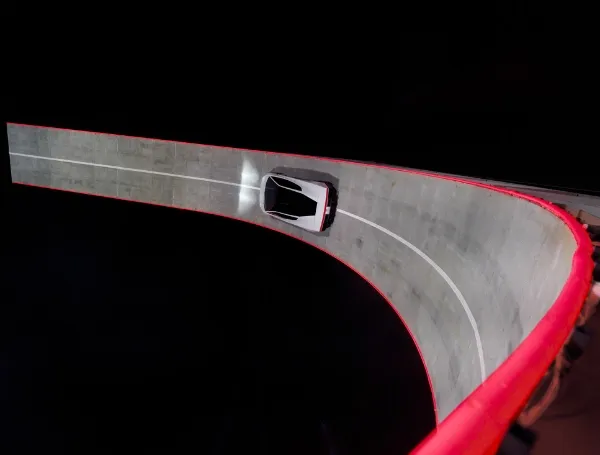
"Vista la capacidad y cantidad de gas propulsor, es altamente improbable que logre distancias en vuelo horizontal, y lo haría como una bala saliendo de un cañón, siempre en declive progresivo. En la configuración vista, no es un auto volador que vaya de un punto a otro."
(Translation: "Given the capacity and quantity of propellant gas, it is highly improbable that it will achieve distances in horizontal flight; it would do so like a bullet leaving a cannon, always in progressive decline. In the configuration seen, it is not a flying car that goes from point A to point B.")
Automotive engineers have also raised serious questions regarding the vehicle’s everyday practicality. While the standard Performance model functions primarily as an electric sports car, integrating heavy cryogenic tanks, high-pressure compressors, and specialized plumbing onto a consumer vehicle introduces immense weight penalties. Critics note that powering these pneumatic systems independently will severely drain the vehicle’s battery autonomy during daily driving.
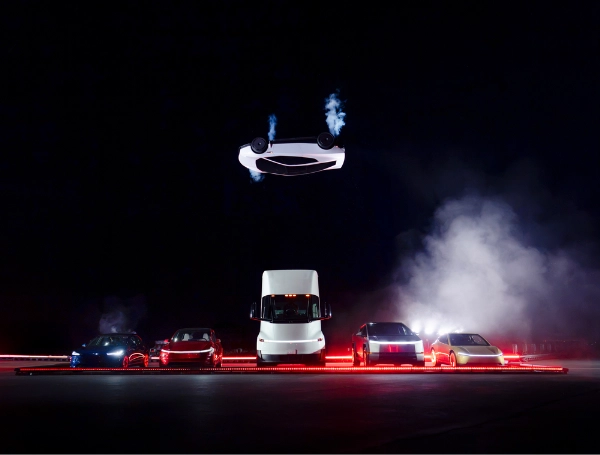
Furthermore, safety regulators have yet to comment on how a vehicle utilizing high-pressure gas thrusters could ever be certified for public roadways, where accidental discharges or system malfunctions could spell disaster in dense traffic.
Implications for the Future of Mobility
The unveiling of the Tesla-SpaceX hybrid Roadster carries profound implications for both the automotive and aerospace industries:
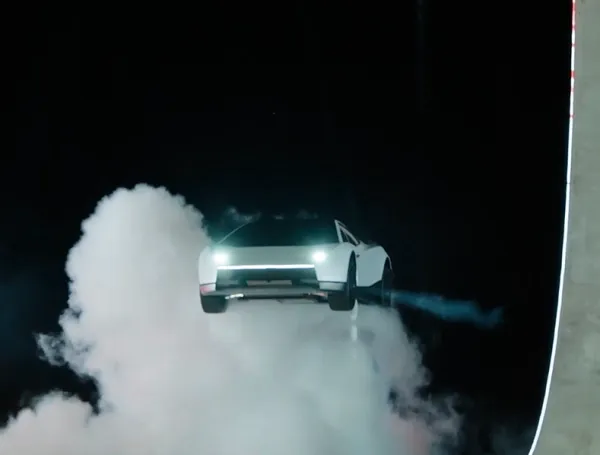
- Redefining Performance Boundaries: Even if the "flying" capabilities remain restricted to controlled environments, the integration of aerospace thrusters into automotive design forces engineers to rethink acceleration, downforce, and vehicle stabilization. It proves that electric vehicles can transcend traditional mechanical limitations through software-driven physics.
- Marketing as Spectacle: In an era where legacy and new-wave automakers launch hundreds of similar electric vehicles annually, Musk’s presentation successfully shifted the narrative away from market saturation and back into the realm of pure aspiration. It functioned as an effective global marketing masterclass that dominated global attention.
- The Gap Between Vision and Reality: The event highlights the growing chasm between consumer expectations and engineering feasibility. While reservation-holders thought they were purchasing a practical flying convertible, they were instead introduced to a high-performance science project. Whether this technology will eventually trickle down into viable consumer products remains one of the most intriguing questions in modern technology.
As Elon Musk continues to merge the worlds of science and science fiction, the Roadster stands as a testament to human ambition—reminding the world that while flying cars may still be a distant dream on congested public roads, the boundaries of what is possible on four wheels have officially been rewritten.