By Digital Outreach Desk
Published: October 26, 2026
Main Facts
In a landmark genetic study published in the prestigious scientific journal Science, researchers have uncovered undeniable biological links connecting the modern and ancient populations of Rapa Nui (Easter Island) with the indigenous people of Hawaiʻi. Spanning an astonishing oceanic expanse of more than 7,100 kilometers (approx. 4,400 miles) across the vast Pacific, this trans-oceanic voyage challenges conventional timelines and geographical boundaries of ancient human movement.
The investigation, driven by advanced computational DNA analysis, indicates that a population originating from Rapa Nui actively participated in the peopling of the Hawaiian archipelago during the 13th century. Rather than viewing the Pacific islands as isolated landmasses separated by insurmountable expanses of water, the findings frame the ocean as a historic superhighway navigated by sophisticated Polynesian seafarers.
The study examined the genomes of over 1,000 individuals across the Pacific, centering heavily on 317 native Hawaiians, 12 residents of Rapa Nui, and eight individuals from Mangareva in French Polynesia. By running rigorous algorithms designed to trace shared DNA segments and reconstruct complex genealogical trees, the international team of researchers discovered that in roughly 61 percent of the modeled genetic lineages, a direct connection bridged Rapa Nui and Hawaiian populations.

Furthermore, the study sheds light on the settlement of Tahiti—estimating its founding population at approximately 800 people around the year 1070—while simultaneously offering crucial medical insights into the genetic health risks, such as hereditary kidney conditions and vision loss, tied to the "founder effect" across isolated island communities.
Chronology of Discovery and Migration
To understand the magnitude of this migration, scientists must look backward through centuries of maritime history and modern genetic sequencing.

1. The Ancient Timeline (c. 1070 – 13th Century)
- Circa 1070 A.D.: Genetic modeling places the founding population of Tahiti at roughly 800 individuals, marking a major milestone in the eastward and northward expansion of Polynesian explorers.
- The 13th Century: Ancestors of the Rapa Nui people, originally hailing from Mangareva, embark on subsequent daring expeditions. A cohort connected to the Rapa Nui population undertakes a massive open-ocean voyage, ultimately reaching the Hawaiian archipelago and contributing significantly to its early gene pool.
2. The Modern Scientific Breakthrough (Recent Years)
- Genome Sequencing Initiatives: Geneticists and computational biologists collect DNA samples from over 1,000 participants spanning multiple archipelagoes, including the Society Islands, Tuamotu, Marquesas, Australes, Samoa, Tonga, Mangareva, Rapa Nui, and Hawaiʻi.
- October 2026: The findings are officially published in Science, sending shockwaves through the anthropological and archaeological communities by proving a direct genetic kinship between Easter Island and the Hawaiian Islands.
Supporting Data and Methodology
The credibility of this historical revision rests upon meticulous genetic sampling and state-of-the-art computational algorithms. Due to the surprising nature of the findings, the research team—including prominent geneticists from Stanford University and the University of California, San Diego—subjected their data to four independent verification procedures to rule out statistical anomalies.
The Sample Breakdown
The study analyzed genetic material from more than 1,000 Pacific Islanders, which notably included:
- 317 Native Hawaiians
- 12 Residents of Rapa Nui (Easter Island)
- 8 Residents of Mangareva (French Polynesia)
- Additional cohorts from the Society Islands, Tuamotu, Marquesas, Australes, Samoa, and Tonga.
Computational Genealogy
Alexander Ioannidis, a computational geneticist at Stanford University and co-author of the study, explained that specialized algorithms allow scientists to identify microscopic segments of DNA shared identically by individuals living on distinct, widely separated islands. By mapping these shared segments, the research team could effectively reconstruct multi-centennial family trees and pinpoint common ancestors across thousands of miles of open ocean.
The analysis revealed a striking hierarchical structure of ancestry: Mangareva serves as the foundational source for Rapa Nui’s lineage, while Rapa Nui—alongside Mangareva—acts as a critical genetic contributor to the native Hawaiian gene pool.

Official Responses and Expert Insights
The study’s authors have emphasized both the technical rigor of their methodology and the profound cultural implications of their findings.
Dr. Keolu Fox, a genome scientist at the University of California, San Diego, and co-author of the research, addressed the skepticism initially faced by the team. Because the genetic bridge between Rapa Nui and Hawaiʻi spanned such an immense geographic distance, the researchers initially doubted their own outputs.
"We had to run our results through four completely different analytical pipelines because the findings were so unexpected," noted Dr. Fox during discussions surrounding the publication. "The data, however, repeatedly pointed to the exact same conclusion: these populations were intimately connected long before modern contact."
Alexander Ioannidis elaborated on the nature of the voyages, introducing cultural framing to the scientific data. The research team adopted the Hawaiian term Holomoana Nui—signifying "great ocean navigation"—to honor the legacy of the intrepid explorers who orchestrated these monumental journeys.

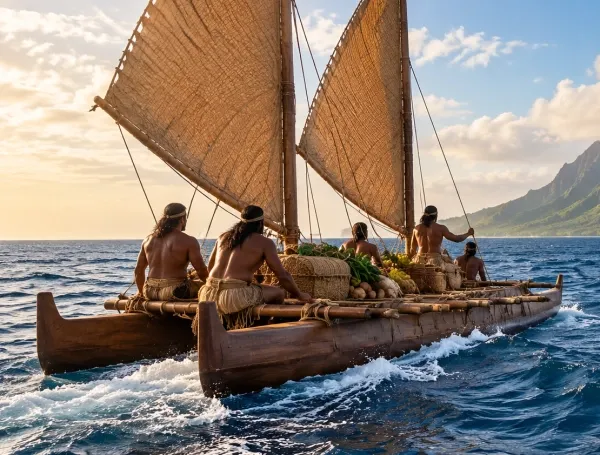
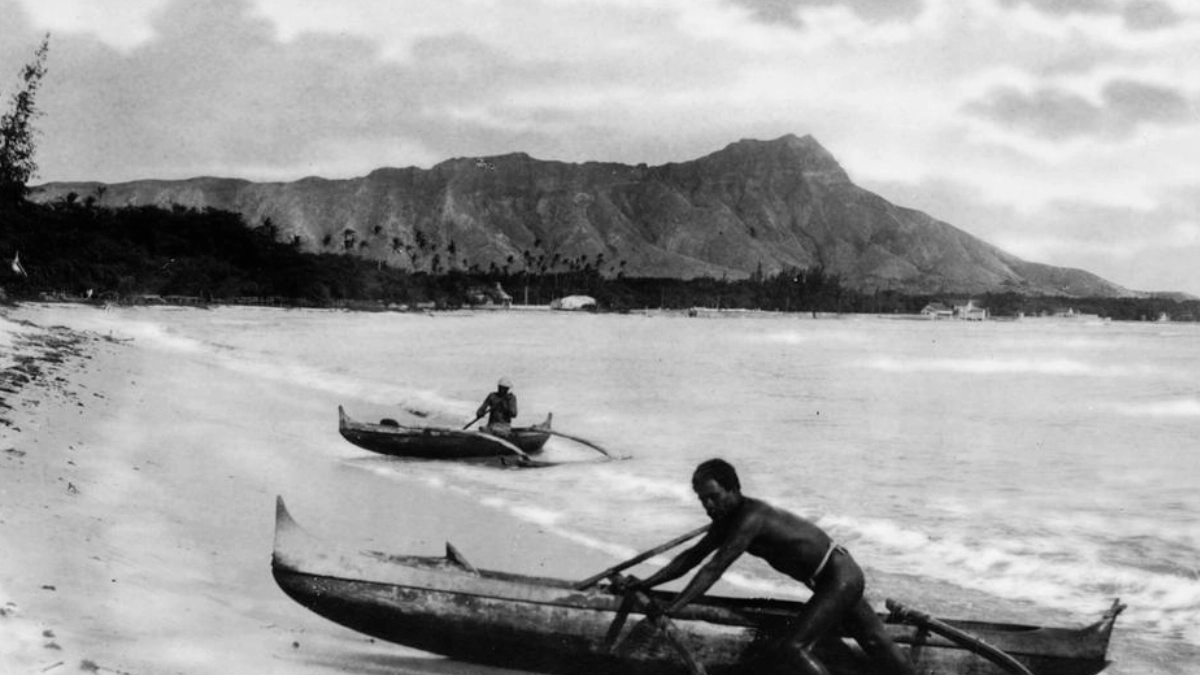
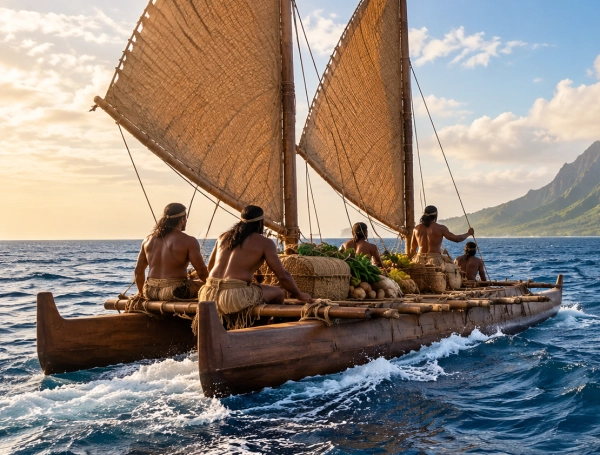
Furthermore, experts highlighted the sophisticated technology of the time. The ancient Polynesians did not drift aimlessly; they engineered double-hulled canoes capable of withstanding weeks or months at sea. These vessels were floating ecosystems equipped to transport not only human crews but vital provisions, building materials, and indigenous flora and fauna necessary to cultivate new societies from scratch.
Implications of the Study
The publication in Science reverberates far beyond academic history, touching upon anthropology, indigenous heritage, and modern medical science.

1. Rewriting Pacific Maritime History
For decades, traditional archaeological models debated the exact vectors and timings of Polynesian expansion. The notion that a small, highly specialized group of mariners could—or would—traverse more than 7,100 kilometers of open Pacific water to link Easter Island with Hawaiʻi was often met with intense debate. This genetic evidence silences much of that skepticism, proving that the Pacific Ocean served as a bridge rather than a barrier for these master navigators.
2. The Mechanics of Ancient Settlement
The study highlights the deliberate nature of these migrations. According to Ioannidis and his colleagues, these voyagers traveled with purpose, carrying foundational crops and livestock—including taro, sweet potatoes (camote), bananas, and domesticated chickens—to ensure the survival of their settlements in new territories. The initial migrating groups were often remarkably small, mirroring the tight demographic bottlenecks seen in Tahiti (where a founding population of roughly 800 established roots around 1070 A.D.) and likely even smaller for the grueling trek to Hawaiʻi.

3. Medical Genetics and the "Founder Effect"
Beyond tracing ancient lineages, the research uncovered critical medical implications tied to the founder effect. When a tiny group of individuals successfully colonizes an isolated island, the resulting gene pool experiences a sharp reduction in overall genetic diversity. Consequently, rare hereditary traits and disease-associated genetic variants can become heavily amplified over generations.
Dr. Fox pointed out that the team identified specific genetic variants linked to severe health conditions, such as hereditary kidney diseases and accelerated vision loss, which appear at unusually high frequencies in certain French Polynesian populations. By mapping these ancestral ties, modern geneticists can better understand the etiology of these conditions, potentially paving the way for targeted healthcare interventions tailored to indigenous Pacific island communities.

Ultimately, this monumental study bridges the deep past with modern genomic science, honoring the unmatched seamanship of ancient Polynesian explorers while unlocking the hidden biological blueprints of the Pacific world.