By Jos Guerrero / Digital Reach News
Published: November 23, 2026
Main Facts
In a groundbreaking discovery that has left the international geological community astonished, an advanced robotic submarine exploring the Mariana Trench in the western Pacific Ocean has uncovered undeniable evidence of the deepest explosive submarine volcanic eruptions ever documented in human history.
Led by researchers from the University of Texas at Dallas, the scientific expedition utilized a remotely operated vehicle (ROV) named Jason/Medea to scour the pitch-black, crushing depths of the world’s most famous underwater chasm. During these operations, the robotic arm harvested pristine rock samples from thousands of meters below sea level. Laboratory analysis of these specimens confirmed the presence of pyroclastic rocks—materials formed exclusively during violent, explosive volcanic events.
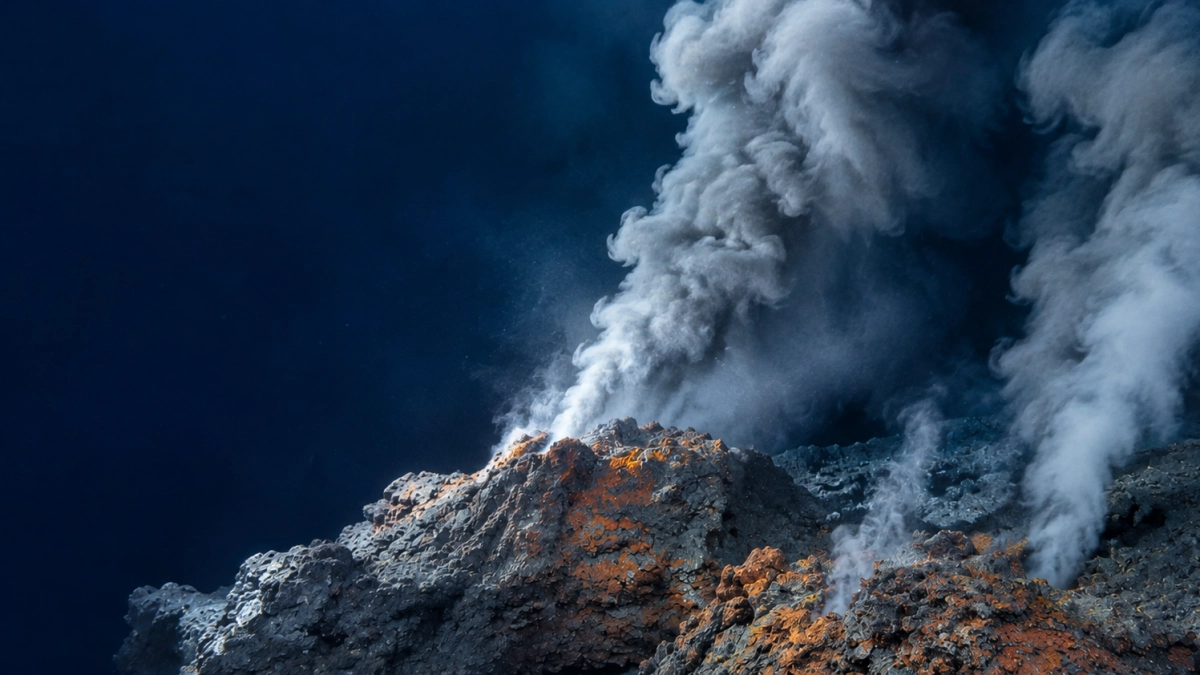
The find is deeply paradoxical. Pyroclastic formations are fundamentally tied to explosive volcanism, a phenomenon widely
considered rare—if not theoretically improbable—in the specific tectonic setting where they were found. Because of the extraordinary pressures exerted by miles of overlying ocean water, scientists long believed that the dissolved gases in ascending magma would be heavily restricted from expanding violently, effectively muting potential explosions. Yet, the physical evidence retrieved from the Mariana Trench proves that cataclysmic, explosive volcanism has occurred at extreme depths, rewriting textbooks on marine geology and challenging established models of subduction zone dynamics.
Chronology of the Expedition and Discovery
To understand how this monumental discovery unfolded, scientists had to retrace a geological history spanning tens of millions of years while executing a meticulously planned modern deep-sea expedition.

The Genesis of the Trench (52 Million Years Ago)
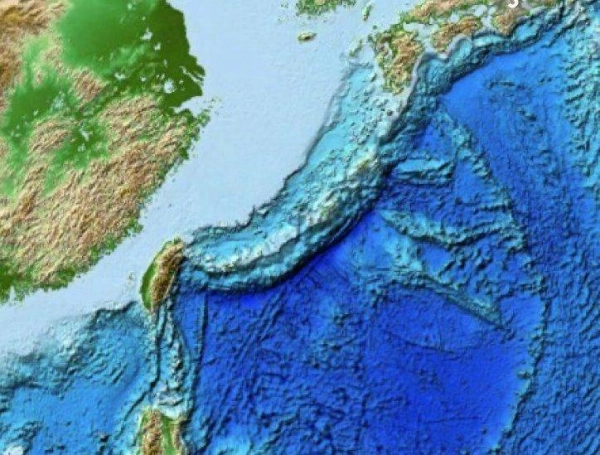
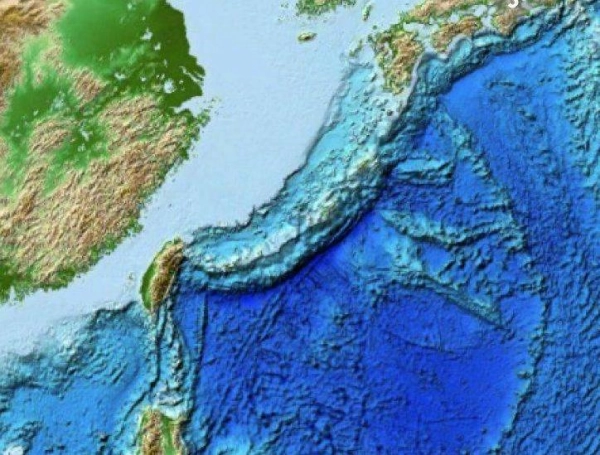
The Mariana Trench is not a static feature of the Earth; it is a dynamic, evolving scar born out of violent tectonic shifts. Approximately 52 million years ago, the Pacific tectonic plate began to subduct, sliding downward and slipping beneath the smaller Philippine Sea plate. This relentless mechanical sinking created the deepest known submarine valley on Earth. At its absolute nadir lies the Challenger Deep, plummeting nearly 11,000 meters (approx. 36,000 feet) beneath the ocean surface—a depth greater than the height of Mount Everest.
The 2024 Expedition
Fast forward to late 2024, when a team of geoscientists embarked on an ambitious marine expedition to the western Pacific. Their primary objective was to investigate the fine-scale geological architecture that explains how the trench achieves such staggering depths.
Deploying the ROV Jason/Medea, the research team focused their efforts on a sprawling antearc segment stretching roughly 550 kilometers long, positioned adjacent to the Challenger Deep. Operating under immense hydrostatic pressure, the robotic vehicle successfully executed seven distinct deep-sea dives covering a linear span of approximately 300 kilometers along this geological structure.

The Breakthrough in the West
As the ROV mapped the steep, rugged topography, researchers immediately noted structural asymmetries. The eastern sector of the studied zone featured steep, sheer walls where the Earth’s crust and upper mantle sit remarkably close to the seafloor surface.
However, the true scientific breakthrough occurred in the western sector. There, navigating the dim, high-pressure abyssal plains, the robotic cameras and sampling tools identified thin, flat layers of pyroclastic rocks. These formations served as the smoking gun: undeniable testimony of ancient, explosive volcanic violence occurring at crushing ocean depths. Subsequent peer review and analysis culminated in a published study in the scientific journal Frontiers in Earth Science, bringing this abyssal revelation to light.
Supporting Data and Geological Analysis
The implications of finding pyroclastic rocks in the trench’s antearc region are profound. In standard plate tectonic models, an antearc region is the slice of the overriding plate located between the trench axis and the volcanic arc. The mantle underlying this specific zone is typically too cool to undergo the melting required to generate active volcanism. Consequently, finding young volcanic materials here was entirely unexpected.
Furthermore, physical laws dictate that immense hydrostatic pressure changes how magma behaves. At shallow depths or on land, gas bubbles expand rapidly within rising magma, causing violent fragmentation and explosions. At thousands of meters underwater, the crushing weight of the water column suppresses gas expansion.
Despite these barriers, the physical samples recovered by Jason/Medea bear the unmistakable markers of explosive fragmentation. Dr. Robert J. Stern, the lead author of the study and a professor at the University of Texas at Dallas, noted that while the samples confirm explosive behavior, the exact vents remain elusive.
Analyses of the rock samples suggest that these hot pyroclastic flows raced down underwater slopes but likely traveled only short distances. Had they traveled vast distances across the cold ocean floor, they would have rapidly quenched and disintegrated. Instead, they retained enough residual heat to weld themselves back together against pre-existing, hardened rock faces—a localized thermal signature that points to nearby, deep-seated volcanic sources.

The chemical and structural differences between the eastern and western sectors further enrich the data:
- The Eastern Sector: Dominated by older, highly fractured rocks, indicating that this side expands primarily through mechanical stretching caused by tectonic plate pulling.
- The Western Sector: Characterized by younger volcanic materials, suggesting that this side may be actively widening via the injection and intrusion of mantle-derived magma.
Official Responses and Expert Perspectives
The academic community has received the findings with a mixture of awe and intense analytical rigor.
"The explosive volcanism near ocean trenches is highly unusual, so we were very surprised," stated Dr. Robert J. Stern during an interview discussing the findings. Emphasizing the historical scale of the discovery, he added, "These are the deepest pyroclastic rocks documented to date anywhere in the global ocean."
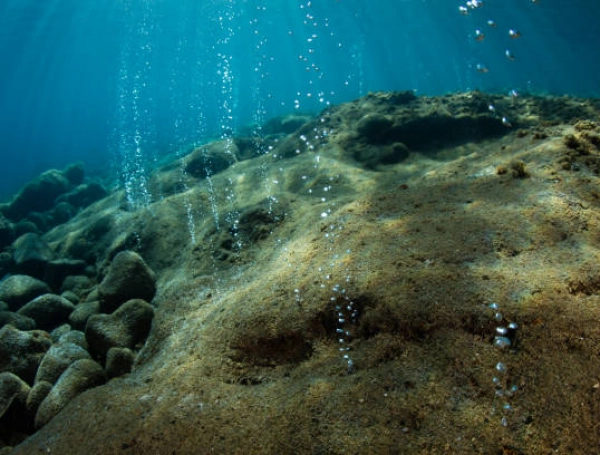
Addressing the mechanical physics of the event, Stern elaborated on the paradox of deep-sea explosions: "The intense pressures at the depths where these submarine volcanoes erupted make the eruption style fundamentally different from what would occur on land or in shallow waters, where pressures are vastly lower."
While the data successfully maps out the physical presence of these pyroclastic layers, the research team remains cautious. They readily admit that definitive proof of their mantle-intrusion hypothesis will require additional field expeditions. Specifically, the team must secure more comprehensive rock collections and subject them to advanced radiometric dating techniques to establish precise timelines for when these abyssal eruptions occurred.
Broader Implications for Earth Science
The ramifications of this discovery extend far beyond the localized geography of the Mariana Trench, touching upon fundamental aspects of global geology, mantle dynamics, and planetary evolution.

Rewriting Subduction Zone Mechanics
The study sheds fresh light on the nature of subduction zones—the planetary engines where tectonic plates collide and recycle material into the Earth’s interior. Data gathered from the ROV dives reveal that the tectonic plates forming this specific subduction zone share a relatively weak mechanical bond, a condition that reduces friction and eases the downward slip of the descending slab.
Moreover, seismic and bathymetric data analyzed alongside the rock samples indicate that the descending slab is unusually narrow and short. This physical geometry permits a much sharper, more pronounced downward curvature as the plate sinks into the mantle. This steep angle directly contributes to the sheer, vertigo-inducing depth of the Mariana Trench.
The Tectonic Engine
Dr. Stern points out that the descent of cold, dense oceanic lithosphere in subduction zones supplies a massive share of the mechanical energy driving global plate tectonics. Consequently, understanding whether the western Mariana antearc is widening via magma intrusion or mechanical stretching provides a vital piece of the puzzle regarding how the Earth’s crust constantly recycles itself. If deep-seated volcanic activity is more common in trenches than previously assumed, textbooks detailing mantle melting points and deep-sea volcanology will require substantial revisions.

Future Outlook: Reaching for the Ultimate Depths
Despite the immense success of the recent expedition, the scientific frontier remains wide open, bound primarily by technological limitations.
The primary hurdle faced by Dr. Stern and his colleagues was the operational depth limit of the Jason/Medea ROV, which is structurally engineered to descend to a maximum of 6,500 meters (approx. 21,300 feet). While this allowed researchers to thoroughly examine the antearc walls, it left a massive vertical void completely unexplored—the stretch of the trench wall extending from 6,500 meters all the way down to the abyssal depths of the Challenger Deep at nearly 11,000 meters.
"We would love to study the Mariana Trench antearc segment much more thoroughly and reach even greater depths," Dr. Stern affirmed, signaling the clear intent of the research group to return.

As robotics engineering advances and pressure-resistant hulls evolve to withstand the crushing, sunless environment of the hadal zone, future missions will undoubtedly target these uncharted abyssal cliffs. Until then, the discovery of the deepest explosive volcanic rocks ever found serves as a humbling reminder of how little humanity truly understands about the fiery, dynamic underworld hidden beneath our planet’s vast oceans.