By Laura Nathalia Quintero International Desk / Breaking News Service
Main Facts: A Catastrophic Collision in Central Spain
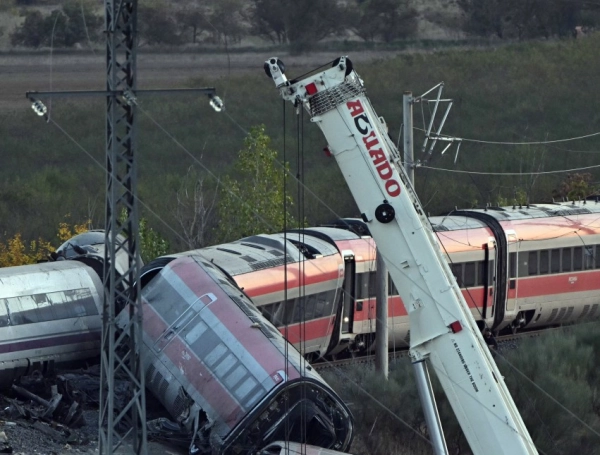
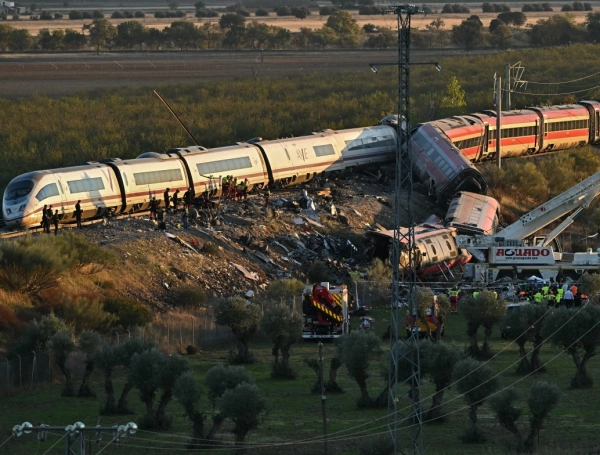
The tranquil morning of Wednesday, October 28, 2026, turned into an unimaginable nightmare in the heart of Spain. At approximately 8:53 a.m. local time, near the rural municipality of Urda in the central province of Toledo, a catastrophic high-speed rail disaster unfolded. A Renfe AVE train—the flagship public high-speed service operating the heavily trafficked route between Madrid and Seville—slammed at full speed into the rear of a stationary passenger convoy operated by the private rail company Iryo.
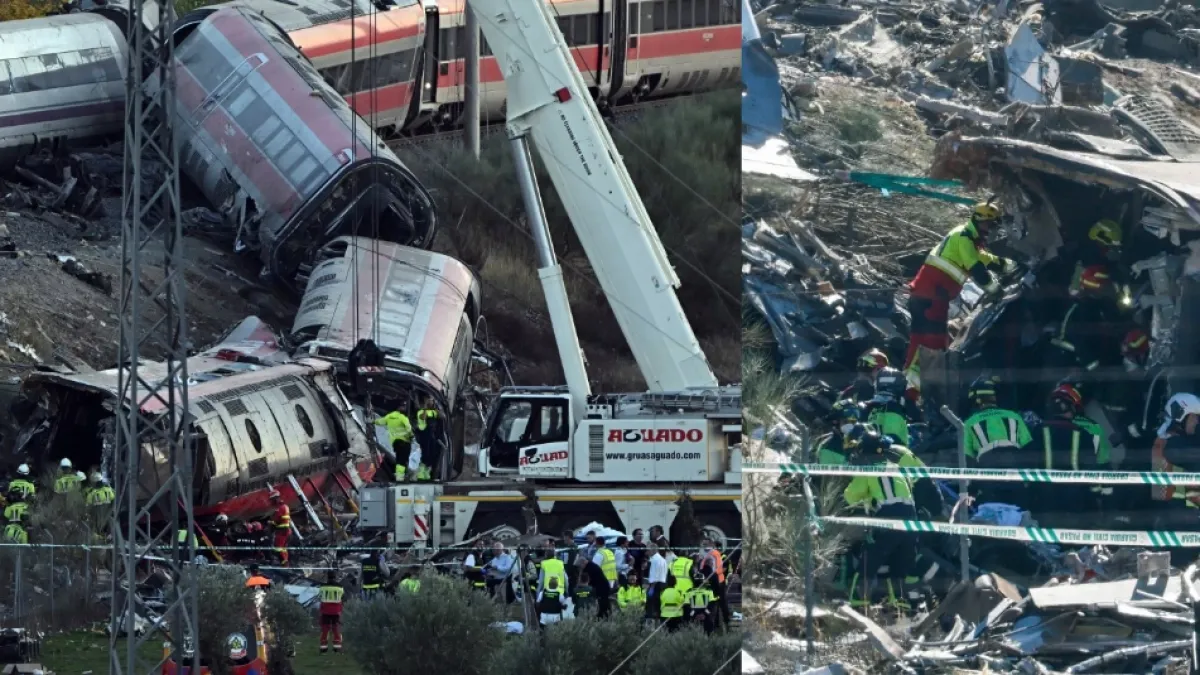
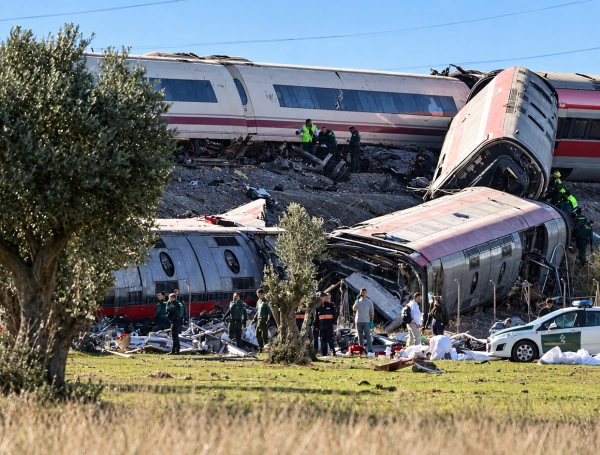
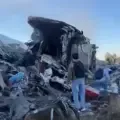
The immediate aftermath was devastating. Official figures place the death toll at at least 68 people, with more than 100 others sustaining injuries ranging from moderate to critical. The force of the impact triggered the violent derailment of two rear vagons belonging to the Iryo convoy, which were thrust off the elevated tracks and sent tumbling down a steep embankment.
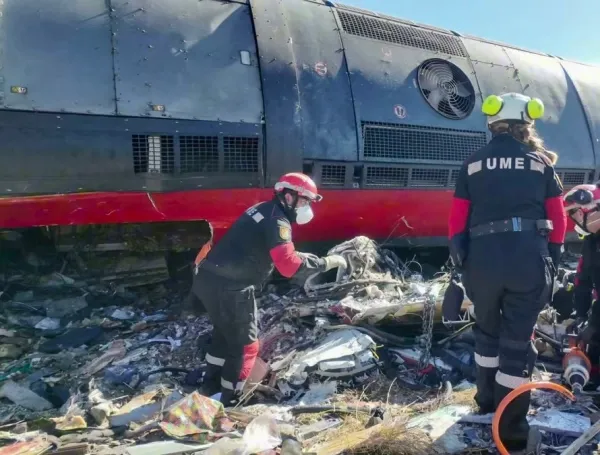
At the time of the collision, the Renfe AVE train was carrying 378 passengers, while the stationary Iryo convoy was transporting approximately 150 individuals, including at least one infant. Emergency response teams—consisting of hundreds of firefighters, paramedics, members of the Civil Guard, and military emergency units—rushed to the remote stretch of track. Working under arduous conditions amid twisted metal and thick plumes of smoke, rescue personnel spent hours triaging the wounded, airlifting critical patients to regional hospitals, and scouring the wreckage for survivors.
The tragedy immediately paralyzed one of Spain’s most vital economic corridors, prompting national mourning, high-level government investigations, and harrowing accounts from those who miraculously cheated death.
Chronology of a Disaster: The Timeline of October 28
To understand how two modern high-speed trains came to occupy the same section of track, investigators and government officials have meticulously reconstructed the timeline of events leading up to the fatal impact near Urda:
08:30 a.m. — The Initial System Failure: Barely twenty minutes before the disaster, a critical technical malfunction struck the railway infrastructure. The LZB (Linienförmige Zugbeeinflussung) advanced automated train protection and signaling system suffered a sudden, severe failure along the Madrid-Sevilla high-speed corridor. This technical glitch triggered automatic safety protocols, forcing multiple trains along the line to come to a sudden halt, including the Iryo convoy, which stopped safely on the tracks near Urda.
08:36 a.m. — The Fatal Authorization: Just six minutes after the systemic failure brought traffic to a standstill, the central control office operated by Adif (the state-owned railway infrastructure manager) issued a directive. Despite the fact that the line had not been cleared and the Iryo convoy remained stationary further up the track, the control center authorized the driver of the trailing Renfe AVE train to resume normal operations. Crucially, investigators later revealed, this green light was given without establishing any temporary speed restrictions or safety buffers.
08:45 to 08:52 a.m. — The Run-Up: Unaware of the stationary danger ahead, the Renfe AVE accelerated. Transport Minister Óscar Puente later confirmed that the train traveled approximately 25 kilometers (15.5 miles) at high speed following the authorization, chewing up distance while the signaling system remained compromised.
08:53 a.m. — The Collision: The AVE plowed into the back of the Iryo train. The kinetic energy of the impact pulverized the rear carriages of the private carrier, crushing them "like paper" and hurling two cars down the embankment.
Post-08:53 a.m. — The Emergency Response: Immediate chaos gave way to self-rescue and community intervention as uninjured passengers, local villagers, and first responders converged on the smoking wreckage to begin pulling survivors from the mangled steel.
The Human Element: "I Could Have Been There"
Among the hundreds of passengers caught in the maelstrom was Jorge Guales, a 53-year-old Colombian national living in Spain. Guales was seated in seat 17C of car 7 aboard the Iryo train. In interviews with the Spanish daily El País and the Europa Press agency, Guales recounted the terrifying moments before and after the collision.
"The blow, the noise was brutally hard," Guales recalled.
Moments before the impact, the journey had been entirely routine. The train had come to a stop due to the earlier system glitch, and onboard hospitality staff were walking down the aisles offering complimentary beverages and light snacks to restless travelers. Passengers had no inkling of danger until the world violently tilted.
"The first thing we felt was that we had been hit," Guales said, describing how bodies were thrown against seats and luggage rained down from overhead racks. As a haze of acrid, chemical-smelling smoke began to fill the cabin, panic threatened to take over. Passengers peered anxiously through the windows, catching horrifying glimpses of a derailed car and "too much smoke, far too much smoke."
Realizing that waiting inside a compromised carriage was a lethal gamble, Guales and a handful of other able-bodied passengers took charge. Fortune favored their specific location: unlike other parts of the train where emergency exits were jammed or windows had to be smashed open with heavy tools, a sliding door near their section suddenly gave way.
"We didn’t have to break any glass because a door opened," Guales explained. "So about three of us got out immediately and started helping people to evacuate."
Evacuating the train proved treacherous. The force of the crash had warped the steel rails, lifting them out of alignment, while the trackbed was littered with jagged ballast stones that made walking difficult—especially for the wounded. Guales and other volunteers waded through the debris, lifting injured travelers and guiding terrified families away from the burning wreckage toward a nearby wooded area. Shortly thereafter, local residents who had heard the explosion arrived with tools, cutting through a perimeter fence to establish a safe evacuation corridor for the survivors.
When Guales finally stepped back to survey the scene, the sheer scale of the disaster came into horrifying focus. The two rearmost cars of the Iryo train had been completely obliterated.
"They were left looking like paper, as if you tear paper," he said, visibly shaken.
Reflecting on his miraculous escape, Guales acknowledged the psychological toll of the experience. The thought that a shift of a few meters or a different ticket selection could have placed him in the pulverized rear carriages haunted him. “It gives you a fright,” he admitted, noting that the horror intensifies “when you think: ‘I could have been there.’ If I had been in another section, I wouldn’t be able to tell the tale.”
Official Responses and Accountability
As the nation reeled from the loss of 68 lives, political leaders faced intense public pressure to provide answers. Spanish Prime Minister Pedro Sánchez addressed the nation hours after the disaster, offering his deepest condolences to the victims’ families and vowing to get "to the final consequences" to uncover the truth behind the crash.
"We will not rest until every link in the chain of events is fully understood," Sánchez declared, announcing three days of official national mourning and promising sweeping reviews of the country’s high-speed rail network architecture.
Minister of Transport Óscar Puente held a high-profile press conference to outline the preliminary findings regarding accountability. Puente did not mince words, directly pointing to a grave human and systematic error within the signaling framework.
According to Puente, the collapse of the LZB system created an abnormal bottleneck. However, the decision by the Adif control center to wave the AVE train forward without imposing a strict speed limitation or verifying track occupancy was classified by the minister as an "erroneous order."
"The train traveled twenty-five kilometers after receiving an authorization that should never have been granted under those conditions," Puente stated. "The investigation will establish whether this was an isolated human error, a protocol failure, or a systemic breakdown in communication."
In the wake of the ministerial briefing, judicial authorities and specialized forensic teams—including agents of the Civil Guard and technicians from the Railway Accident Investigation Commission (CIAF)—moved quickly to secure the site. They seized internal communications logs, digital black boxes from both locomotives, and interrogated the dispatch operator on duty at the time of the collision. Access to the crash site was strictly cordoned off to preserve vital forensic evidence.
Broader Implications: A Shadow Over Spain’s Rail Network
The Toledo catastrophe has sent shockwaves through Spain’s transportation sector, raising uncomfortable questions about safety, infrastructure management, and the rapid expansion of high-speed rail networks.
Spain boasts one of the largest and most sophisticated high-speed rail systems in the world, second only to China in terms of operational kilometers. For decades, the AVE network has been celebrated globally for its punctuality, modern engineering, and spotless safety record. However, the illusion of absolute safety has been shattered twice in less than a year.
The tragedy near Urda comes barely nine months after another high-speed rail disaster on January 18, 2026, in Adamuz, in the southern province of Córdoba. That earlier accident claimed 46 lives and left over 120 injured, laying bare vulnerabilities in regional corridor management and rolling stock protocols.
The compounding tragedies have triggered fierce public debate regarding privatization, deregulation, and the integration of multiple operators—such as state-run Renfe alongside private competitors like Iryo and Ouigo—onto shared high-speed infrastructure. Transport unions have increasingly warned that the pressure to maximize track capacity and squeeze more trains onto legacy corridors may be stretching control centers beyond safe operational limits.
As families across Spain begin the heartbreaking task of identifying loved ones—in many cases utilizing DNA testing due to the severity of the impact—the nation stands at a critical crossroads. The investigation into the Urda disaster will not only determine the legal liability of those who authorized a green light on a red track; it will also force a profound reckoning over whether speed and modernization are being prioritized over the most fundamental mandate of public transit: getting passengers home alive.
By: Andrés Felipe Bejarano Bejarano Redaction: Breaking News Desk Published: September 25, 2026, 15:37 Updated: September 25, 2026, 17:34 Main Facts In an act of extreme brutality that has sent shockwaves across Mexico and drawn…
By International News Desk Updated: July 24, 2026 – 05:01 AM France is currently embroiled in a catastrophic battle against nature as 32 active wildfires ravage the country’s landscape. The situation, fueled by a relentless…
International Desk – EL TIEMPO Published: September 10, 2026 1. Main Facts A strong earthquake with a magnitude of 5.5 shook the Pacific coastline of Costa Rica in the early hours of Thursday, triggering a…