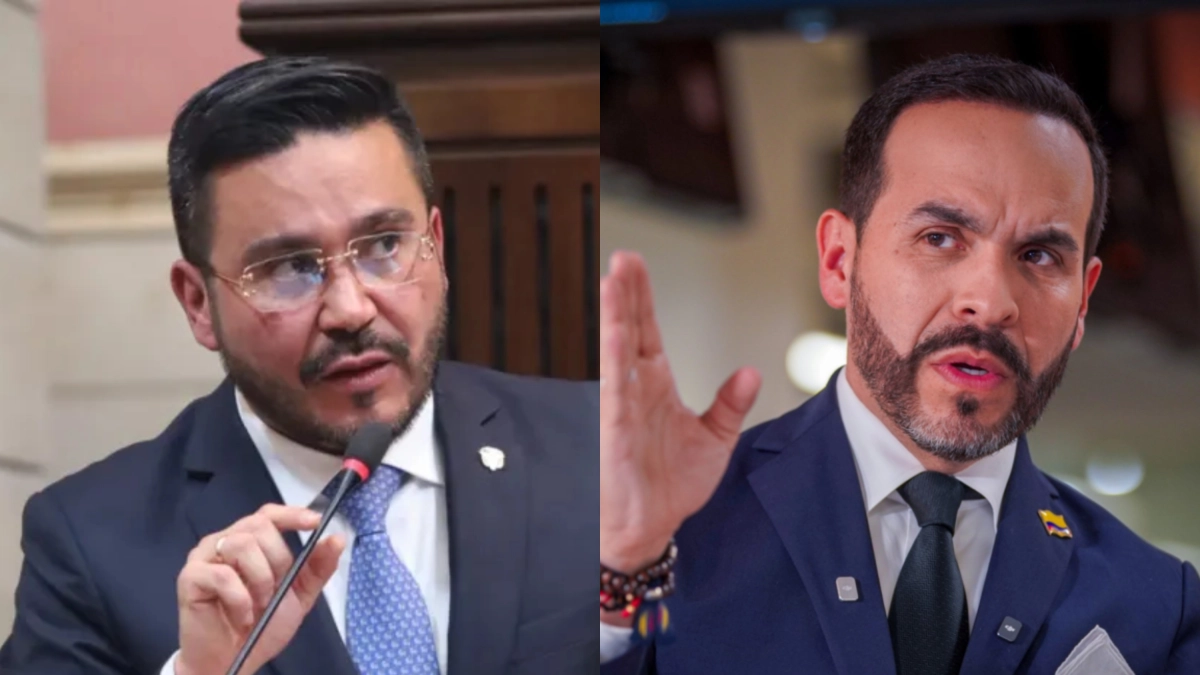
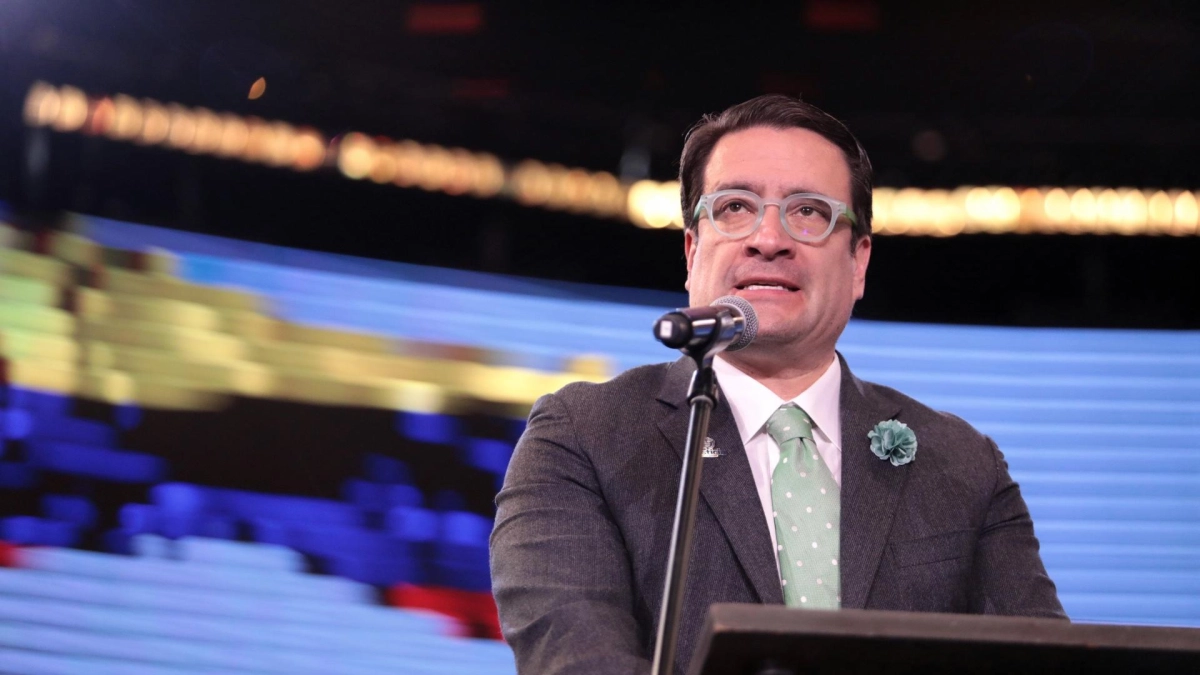
In a sharp political confrontation that has reignited the national debate surrounding the 2016 Peace Agreement, Colombia’s Minister of Justice, Iván Cancino, issued a scathing critique of former President Juan Manuel Santos. The remarks, delivered this Monday, were framed within the context of the tenth anniversary of the historic, yet polarizing, deal between the Colombian state and the Revolutionary Armed Forces of Colombia (FARC).
Cancino’s intervention did not merely target the technical implementation of the accord; it attacked the core legitimacy of the Santos administration’s approach to peace, accusing the former president of eroding the "dignity of the office" by sidelining the popular will and failing to provide genuine security for the citizenry.
Main Facts: A Clash of Visions on Peace and Sovereignty
The core of the dispute lies in Minister Cancino’s assertion that true governance is defined by the rigid application of the Constitution and the protection of the populace, rather than by international accolades or diplomatic rhetoric.
Cancino’s critique centers on three pillars:

- The Democratic Deficit: The disregard for the October 2, 2016, plebiscite, where a narrow majority of Colombian voters rejected the terms of the peace deal.
- The "Impunidad" Argument: The allegation that the government granted excessive legal benefits to FARC leadership without securing corresponding justice or full reparations for victims.
- The Failure of Security: The persistence and expansion of criminal "franchises" and dissident groups that have effectively filled the power vacuum left by the demobilized FARC, undermining the promise of a "post-conflict" era.
"The dignity of the presidency was lost the moment the voice of the people, who voted ‘No,’ was ignored," Cancino declared. For the current minister, the government’s decision to pursue the agreement despite the electoral setback created a moral and legal rift that continues to haunt the country’s institutional stability.
Chronology: A Decade of Contention
To understand the weight of Minister Cancino’s accusations, one must examine the timeline of the peace process and its aftermath:
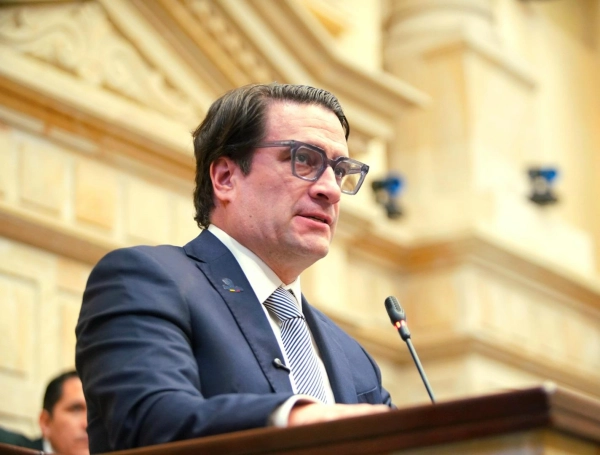
- September 26, 2016: The initial Peace Agreement is signed in Cartagena, drawing global leaders and high-level international support.
- October 2, 2016: The Colombian electorate rejects the peace deal in a national plebiscite. The "No" campaign, led by the Democratic Center, argues the deal is too lenient on war criminals.
- November 24, 2016: A revised version of the accord is signed in the Colón Theater in Bogotá. The government opts to pass this version through Congress rather than calling for a second popular vote.
- 2017–2018: The FARC completes the process of laying down arms and transitions into a political party. However, significant segments of the guerrilla leadership begin to splinter.
- 2019: Key figures, including "Iván Márquez" and "Jesús Santrich," announce their return to armed struggle, forming the "Segunda Marquetalia."
- 2020–2026: The proliferation of dissident groups increases. These groups transition from traditional insurgency into transnational criminal organizations involved in cocaine trafficking, illegal mining, and extortion.
- November 2026: On the tenth anniversary of the final agreement, Minister Iván Cancino delivers his blistering critique, effectively declaring the state’s security strategy a failure in the regions most affected by violence.
Supporting Data: The Security Landscape
Minister Cancino’s claims regarding the rise of criminal "franchises" are supported by various security reports and think tanks monitoring the conflict. The promise that the FARC would disappear has been replaced by a more fragmented, violent reality.
Current data indicates that while the unified FARC structure has been dismantled, the number of combatants operating under the banner of "dissidence" has grown significantly. These groups—often loosely coordinated—control large swaths of territory in the Pacific coast, the Catatumbo region, and the southern departments of Putumayo and Cauca.
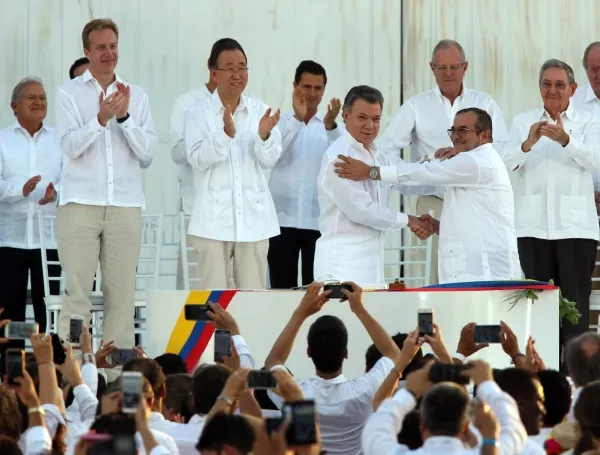
The Minister highlighted that the primary victims of this transition are not the elite in Bogotá, but the rural populations who find themselves in the crossfire of turf wars between the ELN, various FARC dissident factions, and the Clan del Golfo. "We are seeing how these groups have multiplied into multi-headed criminal organizations that compete for drug trafficking routes and the subjugation of entire populations," Cancino noted.
Official Responses and Political Implications
The reaction to Cancino’s statement has been swift, creating a clear divide within the Colombian political spectrum. Supporters of the current administration argue that the Minister is voicing a long-overdue critique of the "establishment" peace, which they claim prioritized the political rebranding of the FARC over the structural security of the nation.
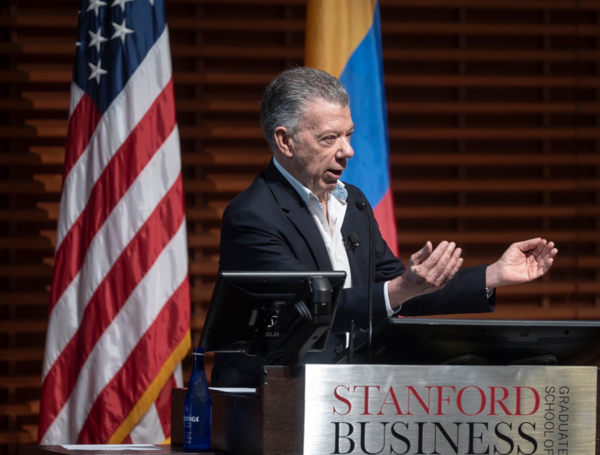
Conversely, allies of the former Santos administration contend that the Justice Minister is attempting to rewrite history for political gain. They argue that the 2016 Peace Agreement saved thousands of lives and that the current surge in violence is a result of a failure by the current government to implement the agreement’s security provisions, rather than a failure of the agreement itself.
However, Cancino’s message is explicitly targeted at the nature of the presidency: "Using the weapons of the Republic to fight terrorists is not undignified; it is a constitutional duty of the President as Supreme Commander of the Armed Forces." By framing the issue as a "constitutional duty," Cancino is shifting the debate from a historical appraisal of the peace deal to an immediate challenge to the state’s current security policy.

The Broader Implications: Peace vs. Authority
The discourse presented by Minister Cancino reflects a broader, existential question for Colombia: Can a nation reconcile the need for negotiated peace with the requirement for absolute state authority?
Cancino’s thesis is that the two are not only compatible but that the former cannot exist without the latter. "Peace without authority is merely a promise," he asserted. "True peace requires justice, security, and liberty."

The Question of International Recognition
The Minister’s direct reference to the Nobel Peace Prize awarded to Santos in 2016 is particularly telling. By stating that "the dignity of the presidency is not defended with speeches or international awards," he is attempting to decouple the international perception of the Colombian peace process from the harsh reality on the ground.
This creates a significant challenge for the legacy of the peace process. If the current Ministry of Justice—the entity responsible for overseeing the judicial transition—views the process as a failure of institutional honor, the remaining legal frameworks for the demobilized combatants may face renewed scrutiny and potential legislative rollbacks.

Impact on Regional Stability
The immediate consequence of this political sparring is the heightened uncertainty for regions under the control of illegal armed groups. If the government’s policy pivot moves definitively toward a "hardline" approach—prioritizing military containment over negotiation—the dynamics in rural Colombia will likely shift toward an escalation of hostilities.
Conclusion: A Turning Point?
As the nation marks the ten-year milestone of the peace deal, the rhetoric from the Ministry of Justice signals that the "honeymoon" phase of the peace-building era is effectively over. The debate is no longer about whether the 2016 agreement was a step in the right direction; it is now about whether the state has the will and the authority to rectify what it perceives as the disastrous consequences of that process.

For President Santos and the architects of the agreement, the challenge will be to defend the peace legacy against an increasingly vocal and influential opposition within the current administration. For Minister Cancino, the challenge is to prove that "authority" can yield the results that negotiation—in his view—failed to achieve.
The coming months will likely see a legislative push to strengthen the military’s role in rural security and a potential re-evaluation of the legal status of former FARC members currently serving in civilian life. Whether this leads to a "peace with authority" or a return to intensified conflict remains the central question facing Colombia in this late stage of its long-running internal struggle.