Global Desk — In less than a decade, the air fryer has transitioned from a niche kitchen gadget to an absolute household staple. Praised for its ability to deliver the satisfying crunch of deep-fried food with a fraction of the oil, this countertop convection oven has revolutionized modern cooking. Yet, as households increasingly rely on it for daily meals—from quick weeknight dinners to intricate weekend baking projects—a persistent anxiety has quietly taken root among consumers: Does the convenience of the air fryer come with an invisible, yet staggering, electricity cost?
While using a compact appliance every day does not automatically trigger a financial emergency, it is far from a negligible expense. To understand the true economic and energetic footprint of an air fryer, consumers must look beyond marketing claims and examine the technical mechanics of power consumption, thermal efficiency, and household energy tariffs.
Main Facts: Deconstructing the Power Behind the Fryer
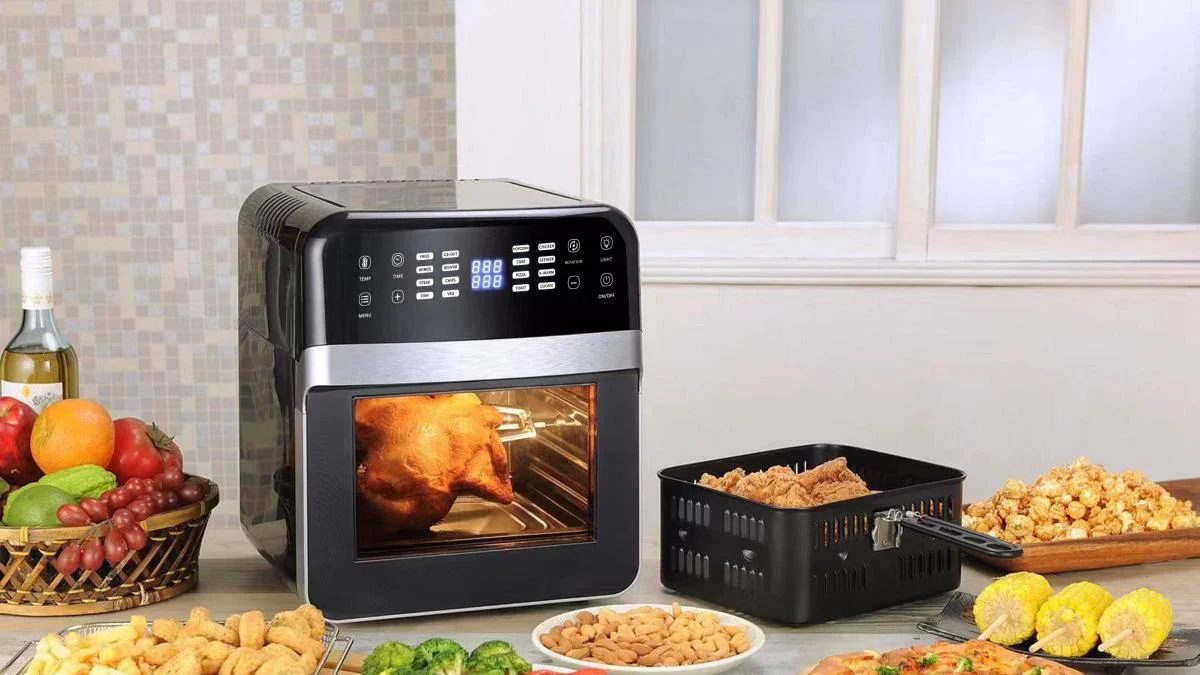
At its core, an air fryer is a miniature convection oven. It operates on a straightforward principle: a powerful heating element combined with a high-speed fan rapidly circulates superheated air around the food chamber. This localized, intense thermal dynamic cooks food faster than a traditional conventional oven, which must heat a much larger cavity.
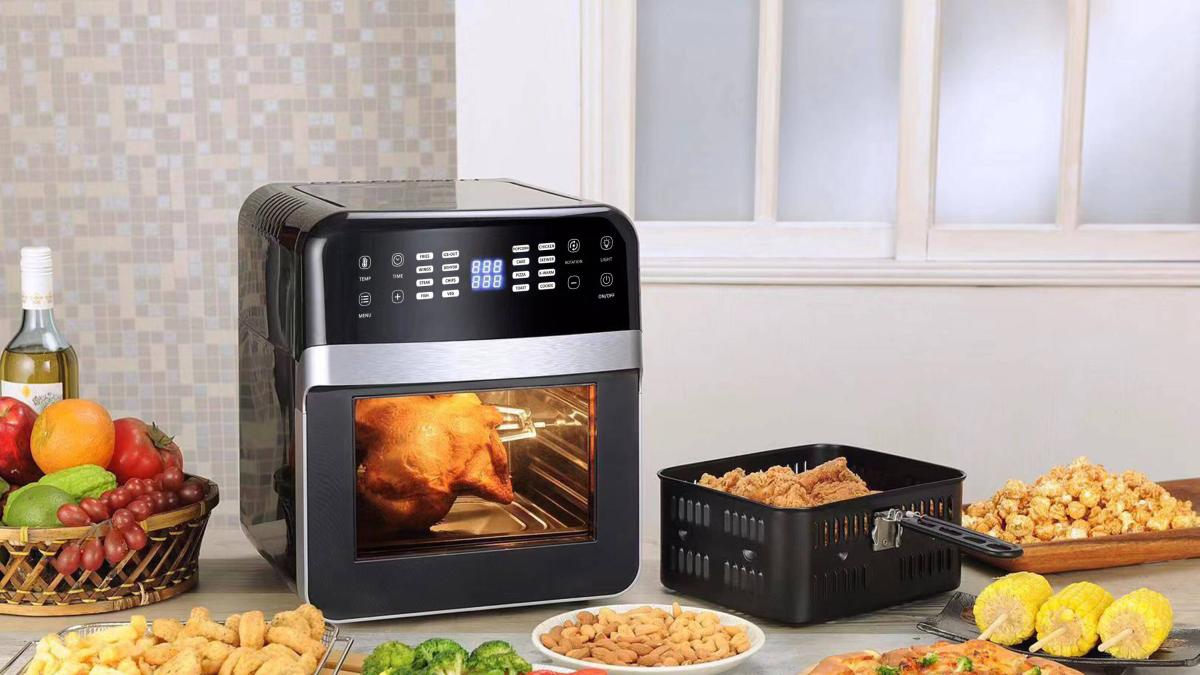
However, speed does not inherently equal low energy use. The primary determinants of how much electricity an air fryer consumes are its wattage, the selected temperature, and the total duration of operation.
-
The Wattage Baseline: Most standard residential air fryers feature a power rating ranging from 1,400 to 2,000 watts. A typical 1,500-watt model draws 1.5 kilowatts (kW) of power
when running continuously.

- The Energy Formula: Energy consumption is measured in kilowatt-hours (kWh), calculated by multiplying the appliance’s power rating in kilowatts by the time it spends operating in hours. If a 1,500-watt air fryer runs continuously for 30 minutes (0.5 hours), it consumes 0.75 kWh of electricity.
- The Thermostat Factor: Real-world consumption is often slightly lower than theoretical maximums because internal thermostats cycle the heating element on and off to maintain a stable target temperature, rather than running it at maximum output indefinitely.
Despite these efficiency mechanisms, the cumulative effect of using a high-wattage device several times a week—or multiple times a day—can leave a noticeable footprint on the monthly utility statement. The final financial impact, therefore, depends heavily on the regional cost per kilowatt-hour charged by local utility providers.
Chronology: The Rise of the Air Fryer and the Evolution of Kitchen Energy Awareness
To fully grasp why energy consumption has become a focal point for air fryer owners, it is helpful to trace the trajectory of the appliance and the modern kitchen economy.
- Early 2010s — Market Introduction: Air fryers burst onto the global consumer market, marketed primarily as a revolutionary, health-conscious alternative to traditional oil immersion frying. Early models featured basic analog dials, fixed temperatures, and limited capacities.
- Mid-2010s to 2020 — Mainstream Adoption: As manufacturers refined the technology, adding digital displays, preset cooking modes, and dual-basket capacities, the appliances gained immense popularity. Culinary blogs and social media platforms flooded the internet with air fryer recipes, transforming it from a specialty appliance into a primary cooking tool.
- 2021 to 2023 — The Global Energy Crisis: A confluence of geopolitical events sparked severe energy inflation worldwide. Utility bills spiked dramatically across North America, Europe, and parts of Latin America. For the first time, households began critically auditing every plug-in appliance, shifting focus from pure convenience to efficiency and operating costs.
- 2024 to Present — The Efficiency Era: Today, consumers view kitchen appliances through a dual lens of nutrition and economics. Energy literacy has grown, with appliance owners actively seeking data on how specific cooking methods compare against traditional electric ovens, microwaves, and stovetops. The conversation has shifted from "Can it cook this?" to "Is it cheaper to use this than my conventional oven?"
Supporting Data: Comparative Energy Metrics and Calculations
To evaluate whether an air fryer is truly economical, energy analysts frequently compare its power draw against traditional cooking appliances.
Air Fryer vs. Traditional Electric Oven
A standard built-in kitchen oven typically operates at a power rating between 2,000 and 4,000 watts. Because an oven has a large cavity, it requires a substantial preheating phase—often 10 to 15 minutes—before it reaches stable cooking temperatures.
By contrast, an air fryer requires little to no preheating and cooks food significantly faster due to its compact size and direct thermal circulation.
- Scenario A (Baking Vegetables): Roasting a batch of root vegetables in a traditional oven might take 40 minutes at 200°C (392°F), preceded by a 15-minute preheat. Total operational time: 55 minutes at roughly 3,000 watts (3 kW), consuming approximately 2.75 kWh.
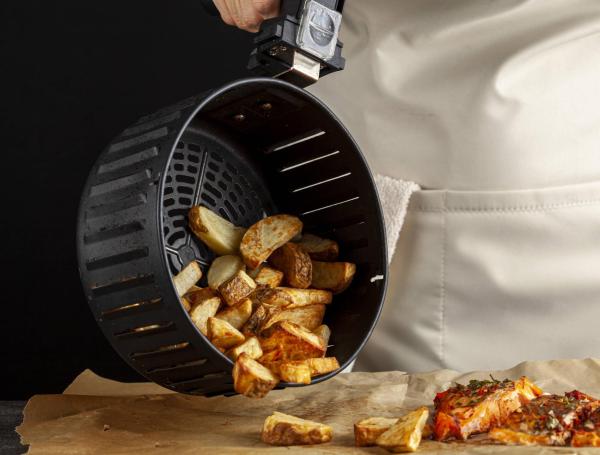
- Scenario B (Air Frying Vegetables): The same batch of vegetables in an air fryer takes roughly 20 minutes with zero preheat time. Operating a 1,500-watt (1.5 kW) air fryer for 20 minutes (0.33 hours) consumes approximately 0.5 kWh.
In this common culinary scenario, the air fryer uses over 80% less energy than the traditional oven, making it an undeniable winner for small- to medium-sized portions.

The Cost Equation
Calculating the monetary cost requires knowing your local utility rate. If a utility company charges $0.15 per kWh:
- Running the air fryer for 20 minutes ($0.15 times 0.5text kWh$) costs roughly $0.075.
- Running the traditional oven for 55 minutes ($0.15 times 2.75text kWh$) costs roughly $0.41.
However, this efficiency advantage narrows significantly if the user needs to cook multiple batches sequentially. If an air fryer basket is too small to hold a large family meal, running the appliance for three consecutive cycles cancels out its time-saving and energy-saving benefits, at which point a single large oven cycle becomes more efficient.
Official Responses and Expert Recommendations: Maximizing Efficiency
Energy agencies, consumer advocacy groups, and appliance manufacturers have released guidelines to help consumers minimize electricity waste while utilizing countertop convection appliances.

Industry Best Practices for Energy-Smart Cooking
Energy efficiency experts emphasize that small adjustments in cooking habits can yield measurable savings on utility bills over the course of a year:
- Avoid Unnecessary Preheating: While some recipes recommend preheating an air fryer, many foods do not require it. Skipping the preheat phase trims 3 to 5 minutes off the total runtime, directly reducing power consumption.
- Optimize Basket Capacity (Avoid Overcrowding): Proper airflow is the mechanism that makes air frying effective. Packing a basket too tightly obstructs the circulation of hot air, forcing food to take significantly longer to cook. Conversely, running the appliance for microscopic portions wastes its overall capacity. The sweet spot is a single, evenly distributed layer of food.
- Strictly Monitor Cooking Times: Relying on timers rather than leaving the appliance running indefinitely prevents energy waste. Over-cooking not only ruins culinary textures but wastes electricity.
- Maintain Rigorous Cleanliness: Grease, oil residue, and food particles accumulate inside the basket and along the heating element over time. This buildup acts as a thermal barrier, impeding airflow and reducing the appliance’s heating efficiency, which forces it to work harder and consume more power to reach target temperatures.
- Match Appliance to Portion Size: For single or double servings, the air fryer is vastly superior to the main oven. For large family gatherings involving whole turkeys or massive trays of food, the traditional oven remains the more efficient choice.
Implications: Economic, Environmental, and Lifestyle Shifts
The widespread adoption of air fryers carries broader implications that stretch far beyond individual household budgets.
Economic and Financial Implications
For lower- and middle-income households, managing utility expenses is a continuous balancing act. Understanding appliance wattage allows consumers to make informed decisions about peak-hour energy use. By shifting certain cooking tasks away from heavy kitchen ranges to efficient countertop devices, households can shave modest amounts off their monthly bills. While a few cents per meal may seem trivial, compounding those savings across 365 days yields noticeable relief for tight household budgets.

Environmental Impact at Scale
From a macro-perspective, the collective shift toward energy-efficient kitchen appliances reduces aggregate residential electricity demand. When millions of households choose a 1,500-watt air fryer over a 3,000-watt conventional oven for quick meals, the cumulative reduction in electrical load on municipal power grids is substantial. This drop in energy demand translates directly to lower carbon emissions, particularly in regions where electricity generation still relies heavily on fossil fuels.
Lifestyle and Culinary Evolution
Culturally, the air fryer has redefined expectations around food preparation speed. The modern consumer expects immediate results with minimal cleanup. This has altered dietary habits, encouraging more home cooking of fresh vegetables, lean proteins, and whole foods rather than relying on takeout or heavy stovetop frying.
Ultimately, the air fryer is neither a free pass to unlimited cooking nor a hidden financial trap. Like any high-wattage electrical tool, its economic impact is governed entirely by user behavior. By respecting its thermal limits, maintaining its mechanical components, and matching portion sizes to appliance capacity, consumers can enjoy the culinary speed and health benefits of the air fryer without unpleasant surprises when the monthly electricity bill arrives.