By Global Business and Technology Desk Updated: November 10, 2026
Main Facts: A Strategic Pivot at the Gigafactory
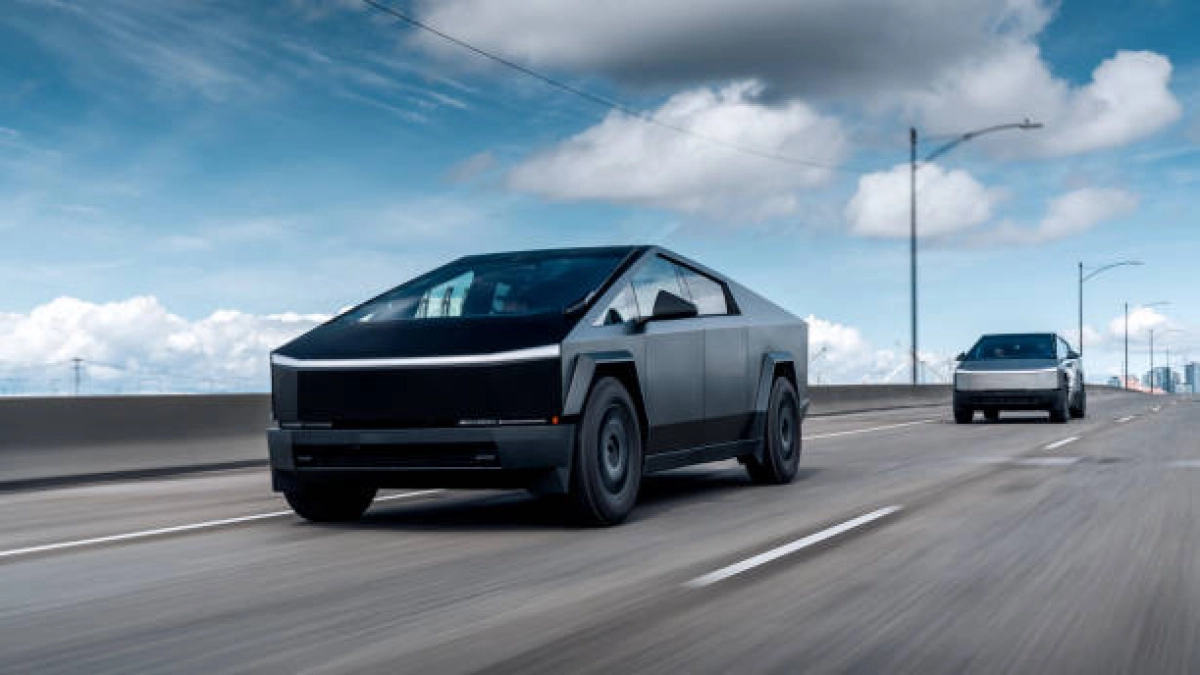
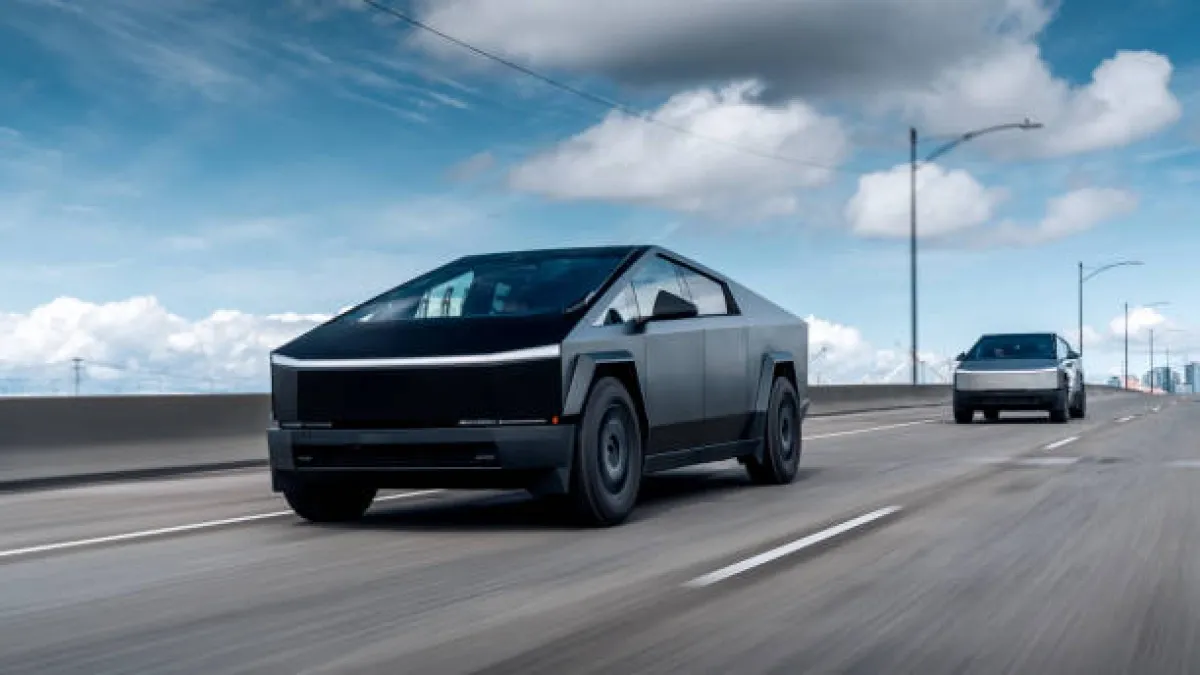
Tesla’s ambitious gamble to revolutionize the electric pickup truck market is officially entering its twilight phase. In a move that signals a profound shift in corporate strategy, Elon Musk’s electric vehicle powerhouse is reorganizing its primary operations in the United States. The centerpiece of this restructuring is a hard pivot away from the company’s polarizing, stainless-steel angular pickup—the Cybertruck—to make way for a new generation of fully autonomous vehicles.
The decision, which leaked via major investigative reports from The Washington Post and Reuters, dictates that Tesla will wind down and ultimately dismantle the Cybertruck manufacturing line at its sprawling Gigafactory in Texas by mid-2027. This industrial pivot is designed to reallocate critical factory floor space, specialized machinery, and engineering talent toward scaling up the production of the Cybercab—a two-seater autonomous robotaxi intended to anchor Tesla’s long-term business model around driverless ride-hailing services.
While the Cybertruck was initially heralded as a radical leap forward for automotive design and manufacturing when its prototype was first unveiled, its lifecycle on the assembly line will be relatively short. According to communications released by Tesla executives, the company plans to utilize the remaining months before the line’s shutdown to push production into overdrive, attempting to fulfill as many lingering reservations as possible. However, the sobering reality is that thousands of reservation holders will never receive the vehicle they originally put down deposits for, marking an abrupt end to one of the most talked-about consumer vehicles of the 21st century.
Chronology of the Announcement and Wind-Down
The dismantling of the Cybertruck program did not happen in a vacuum; rather, it represents the culmination of mounting market pressures, production realities, and a rapidly shifting corporate vision toward artificial intelligence and autonomy.
Early November 2026 (November 6): Following internal disclosures, The Washington Post reported that Elon Musk announced plans to progressively phase out Cybertruck manufacturing at the Texas Gigafactory, targeting a complete line shutdown by mid-2027. The primary driver cited was the urgent need to redirect factory capabilities toward the mass production of the Cybercab.
November 7, 2026: Elon Musk took to his personal platform, X (formerly Twitter), to confirm the reports. In a public exchange, he stated that Tesla would continue building the Cybertruck for another eight to nine months before pivoting entirely to scaling the Cybercab, famously noting: "There will never be another vehicle like it."
November 9, 2026: Addressing rising criticism and media speculation regarding the financial viability of the truck, Musk published a detailed clarification on X. He admitted that the sheer volume of outstanding orders outpaces their manufacturing capacity, confirming that Tesla would be forced to cancel numerous unfulfilled orders and refund deposits. He explicitly pushed back against reports claiming the vehicle was being canceled due to unprofitability.
November 10, 2026:Reuters published detailed follow-up reports outlining the precise operational timeline, indicating that Tesla plans to officially dismantle the assembly line between June and July of 2027, leaving a brief window where the factory will operate on an additional shift to maximize final output.
Supporting Data: Sales Figures and Market Reality
To understand why Tesla is willing to truncate the lifespan of such a high-profile vehicle, one must look closely at the cold, hard numbers. When the Cybertruck was first conceptualized and introduced to the public, aggressive internal projections by Elon Musk suggested that Tesla could eventually scale production and sales to roughly 250,000 units per year.
However, the reality of the American automotive market proved to be starkly different. The vehicle’s unconventional styling, polarizing feature set, high price point, and complex manufacturing requirements created a significant barrier to mainstream adoption.
Official sales tracking data highlights a steep and continuous decline in consumer uptake:
2024 (First Full Year of Production): Tesla managed to sell 38,965 units in the United States, establishing an initial high-water mark that quickly lagged behind early reservation estimates.
2025: Sales suffered a dramatic contraction, plummeting by 48% year-over-year down to just 20,237 units.
2026 (January – September): According to market intelligence estimates cited by Reuters via Motor Intelligence, the downward trajectory only steepened. Total sales for the first nine months of the year hovered around 11,600 units, marking a further 28% drop compared to the same period in 2025.
These figures illustrate that the Cybertruck, despite dominating headlines and cultural discourse, ultimately settled into a niche luxury bracket rather than becoming the high-volume commercial pillar that Tesla originally envisioned.
Official Responses and Stakeholder Reactions
The announcement immediately sparked intense debate across the automotive industry, financial markets, and consumer forums. Mainstream media outlets were quick to label the phase-out as a retreat from an unprofitable product line—a narrative that Elon Musk forcefully rejected.
Elon Musk Defends the Decision
Responding directly to critics and financial analysts on social media, Musk argued that framing the shutdown around profitability was fundamentally incorrect.
"The Cybertruck order rate far exceeds our production rate. We will try to make as many as possible before shutting down the line in about 8 months, but will have to return deposits for a lot of people," Musk posted on X.
He further elaborated on the economic concept of opportunity cost, explaining that the immense engineering and logistical complexity required to manufacture the Cybertruck’s unique architecture no longer made sense when weighed against the exponential value of dedicating those same industrial resources to the Cybercab:
"This is not a case of Cybertruck being unprofitable, as has been misreported by legacy media, but rather that the opportunity cost of the complexity of Cybertruck is vastly outweighed by the value of incremental Cybercab production."
Impact on Consumers and Reservation Holders
For thousands of consumers who have maintained reservations for years—some facing long delays or dealing with localized incidents, such as high-profile collisions that tested the vehicle’s durability in international markets—the news comes as a bitter disappointment. Tesla has confirmed that it will initiate a widespread process of returning reservation deposits to customers whose orders cannot be accommodated during the final eight-month manufacturing window.
Implications for Tesla’s Future
The decision to sunset the Cybertruck marks a mature, albeit ruthless, recalibration of Tesla’s corporate priorities. As the automotive landscape transitions deeper into the era of artificial intelligence, machine learning, and autonomous services, legacy hardware experiments are increasingly being measured against their utility in supporting Tesla’s broader ecosystem goals.
The Rise of the Robotaxi: By clearing the Texas Gigafactory assembly lines of the Cybertruck, Tesla is betting its immediate manufacturing future entirely on the Cybercab. This signals that Musk views autonomous fleet operations and ride-sharing networks as the primary engines for the company’s next decade of financial growth.
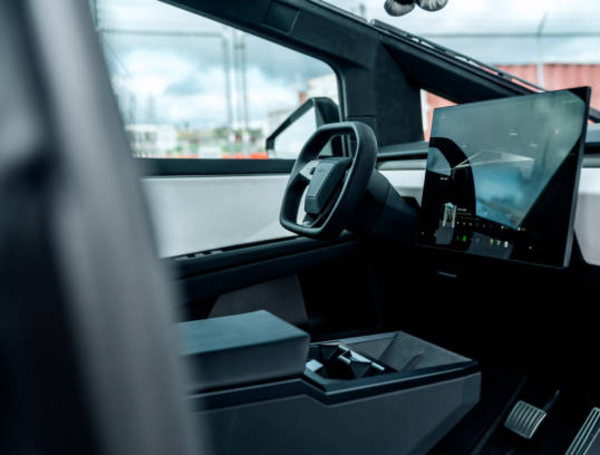
End of an Era in Design: The Cybertruck will remain an automotive anomaly—a bold, stainless-steel exercise in industrial design that pushed manufacturing boundaries with its unpainted exoskeleton and bullet-resistant glass. Its premature departure ensures it will occupy a rare, almost mythic status in automotive history: a vehicle that changed the conversation about what a truck could look like, even if it could not sustain long-term mass production.
A Pragmatic Approach to Resource Allocation: Wall Street analysts have largely viewed the move through the lens of capital efficiency. By cutting losses on a complex, low-volume production line to feed a high-margin autonomous vehicle platform, Tesla is demonstrating a willingness to abandon emotional projects in favor of high-yield technological scaling.
As the clock ticks down toward June and July of 2027, the final batch of Cybertrucks will roll out of the Texas Gigafactory. For better or worse, the era of the electric wedge on wheels is drawing to a close, clearing the path for an autonomous future that Tesla hopes will redefine transportation all over again.
TECHNOLOGY & LAW — In a major legal victory for the global press, a São Paulo court has issued a preliminary injunction prohibiting Meta Platforms from harvesting, copying, storing, or utilizing unauthorized journalistic content from…
In an era defined by the rapid proliferation of digital information and the persistent challenge of navigating an ecosystem saturated with misinformation, the consumption habits of the Colombian public have become a focal point for…
In an era defined by hyper-connectivity, the digital landscape has become increasingly cluttered with unwanted noise. For millions of mobile users, the daily routine is frequently interrupted by the jarring ring of "spam" calls—solicitations, automated…