By Jos Guerrero / Digital Reach Redaction
Published: November 5, 2026
Main Facts
In an aggressive push to modernize public health defenses against emerging biological threats, the Pan American Health Organization (PAHO) recently concluded an intensive, multi-week capacity-building initiative. Between October 6 and October 29, 2026, the organization trained 95 specialized epidemiological surveillance and public health professionals hailing from 16 countries across Latin America and the Caribbean—including Colombia.

The core objective of the initiative is to supercharge early detection mechanisms for public health risks by embedding advanced digital tools and newly integrated artificial intelligence (AI) functionalities into everyday regional surveillance workflows.

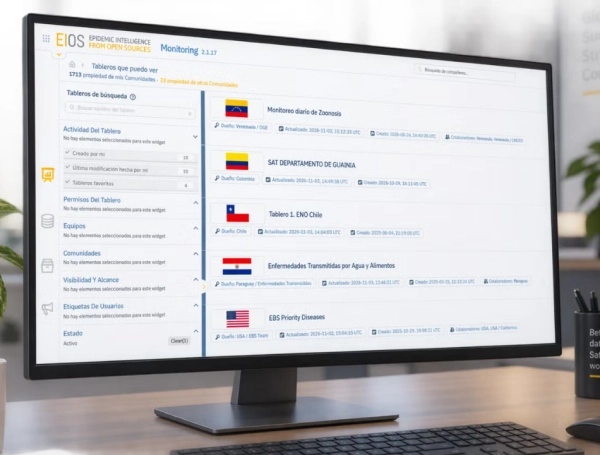
Organized by PAHO’s Health Emergencies Department, the training sessions focused heavily on mastering the Open-Source Epidemic Intelligence System (EIOS). EIOS is a state-of-the-art collaborative platform designed to capture, monitor, analyze, and assess public health signals from a vast spectrum of open-source public information in real-time. By harnessing AI advancements recently integrated into the architecture of EIOS, the participating nations are now better equipped to filter digital noise, recognize subtle epidemiological anomalies, and intercept potential disease outbreaks long before they escalate into high-consequence health emergencies.
Chronology of the Training Initiative
The extensive capacity-building campaign was structured across the month of October 2026 and divided into targeted modalities to ensure maximal operational efficiency for each participating territory:

- Early October 2026 (Initial Wave): The first phase of instruction was rolled out for multidisciplinary teams representing Costa Rica, Dominica, Guatemala, Jamaica, Mexico, Nicaragua, Peru, and Uruguay. This foundational training centered on introducing or refining core EIOS competencies, focusing on event-based surveillance, systematic open-source monitoring, and multi-source signal validation.
- Mid-to-Late October 2026 (Advanced AI Integration): The second, highly specialized phase of the program concentrated exclusively on the cutting-edge AI capabilities newly embedded within the EIOS platform. Representatives from Argentina, Bolivia, Chile, Colombia, El Salvador, Panama, Paraguay, and the Dominican Republic participated in these advanced technical modules.
- November 3, 2026: PAHO officially published an exhaustive operational summary detailing the outcomes of the month-long training program, highlighting the readiness of the 95 specialized professionals to deploy these upgraded tools within their respective national ministries of health.
Supporting Data and Technological Framework
The push toward digital modernization in epidemiology is not accidental; it is a direct response to the exponential growth of digital data in the post-pandemic era. Traditional epidemiological surveillance—reliant primarily on clinical reporting, hospital admissions, and laboratory confirmations—is often bottlenecked by administrative delays. EIOS bridges this gap by acting as an upstream early-warning radar.
How EIOS and Artificial Intelligence Work Together
- Systematic Open-Source Scraping: EIOS continuously monitors thousands of public data channels globally, including traditional news media, social networks, official institutional reports, and specialized scientific forums.
- AI-Powered Triaging: With the newly introduced AI functionalities, the platform automatically categorizes, translates, and filters massive volumes of unstructured data. Machine learning algorithms flag indicators that mirror early patterns of unusual morbidity, vector-borne spikes, or zoonotic spillover risks.
- Complementary Validation: PAHO explicitly stresses that AI and open-source intelligence do not replace traditional, ground-level public health investigations. Instead, they serve as a critical pre-screening layer, alerting epidemiologists to signals that require immediate, rigorous human verification.
Official Responses and Strategic Context
PAHO’s leadership views these digital training programs as a crucial milestone in regional health security. According to institutional statements released by the organization’s Health Emergencies Department, early detection remains the singular most effective intervention to prevent localized health alerts from snowballing into continental or global crises.

This initiative does not exist in a vacuum. It is a vital component of the broader Plan of Action for the Strategy on Epidemic Intelligence to Strengthen Early Warning for Health Emergencies (2024–2029). Formally adopted by PAHO Member States, this multi-year roadmap mandates a systematic upgrade of national technical infrastructures across the Americas. The strategy emphasizes that sharing intelligence, automating data ingestion, and upskilling human capital are non-negotiable prerequisites for withstanding future pandemics and health shocks.

Implications for Public Health in Colombia and the Region
The integration of advanced AI tools into regional epidemiological frameworks carries profound implications for Colombia and its 15 neighboring participant nations:

- Shorter Response Windows: By utilizing AI to sift through multi-lingual, global open-source feeds instantly, Colombian health authorities can identify cross-border epidemiological threats—such as dengue surges, Oropouche virus movements, or avian influenza shifts—weeks ahead of standard reporting cycles.
- Optimized Resource Allocation: Ministries of health face perennial budget and personnel constraints. AI-assisted triage ensures that limited epidemiological personnel focus their investigative energies on verified, high-risk signals rather than chasing false positives found in raw web data.
- Strengthened Cross-Border Collaboration: Because nations like Colombia, Argentina, Chile, and Peru are now trained on the exact same standardized digital platform, regional cooperation and data-sharing during multi-country outbreaks will be significantly streamlined.
As the 2024–2029 strategic plan continues to roll out, PAHO plans to continuously update the EIOS platform, ensuring that the Americas remain at the absolute vanguard of global health security and technological innovation.