By Justice Desk Reporting
Updated: November 22, 2026
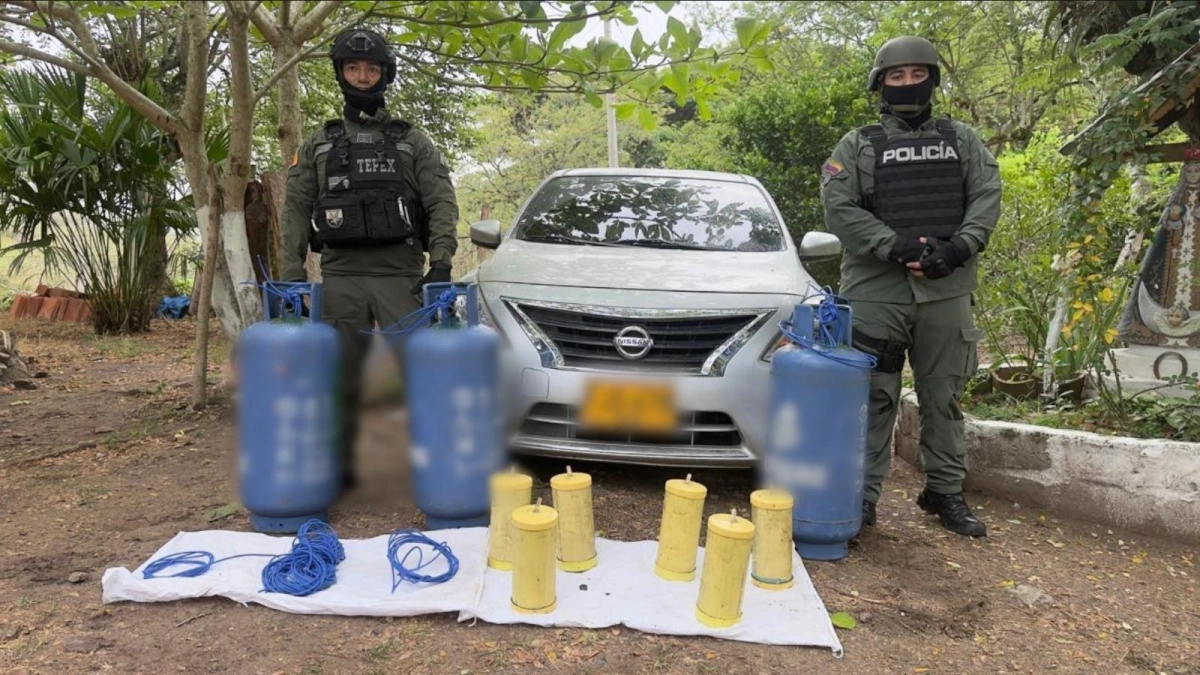
In a high-stakes operation that prevented a potential tragedy in rural Colombia, elite anti-explosive technicians from the National Police successfully neutralized a vehicle rigged with approximately 200 kilograms of high-power explosives. The device, which was abandoned in the El Arayán sector of El Pital, Huila, had been meticulously prepared to inflict significant damage. Intelligence reports directly link the orchestration of this attack to the "Hernando González Acosta" Front, a faction of the dissident groups operating under the command of "Iván Mordisco."
The successful neutralization of the car bomb marks a critical victory for state security forces in a region that has seen escalating tensions between government authorities and illegal armed groups. While the incident resulted in no casualties or infrastructure damage, it serves as a chilling reminder of the evolving tactics employed by dissident groups to exert pressure on local populations and security forces.
The Anatomy of the Threat: A Precision Operation
The operation commenced in the early hours of the morning following a series of intelligence alerts regarding suspicious activity in the Huila department. Upon receiving credible information that a vehicle packed with explosives had been positioned in the rural outskirts of El Pital, the Dijín (Directorate of Criminal Investigation and Interpol) deployed its most specialized unit: the Professional Technicians in Explosives.

Tactical Surveillance and Initial Assessment
Before any boots hit the ground, the Police utilized the Huila Command’s specialized "Remotely Piloted Aircraft Systems" (drones) to conduct an aerial survey. This tactical decision was vital, as it allowed the team to assess the structural integrity of the sedan and confirm the presence of high-risk materials without endangering personnel.
High-resolution thermal imaging and visual confirmation revealed that the vehicle’s interior was packed with multiple metallic cylinders. Once the perimeter was secured, the technicians—donning heavy-duty anti-fragmentation gear—approached the site. Using advanced semi-remote manipulation equipment, including specialized hooks and high-tension cables, the team managed to breach the vehicle’s cabin and trunk safely.

The Arsenal Found Within
The sheer scale of the explosives recovered underscored the lethality of the intended attack. The vehicle was configured with:
- Nine improvised explosive devices (IEDs): Ranging in size and composition.
- Three metallic cylinders: Each contained approximately 60 kilograms of high-grade explosive material, located in the rear cabin area.
- Six PVC containers: Each filled with 4 kilograms of explosives, stashed in the trunk.
- Detonation System: The charges were interconnected by roughly 40 meters of blue detonating cord, designed to ensure a synchronous explosion.
According to police experts, the device was not merely intended to destroy the vehicle; it was engineered for maximum fragmentation. The configuration of the PVC containers and the metallic cylinders was specifically calculated to maximize the blast radius and collateral damage to the surrounding environment.
Chronology of the Neutralization
The process of deactivating a device of this magnitude requires extreme technical precision. The timeline of the operation demonstrates the high level of training possessed by the Dijín’s specialists.
- Early Morning Intelligence: Authorities confirm the location of a suspect vehicle in the El Arayán vereda.
- Aerial Reconnaissance: Drones verify the presence of suspicious cylinders inside the sedan, confirming it is a mobile bomb.
- Containment: The area is cordoned off to ensure the safety of the local civilian population.
- Remote Access: Technicians use specialized equipment to gain entry to the vehicle without triggering the volatile mechanism.
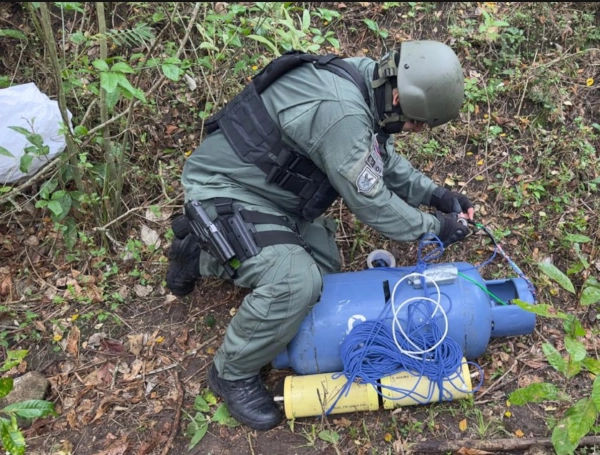
- Component Dismantling: The team identifies a time-based pyrotechnic ignition system. The device was rigged with two standard detonators connected to 60 centimeters of white safety fuse.
- Manual Neutralization: With extreme care, technicians removed the detonators and the safety fuse by hand, effectively breaking the chain of ignition.
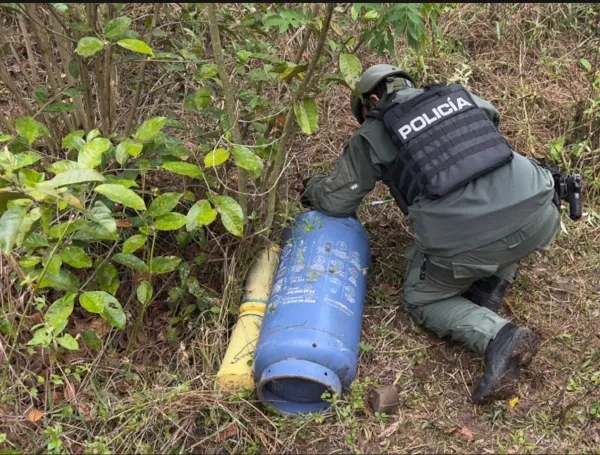
- Final Disposal: Once the primary trigger was removed, the cylinders and containers were extracted from the vehicle, transported to a secure, remote location, and subjected to a controlled explosion.
The Perpetrators: Intelligence Links to ‘Mordisco’
Intelligence dossiers provided by the National Police identify the individual responsible for the logistical assembly of the bomb as Brayan Chaguendo Trompeta, known by his aliases "Canasto" or "Yefer."
Chaguendo is a key operative within the "Hernando González Acosta" Front. This group functions as a primary component of the "Bloque Central Isaías Pardo," an umbrella organization within the broader dissident structures loyal to Néstor Gregorio Vera Fernández, alias "Iván Mordisco."
The "Hernando González Acosta" Front has been under intense scrutiny by state intelligence services for months. Their modus operandi frequently involves the use of improvised explosive devices to create "terror zones" and restrict the movement of the military and police in rural areas. By utilizing car bombs, these groups seek to project power far beyond their actual territorial control, attempting to challenge the state’s monopoly on violence.

Implications for Regional Security
The failed attack in El Pital is part of a broader, more alarming trend. Security analysts note that while the national government continues to pursue "Total Peace" initiatives, the tactical capabilities of dissident groups have not diminished. Instead, they have shifted toward more sophisticated, high-impact acts of terror.
Impact on the Local Population
For the residents of El Pital, the news of the discovery has brought a mix of relief and renewed anxiety. The rural population in the Huila region has often been the primary victim of these conflicts, facing forced displacement, extortion, and the constant threat of proximity to illicit armed groups. The rapid intervention of the police provided a rare moment of reassurance that the state maintains the capacity to preempt such violence.

Strategic Shifts
The use of drones and specialized remote-access technology by the Dijín highlights a modernization in how Colombian security forces combat asymmetric threats. As illegal groups increase their reliance on improvised weaponry, the technological gap is becoming the primary battlefield.
However, experts argue that technology alone is not enough. The persistence of figures like "Alias Canasto" suggests that, despite tactical losses, these groups maintain a robust recruitment and supply chain. The ability to source, transport, and assemble 200 kilograms of explosives implies a degree of logistical sophistication that continues to pose a challenge to local and national security agencies.

Official Stance and Future Measures
Following the successful neutralization, the National Police reaffirmed their commitment to the safety of the civilian population. In a formal statement, the Director of the Dijín emphasized that the investigation into the origins of the explosives is ongoing. "Our focus is not only on neutralizing these immediate threats but on dismantling the networks that supply these criminal structures with the materials necessary to create such devastation," the spokesperson noted.
The police have called upon the local community to continue reporting suspicious activities, noting that the intelligence that led to the discovery of the car was "vital and life-saving."

Looking Ahead
As the investigation into "Alias Canasto" intensifies, authorities are expected to increase patrols in the rural corridors of Huila. The incident has also sparked discussions in the capital regarding the need for stricter monitoring of precursors used in the manufacture of explosives, as well as the implementation of more robust surveillance networks in high-risk rural areas.
While this specific threat was successfully mitigated, the incident serves as a stark reminder of the fragile state of security in rural Colombia. The vigilance of the Dijín’s technical team, combined with the strategic use of advanced technology, proved to be the difference between a successful intervention and a potential catastrophe. As the conflict with the dissidents under "Iván Mordisco" continues to evolve, the state’s ability to detect and neutralize these high-power threats will remain the ultimate test of its reach and effectiveness.