BOGOTÁ, Colombia — In a dramatic escalation of asymmetric warfare that has sent shockwaves through the highest echelons of the Colombian government, a coordinated terrorist attack using explosive-laden drones struck a military installation in the northern department of Bolívar. The deadly strike, which occurred over the weekend, resulted in the deaths of at least three service members and left eight others with varying degrees of injuries.
The assault on the military base in Santa Rosa del Sur highlights an increasingly alarming tactical shift by armed groups operating within the country: the weaponization of commercial drone technology to target fortified state infrastructure and personnel. The incident has triggered a fierce condemnation from President Abelardo De La Espriella, who promised an uncompromising military campaign to dismantle the groups responsible for the violence.
Compounding national security concerns, a separate explosive attack—also believed to involve drones—targeted a toll plaza along a critical economic corridor in the early hours of the morning, further straining the nation’s security apparatus and renewing debates over regional stability and territorial control.
Main Facts
The primary locus of the weekend’s violence was the military canton situated in the municipality of Santa Rosa del Sur, located within the department of Bolívar. According to official reports released by the Ministry of Defense and military commands, the facility was targeted by hostile actors utilizing unmanned aerial vehicles (UAVs) modified to carry and drop explosive payloads.
Casualties: The attack resulted in the tragic deaths of three professional soldiers who were stationed at the base, serving their country. An additional eight military personnel sustained injuries from the blast fragments and structural collapses. The wounded were immediately triaged on-site before being evacuated to medical facilities for specialized treatment.
The Response: President Abelardo De La Espriella utilized social media and official addresses to denounce the attack, directing immediate administrative and psychological support to the families of the fallen soldiers and ensuring comprehensive medical care for the survivors.
Secondary Incident: In a parallel development, an explosive device detonated near a toll booth on the vital highway connecting the cities of Cali and Popayán. While preliminary investigations indicate that this attack may have similarly relied on drone delivery, it mercifully resulted in zero fatalities and no injuries. Structural damage to the toll infrastructure was classified as minor, and traffic along the crucial southwestern corridor was swiftly normalized under heavy military oversight.
Chronology of Events
The unfolding security crisis began in the early morning hours, catching intelligence and security forces in a high state of alertness as multiple regions faced simultaneous pressures.
Pre-Dawn Hours (Cali-Popayán Corridor): The sequence of security events kicked off on the strategic highway linking Cali and Popayán. An explosion rocked a local toll plaza. Initial panic quickly gave way to relief as emergency services confirmed that no motorists or toll personnel were killed or injured. Security forces moved rapidly to secure the perimeter, verifying that the roadway remained structurally sound and passable.
Daytime Assault (Santa Rosa del Sur, Bolívar): Later in the day, the situation escalated from property damage to a devastating loss of life. At the military canton in Santa Rosa del Sur, aerial surveillance was reportedly bypassed or overwhelmed when modified drones successfully infiltrated the airspace above the base.
The Detonation: The drones released their explosive payloads directly over the military compound, catching personnel off guard. The ensuing blasts caused immediate structural damage and initiated emergency rescue protocols.
Immediate Aftermath and Public Address: Within hours of the Bolívar attack, military ambulances evacuated the wounded, while explosive ordnance disposal teams secured the area against secondary devices. By afternoon, President De La Espriella issued a strongly worded condemnation, announcing an immediate reinforcement of military operations in the region.
Supporting Data and Context: The Geopolitics of Bolívar and the Cauca Corridor
To understand the gravity of the attacks in Santa Rosa del Sur and along the Cali-Popayán route, security analysts point to longstanding territorial disputes involving heavily armed, transnational, and domestic criminal syndicates operating in these regions.
The Strategic Value of Bolívar
Santa Rosa del Sur is historically recognized as a complex crucible of conflict. According to comprehensive early warnings issued by the Office of the Ombudsman (Defensoría del Pueblo) earlier in the year, the municipality and its surrounding rural areas serve as a primary contested zone between two dominant illegal armed actors:
The Clan del Golfo: Recognized as Colombia’s largest drug-trafficking cartel, heavily invested in securing local coca production laboratories and transit corridors leading toward the Caribbean coast.
The National Liberation Army (ELN): A protracted Marxist-Leninist guerrilla organization that has historically maintained a deep-rooted presence in Bolívar, utilizing the rugged terrain of the Serranía de San Lucas to evade state forces.
The friction between these two groups—both vying for hegemony over lucrative drug trafficking routes, illegal mining operations, and extortion rackets—has consistently placed the civilian population and state security forces in the crosshairs. The use of drones represents a modern tactical evolution, allowing these groups to project force against fortified positions without engaging in traditional, high-risk ground combat.
The Southwest Corridor
The incident along the Cali-Popayán highway highlights the vulnerability of Colombia’s primary economic arteries. The Pan-American Highway and its surrounding network connect major urban centers to rural agricultural hubs and Pacific ports. Disrupting this corridor is a frequent tactic used by armed factions to demonstrate reach, disrupt commerce, and exert psychological pressure on regional governance.
Official Responses and Political Repercussions
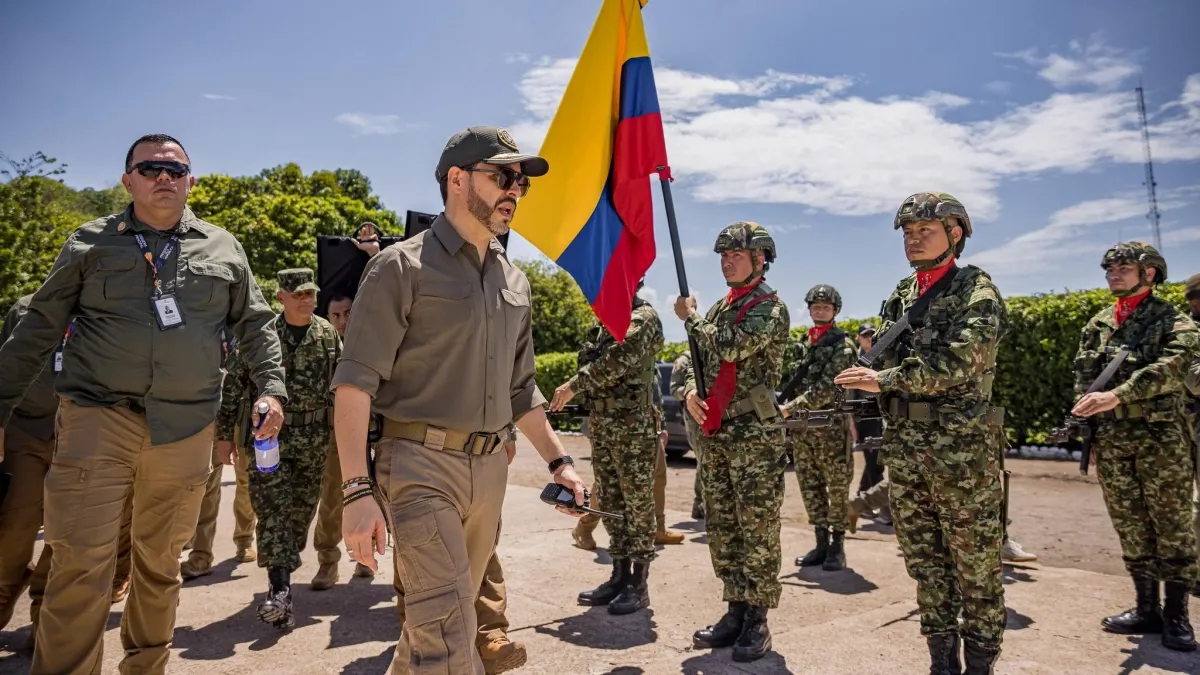
The reaction from the highest levels of the Colombian state was swift, uncompromising, and deeply personal. President Abelardo De La Espriella made it clear that his administration views the drone attacks not merely as localized security infractions, but as a direct challenge to the sovereignty and authority of the Colombian state.
The Presidential Stance
In a series of pointed statements released via digital platforms, President De La Espriella honored the fallen soldiers while issuing a stern warning to the perpetrators:
"This criminal atentado has left dead and wounded soldiers, men who serve with honor in Colombia and who were victims of those who seek to sow terror and challenge the authority of the State. My solidarity goes out to the families of our fallen heroes and to our wounded soldiers. I have ordered that they receive all necessary attention and support."
Demonstrating a zero-tolerance policy toward insurgent and criminal violence, the president used unvarnished rhetoric to signal a major military offensive:
"To those behind this attack, I say with absolute clarity: Your party is over! You will have no hiding place and no truce. We will pursue you with the full legitimate force of the State until we dismantle your criminal organizations and bring you to justice."
De La Espriella confirmed that he has formally instructed the Public Force—comprising the Military Forces and the National Police—to intensify intelligence-led operations, track down the masterminds, strike deep into their financial and logistical structures, and firmly re-establish state control over restive territories.
Ministry of Defense Deployment
Echoing the president’s directives, the Ministry of Defense moved quickly to reassure the public regarding the security of national infrastructure. Regarding the explosion along the Cali-Popayán highway, the ministry released a formal update:
"According to preliminary information, the act appears to have been executed using drones modified with explosives. Transit along this road corridor remains open and the situation is normalized. Army troops maintain a strong presence in the sector to carry out security and control tasks, protect local residents, and guarantee mobility."
Broader Implications for National Security
The utilization of explosive-laden drones against a conventional military base in Santa Rosa del Sur marks a troubling milestone in Colombia’s internal conflict. For decades, the asymmetric nature of the war relied primarily on landmines, improvised explosive devices (IEDs) planted along rural paths, and urban car bombings. The integration of readily available commercial drone technology—adapted for military payloads—introduces a new dimension of threat that challenges traditional base defense systems and early-warning radar arrays.
1. Adaptation of Military Counter-UAS Strategies
The attack forces the Colombian Armed Forces to accelerate the acquisition and deployment of Counter-Unmanned Aerial Systems (C-UAS). Protecting military cantonments across jungle, mountainous, and rural environments from low-altitude, small-signature drones requires significant technological investment, including electronic jamming devices, kinetic interception systems, and enhanced airspace monitoring.
2. Pressure on the Total Peace and Security Agendas
The boldness of the strikes underscores the immense difficulty of pacifying regions where multiple armed actors operate with impunity. As the De La Espriella administration navigates its security policies, incidents of this magnitude harden the political resolve against unverified concessions, tilting national strategy decisively toward military pressure and law enforcement eradication.
3. Protection of Critical Infrastructure
With the simultaneous targeting of a military base and an economic toll plaza, security planners must now reassess the vulnerability of civilian infrastructure. Ensuring the uninterrupted flow of commerce along critical routes like the Cali-Popayán highway remains vital to preventing regional supply chain disruptions and economic inflation.
As military operations intensify in the department of Bolívar and intelligence units trace the supply chains of the drones used in both attacks, the Colombian government faces the formidable task of neutralizing an evolving technological threat while honoring the sacrifice of the soldiers who fell in the line of duty.
BRUSSELS / BOGOTÁ — In a move that bridges the worlds of high-stakes international criminal litigation and global diplomacy, prominent penal lawyer Juan Gonzalo Ospina has been officially appointed as Colombia’s new Ambassador to the…
BOGOTÁ, Colombia – July 24, 2026 – With just under two weeks remaining until he formally assumes the highest office in Colombia, President-elect Abelardo De La Espriella is immersed in a whirlwind of preparations, meticulously…
Bogotá, Colombia – July 21, 2026 – In a significant political development marking the commencement of Colombia’s new legislative quadrennium, Senator Honorio Henríquez of the Centro Democrático party was elected President of the Senate of…