By Sports Editorial Staff
Updated September 9, 2026
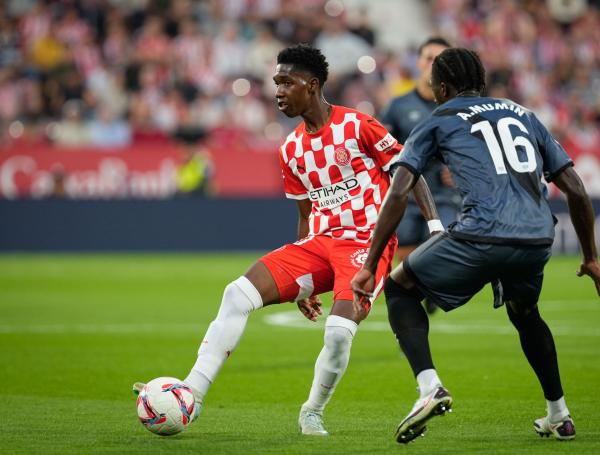
The Spanish football landscape is currently navigating a period of heightened disciplinary scrutiny, as the Royal Spanish Football Federation (RFEF) continues to enforce its regulations with uncompromising rigor. Among the most discussed developments in recent days is the disciplinary action taken against the Colombian sensation Yaser Asprilla, whose celebratory gesture during a match for Girona FC has ignited a broader conversation regarding the intersection of personal expression and strict professional officiating standards.
As the league enters a critical phase, the RFEF’s Committee of Discipline has issued a series of rulings that go beyond the pitch, affecting multiple clubs and personnel. From technical bench disputes to on-field conduct, the governing body is signaling a "zero-tolerance" policy.

The Asprilla Incident: A Message That Cost Dearly
During the recent 0-2 victory for Girona FC against Sporting de Gijón, the talented Colombian attacker Yaser Asprilla found the back of the net, marking a pivotal moment in the match. However, the ensuing celebration—intended as a personal declaration of faith—resulted in immediate disciplinary repercussions.
Upon scoring, Asprilla lifted his match jersey to reveal an undershirt bearing the inscription: "Dios tiene el control" (God has control). While the message was clearly intended as a personal expression, it ran headlong into the rigid framework of the RFEF’s disciplinary code.
The Regulatory Basis for the Sanction
The RFEF Committee of Discipline acted under Article 96 of the Disciplinary Code, which explicitly prohibits the display of any slogans, messages, advertisements, or imagery on garments worn under the official team jersey. The regulation is categorical: regardless of the intent or the nature of the message—be it political, religious, personal, or commercial—the act of revealing an undershirt is considered a technical infraction.

Because the match referee duly noted the incident in the official match report, the committee was compelled to act ex officio. The consequences for the young antioqueño were twofold:
- A Formal Administrative Yellow Card: This caution is now etched into his disciplinary record, despite it not being issued on the field of play.
- Financial Penalty: The player faces a fine reaching up to 3,000 euros, serving as a deterrent against similar displays in the future.
This incident serves as a stark reminder to players across La Liga that the "letter of the law" leaves little room for individual interpretation when it comes to uniform regulations.
A Chronology of Disciplinary Decisions
The sanctioning of Yaser Asprilla is not an isolated event; it is part of a comprehensive update released by the RFEF Committee of Discipline following a tumultuous round of league fixtures. The committee has been busy reviewing match reports from across the Primera and Segunda divisions, addressing a variety of infractions ranging from physical altercations to verbal dissent.

The Rayo Vallecano Fallout
Perhaps the most significant blow dealt by the committee was to Rayo Vallecano following their match against Racing de Santander. The club’s attempts to appeal disciplinary decisions were largely unsuccessful, leading to a ripple effect throughout their squad and technical staff.
- Jorge De Frutos: The player received a two-match suspension following a direct red card. His removal from the game was the result of "ostensible and vehement" protests directed at the officiating team from the bench. The committee upheld the original decision, rejecting the club’s claims of mitigation.
- Fran Pérez: The attacker was handed a one-match suspension. His infraction was deemed more severe in a physical sense, as he was ejected for a violent elbow against an opponent—a move the committee classified as an avoidable act of aggression.
- Iban Fagoaga: The disciplinary reach extended to the coaching staff, with the second assistant manager receiving a one-match ban for sustained, aggressive dissent toward the match officials.
Supporting Data: The Broader Landscape of Spanish Discipline
The RFEF’s recent activity highlights a trend of stricter officiating throughout the 2026 campaign. By reviewing the statistics of the most recent matchday, it becomes clear that the league is attempting to curb a rise in dissent and physical misconduct.
Notable Suspensions Across the League
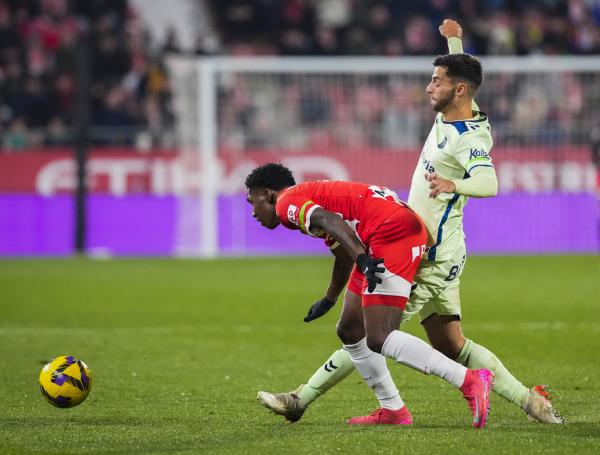
The following players were also impacted by the latest round of disciplinary bulletins, each receiving at least a one-match suspension due to actions taken during the most recent round of competition:
- Arouna Sangante (Sevilla): Suspended for one match following a red card.
- Jon Martín (Real Sociedad): Suspended for one match following a red card.
- Carlos Valero (Elche): Suspended for one match following a red card.
- Abner Zaid (Getafe): Suspended for one match following a double caution (two yellow cards) that led to an expulsion.
Segunda División Actions
The disciplinary crackdown was not limited to the top flight. In the Segunda División, the committee confirmed a two-match suspension for Mathis Lachuer of Real Valladolid, following an off-the-ball incident deemed violent by the match officials. Additionally, Albert Caparrós (Ceuta), Jair Amador (Eibar), and Aritz Aldasoro (Real Sociedad B) were all handed one-match bans, further thinning the availability of squads across the country.
Official Responses and the "Uniformity" Argument
The RFEF maintains that the strict application of Article 96 is essential to protect the "neutrality" and the commercial integrity of the league. According to a spokesperson for the Committee of Discipline, "The regulation is designed to ensure that the focus remains on the sport. Allowing subjective messages, no matter how benign, creates a precedent that is difficult to manage. We apply the law as written to ensure equality for all participants."
Critics, however, argue that the rigidity of the law lacks nuance. Many fans and pundits have pointed out that in an era where player personality is part of the game’s marketing, punishing a player for a message of faith feels archaic. Nevertheless, the committee’s stance remains firm: the pitch is a workspace governed by a specific set of rules, and those rules prohibit non-sanctioned messaging.
Implications for the Future of La Liga
The ripple effects of these decisions are likely to be felt in several ways over the coming weeks:
1. Tactical Disruptions for Clubs
Clubs like Rayo Vallecano are facing significant roster challenges. Losing key personnel like De Frutos and Fran Pérez for multiple matches forces managers to rotate players, often leading to tactical adjustments that may affect their performance in the upcoming table standings.
2. Player Behavior and Self-Censorship
Players are now acutely aware that their actions, even those occurring after the final whistle or during celebrations, are being scrutinized via high-definition video and thorough referee reporting. We can expect to see a decrease in emotional outbursts and "message-bearing" undershirts as players attempt to avoid the financial and suspension-related penalties that have now become commonplace.

3. The Ongoing Debate on "Expression" vs. "Regulation"
The Yaser Asprilla case has reignited the debate over whether the RFEF should consider amending the current code to allow for "non-offensive" personal messages. As it stands, the committee is unlikely to shift its position, maintaining that the current regulations provide the best protection against potential controversy.
4. Consistency in Officiating
The fact that so many players were sanctioned simultaneously for various infractions—ranging from tactical fouls to verbal abuse—suggests that the RFEF is sending a collective message to the clubs: the standards of conduct are being elevated, and the consequences for failing to meet them will be applied consistently across all teams, regardless of their standing in the league.
Conclusion: A Turning Point?
The events of this past week serve as a sobering reminder of the power dynamic within the Spanish football pyramid. While the technical skills of players like Yaser Asprilla continue to draw millions of viewers to stadiums and television screens, the administrative side of the game remains firmly in control.

For Asprilla, the incident is a minor bump in what has been a promising season. For the RFEF, the series of sanctions represents a commitment to maintaining the structure and perceived order of their competition. As the season progresses, players, coaches, and staff will undoubtedly tread more carefully, fully aware that in the world of the RFEF, the smallest gesture can carry the heaviest consequences.
This article was synthesized with the assistance of artificial intelligence, utilizing verified information provided by the EFE news agency.