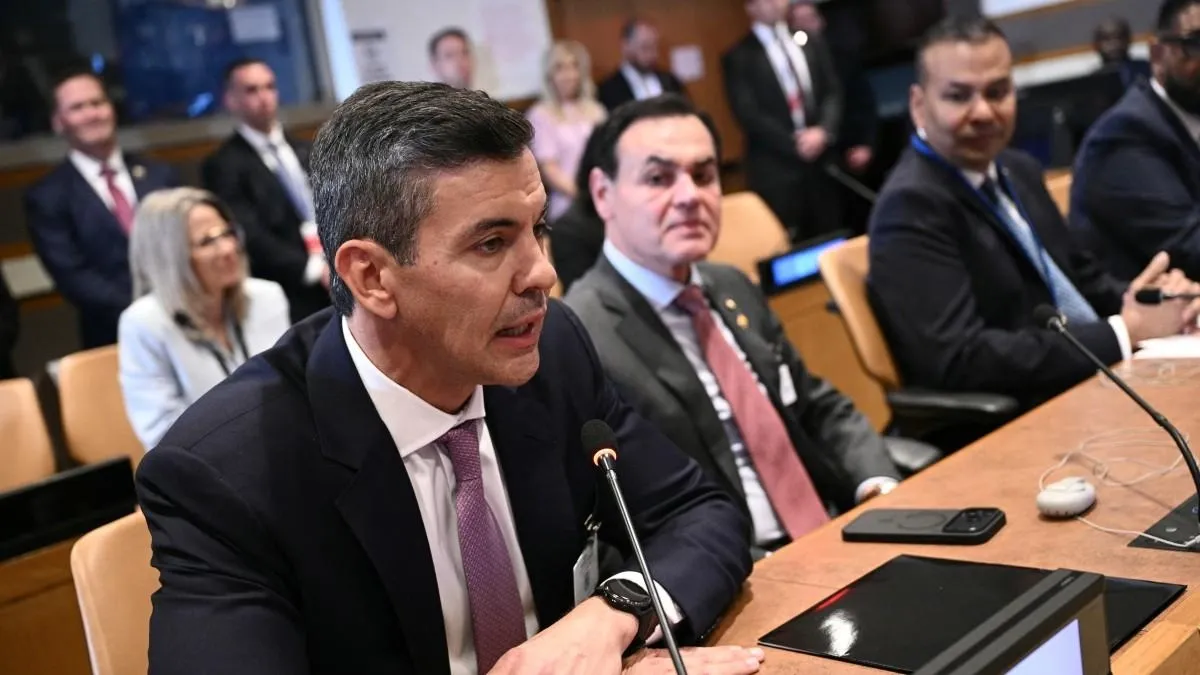
Asunción, Paraguay — In a seismic political earthquake that has upended the highest echelons of power in South America, the Public Ministry of Paraguay formally charged former President Santiago Peña on Saturday. The dramatic move comes hot on the heels of Peña’s abrupt departure from office, forced by relentless, massive street protests led by furious bank depositors and ordinary citizens.
The charges center around the catastrophic collapse and subsequent financial irregularities of Ueno Bank—a crisis that not only depleted the personal savings of thousands of citizens but also compromised vital public funds and state-owned entities. As the new administration under President Pedro Alliana scrambles to restore institutional stability, prosecutors are demanding severe judicial measures, including preventive detention and asset freezes, for the former head of state and other key architects of the national financial system.
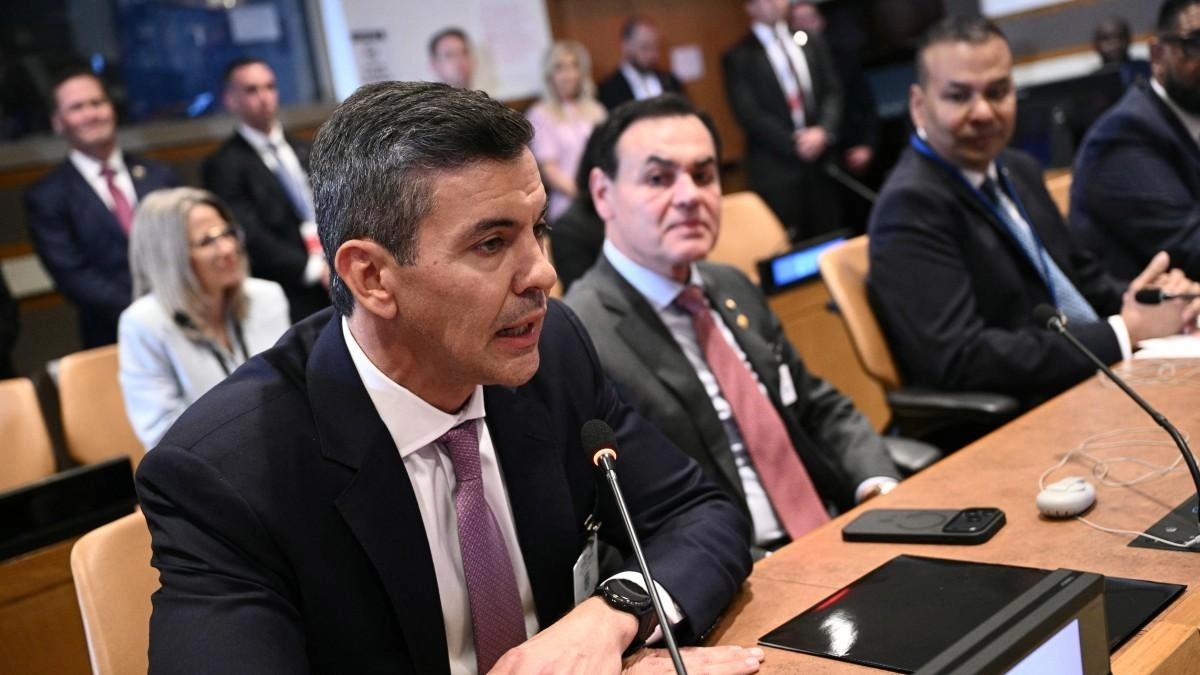
Main Facts of the Impeachment and Criminal Charges
During a packed and tense press conference on Saturday, lead prosecutor Nancy Salomón laid out the gravity of the accusations against the nation’s former leadership.
"From the Public Ministry, a formal indictment has been filed against the former President of the Republic, Mr. Santiago Peña," Salomón announced to a global press corps. She detailed that the charges brought against Peña include "breach of trust" (lesión de confianza) and "self-dealing and administration for personal profit" (administración en provecho propio).

The judicial net has not stopped with the former president. The Prosecutor’s Office has similarly charged Carlos Carvallo, the former president of the Central Bank of Paraguay (BCP), under the exact same penal code violations. Authorities have requested that both men face immediate preventive detention coupled with total asset freezes to prevent the potential flight of capital or the concealment of assets tied to the Ueno Bank scandal.
While Carvallo prepared for his mandatory appearance before the Public Ministry to answer to the charges, the political ramifications rippled across the nation. Peña’s downfall has left a profound vacuum of trust, laying bare the vulnerability of Paraguay’s financial regulatory frameworks to systemic corruption and high-level mismanagement.
Chronology of a Political Collapse: From Bank Run to Presidential Ouster
To understand the magnitude of Saturday’s legal actions, one must trace the rapid, compounding failures that culminated in the collapse of the Paraguayan government over a chaotic few days in November 2026.
- Late October 2026: Rumors and early investigative reports begin to circulate regarding liquidity strains and severe mismanagement within Ueno Bank. Depositors notice unusual delays in processing withdrawals, triggering an initial wave of panic.
- Early November 2026: The crisis explodes into the open. Thousands of frantic account holders—ranging from everyday wage earners to institutional state entities—converge on bank branches across Asunción, demanding their money back. The bank run quickly outstrips available liquidity, forcing a suspension of operations.
- November 5, 2026: Public outrage spills directly onto the streets. Massive demonstrations paralyze downtown Asunción. Protesters call for sweeping accountability, directly targeting Santiago Peña’s administration for failing to supervise the banking sector and allegedly shielding institutional insiders.
- November 6, 2026: Under insurmountable political pressure and facing imminent legislative action, Santiago Peña formally announces his resignation from the presidency, signaling the complete collapse of his administration’s legitimacy. Pedro Alliana assumes power in a hastily arranged transition.
- November 7, 2026: The newly installed government swears in figures like Antonio Barrios as vice president. Meanwhile, investigative journalists and international agencies note the deep web of financial entanglements linking the state apparatus to Ueno Bank.
- November 8, 2026 (Saturday): The Public Ministry drops its legal hammer. Prosecutor Nancy Salomón announces formal criminal charges, preventive detention orders, and asset freezes against both former President Santiago Peña and former Central Bank chief Carlos Carvallo.
Supporting Data and the Scale of the Financial Crisis
The collapse of Ueno Bank is not merely a corporate failure; it represents a systemic hemorrhage of national wealth. The institution held substantial portfolios, not just from private citizens seeking stable yields, but critically, from various public sector bodies and state agencies that utilized the bank for operational liquidity.

Preliminary forensic audits suggest that billions of guaraníes—representing the life savings of ordinary citizens and strategic state reserves—were exposed to high-risk, unregulated investments or extracted through self-serving financial vehicles engineered by well-connected elites.
Because domestic financial channels and local oversight bodies have been compromised or overwhelmed, the magnitude of the missing funds remains difficult to quantify fully. Financial analysts point out that tracking the illicit movement of these resources will require extensive cross-border cooperation, sophisticated digital forensics, and international asset-recovery frameworks.

Official Responses and the Pursuit of International Help
The newly minted government under President Pedro Alliana is moving swiftly to distance itself from the wreckage of the Peña administration while attempting to salvage public confidence.
In a revealing interview with radio station ABC Cardinal on Saturday, newly installed Vice President Antonio Barrios laid bare the administration’s strategy for confronting the financial black hole left by Ueno Bank. Barrios bluntly admitted that domestic authorities alone lack the technological sophistication and forensic capabilities required to trace the complex, multi-layered financial maneuvers executed during the crisis.

"Tenemos que recurrir a nuestros aliados. Tenemos aliados que son países del primer mundo con mucha tecnología que podrían ayudarnos a saber dónde está el dinero," ("We have to resort to our allies. We have allies that are first-world countries with a lot of technology that could help us figure out where the money is,") Barrios stated during the broadcast.
While the vice president refrained from naming specific foreign governments or international intelligence agencies, diplomatic sources suggest that Asunción is already in informal talks with financial intelligence units (FIUs) in the United States and the European Union. The goal is to deploy advanced asset-tracing software and international mutual legal assistance treaties (MLATs) to freeze and repatriate capital siphoned off to offshore accounts or foreign tax havens.

Meanwhile, defense attorneys for Santiago Peña and Carlos Carvallo have decried the prosecution’s demand for preventive detention as heavy-handed, politically motivated, and premature. They argue that their clients acted within the bounds of standard economic policy and regulatory discretion, asserting that the bank’s downfall was driven by macroeconomic volatility rather than criminal intent. Legal experts, however, note that securing a defense against charges of lesión de confianza and administración en provecho propio will be an uphill battle given the overwhelming political consensus for institutional accountability.
Broader Implications for Paraguay and the Region
The Ueno Bank scandal and the subsequent downfall of Santiago Peña carry profound implications that extend far beyond Paraguay’s borders:

- Erosion of Democratic Trust: The crisis demonstrates the fragility of democratic institutions in Latin America when economic populism and high-level cronyism intersect. The ability of ordinary citizens to mobilize and force a president from office in real-time highlights the power of modern civil resistance, but it also underscores the deep instability such shocks inflict on nascent democracies.
- Regulatory Overhaul: Central banks across the region are facing renewed pressure to audit their supervisory mechanisms. The complicity or gross negligence of the Central Bank of Paraguay—exemplified by the criminal indictment of its former chief, Carlos Carvallo—signals that independent regulatory bodies are failing to shield public interests from private banking greed.
- International Financial Scrutiny: Paraguay’s reliance on first-world allies to trace missing assets signals a growing trend in Latin American anti-corruption efforts: domestic judiciaries are increasingly leaning on international cooperation frameworks to pierce through corporate secrecy, shell companies, and offshore money laundering networks.
- Political Realignment: The swift ascension of Pedro Alliana and Antonio Barrios to power will be closely watched by international markets and multilateral lenders. The new executive branch must balance the immediate imperative of placating angry depositors with the delicate task of restoring macroeconomic credibility and avoiding a broader systemic banking panic.
As the legal proceedings against Santiago Peña and Carlos Carvallo advance through the Paraguayan court system, the nation remains on high alert. For a country striving to project an image of stability and economic modernization to foreign investors, the Ueno Bank scandal stands as a sobering reminder that accountability, transparency, and robust oversight are non-negotiable pillars of a healthy republic.