Gourmet Dessert Trend: By combining the everyday banana with sophisticated technique, French pastry tradition meets Latin American ingredients in a viral recipe that utilizes the fruit’s own skin as an eco-friendly serving vessel.
Main Facts
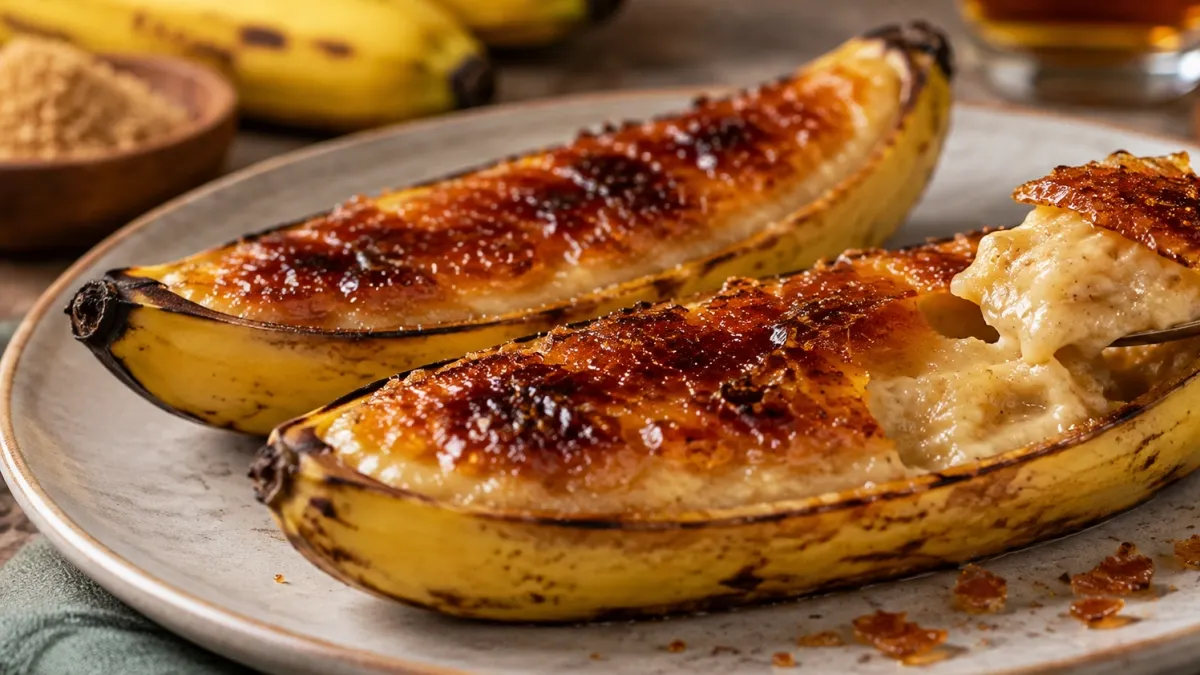
The boundaries of traditional pastry arts continue to expand as acclaimed chefs look to everyday ingredients for inspiration. In a recent culinary demonstration shared across digital platforms, renowned Chef José Ra Castillo unveiled a striking recipe for Plátanos Brûlée (Bananas Brûlée with a Creamy Spoonful). This innovative dessert transforms the humble banana into an upscale, restaurant-quality sweet treat featuring a velvety, custard-like interior and a signature glass-like, caramelized sugar crust.
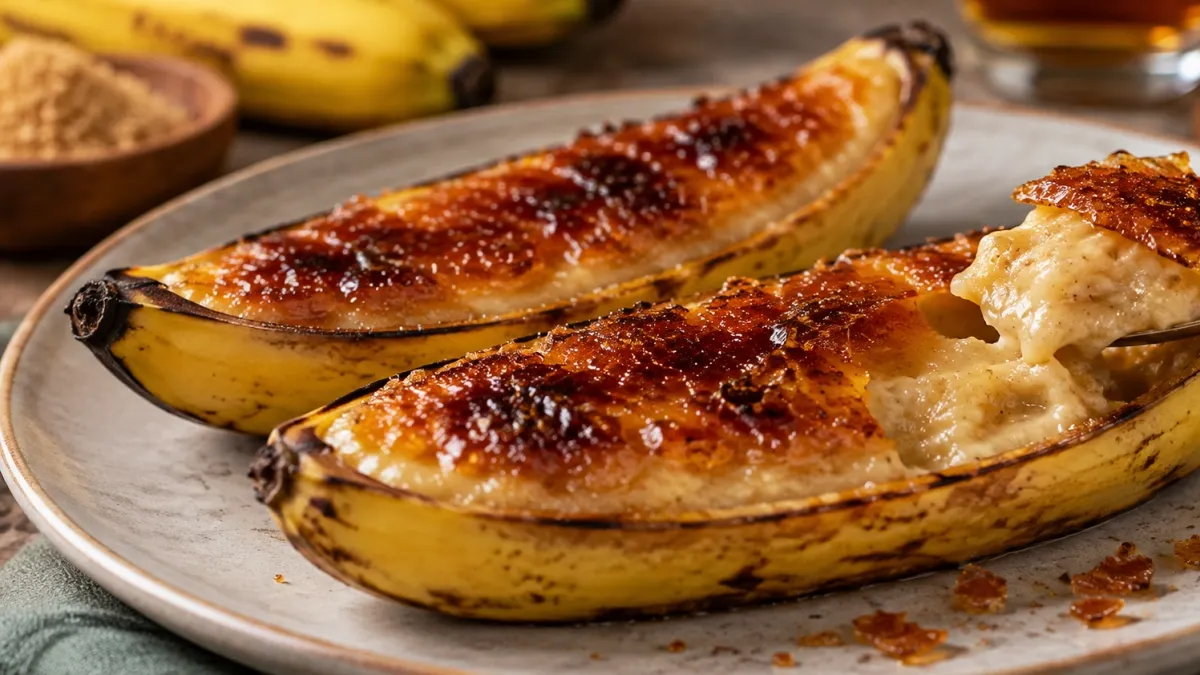
Rather than relying on traditional ramekins, Castillo’s method creatively repurposes the banana’s own peel as a natural serving vessel. The preparation artfully combines core elements of a classic French crème brûlée—such as vanilla, rich dairy, and crisp caramelized sugar—with tropical components including rum and mashed banana.
The recipe requires a precise balance of technique:

- The Vessel: A portion of the banana is sliced longitudinally, and the internal pulp is carefully hollowed out while preserving the structural integrity of the skin.
- The Infusion: The extracted fruit is sautéed with dark mascabado sugar and aromatic vanilla extract, then elevated through a theatrical rum flambeado process.
- The Binder: A mixture of milk and cornstarch is integrated into the warm fruit mixture, transforming it into a thick, homogenous paste as it cooks.
- The Finish: Once cooled to room temperature and returned to the banana peel boats, the dessert is blanketed in a generous layer of sugar and torched to achieve the iconic crisp, crackling surface characteristic of a true brûlée.
Chronology of the Recipe’s Development and Digital Release
The journey of the Plátanos Brûlée from professional test kitchens to global digital screens followed a deliberate, step-by-step gastronomic evolution designed for home cooks:
-
Phase 1: Conceptualization and Sourcing
Chef José Ra Castillo conceptualized a way to merge comfort food familiarity with upscale dining aesthetics. He selected mascabado sugar for its deep molasses notes, which complement the natural sweetness of ripe bananas far better than refined white sugar.
-
Phase 2: The YouTube Premiere (October 2026)
The step-by-step tutorial was published on Castillo’s official YouTube channel. In the video, the chef meticulously breaks down how to hollow out the fruit without tearing the skin, establishing the foundational prep work necessary for home execution. -
Phase 3: Sautéing and Flambeado
In the video’s central sequence, the extracted banana pulp hits a hot skillet alongside the mascabado sugar and vanilla. The chef introduces rum to the pan, carefully executing a controlled flambeado to cook off the harsh alcohol content while leaving behind a rich, complex flavor profile.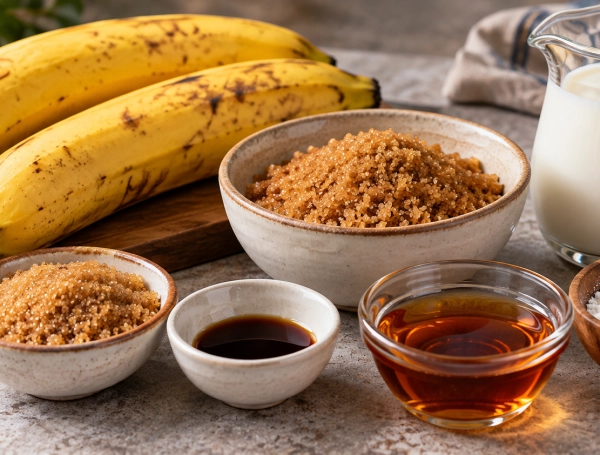
-
Phase 4: Thickening and Tempering
Castillo demonstrates the creation of the creamy matrix by whisking milk and cornstarch separately before folding it into the fruit mixture. The continuous mashing and stirring over heat yield a thick, custard-like consistency, which is then set aside to cool completely to room temperature. -
Phase 5: Assembly and Final Torch
The cooled, dense filling is spooned back into the reserved banana peels, smoothed flat, and coated with a final 100-gram layer of mascabado sugar. The video concludes with the satisfying crack of a kitchen torch breaking through the hardened caramel cap, revealing the soft, aromatic filling underneath.
Supporting Data and Ingredient Breakdown
Achieving the precise textural contrast between the brittle caramel shell and the soft, creamy interior relies heavily on exact measurements and specific ingredient choices. Culinary experts emphasize that the chemical properties of mascabado sugar—minimally processed cane sugar retaining high molasses content—play a critical role in both the flavor depth and the browning capabilities of the recipe.
Comprehensive Ingredient List:
- Ripe Bananas: Selected for their structural firmness and natural sugar content.
- Mascabado Sugar (Divided):
- Step 1: Approximately 30 grams used for sautéing and building the base flavor profile.
- Step 2: 100 grams allocated for the final surface crust and caramelization.
- Extract of Vanilla: Used to enhance the aromatic complexity of the fruit base.
- Dark Rum: Utilized for deglazing the pan and executing the flambeado technique.
- Milk: Provides the liquid base required to hydrate the thickener and create a smooth emulsion.
- Cornstarch (Fécula de Maíz): Acts as the primary thickening agent, stabilizing the milk and fruit purée into a rich, spoonable cream when heated.
Official Safety Guidelines and Professional Warnings
While the recipe is designed to be accessible for home cooking enthusiasts, culinary professionals and safety organizations emphasize that certain steps—particularly the flambeado process—demand rigorous adherence to safety protocols.
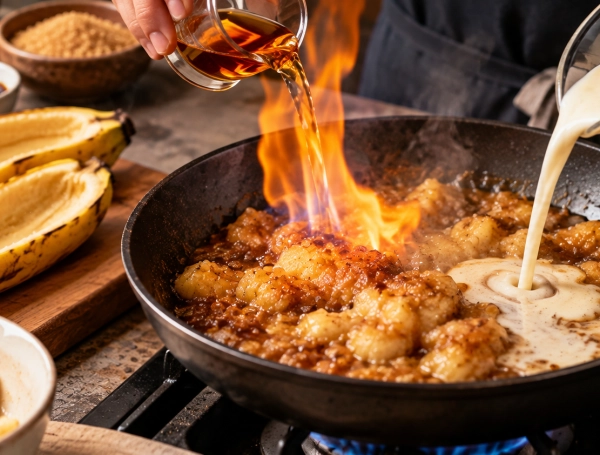
Chef Castillo explicitly highlights the inherent risks of open-flame cooking in home kitchens:
- Distance from Flammables: The flambeado step must be executed well away from overhead cabinets, paper towels, grease splatters, or any other flammable kitchen materials.
- Bottle Safety: Under no circumstances should alcohol be poured directly from a bottle into or near a hot skillet, as the flame can travel up the stream and cause an explosion or severe container rupture. Cooks are advised to measure the rum into a separate vessel beforehand.
- Thermal Management: The filling must be allowed to cool to room temperature before being loaded back into the delicate banana peels to prevent structural collapse and ensure the structural integrity of the serving vessel.
Implications for Modern Home Gastronomy
The viral reception of the Plátanos Brûlée signals a broader cultural shift in how contemporary chefs approach home cooking. By taking an inexpensive, globally ubiquitous ingredient like the banana and elevating it through classical French culinary techniques (such as the brûlée method and pastry cream thickening), high-end gastronomy becomes approachable for everyday kitchens.

Furthermore, the emphasis on zero-waste presentation—using the banana’s own skin as a biodegradable, organic serving dish—reflects an increasing consumer demand for sustainable and visually striking food presentation. As digital platforms continue to champion creative fusion recipes, techniques once locked behind the doors of professional restaurants are successfully making their way into domestic routines, redefining what is possible with simple pantry and produce staples.