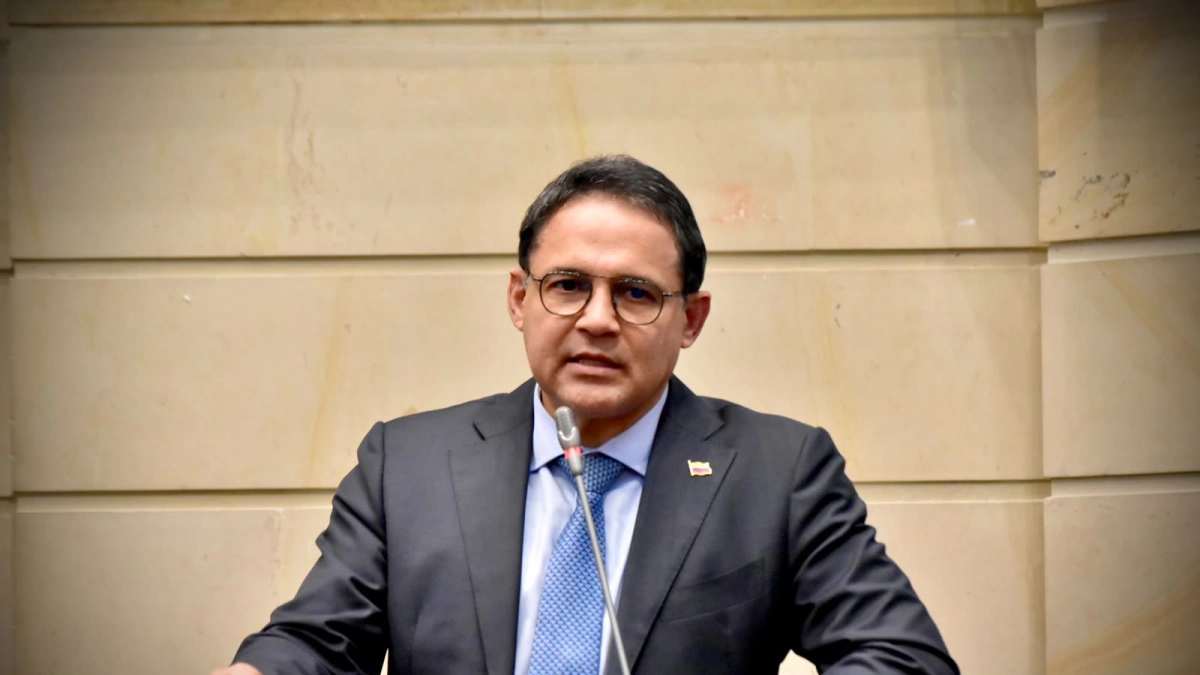
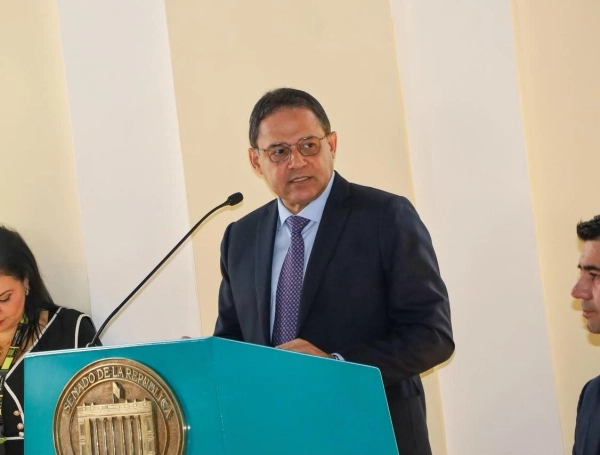
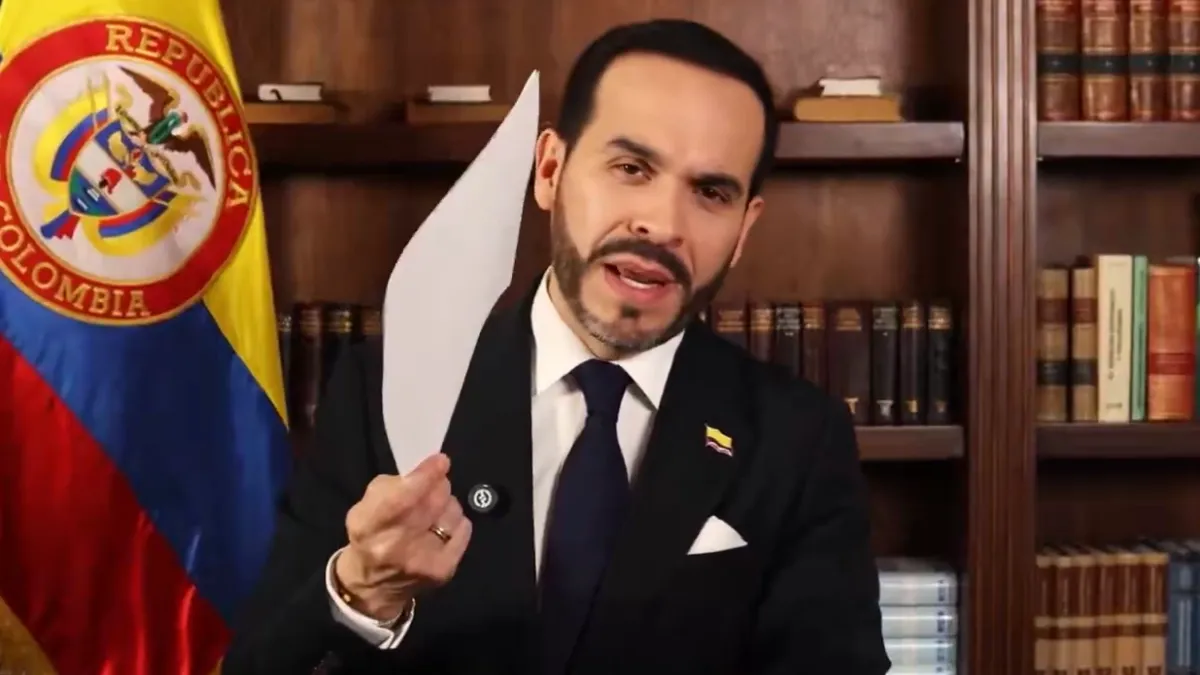
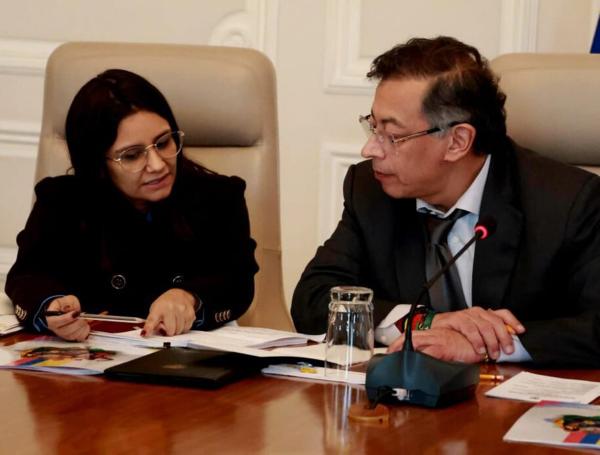
BOGOTÁ — In a move that sets the stage for a high-stakes legislative showdown, the President of the Colombian Senate, Honorio Henríquez, has outlined his stance on the newly introduced fiscal adjustment package spearheaded by the administration of President Abelardo De La Espriella. While promising to shepherd the controversial initiative through Congress with absolute transparency and democratic guarantees, Henríquez drew a hard political line against any measures that would increase the tax burden on ordinary citizens.
The proposal, officially titled the Law of Economic Rescue, arrives at a critical juncture for Colombia’s public finances, seeking to plug a massive structural deficit through a mix of public spending cuts and revenue-generating mechanisms. However, as the legislative machinery prepares to grind into action, the early battle lines drawn by congressional leaders and economic analysts signal that the road to passing the bill will be fraught with fierce debate.
Main Facts
The core of the unfolding legislative battle revolves around the "Ley de Rescate Económico" (Law of Economic Rescue), a sweeping fiscal reform package formally submitted to Congress by the executive branch under President Abelardo De La Espriella.
Senate President Honorio Henríquez formally addressed the nation regarding the administration’s flagship project. While committing to a "broad, plural, and fully guaranteed debate for all sectors," Henríquez made it unequivocally clear that his personal vote—and his ideological stance—will not support any article within the initiative that introduces new taxes or raises existing levies on Colombians.
The executive branch’s bill aims to tackle the nation’s severe fiscal imbalances through a two-pronged strategy: aggressive reductions in state operating expenditures alongside structural tax adjustments. Among its chief provisions, the project outlines a staggering 50 percent cut to the costs associated with professional service contracts and general support for state management slated for 2027. This is to be followed by a 20 percent reduction in personnel expenditures across government agencies by 2028. Additionally, the proposal incorporates a social welfare mechanism designed to return the Value Added Tax (IVA) directly to the lowest-income populations.
Despite these proposed austerity measures, the bill has immediately triggered intense polarization among economists, political figures, and lawmakers. Critics argue that the actual distribution of the fiscal burden relies far too heavily on new taxes and contributions rather than genuine state downsizing, setting up a fierce parliamentary collision over the coming weeks.
Chronology of Events
The trajectory leading up to the introduction of the Law of Economic Rescue and the subsequent reactions reflects a fast-moving political and economic environment in Colombia:
Late August 2026: Discussions intensify within the executive branch regarding the growing fiscal deficit and the urgent need for structural reform to stabilize the national treasury under the newly inaugurated administration of President Abelardo De La Espriella.
September 4, 2026: Prominent economic figures, including former Minister of Finance Mauricio Cárdenas, begin publicly weighing in on the impending fiscal crisis, emphasizing the necessity of substantial spending cuts and revenue adjustments to restore macroeconomic stability.
September 29, 2026: Senate President Honorio Henríquez participates in the signing of the "Institutional Agreement for Transparency," underscoring a legislative commitment to ethical governance and open debate ahead of anticipated high-impact bills.
October 28, 2026: Anticipation builds across political circles as final drafts of the administration’s fiscal rescue package are prepared for formal introduction to the legislature.
October 29, 2026 (6:38 PM): The executive branch officially files the Law of Economic Rescue in Congress. Simultaneously, Senate President Honorio Henríquez issues his official statements guaranteeing an open floor for debate while vowing to reject any article introducing new taxes.
October 29, 2026 (6:48 PM): Updates to initial news reports capture swift political fallout, highlighting deep divisions between optimistic institutional voices and critical analysts like former DANE director Juan Daniel Oviedo, who calls for immediate transparency regarding the government’s underlying economic models.
Supporting Data and Fiscal Metrics
To understand the gravity of the debate surrounding President De La Espriella’s fiscal rescue package, one must examine the underlying numbers driving the national conversation. Colombia’s macroeconomic landscape has faced persistent pressures, characterized by a widening fiscal deficit and mounting public debt obligations that have constrained the government’s budgetary flexibility.
According to government projections cited by economic defenders of the bill, the comprehensive adjustment package is designed to slash approximately $40 trillion COP in public spending over the medium term. The targeted mechanisms within the text of the bill include:
50% Reduction: A mandatory half-price slash in expenditures dedicated to professional service contracts and administrative support functions within the state apparatus, effective in the fiscal year 2027.
20% Reduction: A subsequent one-fifth cut in overall personnel expenditures across government entities, scheduled for implementation by 2028.
Targeted Social Relief: A formalized system for returning the IVA (Value Added Tax) to the most economically vulnerable segments of the population, intended to cushion the blow of indirect taxation on low-income households.
However, these figures are countered by critical evaluations from independent analysts. Prominent figures like former DANE director Juan Daniel Oviedo have pointed out discrepancies between the administration’s public narrative of state-slashing austerity and the mathematical reality presented within the bill’s annexes and tables. According to critics’ preliminary readings of the fiscal tables, the genuine reduction in state operational costs accounts for a significantly smaller fraction of the required adjustment than claimed, leaving formal labor markets and middle-income earners to shoulder a disproportionate weight of the revenue collection targets.
Official Responses and Stakeholder Reactions
The introduction of the fiscal package has drawn a diverse array of responses from across the political and economic spectrum, highlighting the delicate balancing act the administration faces in Congress.
The Legislative Leadership: Honorio Henríquez
Senate President Honorio Henríquez sought to position himself as an impartial arbiter of the legislative process while retaining his identity as a fiscal conservative.
"Como presidente del Senado, garantizaré un debate amplio, plural y con plenas garantías para todos los sectores durante la discusión y votación del proyecto de Ley de Rescate Económico, radicado hoy por el Gobierno Nacional," ("As President of the Senate, I will guarantee a broad, plural debate with full guarantees for all sectors during the discussion and voting on the Economic Rescue Law project, filed today by the National Government,") Henríquez stated.
However, balancing his institutional role with his personal convictions, he added:
"Como senador, considero necesario reducir el tamaño del Estado para hacerlo más eficiente, pero, sobre todo, evitar que el ajuste fiscal se traduzca en mayores impuestos para los colombianos," ("As a senator, I consider it necessary to reduce the size of the State to make it more efficient, but above all, to prevent the fiscal adjustment from translating into higher taxes for Colombians.")
Pro-Reform Perspectives: Former Finance Minister Mauricio Cárdenas
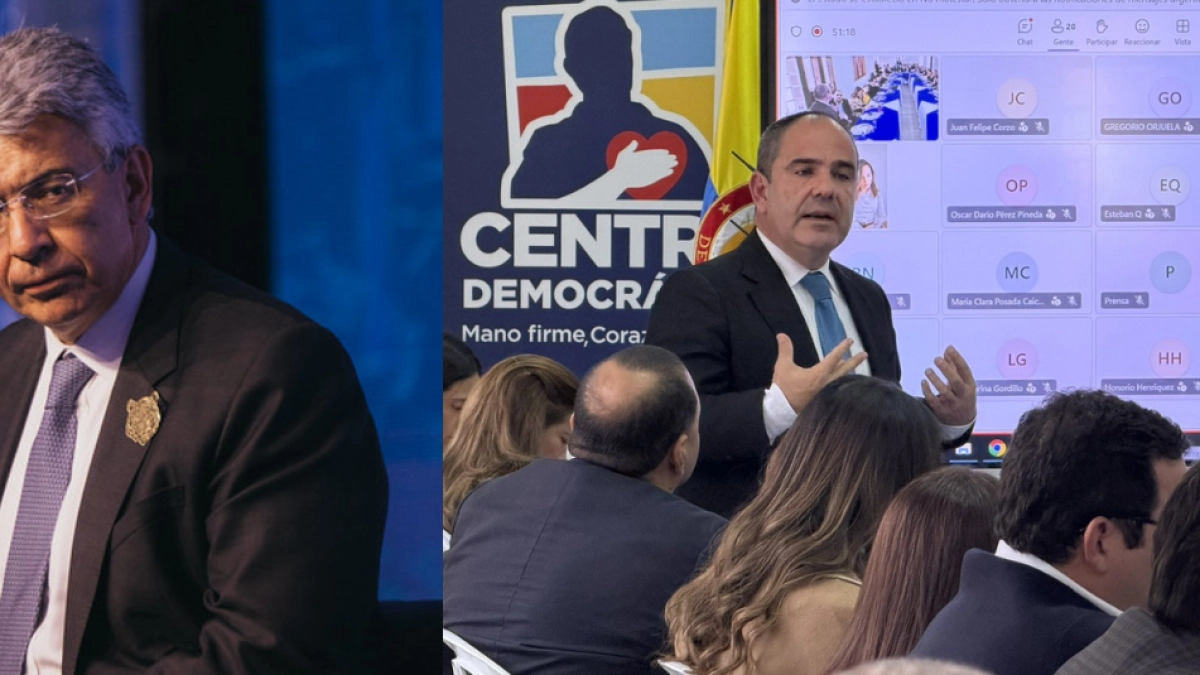
Endorsing the broad strokes of the executive’s strategy, former Minister of Finance Mauricio Cárdenas welcomed the initiative as an unavoidable medicinal dose for the national economy.
"La Ley de Rescate Fiscal es un paso necesario para enfrentar la crisis de las finanzas públicas," ("The Fiscal Rescue Law is a necessary step to face the crisis of public finances,") Cárdenas noted. He praised the scale of the proposed intervention: "Propone recortar $40 billones en gasto público y aumentar el recaudo. Un ajuste necesario para recuperar la sostenibilidad fiscal. Celebro que el Gobierno haya tomado esta decisión." ("It proposes cutting $40 trillion in public spending and increasing collection. A necessary adjustment to recover fiscal sustainability. I celebrate that the Government has taken this decision.")
Critical Voices: Juan Daniel Oviedo
Conversely, former DANE director and prominent political figure Juan Daniel Oviedo raised serious red flags regarding the composition of the adjustment, accusing the Ministry of Finance of masking tax hikes as state streamlining.
"Sí al ajuste, no a uno mal contado," ("Yes to adjustment, no to a poorly counted one,") Oviedo argued sharply. Breaking down the numbers presented in the administration’s own documentation, he asserted: "Hacienda dice que el 70% es reducir el Estado; su propia tabla muestra que en 2027 solo 1 de cada 4 pesos sale de recortar gasto y 2 de cada 3, de impuestos y contribuciones." ("The Treasury says that 70% is reducing the State; their own table shows that in 2027 only 1 out of every 4 pesos comes from cutting spending and 2 out of every 3 from taxes and contributions.")
Oviedo further warned that the burden would fall squarely on the shoulders of the formal labor force:
"Y la cuenta cae sobre el trabajo formal: por quien gana entre 3 y 10 mínimos, la empresa volvería a pagar 13,5 puntos de nómina y el trabajador, más salud." ("And the bill falls on formal labor: for those earning between 3 and 10 minimum wages, the company would again pay 13.5 payroll points and the worker, more health contributions.")
Concluding his critique, Oviedo issued a direct challenge to the economic team: "Pido a Hacienda publicar su microsimulación antes del primer debate." ("I ask the Treasury to publish its microsimulation before the first debate.")
Implications for Colombia’s Economic and Political Future
As the Law of Economic Rescue begins its journey through the Senate and the Chamber of Representatives, the implications of this legislative battle extend far beyond the immediate budget cycle.
First and foremost, the division between the executive branch’s economic architects and key congressional leaders like Senate President Honorio Henríquez highlights the fragility of legislative coalitions under President De La Espriella. If the executive insists on revenue-enhancing measures that rely on increased tax collection or indirect contributions from formal workers and businesses, it risks crashing into a brick wall of opposition led by conservative and anti-tax lawmakers within its own legislative majority.
Secondly, the credibility of the adjustment plan hangs in the balance. Demands from analysts like Juan Daniel Oviedo for transparent data, detailed microsimulations, and honest accounting place intense pressure on the Ministry of Finance. If the government cannot convincingly prove that the bulk of the fiscal rescue relies on genuine state austerity rather than squeezing taxpayers, public and parliamentary resistance is bound to escalate.
Finally, the debate touches upon a fundamental ideological question facing Colombia: how to achieve macroeconomic stability without crushing economic recovery and employment generation. While technocrats and former officials like Mauricio Cárdenas view the package as an indispensable emergency measure to preserve fiscal sovereign health, populist and protectionist pressures inside Congress will fight tooth and nail to protect citizens from additional financial strains.
The coming weeks in Congress promise intense negotiations, committee lobbying, and floor debates that will define not only the economic legacy of President Abelardo De La Espriella’s administration but also the immediate financial well-being of millions of Colombians.
By Juan Pablo Penagos Ramírez / Political Desk Analysis Published: September 14, 2026 Main Facts The political landscape of the Colombian right is undergoing a profound and turbulent restructuring. Months after the presidential triumph of…
By Camila Sanchez Fajardo Digital Outreach Desk, El Tiempo Updated: September 27, 2026 – 11:25 PM Main Facts In a sweeping and uncompromising national address delivered on Sunday, September 27, 2026, Colombian President Abelardo De…
Main Facts: A Judicial Turnaround and the Reopening of Political Scrutiny The political landscape in Colombia has been profoundly rattled following a definitive legal and moral turning point in the case of Juliana Guerrero. Once…