
By Edwin Caicedo
Environment and Health Journalist
November 4, 2026
1. Main Facts
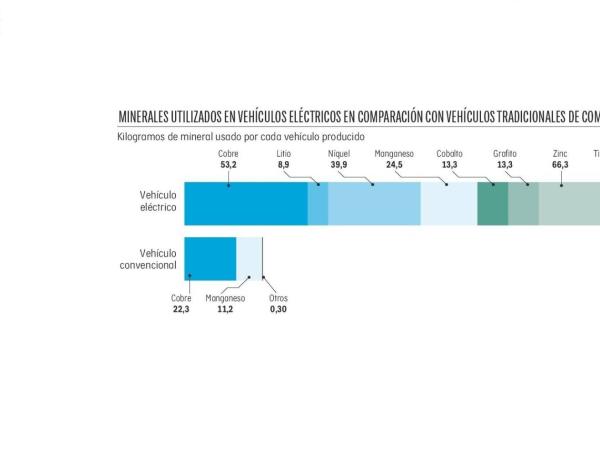
Colombia is at a critical juncture in its economic and industrial development. The national government’s recent proposal to expand the list of designated "strategic minerals" from 17 to 28 has ignited a national debate regarding the future of the country’s mining sector. This expanded classification is designed to protect, explore, and heavily leverage resources essential for global energy transitions, technological advancements, food security, and public infrastructure.

However, according to legal experts, the primary obstacle facing Colombia’s mining sector is not a lack of regulatory frameworks, but rather a persistent deficit in political will. Transforming existing policies into tangible, high-impact projects remains the ultimate test for state institutions.
Manuel José Ocampo, an associate at the international law firm Holland & Knight, emphasizes that for Colombia to truly capitalize on this policy shift, the nation must aggressively advance its mining rounds, dramatically improve geological knowledge of its subsoil, and provide unwavering legal stability to attract foreign and domestic capital. Furthermore, the country faces the urgent challenge of moving beyond its historical role as a mere exporter of raw materials. To build a robust economy, Colombia must foster integrated value chains capable of processing minerals like gold and copper locally, thereby generating high-value employment and fortifying national industry.

2. Chronology of the Strategic Minerals Policy
The evolution of Colombia’s strategic mineral framework spans over a decade, marked by institutional restructuring, regulatory updates, and international cooperation:
- 2011–2014: The Colombian Congress, alongside the Ministry of Mines and Energy (MME), the National Mining Agency (ANM), the Mining-Energy Planning Unit (UPME), and the Colombian Geological Service (SGC), begins structuring a specialized regulatory framework. This framework sets strategic minerals apart from conventional mining categories, establishing unique mechanisms for their development. The enactment of Law 1715 of 2014 introduces foundational incentives for research, talent development, and technology within sustainable sectors.
- 2023: The National Mining Agency issues Resolution 1006, formally establishing the initial list of 17 strategic minerals meant to guide the nation’s exploration and economic priorities.
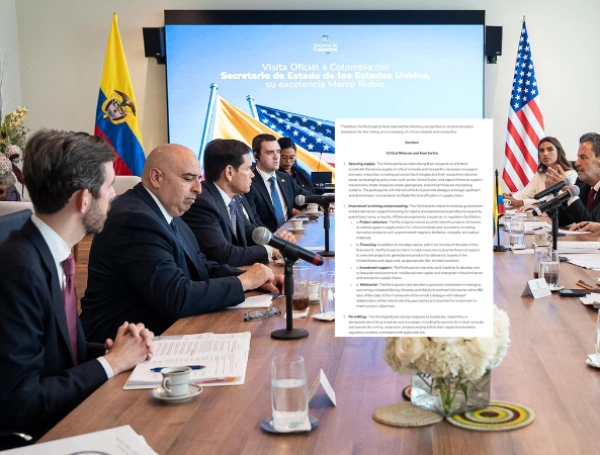
- September 2026: Colombia and the United States sign a non-binding Memorandum of Understanding (MOU) focused on critical minerals, signaling an intent to cooperate on supply chains and international commercialization.
- October 2026: The Colombian government successfully executes and signs a fresh wave of mining contracts derived from recent competitive bidding rounds, injecting optimism into the sector regarding the practical implementation of state policies.
- November 2026: Proposals to expand the strategic mineral catalog from 17 to 28 resources take center stage, triggering broad discussions across legal, environmental, and industrial sectors regarding execution, security, and economic value addition.
3. Supporting Data and Regulatory Mechanics
The proposed expansion from 17 to 28 strategic minerals is far more than a symbolic bureaucratic update; it triggers distinct legal, operational, and financial mechanisms across Colombia’s public administration:

- Derogation of Previous Norms: The updated classification formally repeals Resolution 1006 of 2023, replacing outdated parameters with a broader, more comprehensive catalog tailored to modern industrial needs.
- Empowerment of the ANM: The National Mining Agency gains explicit authority to delimit Strategic Mining Areas (Áreas Estratégicas Mineras – AEM). Within these zones, the agency can conduct objective selection processes to contract qualified developers focused exclusively on the exploration and exploitation of designated critical resources.
- Geoscientific Research Mandate: The state acquires the legal backing and momentum to fund and execute comprehensive geoscientific research programs. This allows public entities to map the country’s true subsurface potential, providing investors with reliable data regarding minerals vital for industrialization and green energy technologies.
- Incentive Frameworks: Pre-existing legislative foundations, notably Law 1715 of 2014 and Law 2099 of 2021, provide tax and financial incentives designed to stimulate technological research, private investment, and sustainable infrastructure development.
4. Official Responses and Expert Perspectives
As the debate surrounding the 28 strategic minerals intensifies, legal and industry experts have weighed in on the delicate balance between attracting foreign investment and safeguarding national sovereignty.
The Legal and Institutional Landscape
Manuel José Ocampo of Holland & Knight asserts that Colombia possesses the foundational regulatory architecture required to make these projects successful. "Since 2011, the Congress and sector authorities have structured a framework that allows strategic minerals to follow a distinct development model," Ocampo explains.

Once Strategic Mining Areas (AEM) are officially delimited, the state holds the power to run objective selection processes. These processes ensure that chosen contractors not only offer optimal economic terms but also meet rigorous environmental, social, and labor standards.
"The state’s duty now is to ensure that this regulatory clarity translates directly into active mining rounds and concrete benefits for the country," Ocampo notes, pointing to the successful October 2026 contract signings as positive proof that the system can function when backed by political execution.

The U.S.–Colombia Partnership: Opportunity vs. Autonomy
The signing of the non-binding Memorandum of Understanding with the United States has raised questions regarding national sovereignty. Ocampo clarifies that an MOU of this nature does not impose mandatory legal obligations or burdens on either state.
Instead, it acts as a strategic diplomatic instrument signaling a shared intent for bilateral cooperation. If managed correctly, this partnership offers Colombia a reliable, powerful ally for the commercialization of its extracted minerals on the global stage. However, Ocampo warns that any resulting legal frameworks must explicitly prioritize environmental protection, community rights, and the establishment of local industrial value chains rather than raw export dependency.

5. Economic, Environmental, and Social Implications
Expanding the catalog of strategic minerals opens the door to significant economic advancement, but it simultaneously introduces profound risks that demand immediate policy intervention.
Combating Transnational Illicit Economies
One of the gravest threats facing Colombia’s mining sector is the infiltration and expansion of criminal networks that exploit weak enforcement in remote regions. Academic and legal sectors have increasingly argued that illicit mining must be formally classified and treated as a transnational crime. By framing illegal extraction through this lens, the Colombian government can secure international intelligence and operational support from foreign allies to dismantle criminal syndicates.
Concurrently, the state must redouble its efforts in mining formalization programs—initiatives advanced across multiple successive administrations. Distinguishing between traditional or artisanal miners who seek legal integration and criminal operations with no intention of regularizing their activities is vital for social stability and environmental remediation.
Overcoming the Raw Material Trap
For decades, Colombia has suffered from the "resource curse," functioning primarily as an exporter of unprocessed commodities while importing finished goods derived from those very same materials. Transitioning away from this model requires a multi-step national strategy:
- Execution of the National Geoscientific Knowledge Plan: Before sustainable industrial policy can take shape, Colombia must accurately map its soil and subsoil to understand its precise geological assets.
- Targeted Value Addition for Existing Productions: The nation must focus heavily on strengthening processing chains for minerals already actively produced within its borders, specifically gold and copper.
- Support for Small-Scale Associativity: Strengthening formalization projects allows small and artisanal miners to organize into cooperatives, boosting productivity and safety standards.
- Financial Incentives and Legal Shielding: The government must introduce dedicated financial mechanisms and robust legal protections that guarantee long-term security for investors willing to fund high-tech processing plants, research facilities, and local talent development within Colombia.
Environmental Protection and Community Rights
As new mining frontiers open up under the expanded 28-mineral classification, environmental safeguards and local community consent remain non-negotiable pillars. Future regulatory adjustments must mandate rigorous environmental impact assessments, respect prior consultation rights (consulta previa) for indigenous and Afro-descendant communities, and enforce strict remediation protocols. Only through a transparent, legally secure, and socially responsible approach can Colombia transform its mineral wealth into a sustainable engine for long-term national prosperity.