By Global Infrastructure & Public Health Desk
Published: September 16, 2026
Updated: September 16, 2026
Main Facts
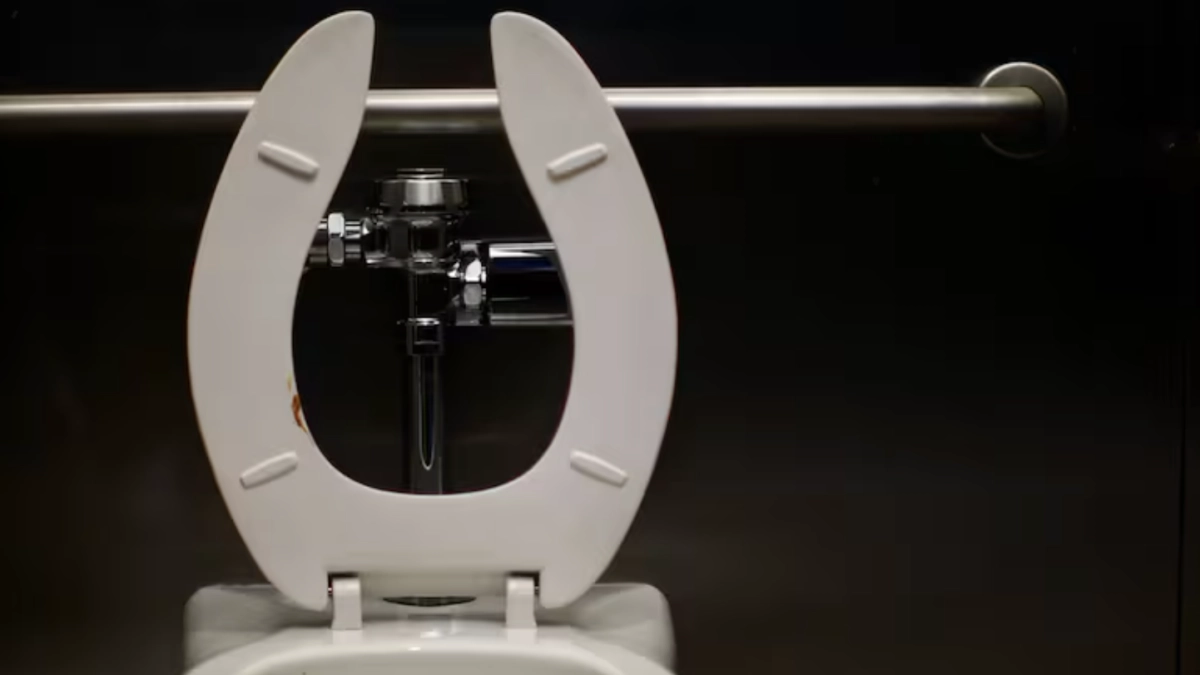
For millions of travelers, shoppers, and commuters navigating the bustling corridors of international airports, subterranean subway stations, sprawling shopping malls, and high-traffic restaurants, a ubiquitous fixture goes largely unnoticed until it demands attention: the public toilet seat. Unlike the continuous, unbroken oval rings found in residential bathrooms across the globe, commercial and public sanitary facilities almost exclusively feature a distinct, open-ended design—a rigid plastic or polymer ring shaped sharply into the letter "U," missing its front segment entirely.
For decades, casual observers have occasionally mistaken this design for a cost-saving measure, a quirky manufacturing quirk, or even a matter of fleeting modern aesthetics. However, industry insiders, plumbing code authorities, and sanitary engineers confirm that the reality is far more deliberate. The open-front toilet seat is an engineering marvel born out of rigorous public health mandates, epidemiological data, and structural mechanics.
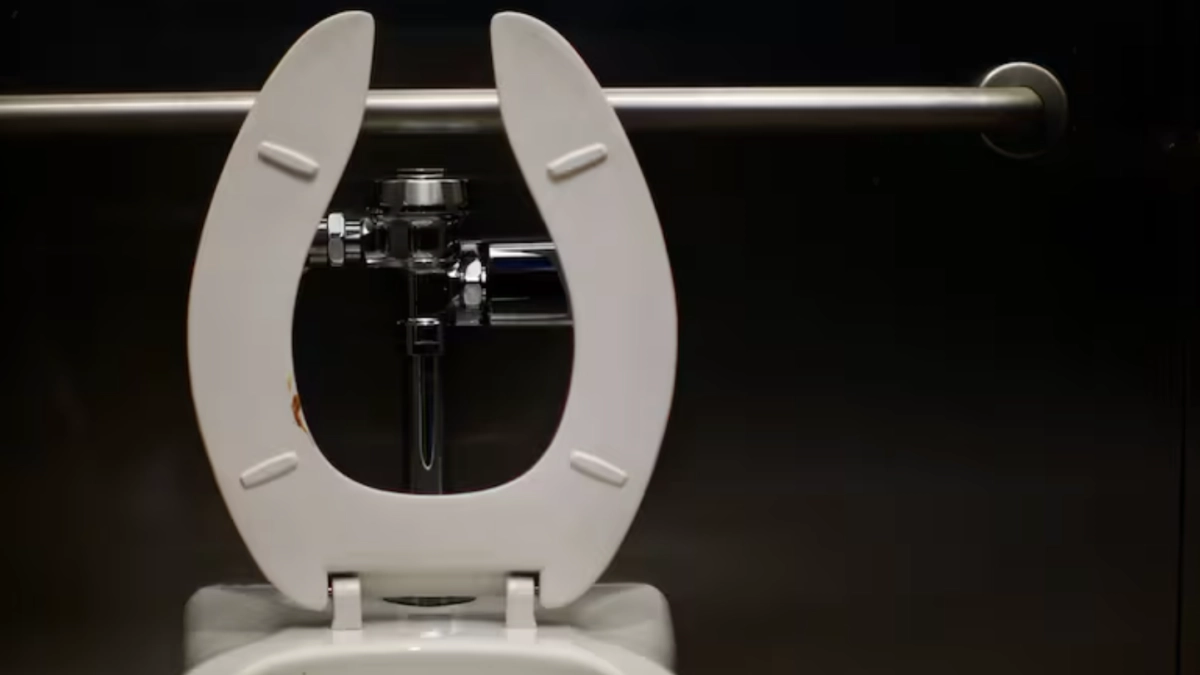
According to guidelines and standards set forth by preeminent regulatory bodies such as the American Society of Plumbing Engineers (ASPE) and the International Plumbing Code (IPC), this feature responds directly to critical criteria involving intimate hygiene, cross-contamination prevention, operational maintenance efficiency, and mechanical stress resistance.Far from being a random architectural choice, the U-shaped seat represents an intersection where human physiology meets industrial design to protect public welfare in high-density environments.
Chronology: The Evolution of the Open-Front Sanitary Seat
To understand how the modern public restroom arrived at the ubiquitous U-shaped seat, one must look back at the convergence of urban sanitation reform, plumbing standardization, and the evolution of municipal building codes over the past century.
Early 20th Century: The Rise of Public Sanitation
In the late 19th and early 20th centuries, as urbanization accelerated and mass transit systems brought millions of people into close daily contact, public health officials grew increasingly alarmed by the rapid transmission of communicable diseases. Public restrooms began to appear in railway stations and municipal buildings, but they typically utilized standard, full-ring wooden or porcelain seats imported directly from domestic designs. These surfaces proved notoriously difficult to clean, prone to absorbing moisture, and served as vectors for bacterial transfer among hundreds of daily users.

The Mid-20th Century: Regulatory Standardization
As indoor plumbing became widespread, the lack of uniformity in commercial restroom design prompted industry leaders to organize. The mid-century marked the founding and empowerment of organizations like the ASPE and the establishment of uniform building codes. Engineers recognized that domestic solutions could not withstand the rigors of public spaces. During the 1950s and 1960s, building codes began to formally distinguish between residential and commercial sanitary fixtures.
The Adoption of the Open-Front Standard
By the late 20th century, plumbing codes—specifically the Uniform Plumbing Code (UPC) and the International Plumbing Code (IPC)—began codifying the requirement for open-front toilet seats in public and commercial buildings. The mandate was designed to address emerging understandings of hygiene, gender-specific sanitary needs, and the realities of mass wear-and-tear. Over the subsequent decades, this design became legally mandated in thousands of jurisdictions worldwide, cementing its place as the global standard for public restroom architecture.
Supporting Data & Regulatory Frameworks
The widespread implementation of the U-shaped toilet seat is not arbitrary; it is backed by structural engineering principles and stringent public health codes.

The Regulatory Bodies
Two primary entities drive the standards for commercial plumbing fixtures in North America and heavily influence global design trends:
- The International Plumbing Code (IPC): Regulates the design and installation of building plumbing systems, specifying where and when open-front seats must be installed to comply with health codes.
- The American Society of Plumbing Engineers (ASPE): Establishes design standards that focus on usability, durability, and sanitation metrics for commercial fixtures.
Operational Metrics in High-Traffic Facilities
Data gathered from facility management firms operating in major transportation hubs—such as international airports and central railway stations—illustrates the sheer volume of stress placed on public restrooms:
- Daily Turnover: A single public toilet stall in a high-density transit hub can experience anywhere from 200 to 500 uses per day.
- Cleaning Cycles: Maintenance personnel in compliant facilities are often required to sanitize high-touch surfaces between 4 to 8 times daily, a process significantly expedited by the absence of the front structural bridge.
- Material Integrity: Commercial-grade thermoplastic and urea-formaldehyde materials utilized in these seats are engineered to withstand repeated cleaning with industrial-grade disinfectants without degrading structurally over a projected lifespan of 5 to 7 years of heavy use.
Official Responses and Expert Perspectives
Sanitation experts, industrial designers, and public health officials have long championed the open-front seat design, pointing to its multi-faceted benefits in controlling the unseen hazards of public restrooms.

The Public Health Perspective on Cross-Contamination
Dr. Elena Vance, a specialist in infectious disease control and municipal sanitation policy, emphasizes the critical role of physical barrier reduction in public spaces.
"When designing for the public sphere, you must anticipate human behavior and human error," Dr. Vance explains. "In a rush, users interact with restroom fixtures in ways that compromise hygiene. The open-front seat is a passive safety measure. By removing the front portion of the ring, we dramatically lower the probability that clothing, paper, or intimate body parts will brush against surfaces that have just been utilized by hundreds of anonymous individuals."
The Engineering and Maintenance Perspective
From an infrastructural standpoint, facility managers view the design as an indispensable tool for operational efficiency. Marcus Thorne, Director of Facilities for a major international airport consortium, highlights the maintenance challenges of public restrooms.

- "In commercial settings, maintenance is a race against time and volume," Thorne notes. "A traditional closed ring creates a confined space where moisture, urine splashes, and organic residue inevitably accumulate in the front quadrant—an area exceptionally difficult for standard wiping techniques to reach effectively. The U-shaped opening eliminates this trap, allowing custodial staff to execute a swift, thorough disinfection cycle that meets stringent health department inspections."
Implications: Hygiene, Accessibility, and the Future of Restroom Design
The implications of the U-shaped public toilet seat extend far beyond simple convenience, touching upon intimate health, civil engineering, and the evolving psychology of public spaces.
Intimate Hygiene and Gender-Specific Benefits
While both male and female users benefit from the reduction of contact surfaces, the design holds profound implications for female hygiene. The anatomical realities of using a public restroom often necessitate close proximity to the front portion of the ceramic or plastic fixture. The open-front design creates a spatial buffer, minimizing the risk of accidental contact with contaminated zones and facilitating the use of toilet paper without interference from the seat’s structure. This significantly curbs the vectors responsible for cross-contamination and the potential transfer of pathogens.
Structural Durability Under Stress
In domestic environments, a toilet seat supports a single household’s weight profile under controlled conditions. In contrast, public restrooms cater to individuals of vastly differing statures, weights, and habits—including users who may lean improperly or apply uneven pressure.

- Mechanical Tension Distribution: The lack of a front bridge means the seat operates structurally as two independent arms anchored at the hinges. This prevents the snapping and cracking common in solid rings subjected to twisting forces or improper weight distribution.
- Material Longevity: By reducing structural stress points, manufacturers extend the operational life of the fixture, lowering replacement costs for businesses and municipalities alike.
Psychological Impact and User Perception
Interestingly, the design also influences user psychology. In an era where public hygiene anxiety has reached unprecedented levels—often manifesting as users employing makeshift paper seat covers or hovering awkwardly—the deliberate, clinical appearance of the U-shaped seat signals to the public that a facility adheres to professional health standards. It provides a visual cue that the space has been engineered with infection control at the forefront.
Looking Ahead: The Next Generation of Restroom Innovation
As public health priorities continue to shift in the wake of global health events, the humble U-shaped toilet seat remains a foundational standard. However, future iterations are moving toward touchless integration, antimicrobial polymer coatings, and self-cleaning mechanisms that work in tandem with the classic open-front architecture.
Ultimately, the iconic U-shape is a testament to the fact that everyday design choices are rarely arbitrary. Beneath the glossy exterior of a public restroom fixture lies a careful balancing act of engineering physics, regulatory compliance, and a relentless commitment to safeguarding public health.