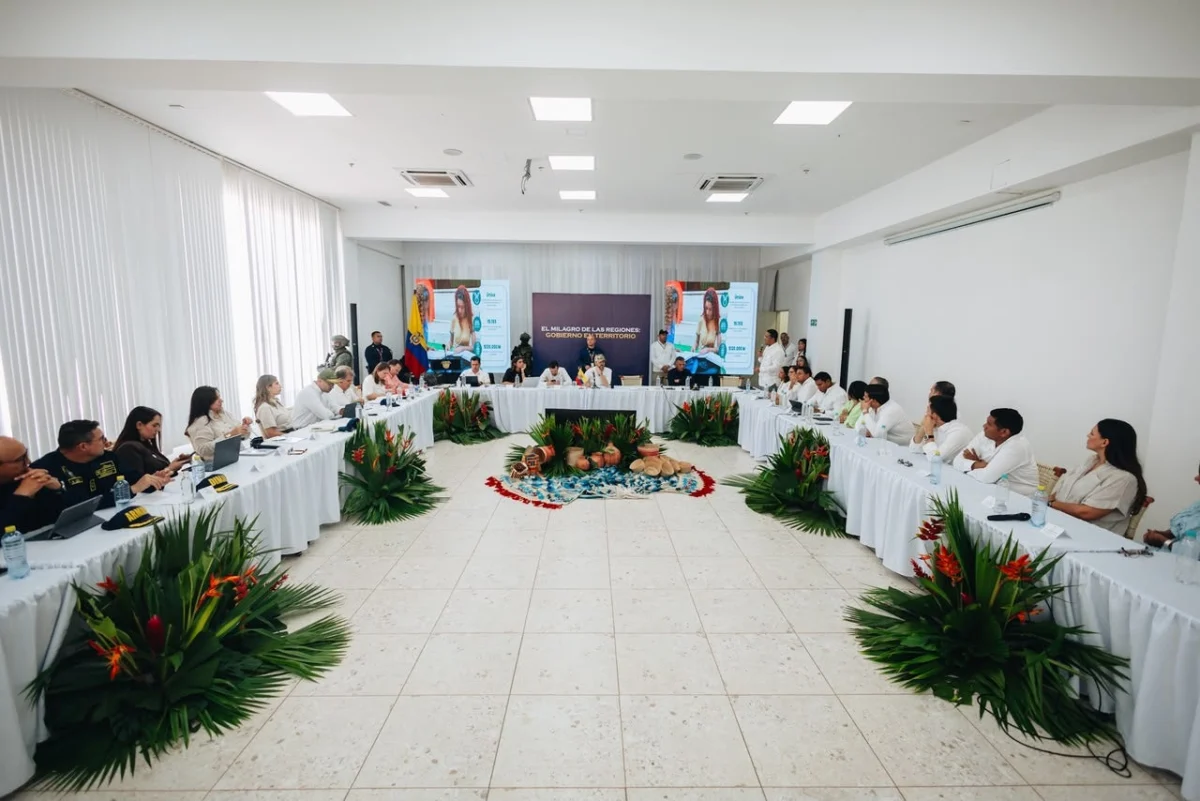
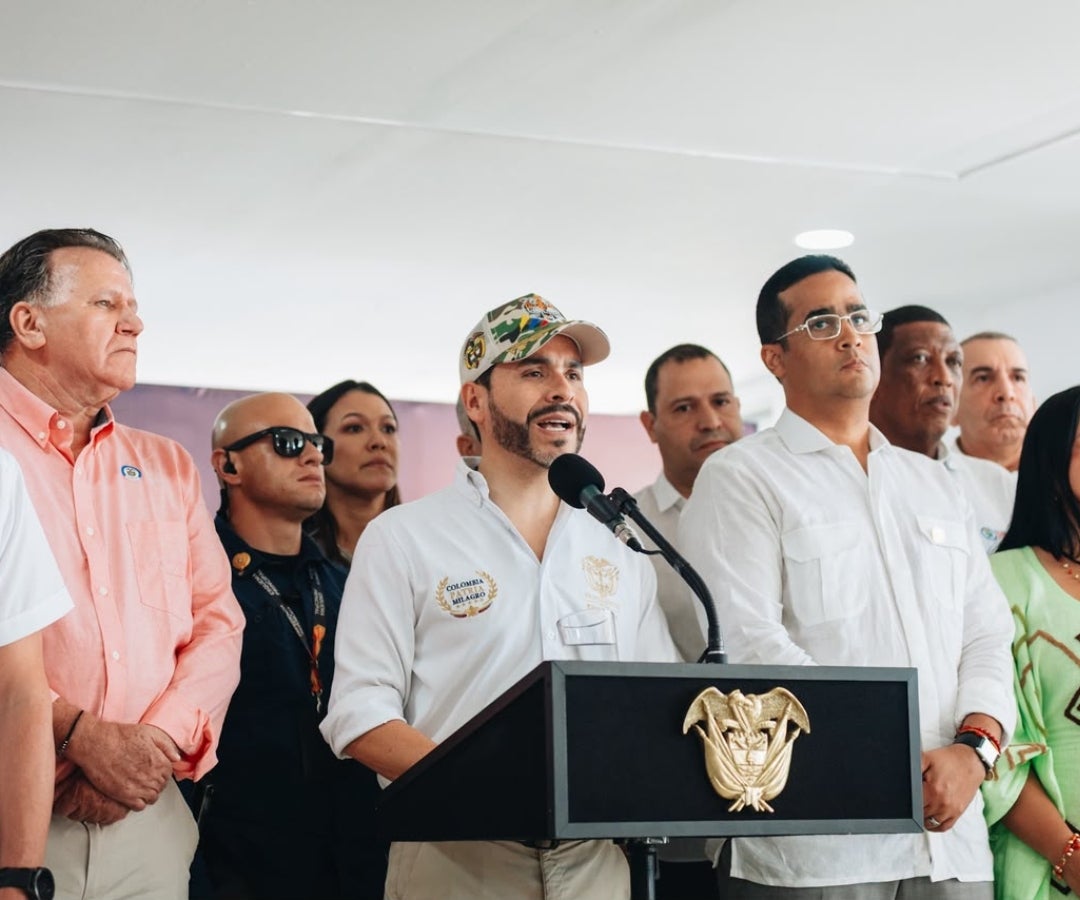
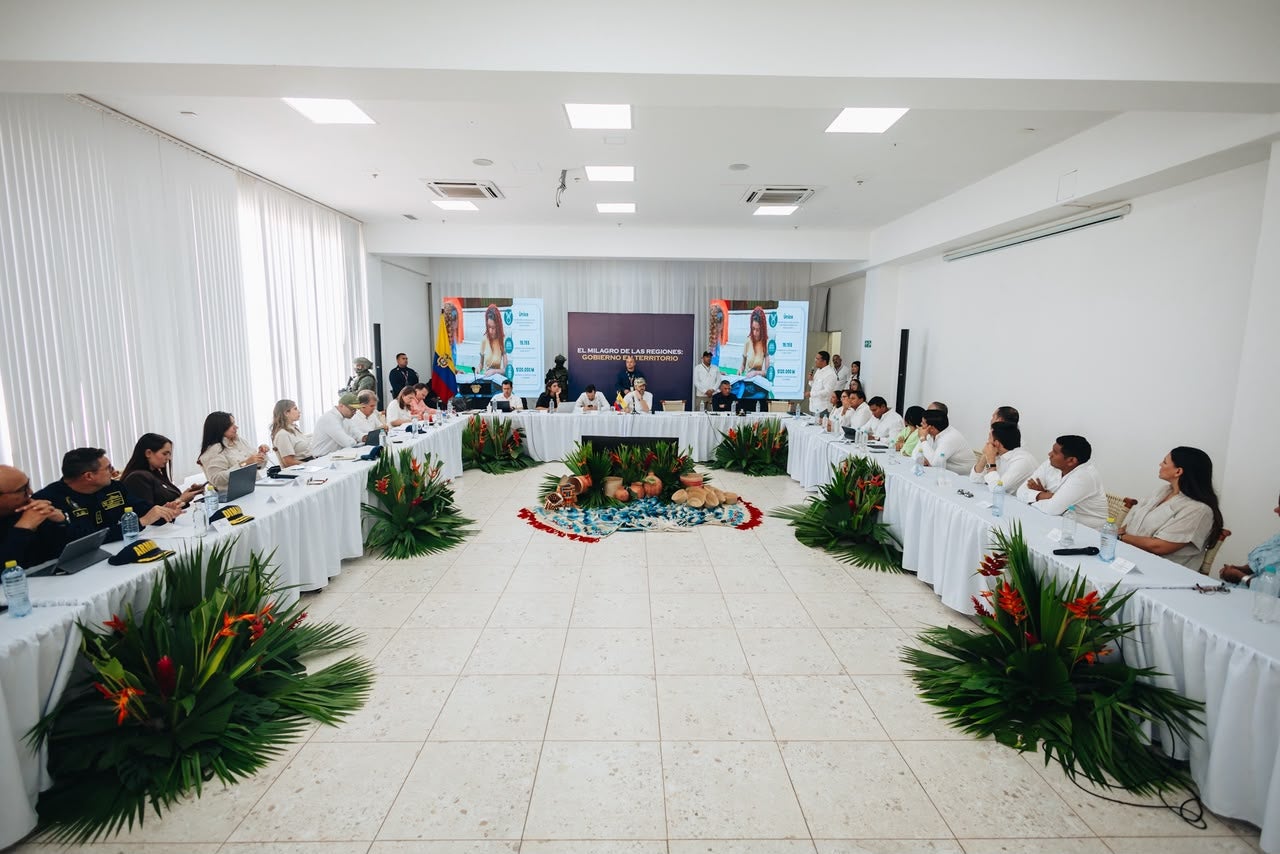
BOGOTÁ, Colombia — In a sweeping series of strategic policy directives aimed at addressing decades of structural neglect, environmental crises, and security challenges, the national government has announced a comprehensive multi-sectoral rescue plan for the northern Caribbean department of La Guajira.
Led by President Abelardo de la Espriella, the ambitious federal intervention encompasses critical investments in potable water access, agricultural revitalization, energy market stabilization, infrastructure expansion, enhanced border security, and rigorous administrative accountability.
The announcement follows a series of high-level executive assessments and cabinet directives intended to transform La Guajira from a zone of chronic vulnerability into a competitive agricultural and economic powerhouse. By coupling massive fiscal infusions with strict anti-corruption oversight, the administration seeks to systematically resolve the historical bottlenecks that have stifled development in Colombia’s northernmost department.
Main Facts: A Comprehensive Multi-Sectoral Intervention
The sweeping governmental package addresses critical deficits across multiple public sectors. At its core, the initiative relies on targeted capital allocations and institutional overhauls designed to bring immediate relief while laying the groundwork for long-term regional stability.
Water and Sanitation Investments: A total of $7.5 billion pesos has been earmarked for water infrastructure projects across the department. This includes an immediate $4 billion pesos for emergency supply needs, subdivided into $2 billion pesos for Uribia and La Alta Guajira, and $500 million pesos for Maicao. An additional $1 billion pesos will fund a comprehensive assurance plan for basic sanitation. Furthermore, $22 billion pesos has been allocated for a major storm drainage project in Riohacha, pending a $7.5 billion peso counterpart investment from the district.
Housing and Urban Renewal: The Ministry of Housing has unlocked $22 billion pesos—fully funded, contracted, and readily available—to reactive the Ciudadela de Paz Bertulfo Álvarez housing project in Fonseca. The funds are designated to complete 180 housing units, of which only 20 had previously been delivered.
Energy Sector Stabilization: To safeguard continuity of service and protect the regional electricity grid, the administration has committed $1.5 trillion pesos to settle energy liabilities with the utility provider Air-e. Of this total, $300,000 million pesos have already been disbursed to guarantee immediate liquidity within the payment chain.
Agricultural Rescue and Food Security: The government will provide direct aid to 4,000 cattle ranchers severely impacted by the El Niño phenomenon, delivering bales of hay, silage, and localized farm irrigation systems. Additionally, the administration plans to strengthen the School Feeding Program (PAE) to introduce a second daily nutritional ration for local children, alongside a specialized healthcare model for the region.
Infrastructure and Connectivity: Executive orders have been issued to review the potential co-financing and inclusion in the National Development Plan (PND) of the Francisco El Hombre highway, alongside a package of tertiary roads for La Jagua del Pilar, Urumita, and Villanueva. The tourism sector will also receive a boost through the Cayuqueras river transport project on the Ranchería River.
Security and Judicial Strengthening: President de la Espriella has ordered Migración Colombia to aggressively coordinate cross-border security operations to curb illegal migration, while formally requesting the Prosecutor General’s Office (Fiscalía) to expand its local investigative personnel to combat regional crime.
Higher Education Oversight: The Ministry of Education has been instructed to launch an immediate, formal investigation into the administrative management of the University of La Guajira, specifically probing the actions of Rector Carlos Robles.
Chronology of the Policy Rollout and Executive Directives
The formulation of the La Guajira rescue plan developed through a structured sequence of executive evaluations, stakeholder consultations, and direct presidential interventions.
Phase 1: Emergency Assessments and Water Security
Initial cabinet reviews identified acute hydrological stress as the most urgent existential threat to La Guajira, particularly affecting indigenous communities in Uribia, Maicao, and La Alta Guajira. As a first response, the administration prioritized emergency water supply logistics while concurrently drafting structural solutions, such as the multi-purpose hydro-agricultural projects designed to irrigate over 17,000 hectares of land.
Phase 2: Energy Sector Interventions and Fiscal Stabilization
As financial pressures mounted on regional energy providers, threatening blackouts and widespread economic disruption, the executive branch intervened directly in the utility market. By authorizing the $1.5 trillion peso fiscal backing for Air-e and initiating the rapid disbursement of the initial $300,000 million pesos, the government averted a systemic collapse of the Caribbean’s energy distribution network.
Phase 3: Infrastructure, Housing, and Agricultural Deployments
With immediate stabilization measures underway, the administration pivoted toward stalled public works. The unfreezing of $22 billion pesos for the Fonseca housing project and the ordering of feasibility studies for the Francisco El Hombre road marked a shift from emergency triage to medium-term economic development. Concurrently, agricultural authorities were mobilized to deploy anti-drought relief to livestock producers suffering under the El Niño weather pattern.
Phase 4: Institutional Accountability and Judicial Enforcement
The final phase of the rollout centered on institutional governance and the rule of law. By officially tasking security and judicial agencies with intensifying border enforcement and targeting local corruption, the government established a zero-tolerance framework for the administration of public funds and institutional management, culminating in the ordered investigation into the University of La Guajira.
Supporting Data and Financial Allocations
To ensure transparency and measure the scope of the federal intervention, the administration has outlined specific budgetary figures across key developmental pillars:
Sector / Project
Allocated Budget / Financial Commitment
Target Area / Objective
Emergency Water Supply
$4.000 million pesos
Immediate provisioning across the department
Uribia & La Alta Guajira Water Solutions
$2.000 million pesos
Localized hydrological infrastructure
Maicao Water Projects
$500 million pesos
Municipal supply enhancements
Sanitation Assurance Plan
$1.000 million pesos
Potable water and basic sanitation continuity
Riohacha Storm Drainage Project
$22.000 million pesos (National) + $7.5 billion pesos (District)
Urban flood mitigation and drainage infrastructure
Fonseca Housing Reactivation
$22.000 million pesos
Completion of 180 housing units (Ciudadela de Paz)
Air-e Utility Bailout
$1,5 billones de pesos total ($300.000 million disbursed)
Regional energy continuity and liquidity
Agricultural Drought Relief
Direct provisioning for 4,000 ranchers
Hay, silage, and farm-level irrigation systems
Ranchería River Cayuqueras Project
13 river vessels (matching 2 from the Governor’s office)
River transport and tourism infrastructure
Official Responses and Ministerial Directives
The execution of the overarching strategy relies on cross-ministerial coordination and strict oversight from specialized public agencies. President de la Espriella emphasized that every peso deployed under the rescue plan will be subject to uncompromising scrutiny.
"Every single peso that is sent will be monitored as it corresponds; there will be no space for corruption or petty politics," President de la Espriella stated firmly during the policy unveiling. "We are going to design a differential health model for La Guajira, to back the strengthening of the PAE [School Feeding Program] to advance toward a second nutritional ration for the children of the department."
Security and Border Control
Addressing cross-border dynamics, the executive branch has placed security forces on high alert. The Director of Migración Colombia has been personally instructed to spearhead inter-agency coordination to stem illegal migration flows along the porous borders. Furthermore, the President confirmed that formal overtures have been made to judicial authorities:
"I requested the Prosecutor General’s Office to strengthen its presence in the department by expanding available personnel to robustly advance the judicialization of crimes affecting the people of La Guajira."
Agricultural and Economic Recovery
To safeguard the departmental economy from external shocks and climate anomalies, the Ministry of Agriculture, alongside financial entities Finagro and the Agrarian Bank (Banco Agrario), has been ordered to restructure and normalize agricultural debt portfolios. The overarching agricultural vision moves beyond simple disaster relief.
"Our vision is to develop a great multi-purpose project that contemplates irrigation districts, aqueducts, and hydroelectric generation, with the goal of irrigating more than 17,000 hectares of land. We need to turn this department into a competitive agricultural production pole," the President explained.
Anti-Corruption and Educational Oversight
In a strongly worded concluding directive, the administration signaled that institutional immunity is a thing of the past, specifically targeting alleged administrative irregularities within higher education.
"I gave instructions to the Minister of Education to open the necessary investigation regarding the management of the University of La Guajira. I want the actions of Rector Carlos Robles to be reviewed in light of a myriad of extremely grave facts brought to the attention of the National Government. Here no one has a crown; whoever violates the law, pays for it."
Implications of the La Guajira Rescue Plan
The comprehensive federal intervention in La Guajira carries profound socio-economic, political, and institutional implications for both the department and the broader Colombian Caribbean region.
Socio-Economic Transformation
For decades, La Guajira has struggled with deep-seated poverty, infant malnutrition, and severe water scarcity, despite its vast natural resource wealth and strategic geopolitical location. The immediate injection of billions of pesos into water sanitation, housing, and agricultural support directly targets the root causes of systemic vulnerability. By expanding the School Feeding Program to include a second daily ration and introducing a culturally adapted healthcare model, the government aims to drastically improve human development indicators among historically marginalized Wayuu and local communities.
Economic Diversification and Infrastructure
The transition toward a competitive agricultural hub—anchored by 17,000 newly irrigated hectares and robust multi-purpose water infrastructure—promises to reduce the department’s historical economic reliance on informal trade and extractive industries. Simultaneously, the integration of regional road networks (such as the Francisco El Hombre corridor) and river transport initiatives (Cayuqueras) will unlock La Guajira’s immense untapped potential for eco-tourism and regional commerce.
Governance and Institutional Integrity
Perhaps the most significant structural implication of the executive package is its strict emphasis on accountability. By coupling massive fiscal transfers with rigorous tracking mechanisms, the administration is attempting to dismantle traditional regional patronage networks. The high-profile investigative orders directed at the University of La Guajira and the reinforcement of prosecutorial personnel underscore a broader political commitment to restoring the rule of law and ensuring that public resources directly benefit the citizenry rather than illicit intermediaries.
As these multi-billion-peso projects transition from executive decree to on-the-ground execution, their successful implementation will serve as a critical benchmark for the government’s regional development strategy and its capacity to deliver sustainable structural reform in Colombia’s most vulnerable territories.
BOGOTÁ, Colombia — In what has been heralded as a major milestone for the capital’s mass transit network, the District Administration and TransMilenio S.A. officially announced the reopening of the Patio Bonito trunk station. Following…
QUIBDÓ, COLOMBIA — In a major milestone for national recovery efforts following the devastating August 10 earthquake, the national government, in a strategic partnership with the private sector, has officially delivered the first wave of…
MEDELLÍN — For decades, the global fashion industry has thrived on a delicate paradox: a business built on ephemeral, fast-moving creative trends operating within legacy supply chains that are often notoriously slow, manual, and wasteful.…