By Editorial Staff
Updated July 20, 2026 – 05:04 A.M.
A Celebration Overshadowed by Loss
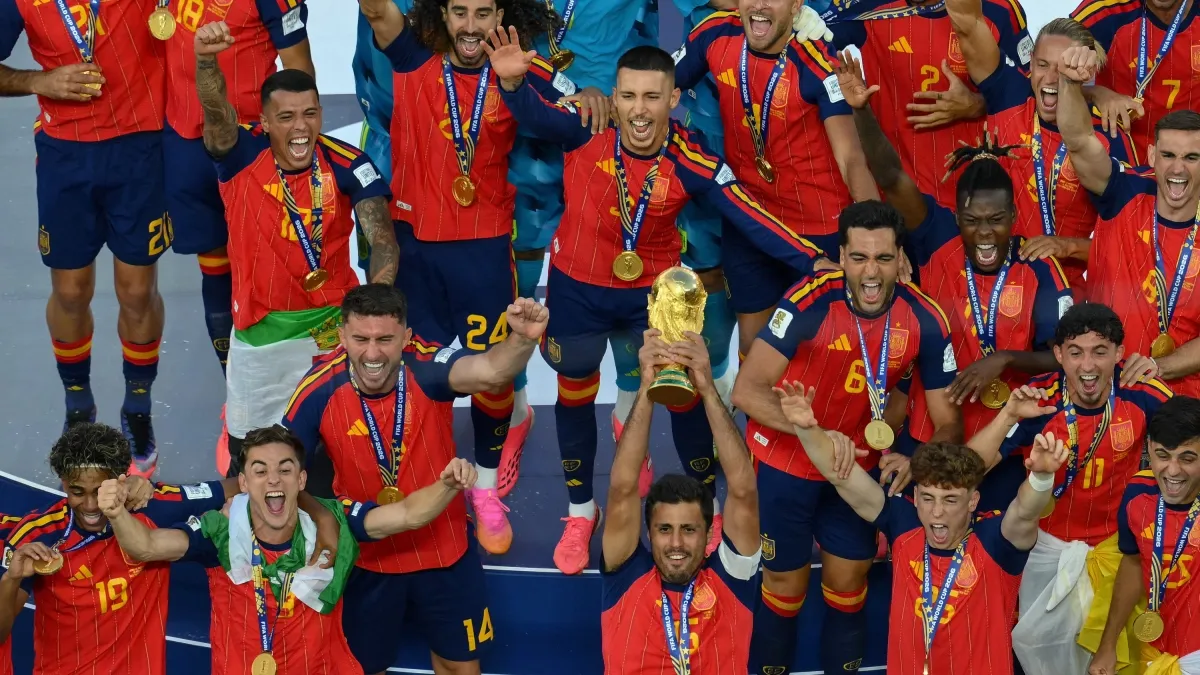
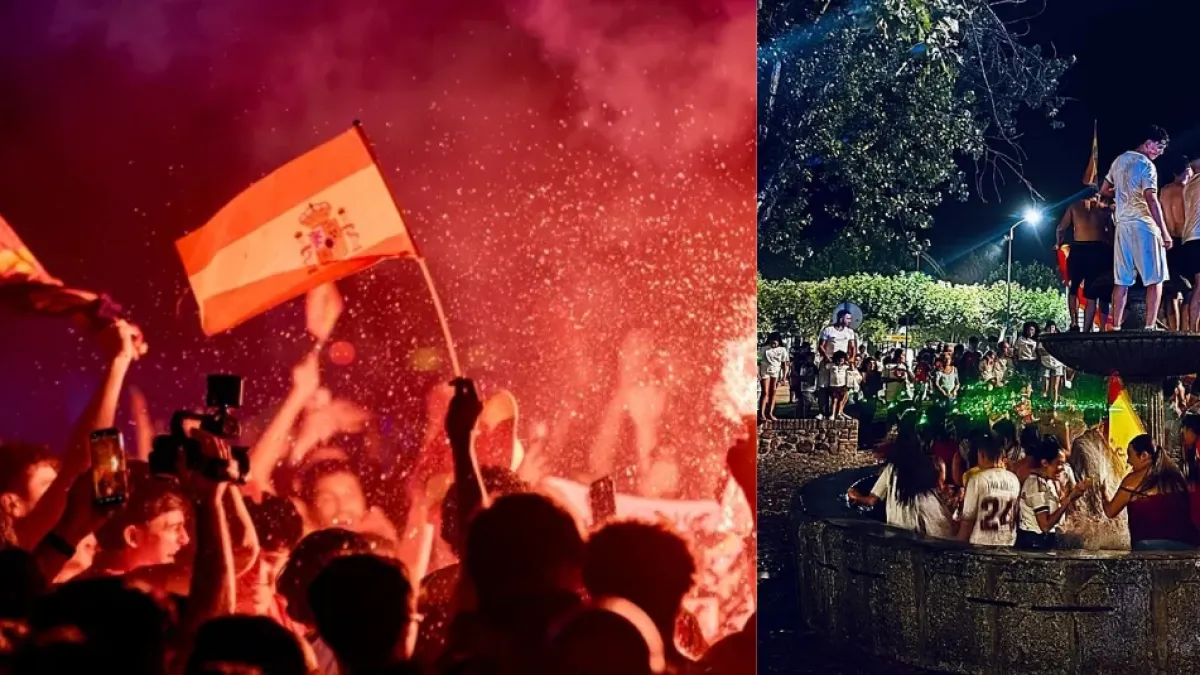
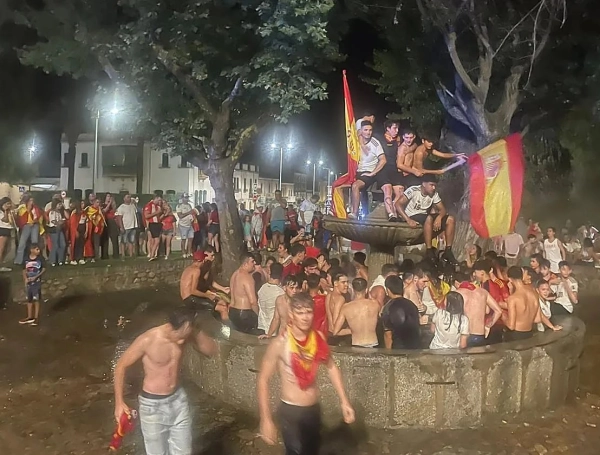
What began as a jubilant display of national pride in the historic Spanish town of Ciudad Rodrigo ended in profound tragedy late Sunday. As thousands of Spaniards took to the streets to celebrate their national team’s historic victory in the 2026 FIFA World Cup final, a joyous gathering at the iconic Fuente del Árbol Gordo (Fat Tree Fountain) turned into a scene of chaos and devastation.
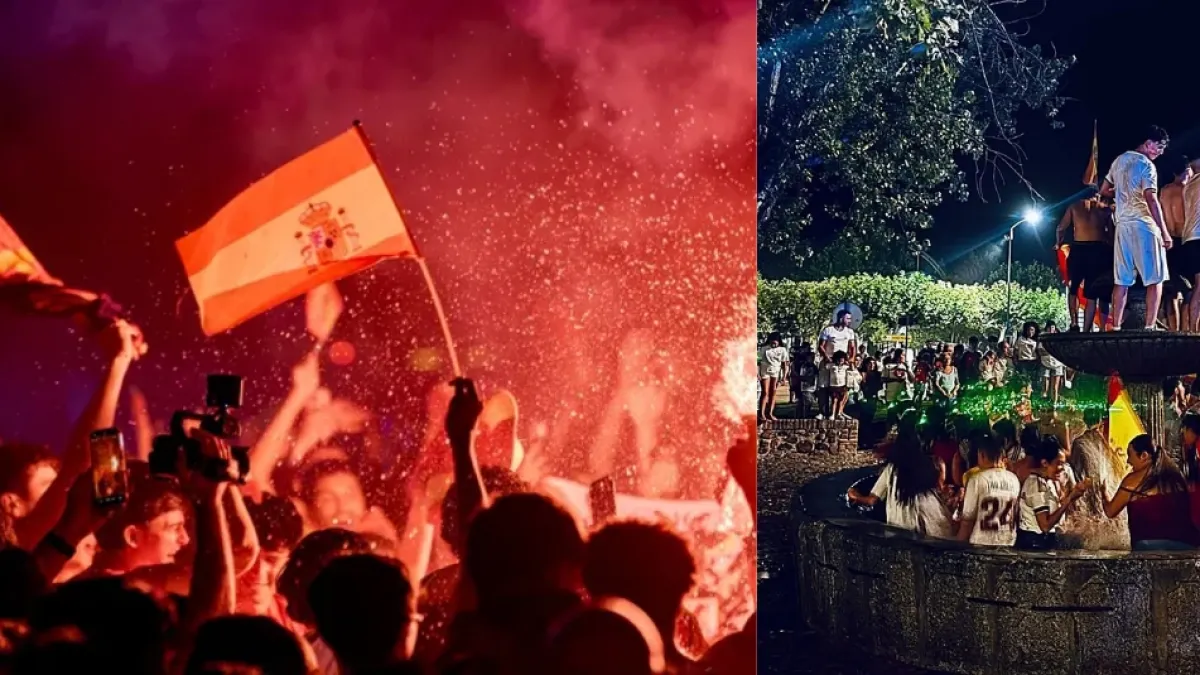
The structural failure of the fountain, which occurred amidst the peak of the victory festivities, resulted in the tragic death of a 13-year-old boy and left three other individuals with serious injuries. The incident, which has sent shockwaves through the province of Salamanca and the entire country, transformed a night of sports-related euphoria into a period of mourning and reflection.
Chronology of the Incident: From Euphoria to Emergency
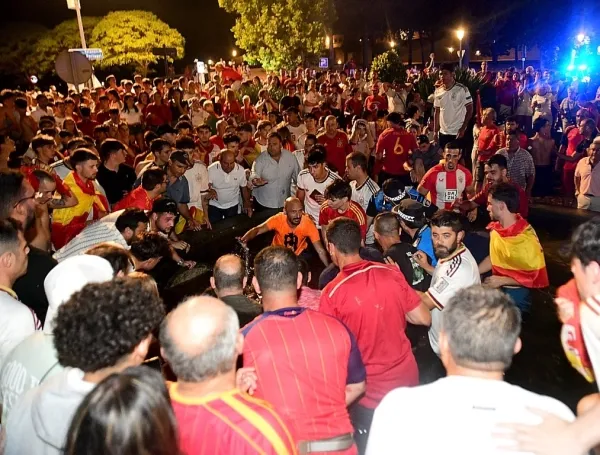
As the final whistle blew, signaling Spain’s championship, fans across the country poured into public squares. In Ciudad Rodrigo, a municipality renowned for its deep-rooted traditions and tight-knit community, the Fuente del Árbol Gordo became a natural focal point for the celebration.

According to preliminary reports from the local authorities, the area surrounding the fountain became heavily congested as the crowd grew in size and enthusiasm. Around the time of the incident, a group of young people had gathered in close proximity to the water feature, some climbing upon its stone structure to better view the festivities.
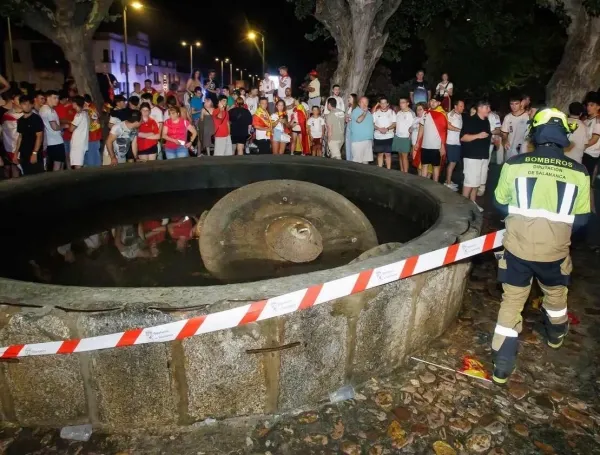
The structural integrity of the fountain, likely unaccustomed to such extreme physical pressure from the weight of the crowd, began to buckle. Witnesses described a sudden, harrowing sound of grinding masonry followed by the partial collapse of the monument. One heavy stone element detached from the structure, striking the 13-year-old victim.
The response from emergency services was immediate. Officers from the Local Police of Ciudad Rodrigo, who were already present in the vicinity managing the crowds, rushed to the scene. Eyewitnesses reported a frantic, high-stakes rescue operation as officers and bystanders worked in unison to remove the heavy rubble and provide medical assistance to the victims. Despite the rapid intervention and the subsequent arrival of paramedics, the injuries sustained by the adolescent proved fatal.
Supporting Data and Context
The incident highlights the inherent risks associated with spontaneous mass gatherings in historic urban environments. Ciudad Rodrigo, a city that traces its origins back centuries, is filled with monuments and structures that, while architecturally significant, were not designed to withstand the modern pressures of mass-event celebratory surges.
- Victim Profile: A 13-year-old male, whose identity has been withheld out of respect for the grieving family.
- Casualties: Three other individuals remain under medical care in local hospitals. Their conditions, while described as "serious" by health officials, are being monitored closely by medical teams in Salamanca.
- Structural Context: The Fuente del Árbol Gordo is a landmark of the municipality. Investigations are currently underway to determine whether the structural fatigue was a latent issue or if the sheer force of the crowd was the sole catalyst for the failure. Forensic architects and municipal engineers are expected to provide a detailed report in the coming days.
Official Responses: A Community in Grief
The response from the municipal government was swift and somber. In an official statement released in the early hours of Monday morning, the City Council of Ciudad Rodrigo expressed their "profound pain and condolences" to the family of the deceased.
"The entire city of Ciudad Rodrigo stands in solidarity with the family and friends of the minor during this unimaginably difficult time," the statement read. "What was intended to be a night of collective happiness and sporting triumph has been cruelly transformed into a tragedy that will leave a permanent scar on our community."
The Mayor of Ciudad Rodrigo, addressing the press, emphasized the fragility of the moment. "We were all united in the joy of the World Cup, and to have that joy stripped away by such a freak accident is a burden that the entire town must bear together," he noted, pledging full support for the families of both the deceased and the injured.
A Period of Official Mourning
In a gesture of shared grief, the local administration has decreed three days of official mourning, effective from July 20 through July 22. During this period, all municipal flags in Ciudad Rodrigo will be flown at half-mast as a sign of respect.

This period of mourning will also serve as a time for the local government to coordinate with law enforcement and safety inspectors to ensure that public areas are secured, particularly in the aftermath of such a high-profile incident. While the primary focus remains on the grieving family, questions regarding public safety protocols during future large-scale events are already beginning to surface among local stakeholders.
Implications: Safety and Urban Planning
The tragedy has ignited a broader conversation about public safety in Spanish municipalities during major events. While celebrations are a fundamental part of the cultural fabric, the failure of the fountain raises critical questions regarding the maintenance of historic monuments and the management of crowds in public spaces.

- Structural Assessment of Public Monuments: Experts suggest that many historic structures in older European cities are subject to environmental wear and tear that may not be immediately visible to the public. The Ciudad Rodrigo incident may prompt a nationwide audit of similar fountain and monument structures in popular gathering squares.
- Crowd Management Protocols: While local police were on site, the speed at which the crowd grew around the fountain highlights the difficulty in maintaining order during spontaneous celebrations. Future events may require more stringent cordoning of historic sites to prevent climbing or excessive weight accumulation.
- Community Resilience: Despite the sorrow, the community of Ciudad Rodrigo has shown remarkable unity. Donations of blood and offers of psychological support for the witnesses and the families of the injured have poured in, demonstrating the strength of the town’s social fabric.
Looking Forward
As the town of Ciudad Rodrigo begins the long process of healing, the focus will shift from the jubilation of the 2026 World Cup victory to the somber task of laying a young life to rest. The tragedy serves as a stark reminder of the unpredictable nature of life and the deep impact that accidents can have on small, interconnected communities.
The investigation into the structural failure of the fountain will likely be the subject of significant legal and administrative scrutiny in the coming weeks. For now, however, the people of Ciudad Rodrigo remain focused on mourning their loss and supporting the three survivors currently fighting for their recovery in local healthcare facilities.

As the flags continue to flutter at half-mast, the memory of the 13-year-old victim will be honored not just by the residents of this historic town, but by a nation that now finds its own celebration tempered by the weight of this loss. The tragedy in Ciudad Rodrigo will remain a somber footnote in the history of the 2026 World Cup, a reminder that behind every historic achievement, there is the fragility of human existence that deserves our utmost respect and remembrance.
Reporting contributed by the staff of "Últimas Noticias." For further updates on this developing story, follow our ongoing coverage via our digital newsletters and social media channels.