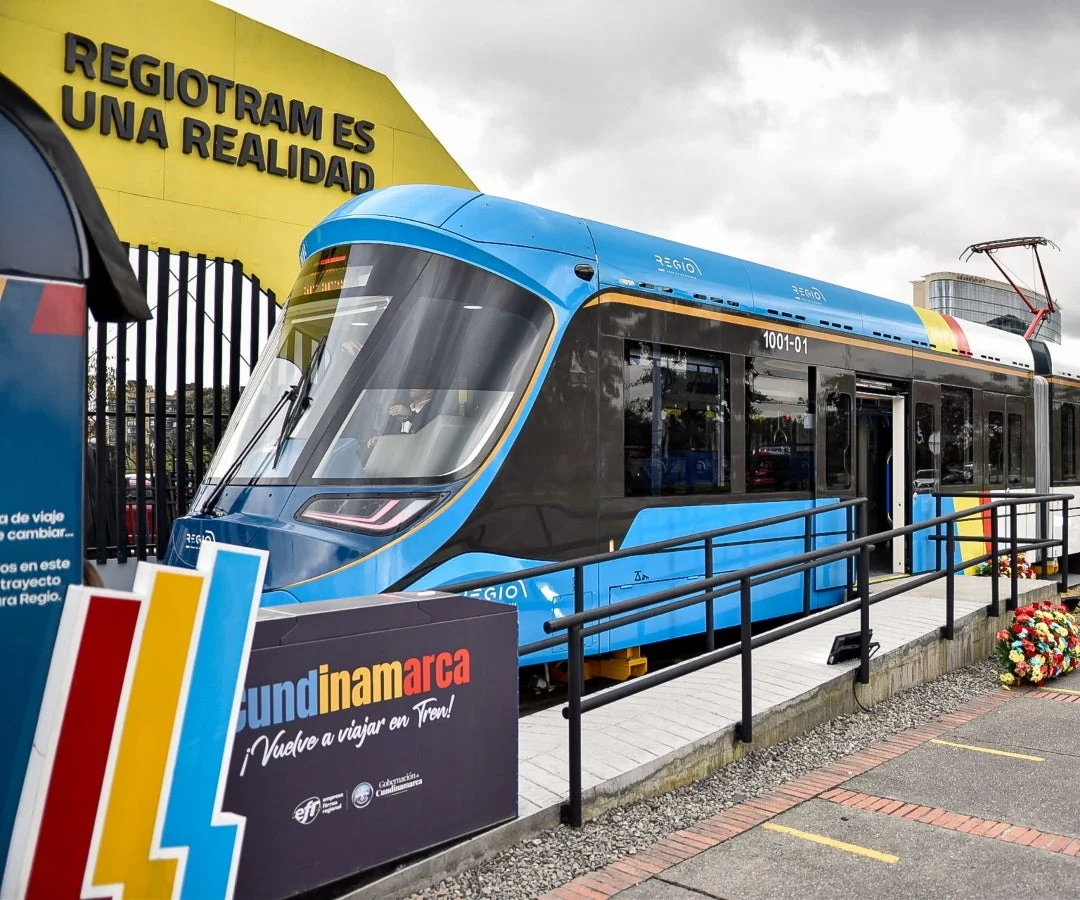
The ambitious vision of connecting Bogotá with its northern provincial neighbors via a high-speed commuter rail system has hit a significant bureaucratic and financial roadblock. At the heart of the latest controversy surrounding the Regiotram del Norte is a dispute between the Bogotá Mayor’s Office, the Cundinamarca Departmental Government, and the National Ministry of Transport. The disagreement centers on the construction of nine critical infrastructure pieces—five vehicular bridges and four pedestrian bridges—that were reportedly omitted from the project’s original technical structuring.
As the capital city and the surrounding department of Cundinamarca grapple with record-breaking traffic congestion and a desperate need for sustainable transit, this "tug-of-war" over responsibility and funding threatens to delay a project valued at over $17 trillion pesos.
Main Facts: The Infrastructure Impasse
The current friction stems from a technical oversight or a shift in requirements—depending on which official is asked—regarding the Lagos de Torca area, a massive urban development project in North Bogotá. The Bogotá Mayor’s Office, led by Mayor Carlos Fernando Galán’s administration, recently denied the existence of a formal agreement with the Regiotram project to cover the costs of five vehicular bridges and four pedestrian crossings.
The Core Conflict
The Bogotá administration argues that these bridges are essential for the city’s mobility and must be integrated into the rail project to prevent the train line from becoming a physical barrier that bisects the northern part of the city. Conversely, the Governor of Cundinamarca, Jorge Emilio Rey, asserts that these requirements were never raised during the extensive preliminary planning phases.
According to Governor Rey, the project underwent 123 technical tables with Bogotá representatives before its finalization. During those meetings, the bridges were not requested. Cundinamarca’s position is that the responsibility for this infrastructure lies with the private developers of the Lagos de Torca project through "urban charges" (cargas urbanísticas)—a mechanism where developers fund public infrastructure in exchange for building rights.
The Financial Stake
The Regiotram del Norte is not a small-scale endeavor. It is backed by Conpes 4190, a strategic policy document that guarantees a total investment of $17.36 trillion COP. However, the current funding structure excludes Bogotá as a direct financier, leaving the burden on the National Government (81.6%) and the Cundinamarca Government (18.4%). The dispute over the nine bridges involves a significant sum that neither party is currently willing to absorb into their existing budgets.
Chronology: From Concept to Conflict
To understand how the Regiotram del Norte reached this stalemate, one must look at the timeline of its development and the shifting political landscape of the Bogotá-Sabana region.
- 2020–2022: Initial Structuring and Technical Tables.
The project underwent rigorous technical evaluation. Over 120 meetings were held between the Bogotá District, the Cundinamarca Government, and the Regional Railway Company (EFR). During this period, the alignment and the basic technical requirements were established. - Late 2022: The Conpes 4190 Approval.
The National Council for Economic and Social Policy (CONPES) approved the financing for the project. At this stage, the total cost was pegged at $17.36 trillion COP. Crucially, the National Government committed to the lion’s share of the funding. - 2023: The "Ley de Garantías" Obstacle.
Before the regional elections, the "Ley de Garantías" (Guaranty Law) came into effect, prohibiting certain types of inter-institutional contracts. Bogotá had intended to join the co-financing agreement with a contribution of approximately $2.3 trillion COP, but the legal window closed before the agreement could be signed. This left Bogotá out of the formal financing structure of the Conpes. - Early 2024: The Return of the Bridge Dispute.
With new administrations in both the Mayor’s Office and the Governor’s Office, the technical requirements were revisited. The Bogotá District began insisting that the five vehicular and four pedestrian bridges were non-negotiable for the project’s viability within city limits. - May 2024: International Mediation.
Technical tables were convened with the International Finance Corporation (IFC) of the World Bank to find a path forward. Despite these high-level discussions, Governor Jorge Emilio Rey publicly confirmed that no agreement had been reached, sparking the current media and political firestorm.
Supporting Data: The Numbers Behind the Rail
The scale of the Regiotram del Norte makes it one of the most significant infrastructure projects in Colombia’s history. Understanding the data is key to understanding why the bridge dispute is so contentious.
Funding Breakdown
- Total Investment: $17.36 Trillion COP.
- National Government Contribution: $14.16 Trillion COP (81.6%).
- Cundinamarca Government Contribution: $3.2 Trillion COP (18.4%).
- Bogotá’s Original Projected Contribution: $2.3 Trillion COP (Currently uncommitted due to the missed co-financing deadline).
Technical Scope
- Length: Approximately 48 kilometers.
- Route: Connecting Bogotá (starting at Calle 26) to the municipalities of Chía, Cajicá, and Zipaquirá.
- Projected Ridership: Estimated to move over 130,000 passengers per day, significantly reducing the load on the Autopista Norte.
The "Missing" Infrastructure
The nine disputed structures are located in the Plan de Ordenamiento Zonal (POZ) del Norte, specifically in the Lagos de Torca sector. This area is designed to house hundreds of thousands of new residents. The bridges are intended to ensure that the rail line does not sever East-West connectivity for vehicles and pedestrians in what is projected to be one of the city’s most densely populated zones.
Official Responses: A Clash of Perspectives
The rhetoric from both sides highlights a deep-seated disagreement over urban planning philosophy and fiscal responsibility.
The Governor’s Stance: Jorge Emilio Rey
Governor Rey has been vocal about his frustration, suggesting that Bogotá is attempting to shift costs onto the department that should have been handled by the city or private developers.
"We have said that those bridges are not included in the project because, in the 123 tables held with Bogotá previously, they were not requested," Rey stated.
He further argued that since the bridges benefit a high-income residential area (Lagos de Torca) that will eventually generate significant property tax revenue for Bogotá, the city should use its own resources. He suggested that if Bogotá was previously willing to contribute $2.3 trillion, they should use a small portion of that "announced but unspent" money to build the bridges.
The District’s Stance: Miguel Silva Moyano
The Secretary of Government for Bogotá, Miguel Silva Moyano, has proposed a middle ground: a separate agreement (convenio) between the city and the department. The District maintains that the bridges are not a "luxury" but a functional necessity. Their position is that building a rail system without adequate crossings would create a "Berlin Wall" effect in Northern Bogotá, crippling local traffic and endangering pedestrians.
The Environmental Perspective: Alfred Ballesteros
The Director of the CAR Cundinamarca (Regional Autonomous Corporation), Alfred Ballesteros, added a different layer to the debate. He warned that focusing solely on roads and bridges—the traditional "gray infrastructure"—is a mistake.
"Persisting in a model based exclusively on expanding highways and increasing the supply of buses means deepening a pattern of dispersed occupation with environmental, social, and fiscal costs," Ballesteros remarked.
He argued that the delay of the Regiotram contributes to "suburbanization" and the consumption of rural soil, which fragments the regional ecological structure.
Implications: What is at Stake?
The standoff over nine bridges has implications that reach far beyond concrete and steel. The resolution—or lack thereof—will define the regional development of the Bogotá-Sabana area for the next century.
1. Urban Planning and "Lagos de Torca"
Lagos de Torca is designed to be a "city within a city," emphasizing sustainable mobility and green spaces. If the Regiotram project proceeds without the disputed bridges, the urban design of Lagos de Torca will have to be radically altered. Conversely, if the rail project is delayed indefinitely, the 130,000+ residents planned for this area will be forced to rely on the already-congested Autopista Norte, leading to a total gridlock of the city’s northern exit.
2. Environmental and Social Costs
As noted by the CAR, every day the Regiotram is delayed is a day where thousands of private vehicles and old-model buses continue to emit greenhouse gases. The social cost is measured in the "time poverty" of citizens who spend 3 to 4 hours a day commuting between Zipaquirá and Bogotá. The failure to integrate rail successfully encourages the "fragmentation of the ecological structure," as developers push further into rural areas when transit-oriented development in the city fails.
3. Economic Stability and Investor Confidence
The Regiotram del Norte involves international stakeholders, including the World Bank’s IFC. Prolonged disputes between local governments can signal instability to international investors and contractors. With a budget of $17.36 trillion, the project is a major driver for the regional economy; delays could lead to cost overruns due to inflation and the rising price of imported technology and materials.
4. The Precedent for Regional Integration
This conflict serves as a litmus test for the newly formed Metropolitan Region Bogotá-Cundinamarca. This legal entity was created specifically to solve these types of cross-border disputes. If the Mayor and the Governor cannot reach an agreement on nine bridges, it raises serious questions about the Metropolitan Region’s ability to handle even larger challenges, such as water management, waste disposal, and regional food security.
Conclusion: The Need for a "Grand Bargain"
The Regiotram del Norte is currently at a crossroads. The technical tables with the IFC suggest that there is a desire for mediation, but the political will to "blink first" is currently absent. For the project to move forward, a "Grand Bargain" is likely required: one where Bogotá reintegrates into the co-financing scheme, perhaps by earmarking a portion of its original $2.3 trillion commitment specifically for the disputed bridges, while Cundinamarca and the National Government provide guarantees on construction timelines and regional connectivity.
Without a resolution, the "Great Rail Divide" will remain a symbol of the bureaucratic friction that often hampers Colombia’s most transformative infrastructure dreams.