By: Editorial Staff
July 16, 2026
The recent world football championship did more than just crown a global champion; it served as a massive, real-time stress test for Colombia’s digital infrastructure. As the national team progressed through the tournament, the country’s internet consumption patterns underwent a seismic shift, characterized by unprecedented data traffic spikes, a surge in 5G utilization, and a fundamental change in how Colombians consume live entertainment.
According to a comprehensive analysis released by Claro Colombia, the primary operator in the country, the championship acted as a catalyst for a digital evolution. The data reveals that the national team’s matches pushed network traffic to record levels, with increases of up to 30% compared to standard usage days. This surge was not merely a result of more people watching; it reflected a new, multi-screen lifestyle where fans simultaneously watch, post, comment, and stream, creating a complex web of high-demand connectivity.
The Anatomy of a Digital Surge: Key Findings
The data provided by Claro Colombia highlights a clear trend: the "living room" experience has moved into the cloud. During the tournament, the distinction between television viewership and digital interaction blurred significantly.

Peak Performance and Network Stress
On a typical day, Claro’s mobile network traffic hits its peak of approximately 693 terabytes (TB) around 9:00 PM. However, the dynamics changed entirely during the match between Colombia and Congo on June 23. At that same hour, traffic soared to 825 TB, representing a 19% increase.
The "convergent network"—the backbone integrating both fixed and mobile services—showed even more dramatic fluctuations. Before kickoff, the average traffic hovered at 10.4 terabits per second (Tbps). Once the whistle blew, this surged to 12.3 Tbps, a staggering 18.3% increase in data throughput. In some instances, depending on the match intensity and the time of day, total traffic spikes reached as high as 30%.

The Shift to "Always-On" Entertainment
Traditional linear television remains a cornerstone, but its delivery method is evolving. Traffic on standard channels distributed via Claro TV+—including major networks like Caracol, RCN, and Win Sports—saw an increase of over 50%, with peaks reaching 450 gigabits per second (Gbps) during high-profile matches. More tellingly, the consumption of these same channels through digital applications and web platforms grew more than three times compared to a regular day, signaling that the audience is increasingly opting for mobile-first or OTT (Over-the-Top) delivery systems.
Chronology of a Digital Phenomenon
The impact of the championship on network traffic was not uniform; it was a rhythmic pulse that followed the intensity of the matches.
The Midday and Afternoon Effect
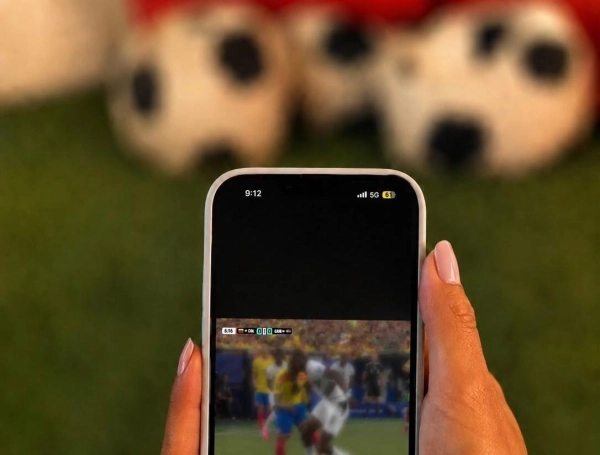
For matches held during standard working hours, mobile traffic saw an immediate 26% spike compared to the hour preceding kickoff. This suggests that millions of Colombians, despite professional obligations, found ways to follow the action in real-time, leveraging mobile data to stay connected to the game’s progress.
The Nighttime Shift
Matches scheduled in the evening created a unique "post-match" phenomenon. In a standard cycle, internet traffic begins a steady, predictable decline after 9:00 PM. During the tournament, however, this pattern was shattered. Once the final whistle blew, a secondary, sustained traffic peak occurred—roughly 17% higher than usual. This suggests that after the match, fans flooded social media and streaming platforms to watch replays, discuss the result, and consume post-match commentary. As a result, the "curfew" for high internet usage was effectively pushed back by nearly two hours, with intense activity lasting until midnight.
The 5G Revolution: Speed Meets Demand
Perhaps the most significant finding from the Claro report is the maturation of 5G technology in the Colombian market. The tournament served as a coming-out party for the fifth generation of mobile connectivity.
During workday matches, 5G traffic increased by more than three percentage points, reaching a 23.5% share of the total mobile load. Even during evening matches, 5G accounted for 21.5% of total mobile traffic.
The most impressive performance, however, occurred during the match against Portugal. This event happened to coincide with a large-scale live event, the "Vive Claro" concert. In this high-density environment, more than 62% of the traffic was carried over 5G networks. In specific base stations near the venue, 5G usage surpassed 90%, proving that the technology is not just a marketing buzzword, but a vital necessity for managing data congestion in high-traffic scenarios.
Official Perspective: Engineering the Future
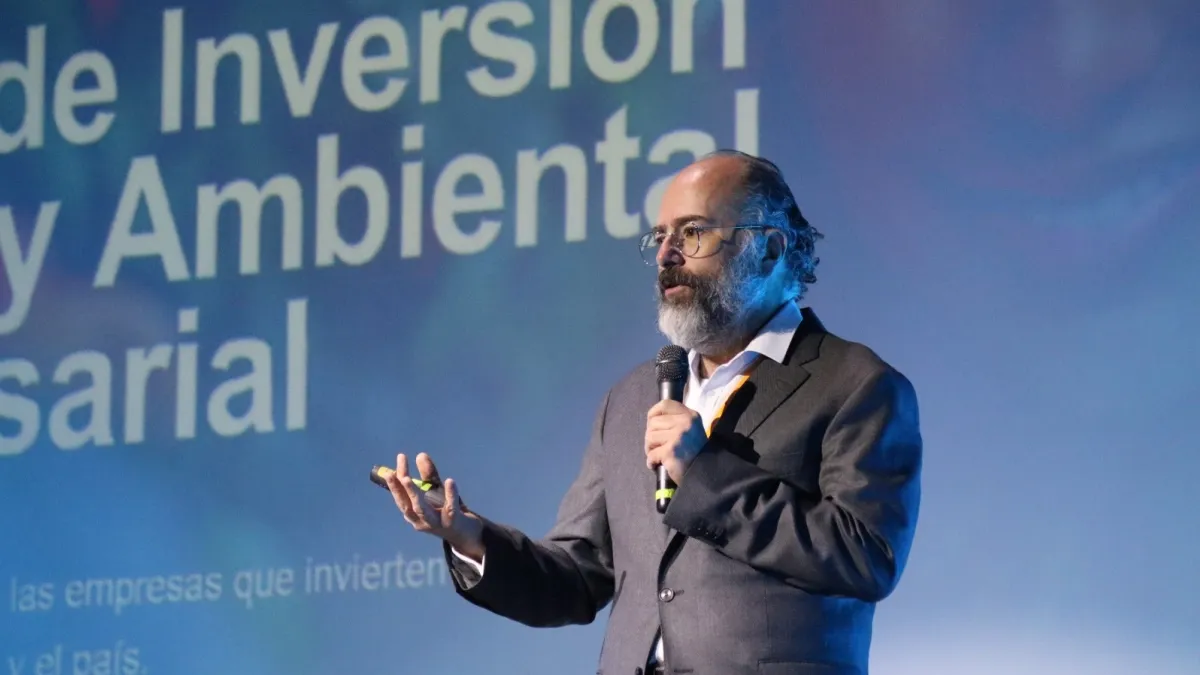
Hugo Salazar, Director of Engineering at Claro Colombia, emphasized that these findings are more than just statistics—they are a roadmap for future infrastructure development.

"The large sporting events of today are, by definition, large digital events," Salazar stated. "Millions of people are connecting simultaneously to watch, interact, and share. These behaviors demonstrate that the network is no longer just a utility for communication; it is the platform upon which the national experience of entertainment is built."
Salazar noted that the company’s infrastructure has had to adapt rapidly to these "multi-screen" behaviors. The shift towards streaming services such as Disney+, Paramount+, DGO, and Claro TV+—which saw utilization increases of up to 45%—requires a network capable of handling massive, continuous bandwidth without latency.

"We are seeing a total redefinition of how our infrastructure is planned and operated," he added. "The user doesn’t just want to watch; they want to engage in real-time. When you have 232,000 devices simultaneously connected via Claro TV+ during a single match, the technical demands on our servers and data centers are immense."
Regional Disparities and Behavioral Insights
The "digital fever" was not limited to the capital city of Bogotá. The report highlighted interesting regional variations in connectivity demand:

- High-Growth Regions: Pasto, Pereira, Popayán, Armenia, Cartagena, Barranquilla, and Medellín recorded mobile traffic increases of over 40%.
- The Big City Surge: In major hubs like Bogotá, Manizales, Cali, and Bucaramanga, the growth surpassed 50% during critical matches.
The "Hydration Break" Index
Interestingly, the report identified a clear inverse relationship between match action and secondary activity. During the time the ball was in play, streaming and video platforms commanded the lion’s share of bandwidth. However, during halftime or breaks in play, video streaming traffic dropped by nearly 40%, while social media usage surged by 29%. This confirms the "second screen" hypothesis: fans treat the breaks as an opportunity to curate their social media feeds, share memes, and debate referee decisions.
According to the final data, the digital pie of the championship was distributed as follows:

- Social Media: 46.67% of traffic.
- Streaming Platforms: 26.41% of traffic.
- Messaging Services: 7.77% of traffic.
Implications for the Future of Connectivity
The data from the 2026 championship offers a glimpse into a future where digital infrastructure is the primary nervous system of a nation. Several key implications emerge:
- Capacity Planning: With streaming and 5G becoming the standard for major events, operators must focus on "burst capacity"—the ability to handle extreme, short-term surges in demand without compromising service quality.
- The Death of Traditional Scheduling: The fact that the entire country’s internet habits were shifted by two hours highlights that "prime time" is no longer a fixed window. Operators must move toward flexible, dynamic resource allocation that adapts to user activity rather than fixed time slots.
- The Essential Nature of 5G: The success of 5G in high-density environments during this tournament proves that the rollout of this technology is not just about speed, but about network efficiency. It is the only way to prevent gridlock during large-scale public events.
- A Changing Consumer Profile: The 158% increase in devices connected to Claro TV+ during the Colombia-Congo match confirms that the "cord-cutting" trend is accelerating in Colombia. Viewers are rapidly moving away from cable boxes toward app-based, on-demand viewing experiences.
As Colombia continues to navigate the complexities of digital transformation, the lessons learned during this tournament will be invaluable. The "Digital Stadium" is here to stay, and for companies like Claro, the challenge will be to ensure that every time the national team plays, the digital experience remains as seamless as the beautiful game itself.