By Economic Reporting Desk
November 7, 2026
In a significant development for Colombia’s energy landscape, the Canadian oil and gas giant Parex Resources has announced a major hydrocarbon discovery in the VIM-1 block, located in the department of Magdalena. This discovery, which yielded promising results in initial testing, serves as a cornerstone for the company’s broader strategy to bolster national energy supply. By investing in new infrastructure, Parex aims to mitigate the growing gas shortages currently facing the Colombian market, positioning itself as a vital player in national energy security.
A Strategic Discovery in the Magdalena Basin
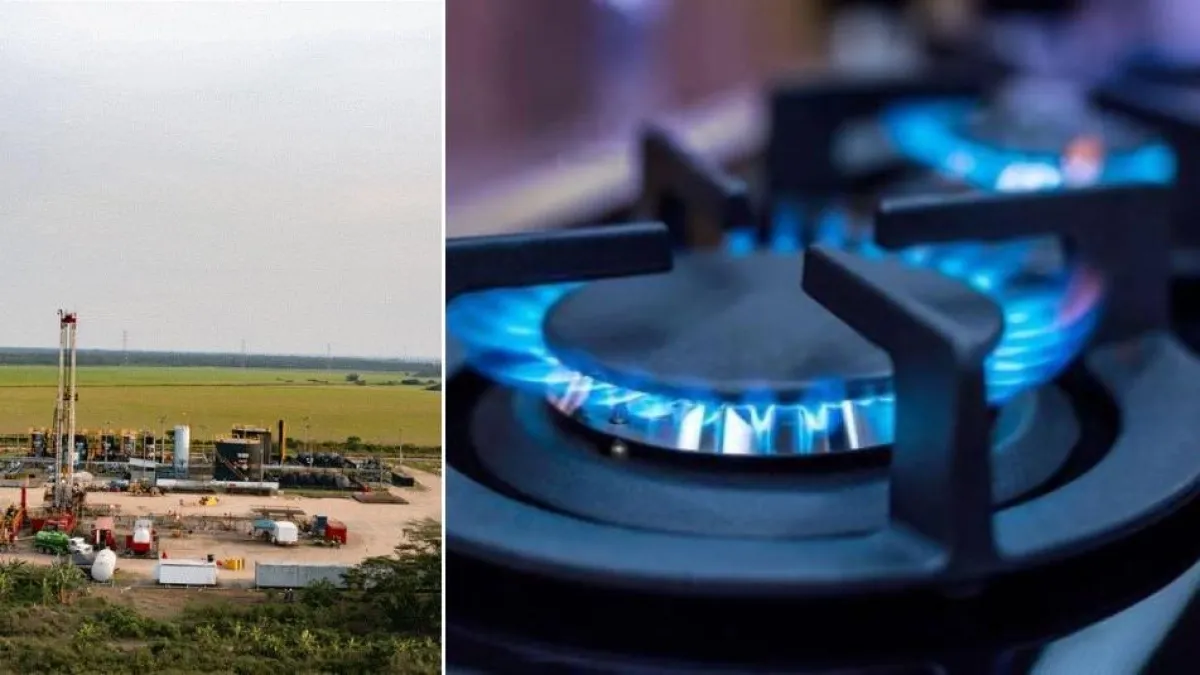
The recent exploration success in the VIM-1 block, situated in close proximity to the established La Belleza field, has provided a much-needed boost to the sector. During initial testing, the new well recorded an output of 6,600 barrels of oil equivalent per day (bped). This discovery is not merely a quantitative win; it is a qualitative shift in how the company approaches resource management.
The discovery was made in the same geological formation as the La Belleza field, which is already a productive asset. To optimize reservoir management and prioritize environmental sustainability by minimizing gas flaring, the company conducted a controlled 35-hour testing period. The results were highly encouraging: during the final ten hours, the well demonstrated a steady production of 22 million cubic feet per day (mpcd) of natural gas and 3,000 barrels per day (bpd) of light crude, with a remarkably low water cut of just 1 percent.

Currently, the well is in the final stages of connection to the La Belleza gas plant, with full integration expected by the end of 2026.
Infrastructure: The Backbone of Future Supply
Parex Resources is not merely extracting resources; it is building the logistical pathways necessary to deliver them to the Colombian market. The company has finalized plans for a new gas pipeline, scheduled to be operational by mid-2027. This infrastructure project is designed to inject up to 25 million cubic feet per day of natural gas into the domestic network.

This development is particularly timely. Colombia is currently grappling with supply constraints, and the ability to monetize gas that was previously being re-injected into the well marks a significant turnaround. By converting these volumes into market-ready supply, Parex will not only capitalize on attractive local market prices but also provide a critical buffer against the nationwide energy scarcity that has plagued industrial and residential sectors in recent months.
Chronology of Progress and Operational Resilience
The current success in the VIM-1 block and the Llanos Orientales region is the culmination of a deliberate, multi-year strategy.

- Early 2026: Parex begins an aggressive expansion phase, successfully identifying four new prospects in the Llanos region.
- Mid-2026: The company formalizes its acquisition of the petroleum business of Frontera Energy, significantly expanding its footprint and asset portfolio in Colombia.
- Third Quarter 2026: Operations face challenges due to severe weather conditions in the Llanos Orientales, which hampered road access and logistics. Despite this, the company maintains production levels, proving the structural robustness of its assets.
- November 2026: The announcement of the VIM-1 discovery signals a shift toward prioritizing gas infrastructure as the primary driver of the company’s capital expenditure for the coming year.
- 2027 Outlook: The company is set to bring the new pipeline online and initiate an intensive drilling program, with plans to sink 20 additional exploration and development wells.
The Llanos Orientales: The Heart of the Portfolio
While the VIM-1 discovery has captured recent headlines, the company’s bread-and-butter operations in the Llanos Orientales continue to show remarkable resilience. The Llanos 111 block is rapidly approaching a milestone of one million barrels of cumulative production, cementing its status as one of the most significant discoveries in the company’s recent history.
Despite heavy rainfall in the region periodically restricting transport, production in the block remains strong, exceeding 6,000 barrels of crude per day. Parex has been transparent regarding these logistical hurdles, clarifying that current output is limited by infrastructure capacity and regional connectivity, not by the performance of the reservoirs themselves.

To resolve these bottlenecks, the company is executing a phased expansion of road access. With the return of the dry season in the final quarter of 2026, the company anticipates an immediate increase in production of roughly 2,000 barrels per day, with further growth projected for 2027 as transportation networks stabilize.
Financial Commitment and Capital Reallocation
To support this ambitious agenda, Parex Resources has upwardly revised its capital expenditure (CAPEX) budget. The new range is set between $285 million and $315 million, an increase from the initial forecast of $275 million to $295 million.
This capital is strategically allocated to:
- Development in the Magdalena Medio: Focusing on the Llanito and Casabe fields to maintain production momentum.
- Exploration in the Bajo Magdalena: Prioritizing the VIM-1 block to bring new gas volumes to market.
- Consolidation of Llanos 111: Ensuring that the infrastructure matches the high output potential of this prolific area.
The company’s ability to maintain a 70 percent exploration success rate in the Llanos and a 100 percent success rate in three other national prospects has given investors and stakeholders confidence that these capital injections are well-placed.

Market Implications: Energy Security vs. Supply Deficit
The urgency behind Parex’s infrastructure projects is tied to the broader Colombian energy crisis. Industry analysts have long warned of a domestic gas deficit that could lead to higher costs for thermoelectric power plants and residential consumers.
By prioritizing the development of gas-ready infrastructure, Parex is effectively bypassing the limitations of the existing grid. This effort is complemented by ongoing industry-wide discussions, such as the potential for repairing cross-border gas pipelines with Venezuela or fast-tracking long-delayed projects like the Komodo offshore well, which has recently seen regulatory hurdles removed by Ecopetrol.

Parex’s proactive stance—using its own capital to solve the "last mile" connectivity issue for its gas—is viewed by many as a blueprint for other private operators in the country. It signals a move away from purely extractive operations toward integrated energy management.
Looking Ahead: A New Era for Colombian Energy
As 2026 draws to a close, the energy sector is undergoing a period of intense transformation. While public sentiment regarding the broader industry and state-owned entities has been volatile, the performance of private firms like Parex has remained a bright spot.

The company’s commitment to drilling 20 new wells over the next 12 months is not just an operational goal; it is a signal to the market that the Colombian subsoil remains highly prospective. Whether these efforts will be enough to fully plug the national gas deficit remains to be seen, but the contribution from the VIM-1 block is undeniably a vital piece of the puzzle.
For the Colombian government, the challenge remains to foster a regulatory environment that encourages this level of private investment while ensuring that the benefits of such discoveries are equitably distributed across the national energy grid. As Parex moves into the next phase of its growth, the eyes of the energy sector will be fixed on the Magdalena basin, waiting to see if this new infrastructure can deliver the relief the country so desperately needs.

In conclusion, the strategic pivot of Parex Resources towards increased gas production, backed by a disciplined approach to capital expenditure and infrastructure development, highlights a promising trajectory. By addressing both the technical challenges of extraction and the logistical realities of transportation, the company is positioning itself to be a key architect of Colombia’s energy stability in the years to come.