BOGOTÁ, COLOMBIA — Moments of profound tension and shock gripped passengers and crew members aboard a commercial aircraft preparing for departure at the Puente Aéreo in Bogotá. What was meant to be a routine commercial flight quickly deteriorated into a scene of violent chaos, triggered entirely by a dispute over overhead baggage space.
The incident, which was rapidly documented by startled passengers on their smartphones and broadcast across social media platforms, underscores a growing and alarming global trend of unruly behavior in the skies. The aggressive altercation not only endangered the safety of everyone on board but also highlighted the severe legal consequences passengers face when they choose violence over civility at 35,000 feet—or even while still on the tarmac.
Main Facts of the Incident
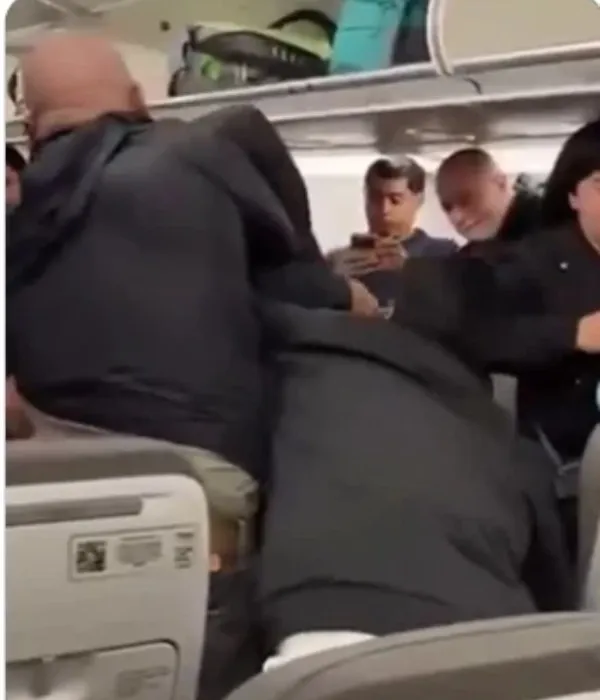
The confrontation erupted inside the cabin of an aircraft stationed at Bogotá’s historical Puente Aéreo terminal. According to preliminary reports, witness testimonies, and widely circulated video footage, the violent episode began when an aggressive male passenger demanded that a Mexican traveler refrain from placing his carry-on luggage in the overhead storage compartment.
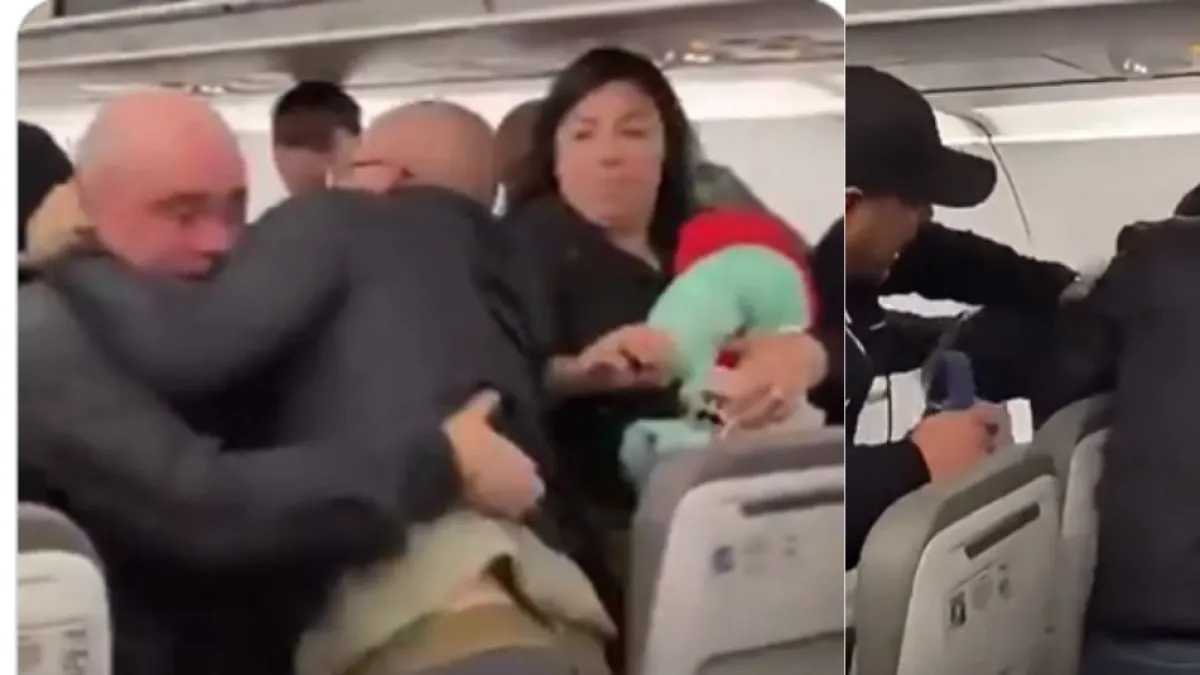
When the foreign traveler politely refused or hesitated to comply with the aggressive demands, the situation escalated with terrifying speed. Rather than seeking assistance from the flight attendants or waiting to resolve the matter peacefully, the aggressor lunged at the victim. Witnesses reported that the assailant began punching the Mexican traveler indiscriminately and, in a harrowing escalation of violence, attempted to choke him in front of shocked onlookers.

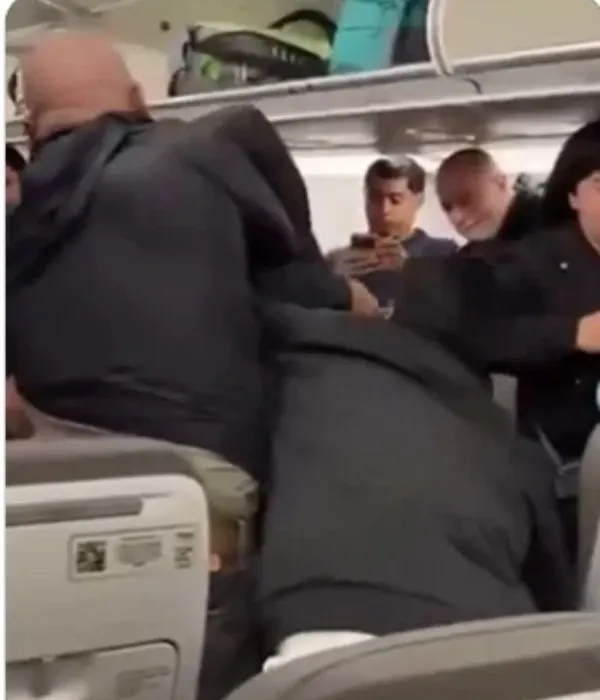
The chaotic scene quickly drew the intervention of the flight’s cabin crew, who rushed to de-escalate the altercation. However, the situation had spiraled far beyond verbal warnings. The assailant turned his fury toward the flight attendants, physically lashing out at crew members who attempted to separate the fighting men and restore order.
Realizing that the physical confrontation was completely out of control and threatening the safety of the entire flight, the airline staff had no choice but to request immediate assistance from the National Police. Upon boarding the aircraft, law enforcement officers were met with the same belligerent hostility. The suspect reportedly resisted arrest and attempted to physically assault the uniformed officers before he was finally subdued, handcuffed, and dragged off the plane.

As he was removed from the aircraft, the man was met with a chorus of furious jeers, boos, and condemnation from the remaining passengers, who loudly expressed their outrage over his violent and disruptive behavior.
Chronology of Events
To understand how a routine boarding process turned into a violent spectacle, aviation security and witness timelines outline a precise sequence of events:
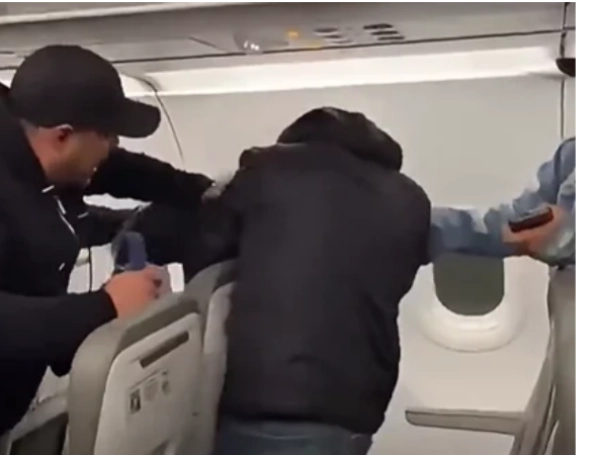
- Phase 1: The Boarding Process and Initial Dispute. As passengers filled the cabin of the aircraft at the Puente Aéreo, the cabin was busy with the standard shuffle of stabling luggage. An argument began when a local passenger aggressively ordered a Mexican national not to use a specific overhead compartment.
- Phase 2: Escalation to Physical Violence. Following the foreign traveler’s refusal to bow to the demands, the aggressor snapped. Abandoning any sense of decorum, he initiated a physical assault, throwing punches and escalating the attack to the point of attempting to choke the victim.
- Phase 3: Crew Intervention and Total Chaos. Flight attendants intervened to pull the men apart. Instead of complying, the aggressor began attacking the crew. With the cabin descending into pandemonium, the captain and senior crew members called for airport security and the National Police.
- Phase 4: Confrontation with Law Enforcement. Officers boarded the aircraft to remove the threat. Rather than submitting to authority, the suspect turned his physical aggression toward the police officers, forcing them to use tactical restraint.
- Phase 5: Expulsion and Public Backlash. Amid loud condemnation, boos, and insults from fellow passengers who filmed the ordeal, the unruly traveler was physically removed from the plane, leading to a delayed departure while the cabin was stabilized.
Supporting Data: The Rising Tide of Unruly Passengers
While aviation remains statistically one of the safest modes of transportation in the world, human behavior inside the cabin has experienced a troubling degradation in recent years. International air transport associations note a sharp post-pandemic spike in "unruly passenger incidents," ranging from verbal abuse against flight crews to physical altercations over minor disputes like reclining seats, mask mandates (historically), personal space, and, most commonly, overhead bin real estate.
In Colombia, civil aviation authorities have tracked an uptick in disruptive behavior across major hubs like El Dorado International Airport and the Puente Aéreo. Analysts point out that modern air travel is high-stress—characterized by tight seating, delays, security lines, and crowding—which often lowers the threshold for tolerance and patience. However, security experts emphasize that personal stress can never excuse violent behavior, particularly in a confined, high-altitude environment where a security breach can have catastrophic consequences for flight safety.

Official Responses and Regulatory Framework
The swift actions taken by the crew and law enforcement on the Bogotá flight align with strict protocols designed to protect passengers and aircraft integrity. However, the repercussions for the aggressor extend far beyond a delayed flight and public embarrassment.
According to the Colombian Aeronautical Regulations (Reglamentos Aeronáuticos de Colombia — RAC), specifically RAC 13, acts that compromise safety, disrupt public order, or involve physical violence on an aircraft or within airport facilities carry severe administrative and criminal penalties.
Financial Sanctions
The Colombian Civil Aviation Authority (Aeronáutica Civil) enforces stringent economic penalties calculated in Tax Value Units (known in Spanish as Unidades de Valor Tributario or UVT). Depending on the severity of the infraction, fines for disruptive behavior on flights can range anywhere from four million to 14 million Colombian pesos.
Grounds for Penalization under RAC 13
Under Colombian aviation law, penalties are automatically triggered by actions including, but not limited to:

- Refusing to comply with direct instructions given by flight deck or cabin crew members.
- Engaging in physical fights or assaulting fellow travelers, ground staff, or crew members.
- Resisting law enforcement personnel during aircraft security interventions.
- Consuming unauthorized substances, smoking, or tampering with emergency equipment.
Beyond government-mandated fines, commercial airlines reserve the right to blacklist disruptive individuals. This means the aggressor in this incident likely faces a permanent ban from utilizing the airline’s services in the future, compounding the financial and logistical fallout of his actions.
Implications for the Aviation Industry and Travelers
The terrifying incident at the Puente Aéreo serves as a stark reminder of the fragile social contract that keeps commercial aviation running smoothly. Thousands of people share cramped spaces daily, relying on mutual respect, patience, and adherence to rules to ensure safe transit from point A to point B.

When an individual chooses to break that contract through violence, the ripple effects are immediate:
- Operational Delays: The entire flight schedule is thrown into disarray as police reports are filed, statements are taken, and security protocols are re-verified.
- Trauma for Passengers: Fellow travelers—including children and foreign visitors—are subjected to psychological distress and fear, tarnishing their travel experience and projecting a negative image of local transport hubs.
- Increased Security Measures: Incidents like this invite calls for even stricter airport security checks, potentially increasing wait times and administrative burdens for all travelers.
As aviation authorities continue to crack down on air rage with heavy fines and legal prosecution, cases like the one at Bogotá’s Puente Aéreo send a clear, unmistakable message: violent outbursts in the skies will no longer be tolerated, and the cost of losing one’s temper is exceptionally high.