By Breaking News & International Desk Published: November 6, 2026 | Updated: November 6, 2026
Main Facts
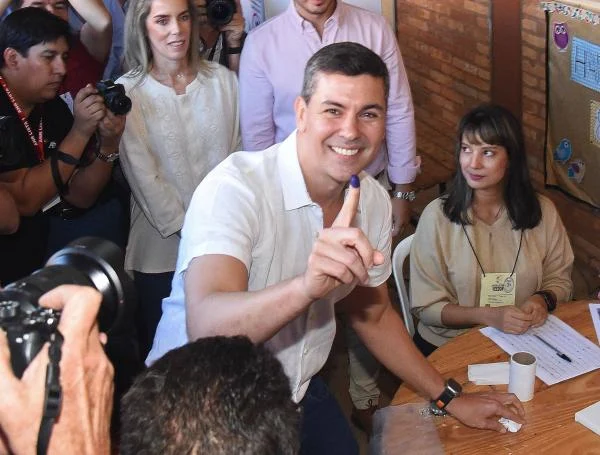
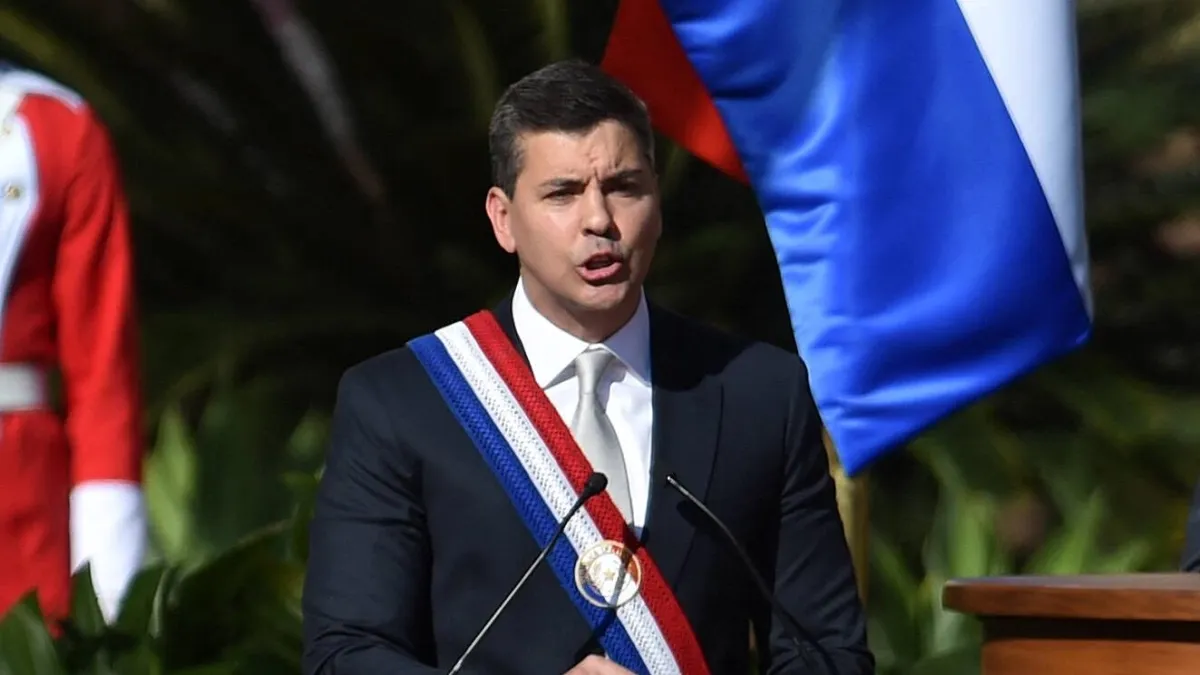
In a historic and sweeping political earthquake, the Senate of Paraguay voted unanimously on Friday, November 6, 2026, to convict and depose President Santiago Peña. Found guilty of "malperformance of duties" during an impeachment trial conducted in his absence, the 47-year-old conservative economist became only the second president in Paraguay’s recent democratic history to be removed from office via impeachment, mirroring the fate of former President Fernando Lugo (2008–2012).
With all 44 present senators casting votes in favor of conviction, Peña’s presidency came to an abrupt, unceremonious end, cutting short a term originally scheduled to run until 2028. Immediately following the vote, Vice President Pedro Alliana was sworn in as the nation’s new head of state to navigate the turbulent institutional waters.
The downfall of Santiago Peña was precipitated by an unprecedented economic and political storm triggered by the sudden closure of Ueno Bank, a massive financial institution serving roughly 2.9 million citizens in a nation of 6.1 million. The bank’s collapse—rooted in severe regulatory failures, mishandled public funds, and frozen depositor accounts—unleashed widespread public fury. Accusations mounted that Peña’s administration had funneled hundreds of millions of dollars in state resources into the bank, jeopardizing the livelihoods of ordinary citizens and leaving over 32,000 retired workers belonging to the Social Prevision Institute (IPS) unable to access their pensions.
The political fallout was swift and total. Stripped of his presidency, Peña also lost his constitutional entitlement to become a lifelong senator (senador vitalicio). Under Article 189 of the Paraguayan Constitution, democratically elected former presidents automatically receive life senatorial seats and accompanying legal immunities—unless they are impeached and found guilty. By condemning him, the Senate ensured that Peña faces the full weight of potential judicial scrutiny without the shield of legislative immunity.
Chronology of a Crisis: From Financial Tremors to Impeachment
The events leading up to the historic Senate vote unfolded at a breakneck pace over a devastating 48-hour window in early November 2026:
The Catalyst (Late October – Early November 2026): Public panic erupted after the Central Bank of Paraguay (BCP) intervened in Ueno Bank, initiating a resolution procedure. Thousands of depositors rushed to branches as rumors of insolvency and missing liquidity circulated. Protests formed outside major financial hubs, fueled by revelations that public sector funds had been heavily exposed to the bank.
Thursday, November 5, 2026 – The Resignation Bid: Facing collapsing political support, the withdrawal of public backing from his political mentor and former President Horacio Cartes, and an imminent congressional trial, Santiago Peña announced his resignation via a video message on X (formerly Twitter). He stated he was stepping down to spare the nation from deeper division and to preserve social peace. However, due to a lack of quorum, the Congress failed to formally process or accept his resignation.
The Domino Effect: Concurrently, high-level cabinet officials began abandoning ship. Interior Minister Enrique Riera tendered his resignation amid mounting nationwide civil unrest and security concerns tied to the banking protests.
Friday, November 6, 2026 – The Impeachment Trial and Verdict: Rather than allowing the resignation to halt proceedings, the Chamber of Senators chose to forge ahead with the political trial. Peña opted not to appear before the legislative body, despite personal citations, choosing instead to send a legal team—composed of attorneys Adolfo Ferreiro and Ricardo Preda—to mount a technical defense. The defense argued that the trial was null and void since a resignation letter had already been submitted. The Senate flatly rejected this argument, pushed past the legal challenges, and voted unanimously to convict the president, bringing his administration to an immediate halt.
Supporting Data and Economic Impact
The figures underpinning the Paraguayan crisis highlight the systemic vulnerability exposed by the Ueno Bank collapse:
The Scale of Ueno Bank: Ueno Bank was not a minor financial player; it held accounts for nearly half of Paraguay’s entire population (2.9 million out of 6.1 million inhabitants).
Public Fund Exposure: Congressional prosecutors leading the impeachment charge claimed that the collapse resulted in the evaporation or freezing of approximately $1.2 billion USD of public and private capital, prompting legislators to label Peña "the biggest embezzler in the nation’s history."
The Pension Crisis: Among the hardest hit were 32,000 retired beneficiaries of the Social Prevision Institute (IPS). Their inability to access monthly stipends transformed a banking sector failure into an immediate humanitarian and social crisis, driving waves of vulnerable citizens into the streets.
Political Dominance Fractured: Peña’s removal represents a devastating blow to the Colorado Party (Asociación Nacional Republicana), which has held a near-monopoly on political power in Paraguay for nearly 80 consecutive years, interrupted only by Lugo’s brief tenure between 2008 and 2013.
Official Responses and Political Realignments
The speed at which Santiago Peña lost his political allies stunned political analysts across Latin America.
In his final address broadcasted to the public, the ousted leader defended his decision to step down prior to the vote, emphasizing that his ego could not supersede national stability:
"I have taken the decision to present my resignation to the Presidency of the Republic; I do so thinking of the stability of our country, of social peace, and of the necessity to preserve our democratic institutions… I do not want my presence to be a motive for greater division or instability. My responsibility is to put the country above my personal destiny."
Despite these appeals, the political machinery turned decisively against him. Most notably, former President Horacio Cartes (2013–2018)—widely recognized as Peña’s primary political mentor who engineered his rise within the Colorado Party—withdrew his public backing just hours before the trial. Cartes’s faction greenlit the legislative movement to advance the impeachment, signaling that the party leadership prioritized institutional self-preservation over protecting a faltering executive.
Meanwhile, legal representatives for the defense maintained that the trial was unconstitutional from its inception. Attorney Adolfo Ferreiro argued that trying a president who had already submitted a formal resignation violated core tenets of due process, a stance summarily dismissed by a Senate determined to assert its constitutional authority and deny Peña his lifelong senatorial protections.
Geopolitical and Regional Implications
The sudden downfall of Santiago Peña carries massive repercussions far beyond Paraguay’s borders:
1. Shockwaves Within the Conservative Bloc
Paraguay had recently solidified its position as a reliable conservative anchor in South America, frequently aligning itself with right-of-center regional movements and maintaining strong diplomatic ties with the United States. Peña’s collapse weakens the conservative axis in the Southern Cone, creating a domestic vacuum that opposition parties and populist movements are eager to exploit ahead of the 2028 electoral cycle.
2. Institutional Resilience vs. Democratic Fragility
While the peaceful swearing-in of Vice President Pedro Alliana demonstrates that constitutional mechanisms for succession remain functional, the fact that two democratically elected presidents have now been unseated by impeachment in less than two decades underscores deep structural vulnerabilities in Paraguayan governance. Critics argue that cyclical party infighting and opaque financial entanglements between the political elite and private banking institutions continue to threaten the nation’s democratic consolidation.
3. Economic Reconstruction Under Alliana
The immediate priority for newly minted President Pedro Alliana will be restoring confidence in the financial sector, auditing the true scale of the Ueno Bank deficit, and guaranteeing that pensioners and everyday depositors are made whole. Failure to stabilize the economy swiftly could translate broader public rage into permanent voter alienation from the Colorado Party, threatening its decades-long dominance as Paraguay looks toward the next major electoral test.
International Desk Published: September 20, 2026 | Updated: September 20, 2026 Main Facts In what authorities have officially labeled an unprecedented escalation of the ongoing war, a historic and massive drone offensive targeted Moscow and…
Washington D.C. — In an escalating political standoff that underscores growing fractures within the conservative coalition, U.S. Representative María Elvira Salazar has issued a direct and scathing critique of President Donald Trump’s immigration agenda. Standing…
By Global News Desk Published: September 20, 2026 Main Facts In a landmark legal decision that deals a severe blow to the operational liability defenses of ridesharing giants, an independent arbitration panel has ordered Uber…