BOGOTÁ — In a political landscape already fraught with intense polarization, a new and deeply sensitive controversy has shaken the foundations of Colombia’s progressive movement. On Friday, November 6, 2026, female members of the congressional caucus and political leadership of the Historic Pact (Pacto Histórico) issued a joint official statement addressing the explosive allegations made by Deyci Jiménez against former President Gustavo Petro.
The denunciations, which have triggered nationwide shockwaves, center on claims of an alleged network of women who were supposedly instrumentalized through state provision of service contracts. The unfolding scandal has forced the progressive coalition—which has long championed feminist causes, workers’ rights, and institutional transparency—into a complex reckoning over accountability, gender equity, and political survival.

According to the official communiqué released by the women of the Historic Pact, these grave accusations "cannot be ignored, minimized, or approached from a lens of political convenience." The statement marks a pivotal moment in the discourse surrounding the allegations, signaling that the coalition’s female leaders are demanding a rigorous, transparent evaluation of the facts rather than an automatic circling of the wagons.
Main Facts: The Allegations, the Contracts, and the Core Dispute
The epicenter of the current crisis revolves around testimonies, digital chats, and formal legal accusations brought forward by Deyci Jiménez. Jiménez has alleged the existence of a systematic scheme in which women were allegedly targeted and maneuvered through public contracting mechanisms, intersecting with accusations of inappropriate behavior and sexual misconduct involving high-ranking political figures, notably former President Gustavo Petro.

The controversy deepened significantly when other figures, such as Angie Rodríguez, came forward to discuss digital communications involving the former president. Rodríguez publicly addressed her own chats with Petro, describing interactions—including purported directives regarding a contract for Jiménez—as authentic.
For the women of the Historic Pact, the gravity of these disclosures lies not only in the specific legal exposure of the former head of state, but also in the broader systemic implications. As public servants and political actors who have built their political identities around defending the dignity, autonomy, and civil liberties of women, the caucus faces an acute ideological contradiction.

"As politicians who have built our trajectories reclaiming the rights, dignity, autonomy, and freedom of women, these accusations cannot be ignored," the group emphasized in their statement. They further stressed that every denunciation deserves to be heard with absolute respect, and that no woman stepping forward to utilize the justice system should be subjected to public disqualification or invasive character assassinations regarding her private life.
Chronology of Events: From Initial Revelations to the Pact’s Pronouncement
To understand the velocity at which this political crisis has escalated, it is essential to trace the timeline of events leading up to the Historic Pact’s official response:

- Late October 2026: Initial investigative reports and legal filings begin to surface, bringing public attention to claims made by Deyci Jiménez regarding irregularities in state contracting and personal conduct linked to former President Gustavo Petro.
- October 27, 2026: Judicial and investigative authorities initiate preliminary reviews of the evidence, as public pressure mounts from various political sectors demanding legislative and criminal oversight.
- November 5, 2026: Opposition legislators—specifically from parties such as National Salvation (Salvación Nacional)—swiftly file formal denunciations against Gustavo Petro before the Investigation and Accusation Committee of the House of Representatives, demanding immediate parliamentary scrutiny.
- Early November 2026: Additional witnesses and figures, including Angie Rodríguez, step into the public eye, verifying the existence of internal chats and communications that allegedly corroborate aspects of the contracting and directional claims made by Jiménez.
- November 6, 2026: Recognizing the mounting crisis, the women of the Historic Pact release a comprehensive, formal statement on social media and through official channels, demanding institutional protection for the accusers, calling for non-instrumentalization of the case, and urging thorough judicial investigations.
Supporting Data and Institutional Demands
Rather than leaving the matter to internal party arbitration, the female members of the Historic Pact have made direct, formal appeals to Colombia’s primary oversight and investigative bodies. Their objective is twofold: to ensure the physical and psychological safety of those testifying, and to guarantee that the judicial process moves forward unhindered by political interference.
In their communication, the caucus explicitly stated:

"We respectfully request the Office of the Attorney General of the Nation (Fiscalía General de la Nación), the Ombudsman’s Office (Defensoría del Pueblo), and the National Protection Unit (UNP) to evaluate her situation and adopt corresponding measures."
These requested protective measures are designed to ensure that Deyci Jiménez and any other emerging witnesses can present their testimonies through official institutional channels with peace of mind and adequate security. The signatories underscored that in scenarios where clear asymmetries of power or institutional subordination exist between parties, that dynamic acquires critical importance and demands specialized judicial investigation.
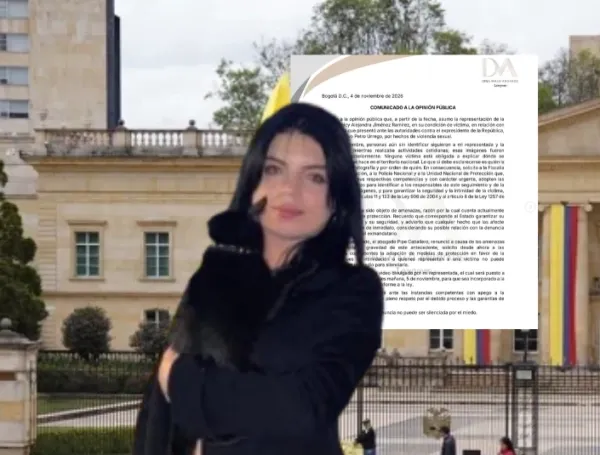
Furthermore, the caucus highlighted that their stance is anchored directly in the internal statutes and foundational principles of the Historic Pact. The coalition’s official charter strictly rejects all forms of discrimination, gender-based violence, and political harassment.
"Among the commitments of the political party is to promote safe spaces free of violence […] disciplinary mechanisms are contemplated for behaviors that contradict them, always with respect for due process," the statement noted, framing their intervention not as an external attack, but as an enforcement of internal party ethics.

Official Responses and Political Reactions
The fallout from the Jiménez denunciation has triggered a fractured response across the Colombian political spectrum, exposing deep ideological fault lines:
1. The Historic Pact Caucus (Women’s Leadership)
The collective response from the women within the progressive coalition walks a fine line between unwavering solidarity with feminist principles and a plea for judicial due process. They have cautioned against premature sentencing while simultaneously refusing to dismiss the claims. Crucially, they issued a warning against political opportunism:
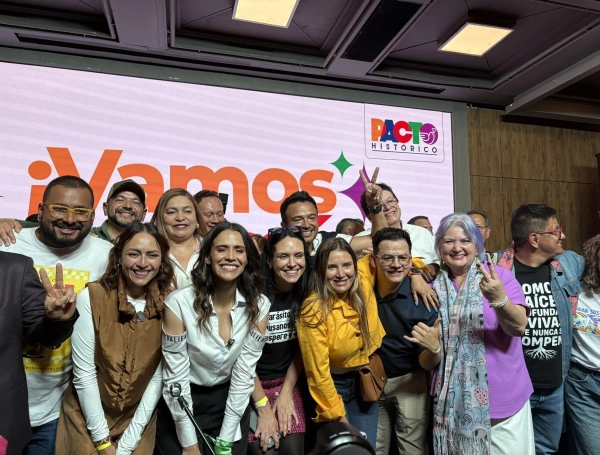
"We also hope that the situation is not instrumentalized by any political sector for private interests […] It is an event that deserves all the care and respect possible by the parties."
2. Opposition Parties and Legislative Action
On the opposing side of the aisle, conservative and opposition lawmakers have moved aggressively to capitalize on the institutional vulnerability of the former president. The filing of formal charges before the House Accusations Committee by figures associated with parties like National Salvation illustrates an intent to push for immediate political and legal consequences, framing the scandal as symptomatic of systemic corruption and abuse of power within the previous administration.

3. The Judicial System
With the Attorney General’s Office and the congressional committees now seized of the matter, the judicial branch faces immense public scrutiny. Legal analysts note that the robustness of the digital evidence—such as the chat logs authenticated by witnesses like Angie Rodríguez—will likely dictate the speed and trajectory of any formal investigations or potential indictments.
Implications for the Progressive Movement and Colombian Politics
The unfolding scandal surrounding Deyci Jiménez and Gustavo Petro carries profound long-term implications for Colombian democracy and the future of the left-wing coalition:
- Ideological Credibility: For a political movement that has mobilized millions by promising a break from traditional patriarchal and corrupt power structures, allegations involving the instrumentalization of state contracts and sexual misconduct strike at the heart of its moral authority. How the Historic Pact navigates this crisis will redefine its internal democratic standards.
- The Test of Institutional Independence: As the case moves through the Fiscalía, the Ombudsman’s Office, and potentially Congress, the capacity of Colombia’s checks and balances to impartially investigate a towering political figure like Petro will be severely tested.
- Weaponization vs. Justice: A central concern articulated by the progressive women’s caucus is the risk of political instrumentalization. The challenge for investigators will be to separate legitimate safeguarding of victims’ rights from partisan maneuvers designed to inflict maximum electoral and reputational damage ahead of future political cycles.
As investigations proceed, the political future of key actors remains suspended in a delicate balance between legal accountability and political defense. What remains certain is that the voices of the women within the Historic Pact have fundamentally altered the internal dynamics of the left, signaling that accountability can no longer be deferred in the name of political convenience.