By Editorial Staff
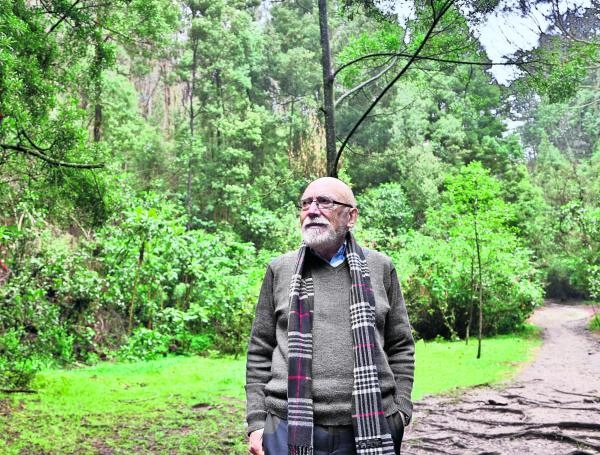
Colombia has lost one of its most profound intellectual pillars. Julio Carrizosa Umaña, a visionary engineer, academic, and the undisputed pioneer of environmental thought in the country, passed away this Thursday at the age of 91. His death marks the end of an era for environmentalism in South America, leaving behind a legacy that transformed how the nation perceives its relationship with its natural heritage.
A man of rigorous academic preparation and deep territorial knowledge, Carrizosa did not merely observe the degradation of the landscape; he built the institutions, the laws, and the philosophical framework necessary to protect it. From the halls of Harvard University to the remote jungles of the Amazon, his life was a testament to the idea that a country’s wealth is not measured solely in economic output, but in the health and complexity of its ecosystems.
A Life Dedicated to the Territory: Chronology of a Pioneer
Born into a generation that witnessed the rapid modernization of Colombia, Carrizosa Umaña understood early on that progress without ecological stewardship was a recipe for catastrophe. His academic journey began at the National University of Colombia, where he studied engineering, a discipline he would later bridge with public administration (Harvard) and economics (Universidad de los Andes).

The Formative Decades (1950s–1970s)
In the 1950s, Carrizosa began his career at a time when the country was largely unmapped and poorly understood. During his tenure as the director of the Instituto Geográfico Agustín Codazzi (IGAC), he spearheaded the use of side-looking airborne radar to map the Chocó and the Amazon. This was a monumental task, identifying approximately 80 percent of the nation’s cadastral properties and providing the empirical basis for future territorial planning.
The 1970s marked his most significant institutional contribution: the creation of the National Code of Renewable Natural Resources and Environmental Protection (1974). As part of the core team of experts, Carrizosa helped craft what was then a groundbreaking legal instrument—one of the first of its kind in the world—that established the legal standing of the environment as a subject of state protection.
The Institutional Builder (1980s–2000s)
Beyond legislation, Carrizosa was instrumental in the physical preservation of the land. He was a primary architect behind the establishment of 17 National Natural Parks, ensuring that the country’s most vital biodiversity hotspots were shielded from the encroaching pressures of development. Throughout these decades, he transitioned from a government official to a public intellectual, consistently warning that the "simple" solutions favored by politicians were insufficient for the "complex" realities of a tropical, multi-ethnic, and biologically diverse nation.
The Philosophy of "Complexity"
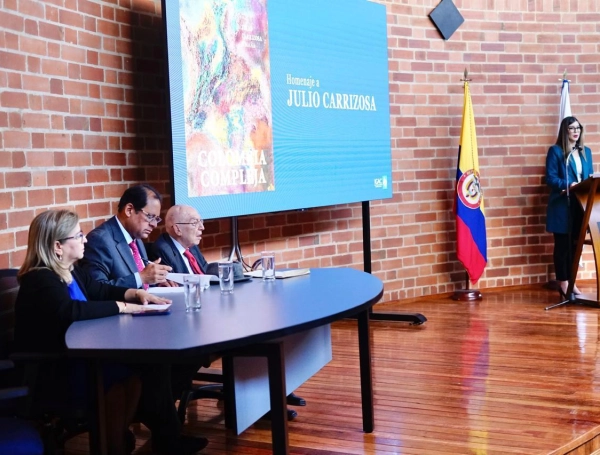
At the heart of Carrizosa’s intellectual output lies his seminal concept of "Complex Environmentalism." In his 2014 masterpiece, Colombia Compleja, he argued that environmental degradation is not an isolated issue but a byproduct of systemic failures in how society organizes itself.
"The problems of our country cannot be solved through simple explanations," he often remarked. For Carrizosa, the tendency of both the political left and right to reduce reality to ideological slogans or purely economic metrics was the greatest threat to sustainable development. He viewed the environment as a web of interconnected variables—social, historical, geographical, and economic—that must be addressed in tandem.
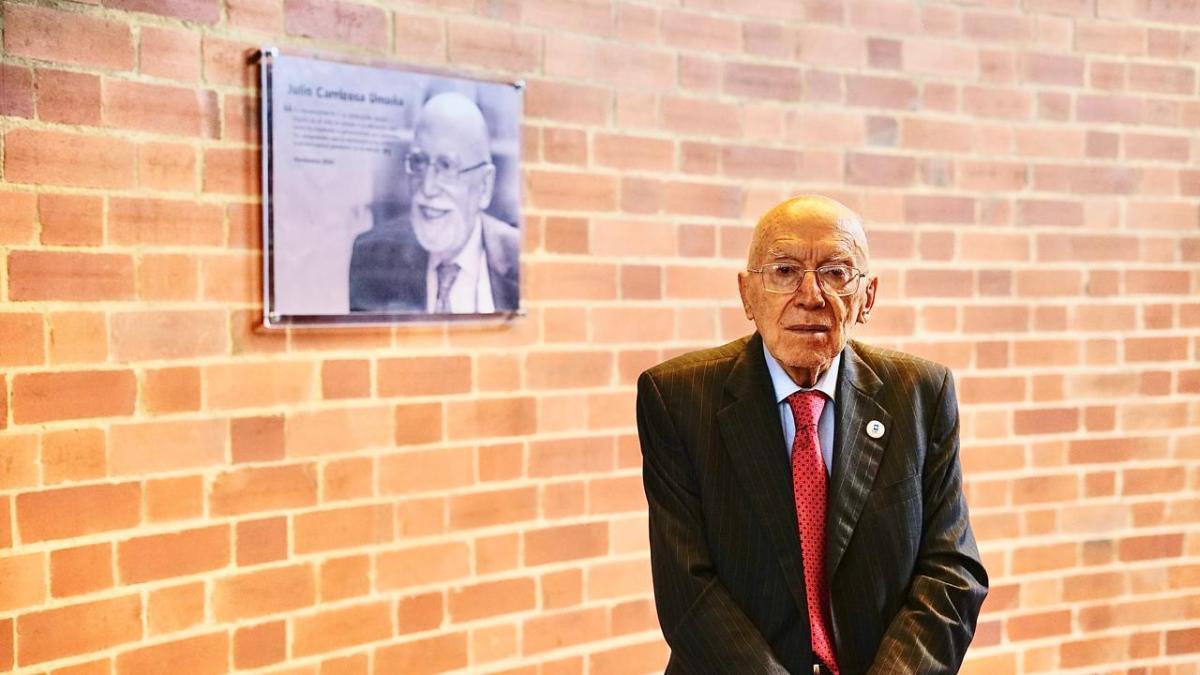
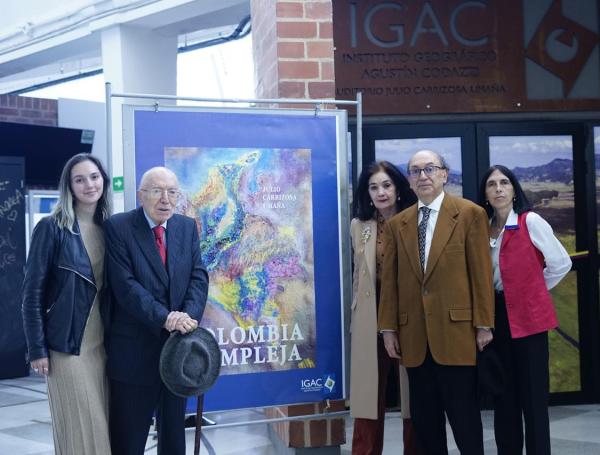
During a recent tribute at the IGAC—an institution that honored him by naming one of its auditoriums in his memory—he reflected on the state of the nation: "I think that unfortunately, things are worse than when I started learning about the country in the 50s. But at the same time, the environmental movement is much larger and stronger than it was in the 60s."
Supporting Data and Institutional Impact
Carrizosa’s influence is best measured by the infrastructure of the Colombian state:
- 17 National Parks: His advocacy helped secure the legal and physical protection of major ecosystems, forming the backbone of the current National Natural Parks System.
- The 1974 Code: This legislation remains a cornerstone of environmental law in Colombia, serving as a template for other Latin American nations seeking to codify natural resource management.
- Mapping the Unknown: Through his work at IGAC, he provided the technical data necessary for the state to claim sovereignty over its most remote regions, a crucial step in both environmental protection and territorial security.
Voices of a Nation: Tributes to the Master
The news of his passing triggered a wave of mourning across the academic, political, and social sectors of Colombia.
Manuel Rodríguez Becerra, the nation’s first Minister of Environment, described Carrizosa as "a Colombian without equal and an incomparable friend." In a statement, Rodríguez emphasized that Carrizosa’s contribution to the region’s environmental thought through his writing and advocacy had no parallel in modern history.
Alegría Fonseca, a prominent environmental activist, expressed her grief, noting that the movement had lost its moral compass. "We say goodbye with a broken heart, but we will continue this eternal fight following his example and his teachings," she wrote.
Sandra Vilardy, academic and former Vice Minister of Environment, captured the sentiment of a younger generation of scholars: "Today we wake up a bit more orphaned. We owe so much to Julio Carrizosa Umaña. Thank you, master, for insisting on the complexity of our country."
Implications: A Future Beyond Reductionism
The death of Julio Carrizosa Umaña is a call to action for the current generation of policymakers. His life work warns that if Colombia continues to treat the environment as a "sector" rather than as the foundational context for all human life, the results will be increasingly disastrous.

His final recommendations, included in the latest edition of Colombia Compleja, remain a roadmap for the future. He advocated for "liberating our minds" from the binary traps of traditional politics. He believed, fundamentally, that while Colombia might never be a "wealthy" nation in the conventional sense of capital accumulation, it possessed every natural and cultural advantage to be a "good place to live."
His vision of a "good living" (buen vivir) was not a retreat from modernity, but an invitation to design a society that respects the carrying capacity of its geography. As the nation grapples with climate change, deforestation, and the challenges of the energy transition, Carrizosa’s voice—the voice of the scientist who loved the land—will be missed.

However, his legacy is firmly embedded in the institutional memory of Colombia. Every hectare protected within a national park, every law that upholds the rights of nature, and every student who chooses to approach environmental problems with a "complex" lens carries forward the spirit of Julio Carrizosa Umaña. The pioneer has left the scene, but the path he cleared for the future of the nation remains, challenging us to look deeper, think harder, and act with a profound respect for the complex web of life that sustains us all.