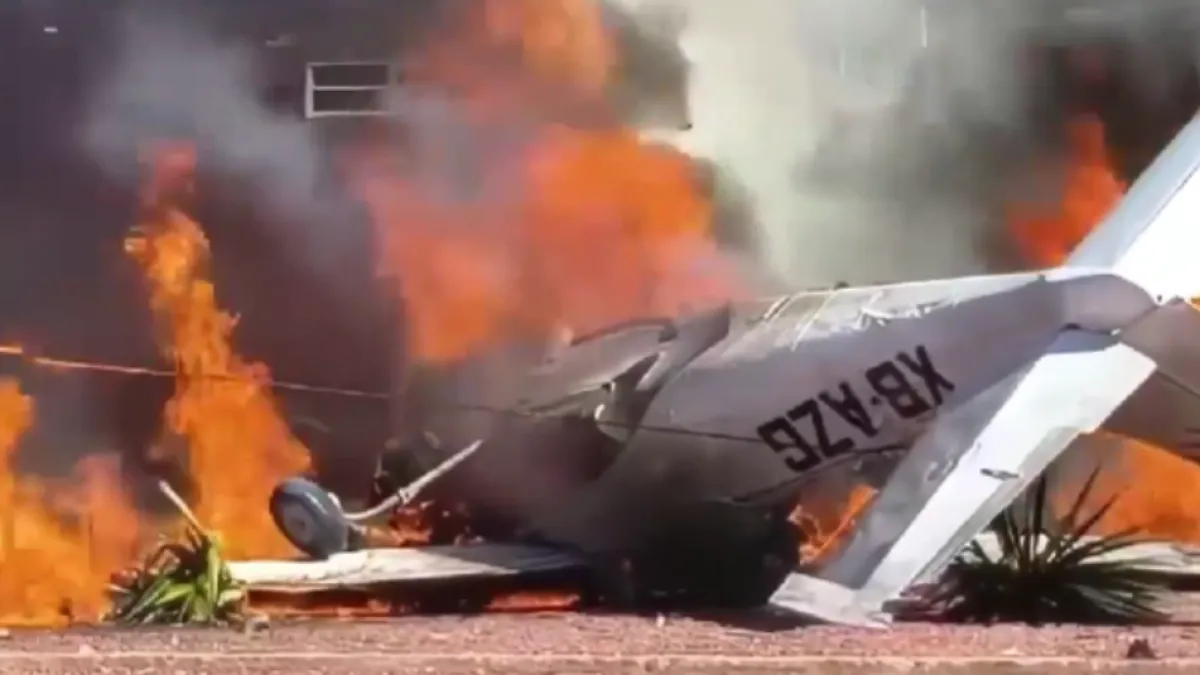
Pachuca, Mexico – A routine Monday morning flight turned into an unimaginable catastrophe on November 2, 2026, when a light aircraft plummeted to the ground just moments after departing from the Pachuca Airport in the central Mexican state of Hidalgo. The fiery crash resulted in the immediate deaths of both occupants onboard, sending shockwaves through the local community and prompting immediate intervention from federal and state aviation authorities.
The incident, which took place in broad daylight, has reignited critical conversations regarding general aviation safety protocols, aircraft maintenance standards, and emergency response frameworks across Mexico’s regional airports. As investigators comb through the charred wreckage, the aviation community mourns the loss of two more lives in what has become an increasingly scrutinized sector of civil transportation.
Main Facts: The Crash of Flight XB-AZG
The aircraft involved in the accident was a single-engine Cessna 210, a popular high-performance light aircraft widely utilized for private and commercial regional transport. Registered under the official Mexican alphanumeric string XB-AZG, the plane was operated by Grupo Aeroespacial Avspace S.A. de C.V., a private aviation and aerospace services company.
According to flight logs and preliminary data released by local air traffic control, the aircraft departed from the Pachuca Metropolitan Airport (PCA) at approximately 09:30 local time on November 2. Its designated flight plan indicated a routine domestic journey heading south toward the General Abelardo L. Rodríguez International Airport in Cuernavaca, located in the neighboring state of Morelos.
However, the flight was cut tragically short. Barely one minute after lifting off from the runway—at approximately 09:31 local time—the aircraft suffered catastrophic structural or mechanical failure, losing altitude rapidly before slamming into the ground in the Venta Prieta sector of Pachuca.
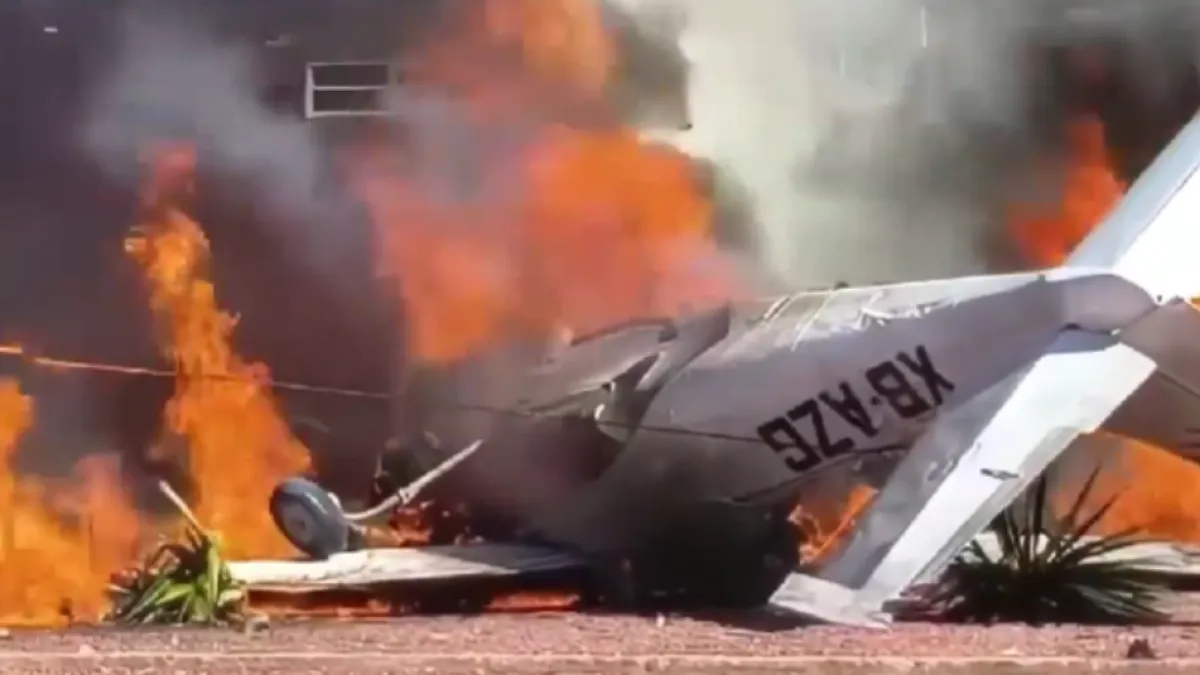
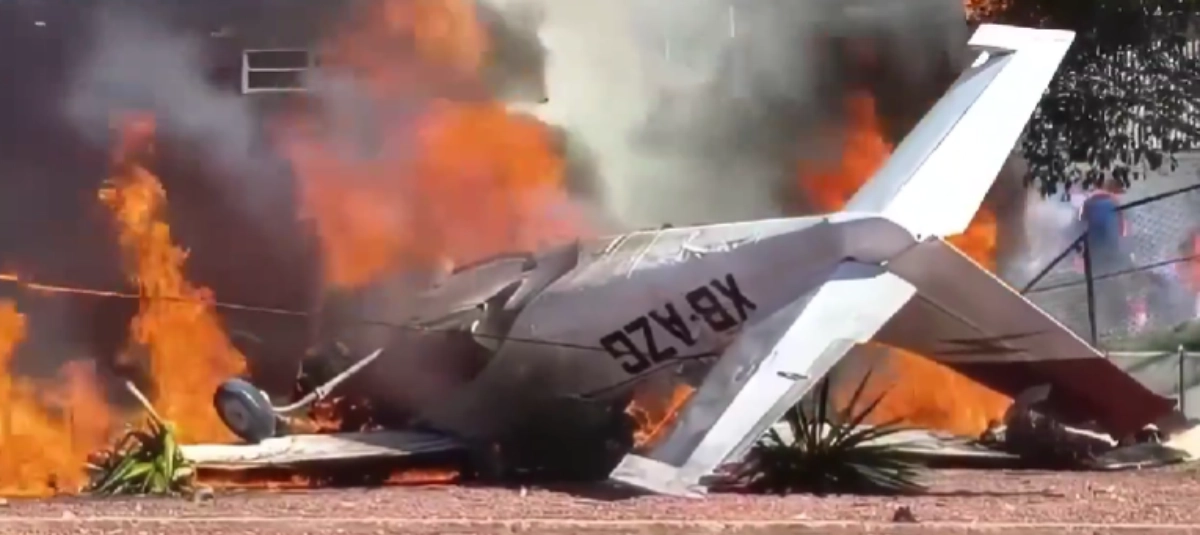
The impact triggered a violent explosion and subsequent intense fire. Video footage captured by terrified local residents and shared widely across social media platforms showed thick, billowing plumes of black smoke rising from the impact site as roaring flames consumed the fuselage. Emergency services rushed to the scene, but the intensity of the fire left no chance of survival for the two individuals trapped inside.
Chronology of the Disaster: A Minute-by-Minute Timeline
Reconstructing the final moments of flight XB-AZG requires piecing together radar data, eyewitness testimonies, and emergency service logs. While official timelines will be refined as the investigation progresses, the sequence of events on the morning of November 2 unfolded with terrifying speed:
- 09:15 AM – Pre-Flight Procedures: The Cessna 210 completes its pre-flight checks on the tarmac at Pachuca Airport. Ground crew and the pilot finalize clearance procedures for the short regional hop down to Cuernavaca.
- 09:28 AM – Taxi and Takeoff Clearance: Air traffic control grants the aircraft clearance to taxi to the active runway. Weather conditions at the time appear clear, though localized wind patterns are being evaluated by investigators.
- 09:30 AM – Departure: The Cessna 210 throttles up and lifts off successfully from Pachuca’s runway, initiating its initial climb profile.
- 09:31 AM – Sudden Loss of Control: Barely 60 seconds into the flight, witnesses on the ground report sputtering engine sounds or an abrupt change in the aircraft’s pitch. The plane veers off its intended trajectory, stalling or entering an uncontrollable descent.
- 09:31:30 AM – Impact and Explosion: The aircraft impacts the ground violently in the densely populated or semi-urban area of Venta Prieta. The rupture of the fuel tanks causes an immediate and massive explosion.
- 09:33 AM – First Responders Dispatched: Emergency dispatch centers in Hidalgo receive the first of dozens of panicked phone calls from citizens reporting a plane crash and subsequent fire.
- 09:40 AM – Arrival of Emergency Services: Firefighters, civil protection units, and municipal police arrive at the scene. Fire suppression teams begin battling the ferocious blaze enveloping the wreckage.
- 10:15 AM – Confirmation of Fatalities: Firefighters manage to bring the inferno under control, confirming that the two occupants of the aircraft perished in the fire. The area is cordoned off to preserve the integrity of the crash site.
- 12:00 PM – Official Statements: The Federal Agency of Civil Aviation (AFAC) and Hidalgo state authorities issue initial press releases confirming the tragedy, the aircraft’s registration, and the initiation of a formal, multi-agency investigation.
Supporting Data and Technical Profile of the Cessna 210
To understand the mechanics of the accident, aviation analysts look closely at the specifications of the aircraft involved. The Cessna 210 Centurion is a six-seat, high-wing, single-engine high-performance aircraft introduced by Cessna in the late 1950s. Known for its retractable landing gear and powerful continental engine, it has earned a reputation as a reliable workhorse for business and personal aviation worldwide.
However, like all complex machinery, its safety record heavily depends on rigorous adherence to maintenance schedules, weight and balance calculations, and pilot experience—especially during the critical phases of takeoff and initial climb.

- Aircraft Type: Cessna 210 Centurion
- Registration: XB-AZG
- Operator: Grupo Aeroespacial Avspace S.A. de C.V.
- Engine Configuration: Single reciprocating engine (typically a Continental fuel-injected powerplant)
- Seating Capacity: Up to 6 occupants
- Departure Point: Pachuca Metropolitan Airport (Hidalgo, Mexico)
- Destination: Cuernavaca International Airport (Morelos, Mexico)
- Flight Duration: Approximately 1 minute (aborted by crash)
- Casualties: 2 fatalities (occupants)
Statistical context from global aviation safety boards indicates that a disproportionate number of general aviation accidents occur during the takeoff, initial climb, and landing phases. Because these maneuvers take place at low altitudes and low airspeeds, pilots have minimal reaction time—and virtually zero altitude buffer—to recover from engine failures, structural anomalies, or aerodynamic stalls.
Official Responses and Immediate Aftermath
The response from Mexican federal and state agencies was swift. Following the confirmation of the deaths of the two crew members or passengers, the Agencia Federal de Aviación Civil (AFAC)—Mexico’s civil aviation authority—issued a formal statement expressing condolences to the families of the victims and announcing the deployment of a specialized team of accident investigators.
Concurrently, the Hidalgo State Attorney General’s Office (Procuraduría General de Justicia del Estado de Hidalgo) initiated an independent ministerial inquiry to handle the recovery of the remains, coordinate with forensic pathologists, and secure the perimeter for evidence collection.

In a joint briefing, local civil protection officials praised the rapid response of the municipal fire department, noting that their prompt arrival prevented the fire from spreading to nearby structures or igniting secondary fuel hazards in the vicinity of Venta Prieta.
The operating company, Grupo Aeroespacial Avspace, released a brief statement acknowledging the tragedy and pledging full cooperation with federal regulators. Representatives stated that the company is turning over all maintenance logs, pilot certifications, and dispatch records to the AFAC to assist in determining the root cause of the disaster.
Broader Implications for Mexican General Aviation
The crash of flight XB-AZG highlights ongoing structural and safety challenges within Mexico’s general aviation sector. While commercial aviation regulated under stringent international standards (such as major domestic airlines) maintains an exemplary safety record, private, executive, and light commercial operations frequently face heightened scrutiny regarding oversight, aging fleets, and operational compliance.

1. Fleet Age and Maintenance Rigor
Many light aircraft operating within Mexico’s regional networks are decades old. While the Cessna 210 design is robust, older airframes and powerplants require meticulous, uncompromising maintenance protocols. Regulatory bodies like the AFAC face constant pressure to ensure that operators—particularly smaller commercial ventures and private firms—do not cut corners on costly part replacements or mandatory overhaul cycles.
2. Pilot Training and Low-Altitude Emergencies
Engine failures or unexpected control losses immediately after takeoff leave pilots with agonizingly few choices. Training protocols emphasize "return-to-field" impossibility margins for low-altitude engine failures, often forcing pilots to find the safest possible uncontrolled landing spot straight ahead. The steep learning curve and high-stress environment of emergency management demand continuous simulator training and recurrent proficiency checks.
3. Public Safety in Urban Proximity
The crash in Venta Prieta once again underscores the hazards associated with the urban encroachment surrounding regional airports. Over the past several decades, cities like Pachuca have expanded outward, bringing residential and commercial neighborhoods closer to airport perimeters. When an aircraft experiences a catastrophic failure during takeoff, the margin between open countryside and populated areas has narrowed dangerously, raising questions about urban planning and zoning laws around aviation infrastructure.

Conclusion
As the investigation into the November 2 disaster continues, forensic experts, aeronautical engineers, and government inspectors will spend weeks—if not months—analyzing the burnt remnants of the Cessna 210’s engine, avionics, and control surfaces. Black box data (if equipped), radio communications logs, and meteorological reports will be cross-referenced to paint a definitive picture of why flight XB-AZG met such a devastating end.
For now, the aviation community in Mexico mourns two more lives lost to the unforgiving skies. The tragedy serves as a solemn reminder of the inherent risks of flight and the unyielding necessity of safety, vigilance, and transparency in every tier of the global aviation industry.