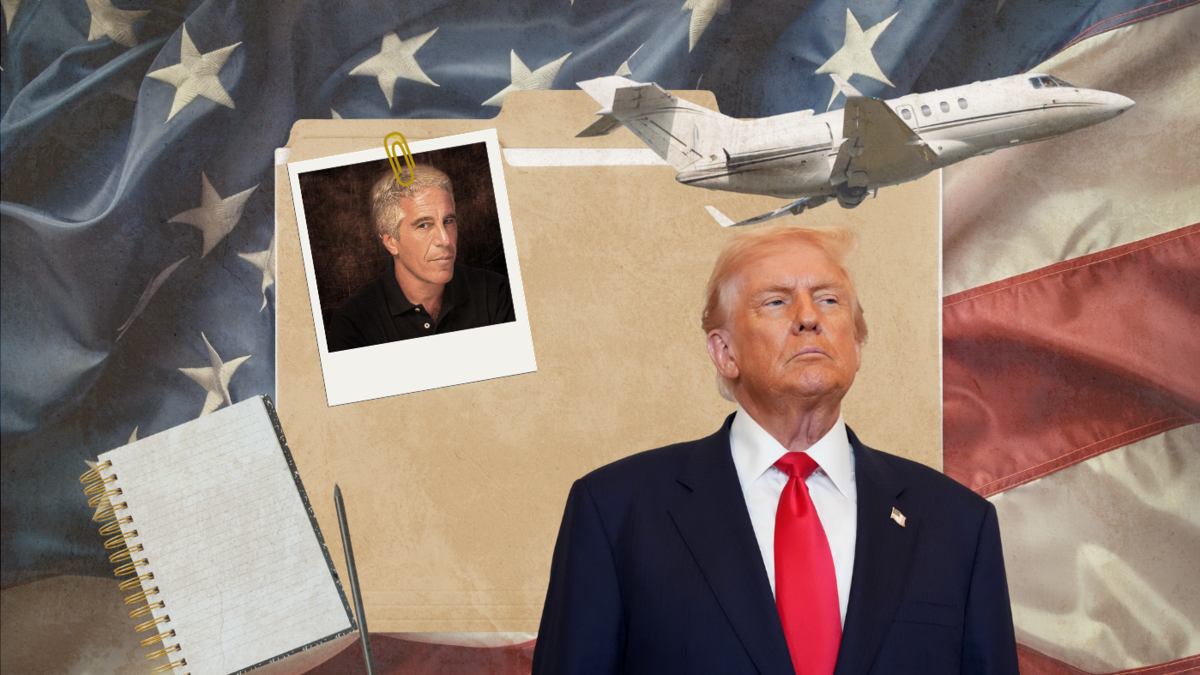
WASHINGTON — In a decisive legal blow, a federal judge in Florida has permanently dismissed a staggering $10 billion defamation lawsuit brought by Donald Trump against The Wall Street Journal and its owner, media mogul Rupert Murdoch. The high-profile litigation stemmed from an investigative report published by the newspaper that linked Trump to a suggestive, decades-old birthday card addressed to convicted sex offender Jeffrey Epstein.
The ruling, handed down by U.S. District Judge Darrin Gayles, shuts down the former president’s legal bid to penalize the publication over the controversial document. While the court stopped short of definitively authenticating the disputed letter, Judge Gayles ruled that The Wall Street Journal had exercised proper journalistic diligence and acted in good faith when it brought the story to light.

The dismissal marks another chapter in the enduring, complex fallout surrounding Epstein’s vast social and financial network—a web that continues to entangle high-profile political and cultural figures years after the financier’s death.
Main Facts of the Case
The legal battle centers on a report published by The Wall Street Journal in 2025, which revealed the existence of a typed birthday greeting allegedly sent by Donald Trump to Jeffrey Epstein in 2003, marking the financier’s 50th birthday.

According to the newspaper’s investigation, the controversial missive was discovered inside a dedicated commemorative book of dedications compiled for Epstein. Ghislaine Maxwell, Epstein’s longtime companion and co-conspirator—who was later convicted of sex trafficking minors—had reportedly reached out to dozens of prominent acquaintances, associates, and public figures within Epstein’s elite social circle, soliciting contributions for the milestone birthday book.
The letter attributed to Trump featured a brief, typed message accompanied by a sketch of a nude woman. The text of the note read:

"Happy birthday, and may every day be another wonderful secret."
Trump vehemently denied authoring or sending the letter, labeling the report as malicious and defamatory. Seeking massive financial retribution, Trump filed a lawsuit against both the publication and Rupert Murdoch, demanding $10 billion in damages for what he characterized as a deliberate smear campaign designed to injure his reputation.

However, Judge Gayles determined that Trump’s legal team failed to meet the rigorous legal standard required for public figures in defamation lawsuits. Specifically, the court found no evidence that the newspaper acted with "actual malice"—meaning Trump could not prove that The Wall Street Journal published the article while knowingly spreading false information or exhibiting reckless disregard for the truth.
Furthermore, Judge Gayles ruled that the dismissal is with prejudice, meaning Trump is legally barred from refiling the same complaint within that judicial district.

Chronology of Events
To fully understand the legal and political gravity of the lawsuit, it is necessary to examine the timeline of events connecting Donald Trump, Jeffrey Epstein, and the subsequent journalistic and judicial actions:
- 2003 (The Milestone Birthday): Jeffrey Epstein celebrates his 50th birthday. According to investigative reports, associates including Ghislaine Maxwell compile a commemorative book filled with notes and sketches from various public figures and acquaintances.
- July 2019 (The Arrest of Jeffrey Epstein): Federal authorities arrest Jeffrey Epstein in New York on federal charges of sex trafficking of minors and conspiracy. The arrest sends shockwaves through global political, financial, and social circles.
- August 2019 (The Death in Custody): Just one month before his scheduled trial, Epstein is found dead in his Metropolitan Correctional Center cell in New York City. The official ruling of suicide immediately sparks widespread skepticism, fueling numerous conspiracy theories regarding potential high-profile cover-ups and silenced co-conspirators.
- 2025 (The Wall Street Journal Exposure): The Wall Street Journal publishes an explosive investigative report detailing contents from Epstein’s personal archives, bringing the 2003 birthday book—and the letter allegedly authored by Trump—into the public eye. The story is swiftly picked up by international media outlets.
- Late 2025 – Early 2026 (The Defamation Lawsuit): Denying all involvement with the letter, Donald Trump launches a $10 billion defamation lawsuit in Florida federal court against The Wall Street Journal and Rupert Murdoch, alleging severe reputational damage.
- October 31, 2026 (Judicial Dismissal): U.S. District Judge Darrin Gayles issues a definitive ruling dismissing Trump’s $10 billion lawsuit with prejudice, affirming that the newspaper conducted responsible reporting and acted in good faith.
Supporting Data and Journalistic Standards
The core of Judge Gayles’ legal reasoning hinged on the protections afforded to the press under American jurisprudence, particularly the landmark New York Times Co. v. Sullivan standard. For a public figure like Donald Trump to win a defamation claim, he must prove not only that a statement was false, but that the publisher acted with "actual malice."

In evaluating The Wall Street Journal’s actions, the court scrutinized the newsroom’s verification process:
- Documentary Evidence: The newspaper based its reporting on physical artifacts recovered from Epstein’s estate and network records, specifically the commemorative birthday book managed by Ghislaine Maxwell.
- Editorial Diligence: The court noted that the publication did not print the claim haphazardly; editors and reporters conducted due diligence to verify the provenance of the materials before running the piece.
- Absence of Malice: Trump’s legal representation failed to produce clear and convincing evidence showing that journalists at the Journal knew the letter was a forgery (if indeed it was) yet chose to publish it anyway to inflict intentional harm.
Media law experts have noted that the ruling reinforces the high bar set for political figures seeking to penalize mainstream journalistic outlets through the courts, protecting investigative reporting even when dealing with explosive, politically sensitive subject matter.

Official Responses and Stakeholder Reactions
The dismissal of the lawsuit drew swift reactions from legal analysts, political commentators, and defenders of the press:
- The Defense and Media Advocates: Representatives for The Wall Street Journal and Dow Jones welcomed the verdict, viewing it as a major victory for the First Amendment and the freedom of the press. Media defenders underscored that investigative journalism into powerful public figures—regardless of their political affiliation—must remain protected from retaliatory, multi-billion-dollar lawsuits designed to chill reporting.
- The Trump Legal Team: While immediate statements from Trump’s personal attorneys expressed profound disappointment with the ruling, the strict nature of a dismissal "with prejudice" means that any further legal recourse regarding this specific claim in Florida is effectively closed. Observers suggest that an appeal to the U.S. Court of Appeals for the Eleventh Circuit remains a technical possibility, though overturning a finding of good-faith reporting presents a steep legal hurdle.
- Public and Political Fallout: The case has once again thrust the ghosts of Jeffrey Epstein’s social network back into the American political consciousness. As watchdog groups and political opponents parse the connections between influential figures and the late financier, the ruling ensures that the debate over the document’s origins will continue to play out in the court of public opinion rather than a civil courtroom.
Implications for Future Defamation Litigation and Press Freedom
The conclusion of Trump’s $10 billion lawsuit carries broad implications for both American media and future political litigation:

- Reaffirmation of the "Actual Malice" Standard: By upholding the principle that investigating archival records and publishing them in good faith does not constitute defamation—even when subjects vehemently deny authenticity—the court has reinforced the bedrock protections that shield American news organizations from crippling financial retaliation.
- The Shadow of the Epstein Archives: The case illustrates that the public reckoning over Jeffrey Epstein’s associations is far from over. As more documents, logs, and personal items from Epstein’s inner circle are scrutinized by journalists, public figures will likely face continued public scrutiny regarding their past interactions with the disgraced financier.
- The Limits of Retaliatory Lawsuits: High-profile figures frequently turn to the judicial system to challenge unfavorable media coverage. This ruling serves as a stark reminder that multi-billion-dollar damage claims face immense legal obstacles when crashing against the robust protections of the First Amendment and demonstrated journalistic good faith.
As the legal avenues close in Florida, the legacy of the 2003 birthday book remains a permanent fixture in the historical record of an era defined by excess, secrecy, and the enduring fallout of the Epstein scandal.