By Edwin Caicedo Environment and Health Journalist
Main Facts: The Clash Over Regional Autonomy and Environmental Financing
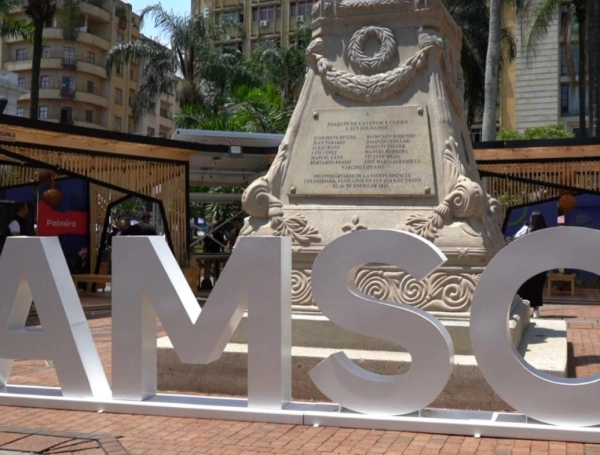
The environmental landscape of Valle del Cauca is currently experiencing a high-stakes institutional friction. The Minister of Environment and Sustainable Development, Fabio Arjona, has openly expressed profound concern regarding the operational rollout of the newly established Área Metropolitana del Suroccidente de Colombia (AMSO). According to the national government, the transition risks severely destabilizing the financial architecture and institutional capacity of the Corporación Autónoma Regional del Valle del Cauca (CVC), an entity with a robust 72-year history of safeguarding the department’s ecosystems.
The core of the dispute lies in the administration and distribution of environmental levies, specifically the substantial revenues generated by the environmental surcharge (sobretasa ambiental) in Cali. For decades, the CVC has anchored its conservation efforts—ranging from micro-watershed rehabilitation and Amazonian transition projects to the decontamination of the crucial Cauca River—on these pooled regional funds.
Minister Arjona’s warnings, delivered during the Regional Environmental Meeting of Non-Profit Entities (ESAL) in Buga, underscore a central tension in modern Colombian decentralized governance: how to foster metropolitan integration without dismantling historical, highly specialized environmental authorities that serve broader regional ecosystems.
As the AMSO—comprising the municipalities of Cali, Jamundí, and Puerto Tejada—takes its formative steps, local and national authorities are locked in a debate over whether the newly minted metropolitan administration possesses the technical, financial, and operational maturity required to manage multi-billion-peso environmental budgets without leaving surrounding municipalities ecologically exposed.
Chronology of Events: From Metropolitan Creation to Buga’s Warnings
To fully grasp the gravity of the current institutional standoff, it is essential to trace the timeline of events leading up to Minister Arjona’s recent declarations:
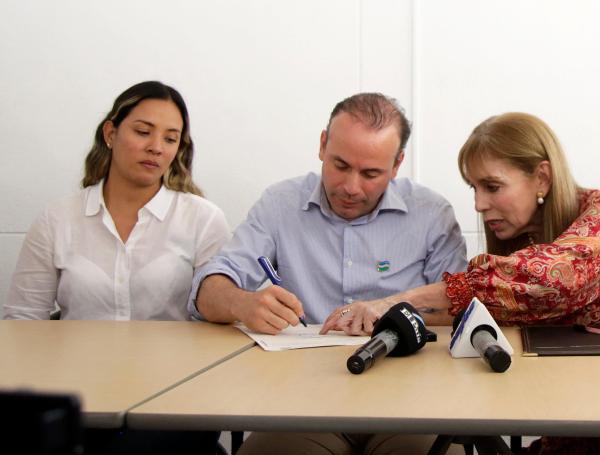
2024 (The Inception of AMSO): The Área Metropolitana del Suroccidente de Colombia (AMSO) is officially approved and signed into existence by the mayors of Cali, Jamundí, and Puerto Tejada. The initiative aims to streamline urban planning, mass transit, and regional development across these economic hubs. However, immediate red flags are raised regarding jurisdictional overlaps with existing environmental authorities.
September 2025: CVC leadership begins publicly raising alarms, indicating that the structural adjustments required by the AMSO could inadvertently strip resources from the 40 other municipalities in Valle del Cauca that depend on regional environmental redistribution.
October 21, 2026: CVC Director General Marco Antonio Suárez Gutiérrez intensifies the public debate, asserting that the creation of the AMSO threatens crucial environmental investments across the department and explicitly stating that the new metropolitan entity is "not prepared" to absorb environmental authority roles.
October 26, 2026: Concurrently, broader regional anxieties are highlighted as environmental forums discuss the vulnerability of protected areas, setting a tense backdrop for regional environmental governance.
October 26–27, 2026: The Regional Environmental Meeting of Non-Profit Entities (ESAL) convenes in Buga, bringing together nearly 300 community and civil society representatives. It is during this high-profile gathering that Minister of Environment Fabio Arjona delivers his definitive warnings against weakening the CVC and announces a major national funding boost for community-led conservation.
Supporting Data: The Financial Anatomy of the Crisis
The debate over the AMSO is, at its heart, a financial contest over the allocation of green capital in southwestern Colombia. The numbers involved explain why both national and regional authorities are unwilling to yield ground easily.
72 Years of CVC Legacy: Established decades ago, the CVC has built a complex technical apparatus dedicated to disaster risk management, water security, reforestation, and biodiversity preservation across Valle del Cauca’s 42 municipalities.
158,000 Million Pesos in Play: According to CVC Director General Marco Antonio Suárez Gutiérrez, projected revenues from the Cali environmental surcharge alone will reach approximately 158,000 million pesos for the 2027 fiscal year.
The 50/50 Distribution Model: Historically, this surcharge operates on a vital equity principle: 50 percent of the funds are reinvested directly into urban and peri-urban projects within Cali, while the remaining 50 percent is redistributed to sustain environmental projects across the other 39 municipalities in the department.
The 40-Municipality Vulnerability: Critics and regional directors warn that if the AMSO absorbs or redirects these urban green revenues exclusively toward its three core member cities (Cali, Jamundí, and Puerto Tejada), peripheral municipalities will face an immediate funding cliff, crippling local watershed protection and ecological recovery initiatives.
Grassroots Empowerment: Demonstrating a dual-track strategy during the Buga summit, the Ministry of Environment announced that the national government will triple the resources allocated by the CVC to the Participatory Fund for Environmental Action (Fondo Participativo para la Acción Ambiental), marking 25 years of supporting localized, community-driven conservation initiatives.
Official Responses: Perspectives from the Ministry and the CVC
The institutional friction has brought key stakeholders into the public spotlight, each articulating distinct visions for the future of environmental management in the region.
The Ministry of Environment: Caution and Technical Rigor
Minister Fabio Arjona has taken a firm stance demanding methodological and technical justification for any administrative shift. Speaking to the 300 delegates in Buga, Arjona emphasized that administrative modernization must not come at the expense of ecological stability:
"Me preocupa que una transformación institucional pueda debilitar las capacidades de una autoridad ambiental con 72 años de historia, experiencia y resultados. Cualquier decisión sobre la administración de los recursos ambientales debe sustentarse en estudios técnicos y financieros, y garantizar que no se pongan en riesgo los programas que benefician a todo el Valle del Cauca," stated Minister Arjona.
The Minister further stressed that regional integration should act as an additive force rather than a subtractive one. He cautioned against concentrating capital in urban centers while rural and semi-rural territories struggle to protect their vital hydrological sources:
"La integración regional debe sumar capacidades, no debilitar la institucionalidad existente. Necesitamos coordinación, transparencia y resultados verificables, respetando la experiencia acumulada por instituciones que han trabajado durante décadas por el ambiente."
The CVC Directorate: Defending Regional Equity
Marco Antonio Suárez Gutiérrez, Director General of the CVC, has consistently underscored the operational dangers of rushing metropolitan encroachment into environmental jurisdictions. Suárez has challenged the technical, administrative, and operational readiness of the AMSO to assume environmental policing and resource-allocation duties.
During community engagements at the ESAL encounter, Suárez reaffirmed the irreplaceable value of grassroots organizations in bridging institutional policy with local realities:
"Las organizaciones comunitarias son fundamentales para llevar la gestión ambiental a cada territorio. Durante 25 años, el Fondo Participativo para la Acción Ambiental ha permitido acompañar iniciativas que nacen de las propias comunidades y que contribuyen a proteger nuestros recursos naturales. Fortalecer este trabajo es invertir en el futuro ambiental del Valle del Cauca."
Implications: What Lies Ahead for Valle del Cauca’s Ecosystems
The standoff between the national Ministry of Environment, the CVC, and the architects of the AMSO carries profound long-term implications for the environmental governance of Colombia:
The Risk of Decentralized Fragmentation: If metropolitan authorities assume environmental competencies without adequate technical safeguards, Colombia risks fracturing its autonomous regional corporation model—a system that, despite administrative flaws, has provided long-term continuity for watershed and biodiversity management.
Rural vs. Urban Ecological Disparity: Concentrating environmental surcharges within metropolitan cores (Cali, Jamundí, Puerto Tejada) threatens to starve outlying rural zones of the funds needed for vital ecological restoration, upstream reforestation, and the mitigation of rural carbon footprints.
Strengthening Community Resilience as a Counterweight: By tripling national contributions to the Participatory Fund for Environmental Action, the Ministry is signaling a pivot toward grassroots resilience. Empowering local non-profit entities and community action boards may serve as a buffer against institutional disruption, ensuring that conservation dollars reach the soil directly, bypassing bureaucratic bottlenecks.
The Precedent for Future Metropolises: How the tension between the AMSO and the CVC is legally, financially, and operationally resolved will set a definitive precedent for other emerging metropolitan areas across Colombia that seek to integrate urban governance with entrenched environmental authorities.
As the debate moves from political forums to technical committees, the ultimate test will be whether administrative modernization can coexist with ecological equity—ensuring that 72 years of environmental stewardship in Valle del Cauca are not compromised in the name of regional restructuring.
By Edwin Caicedo Environment and Health Journalist September 28, 2026 Main Facts In a remarkable paleontological discovery that pushes back our understanding of modern amphibian evolution, two young science interns from Chicago’s Field Museum have…
By Edwin Caicedo | Environmental and Health Journalist Published: September 26, 2026 Main Facts The transition toward sustainable mobility in Colombia is no longer confined to the passenger vehicle market. As enterprises, entrepreneurs, and logistics…
By Global Environmental Desk Published: September 30, 2026 Main Facts: A Planetary Crisis Unfolding in Our Waters Earth’s oceans are undergoing profound, long-term transformations driven by relentless global heating, unchecked carbon emissions, and human activity.…