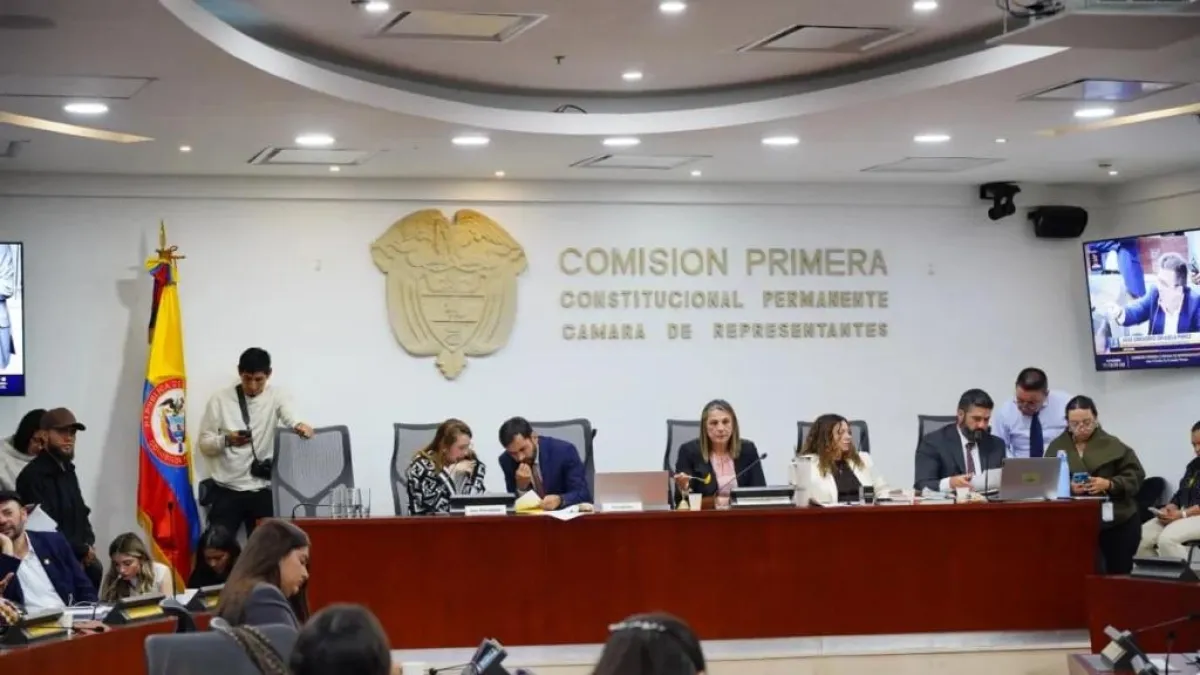
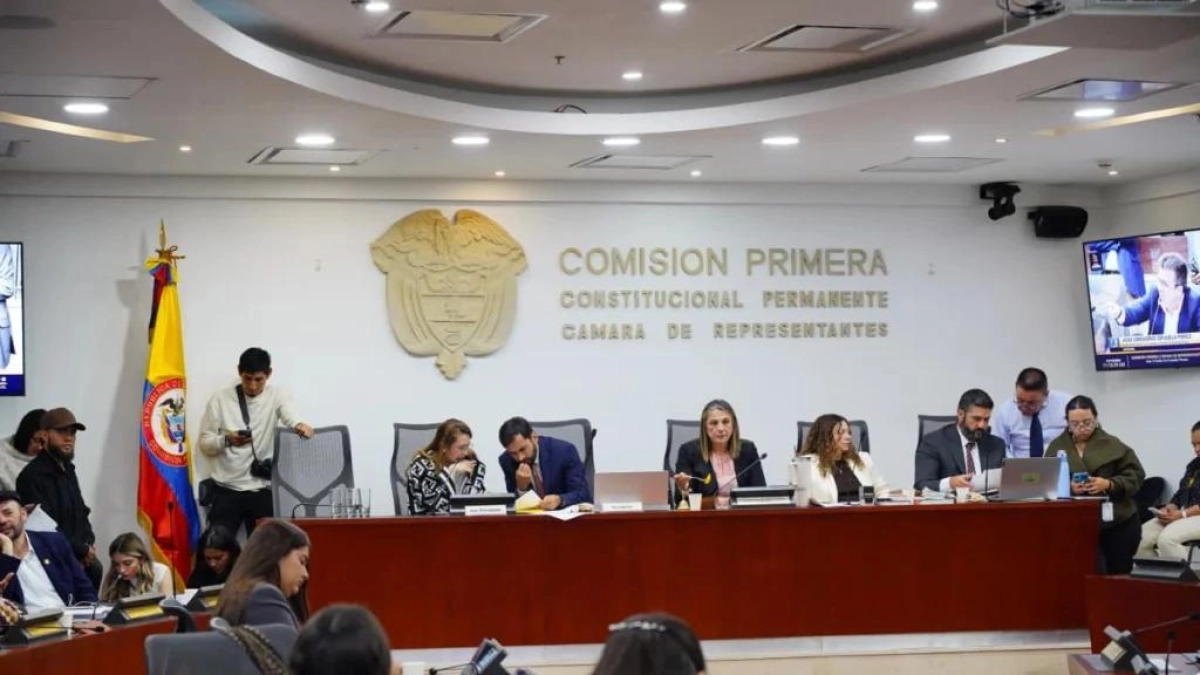
In a decisive move that could reshape the landscape of Colombian national politics, the First Commission of the House of Representatives approved in its first debate a constitutional reform bill designed to close a historic political loophole. The proposed legislative act aims to explicitly prohibit individuals who have served as the Mayor of Bogotá from running for the Presidency or Vice Presidency of the Republic in the election cycle immediately following their mayoral term.
For decades, the second most influential political post in Colombia—the Alcaldía Mayor de Bogotá—has frequently served as a powerful springboard for national ambitions. Figures commanding the capital city inherit immense media visibility, significant budgetary control, and a platform that rivals national ministries. Critics and lawmakers behind the new initiative argue that this dynamic compromises local governance, as elected mayors allegedly use municipal resources and public visibility to engineer national presidential campaigns rather than focus on grueling, often unpopular municipal reforms.
The proposed text seeks to amend Article 197 of the Colombian Constitution. The core provision under discussion reads:
"Without prejudice to the disqualification provided in the previous paragraph for those who have held the office of Mayor within the year prior to the election, neither shall anyone who has been elected and exercised in full ownership the office of Mayor Major of Bogotá during the constitutional period immediately preceding the presidential election be able to register as a candidate or be elected President or Vice President of the Republic, even if they had resigned before the end of said period."
The initiative must clear a rigorous legislative gauntlet. It requires three additional debates to complete its first round of approval in Congress, followed by four more debates in a second legislative round before it can be formally enshrined into the Constitution.
Crucially, the transitional articles dictate that the restriction would take effect starting in 2024. Consequently, if ultimately approved, the rule will not apply to the current incumbent, Mayor Carlos Fernando Galán, but will directly bind whoever succeeds him in the next local administration.
Chronology of the Debate and Legislative Pathway
The push to curtail the political trajectory from Bogotá’s Liévano Palace to the Casa de Nariño is not a sudden development, but it reached a critical milestone this Tuesday during the legislative session of the House First Commission.
Pre-2024 Context: Over the past three decades, several prominent political figures have leveraged the mayoral seat of Bogotá to launch high-profile national presidential bids, cementing the city’s reputation as a political launching pad. This trend has repeatedly sparked debates regarding potential conflicts of interest and the diversion of municipal priorities toward national electoral gains.
October 2026 (First Debate Approval): The First Commission of the House of Representatives officially placed the legislative act on its agenda, debating its merits amid intense polarization between proponents of institutional equality and critics defending broad rights to political participation. By the conclusion of the session, the commission voted to approve the measure in its first of eight required debates.
Upcoming Legislative Steps: With the initial hurdle cleared, the bill now advances to subsequent debates. It must successfully navigate three more sessions to complete its first legislative round and an additional four debates in the second round. If it survives the entire constitutional amendment process, Colombia will witness a structural shift in how local and national political careers intersect.
Supporting Data and Political Context
The debate surrounding the Bogotá mayoralty touches upon the structural asymmetries inherent in Colombia’s centralized yet regionally vital administrative setup. Bogotá represents a massive demographic and economic engine, housing millions of voters and generating substantial media attention.
Voter Reach and Visibility: The Mayor of Bogotá commands a daily news cycle that few regional executives can match. Campaign analysts note that the sheer volume of public appearances, infrastructure project inaugurations, and security briefings gives a Bogotá mayor an unfair structural advantage over governors, ministers, or senators seeking the presidency.
The "Trampoline" Phenomenon: Historical precedent underscores why lawmakers have targeted the capital specifically. Critics point out that managing urban transit, waste collection, and citizen security often requires taking deeply unpopular measures—such as raising taxes, implementing mobility restrictions, or executing controversial urban renewal projects. When mayors eye the presidency, political incentives may push them to stall or dilute these necessary policies in favor of populist measures designed to court a national electorate.
Exemption Scope: By anchoring the restriction’s enforcement timeline to the post-2024 framework, the legislature deliberately insulated the current administration of Mayor Carlos Fernando Galán from retroactive penalties, a move sponsors argued was necessary to neutralize accusations of partisan targeting or ad-hominem legislation.
Official Responses and Stakeholder Perspectives
The commission’s vote has elicited sharp divisions across the political spectrum, drawing strong endorsements from reform-minded legislators as well as sharp critiques from legal scholars and institutional traditionalists.
Proponents of the Reform
Representative Carol Borda, a member of the Salvación Nacional movement and one of the vocal champions of the initiative, celebrated the outcome of the debate.
"The project that ends the use of the Mayor’s Office of Bogotá as a springboard to run for the presidency has been approved," declared Borda.
She asserted that the current system encourages politicians to shirk demanding local duties because the tough choices required to run a capital city are frequently "unpopular but necessary." Borda emphasized that the measure is fundamentally about fairness:
"We seek to avoid this political bias… By neutralizing the unequal muscle and visibility that Bogotá provides compared to other regions, we safeguard equality among future presidential candidates."
Representative Daniel Briceño echoed these sentiments, arguing that the reform refocuses executive priorities.
"Those who assume the challenge of leading the capital of the Republic must do so to solve the problems of transportation and security, and not to catapult a campaign from the Mayor’s Office to the Presidency, which is what has happened in recent years," Briceño maintained.
Critical Voices
Conversely, the proposal has encountered stiff legal and philosophical resistance. Former Minister of Justice Jorge Iván Cuervo raised severe doubts regarding the constitutional viability of the project, arguing that it fundamentally undermines foundational democratic principles.
"This violates the principle of equality," Cuervo argued. "There is no reason to think that Bogotá is more important than any other capital city to establish that restriction."
Cuervo pushed back against the logic of the bill by suggesting that if such logic were applied consistently, the legislature would face a slippery slope of career restrictions.
"Just for the sake of argument, the prohibition would also have to be extended to councilors, preventing them from resigning from their positions and ending up in Congress," he added.
Legal analysts point out that restricting passive suffrage—the right to be elected—requires an exceptionally high constitutional threshold. Opponents argue that barring a citizen democratically elected by millions of Bogotanos from subsequently seeking the highest office disenfranchises voters and arbitrarily limits the pool of experienced executives available to lead the country.
Implications for Colombian Democracy
If the legislative act successfully passes all remaining seven debates, its long-term implications for Colombian governance will be profound.
Redefining Mayoral Incentives: Future candidates for the Mayor’s Office of Bogotá will face a starkly different career calculus. Knowing that the position cannot serve as an immediate stepping stone to the Casa de Nariño, candidates may approach the four-year municipal term with a greater focus on localized legacy-building, urban planning, and administrative problem-solving rather than national image cultivation.
Precedent for Regional Restrictions: Critics like Jorge Iván Cuervo have warned that opening the door to specific occupational disqualifications for Bogotá could invite a wave of similar proposals targeting other major administrative centers, such as Medellín, Cali, or Barranquilla, or restricting other elected officials from moving between legislative and executive branches.
The Shape of Future Presidential Races: Removing Bogotá mayors from the immediate presidential conversation alters the traditional lineup of contenders. Parties and coalitions that historically relied on the capital’s chief executive as a natural presidential standard-bearer will have to cultivate national figures through legislative, ministerial, or gubernatorial channels instead.
As the bill moves toward its second and third debates in the coming legislative weeks, it promises to remain a focal point of intense legal debate, testing the balance between institutional equity and the fundamental political rights of elected leaders in Colombia’s evolving democracy.
BOGOTA, July 19, 2026 – As Colombia stands on the cusp of a new legislative session, the traditional, often subdued, process of electing the Congress president has ignited an unexpected and intense political firestorm. This…
By Global News Desk Updated: September 30, 2026 Main Facts In a swift and extraordinary display of state intervention, the Colombian government has mobilized diplomatic channels, medical resources, and emergency state funds to secure the…
By Laura Nathalia Quintero El Filtro – Breaking News Desk Updated: September 17, 2026 Executive Summary: The Anatomy of a Viral Hoax In the digital ecosystem surrounding Colombia’s highly contentious 2026 general elections, a sophisticated…