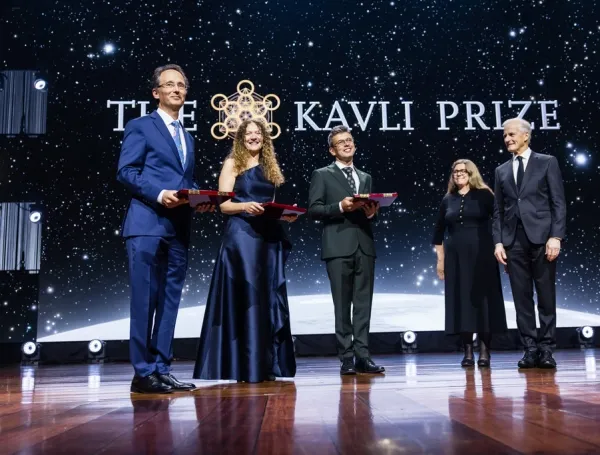
Amina Helmi, a brilliant Argentine astrophysicist whose childhood wonder was sparked by the Buenos Aires planetarium, has been awarded the prestigious 2026 Kavli Prize in Astrophysics—widely celebrated internationally as the "Nobel Prize of Astrophysics."
Born in Bahía Blanca, Argentina, Helmi was recognized for her pioneering, decades-long research into the violent, ancient history of our cosmic neighborhood. Specifically, her work has shed groundbreaking light on ancient galactic collisions, revealing the remnants of smaller galaxies that were cannibalized and absorbed by the Milky Way billions of years ago.
According to official announcements from the University of Groningen, Helmi shares this year’s honor with two fellow international astrophysicists: Vasily Belokurov of the University of Cambridge and Rodrigo Ibata of the University of Strasbourg. Together, the trio has mapped out the archaeological clues left behind in the stellar streams of our galaxy, fundamentally altering how humanity understands galactic formation, evolution, and the elusive nature of dark matter.
Chronology: From a Bahía Blanca Childhood to Global Scientific Stardom
The journey of Amina Helmi from an inquisitive child in Argentina to one of the most prominent astrophysicists on the planet is a testament to lifelong curiosity and rigorous academic dedication.
The Early Sparks (Childhood): At just 11 years old, Helmi visited the planetarium in Buenos Aires for the first time. The sprawling, glowing projections of the cosmos left an indelible impression on her. Around the same time, she read Contact, the iconic science fiction novel by astronomer Carl Sagan, whose female protagonist spent her life listening for signals from deep space. This book cemented Helmi’s fascination with astronomy and the idea that profound cosmic mysteries could be unraveled through mathematics.
Academic Foundation (1990s): Helmi pursued her formal education in her home country, earning her degree in Astronomy from the National University of La Plata (Universidad Nacional de La Plata).
The European Move and Doctoral Breakthrough (1996): Seeking to expand her research horizons, Helmi moved to the Netherlands in 1996 to pursue a Ph.D. at the University of Leiden. It was during her doctoral studies that she achieved her first major scientific breakthrough: identifying unique groups of stars moving in patterns vastly different from the majority of stars residing in the Milky Way’s disc. These structures, now famously known as the "Helmi streams," were mathematically proven to be the debris of a dwarf galaxy consumed by our own galaxy eons ago.
Joining Groningen (2012): Following her foundational doctoral work, Helmi joined the Kapteyn Astronomical Institute at the University of Groningen. Her continued contributions to galactic dynamics and stellar kinematics earned her a professorship at the institution in 2012.
The Pinnacle (October 2026): In October 2026, the culmination of her life’s work was recognized globally when the Norwegian Academy of Science and Letters, the Kavli Foundation, and the Norwegian Ministry of Education and Research jointly awarded her the Kavli Prize in Astrophysics.
Supporting Data and Scientific Methodology
To understand the magnitude of Amina Helmi’s contributions, one must look at the methodology behind her discoveries. Traditionally, studying events that occurred billions of years ago in space felt like trying to piece together a shattered mirror in pitch-black darkness. However, Helmi utilized the velocities, trajectories, and chemical compositions of stars—a field known as galactic archaeology—to reconstruct the timeline of the Milky Way.
When a smaller galaxy ventures too close to a larger one, the immense gravitational forces of the larger host tear the smaller satellite apart. The stars from the digested galaxy do not instantly blend into the background; instead, they retain a collective "memory" of their original orbit, moving together in coherent streams through the host galaxy’s halo.
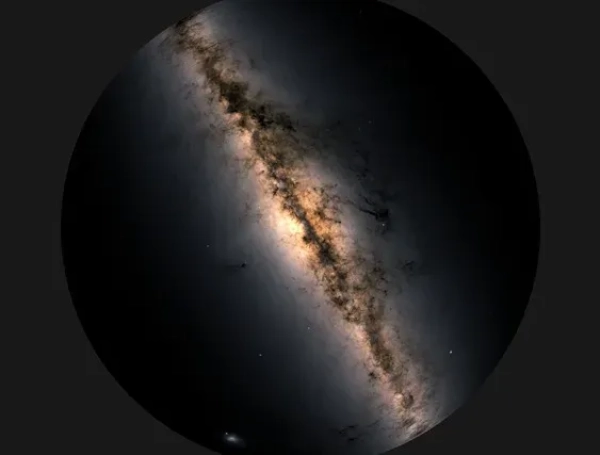
By analyzing massive datasets—initially through ground-based observations and later turbocharged by space missions like the European Space Agency’s (ESA) Gaia satellite—Helmi and her co-laureates mapped these stellar movements. Their work proved that the Milky Way is not a pristine, isolated island in space, but rather the product of a long history of cosmic cannibalism.
Furthermore, Helmi’s research provides invaluable empirical data for studying dark matter, the mysterious, invisible substance that makes up roughly 27% of the universe. Because dark matter does not emit, absorb, or reflect light, scientists can only detect it through its gravitational footprint.
"One way to study dark matter is based on the movements of the stars," Helmi explained in an interview with BBC News Mundo.
By observing how these stellar streams are pulled, warped, and influenced by gravitational fields, Helmi’s models help physicists weigh and map the distribution of dark matter within the Milky Way, offering clues to a puzzle that has baffled science for nearly a century. Regarding dark energy—the force driving the accelerated expansion of the cosmos—Helmi remains candid about the boundaries of human knowledge:
"Dark energy definitely we don’t know what it is. What we know is that the universe is expanding and faster and faster. And that force one describes as dark energy. It is very strange and there are many experiments trying to determine what it is."
Official Responses and International Acclaim
The announcement of the 2026 Kavli Prize winners sent waves of celebration across the global scientific community, particularly in Latin America, where Helmi’s success is viewed as a monumental source of inspiration for aspiring scientists.
The Kavli Prize committee highlighted the shared achievement of Helmi, Belokurov, and Ibata, noting that their collective body of work transformed galactic archaeology from a theoretical sub-discipline into a precision science.
The University of Groningen released glowing statements praising Professor Helmi’s dedication, mentorship, and intellectual rigor. Colleagues at the Kapteyn Astronomical Institute emphasized that her ability to combine complex theoretical mathematics with observational data sets a gold standard for modern astrophysics.
In Argentina, academic institutions and media outlets celebrated her roots. Her path from Bahía Blanca and La Plata to the highest echelons of European and global academia underscores the profound impact of Latin American scientists on the international stage.
Implications for the Future of Astronomy
The recognition of Amina Helmi’s work via the Kavli Prize comes at a golden age for observational astronomy. With next-generation telescopes, advanced supercomputing, and continuous data streams from galactic mapping missions, the methods pioneered by Helmi and her peers are more relevant than ever.
Mapping the Galactic Family Tree: The identification of the Helmi streams opened the floodgates for discovering other galactic merger events, such as the Gaia-Sausage-Enceladus merger. Future research will continue to untangle the complex genealogy of the Milky Way, determining precisely how many satellite galaxies contributed to our current cosmic home.
Decoding Dark Matter Distribution: As stellar mapping becomes increasingly precise, the velocity anomalies tracked by researchers like Helmi will allow astrophysicists to create high-resolution maps of dark matter substructures within our galactic halo. This could potentially edge humanity closer to identifying the true nature of dark matter particles.
Inspiring the Next Generation: Beyond the equations and data models, Helmi’s trajectory serves as a powerful cultural milestone. For young girls in Latin America and across the globe who, much like an 11-year-old Amina looking up at the Buenos Aires planetarium, gaze at the stars with wonder, her story proves that curiosity, backed by perseverance, can reach the farthest corners of the universe.
BOGOTÁ, COLOMBIA — In celebration of the upcoming World Animal Day on October 4, media outlets around the globe are preparing special programming, features, and tributes to highlight the vital role that animals play in…
BUENOS AIRES, ARGENTINA — Positioned as a cultural, gastronomic, and business hub in South America, the Colombian capital is making a formidable impression on the international stage. Led by the District Institute of Tourism (IDT),…
Introduction: A Precedent-Breaking Move As the administration of President Gustavo Petro approaches its final days, a shadow of uncertainty has fallen over Colombia’s public higher education sector. In an unprecedented move that has sent shockwaves…