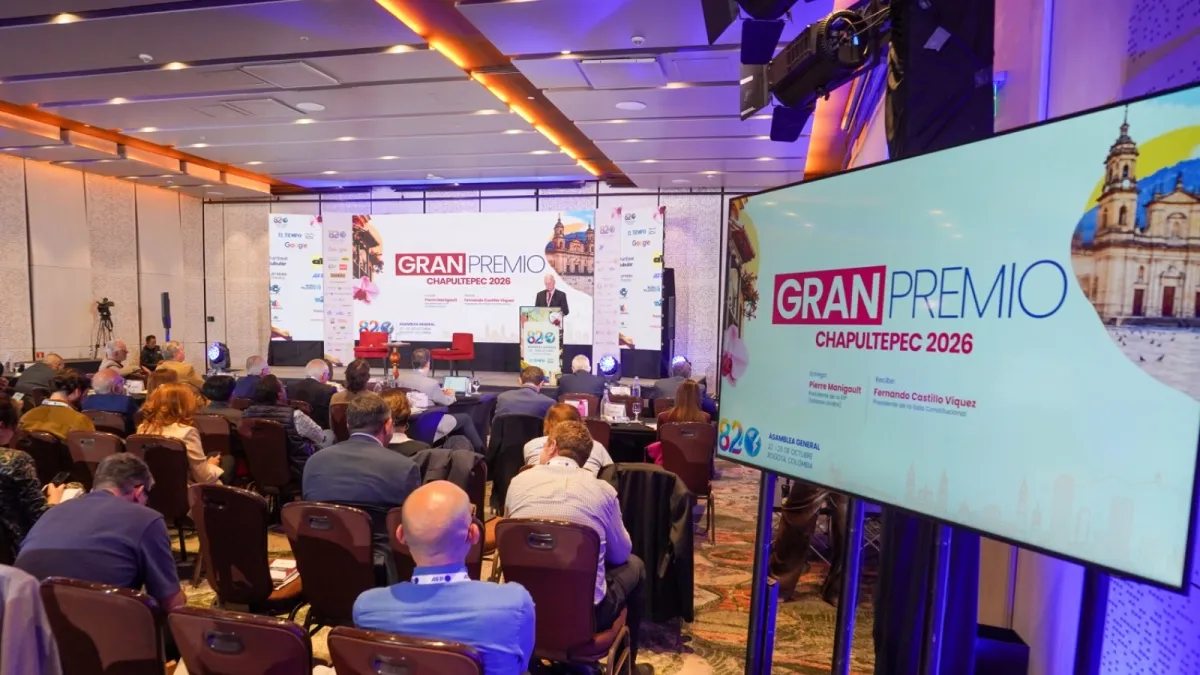
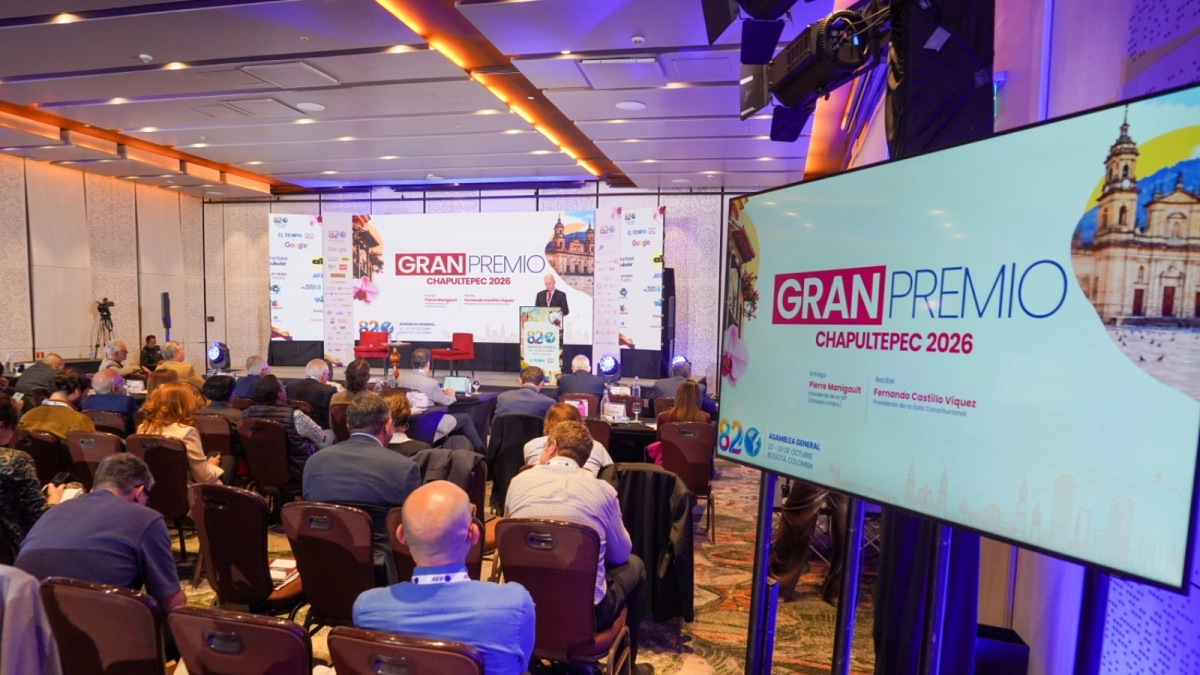
BOGOTA, COLOMBIA — As the media landscape undergoes its most profound structural and technological transformation in history, leaders of the Western Hemisphere’s premier news organizations convened in the Colombian capital for the 82nd General Assembly of the Inter American Press Association (IAPA). Gathering at the Hilton Bogotá, the multi-day summit brought together editors, publishers, investigative journalists, and freedom-of-press advocates to confront an era defined by geopolitical volatility, the erosion of public trust, and the disruptive ascent of generative artificial intelligence (AI).
Against a backdrop of rising political polarization in the Americas and mounting legal and physical threats against reporters, the second day of the assembly served as a crucible for intense debate. Discussions centered not merely on defending the traditional bastions of journalism against external hostility, but on aggressively reimagining the craft to survive and thrive in a digital-first, AI-driven reality.
Main Facts and Core Themes
The central pillars of the 82nd General Assembly addressed the convergence of technology, ethics, and geopolitical pressure. The core agenda was anchored by several critical developments:
The AI Paradigm Shift: Industry leaders explored both the existential threats and operational benefits of artificial intelligence. While panels warned of automated disinformation campaigns capable of manufacturing reality at scale, technologists and editors demonstrated how machine learning can supercharge investigative reporting through massive data processing and source verification.
Democratic Backsliding and Press Freedom: Speakers repeatedly emphasized that independent journalism across Latin America and the United States faces orchestrated attempts by populist political movements to restrict information flows, delegitimize reporting, and silence dissent.
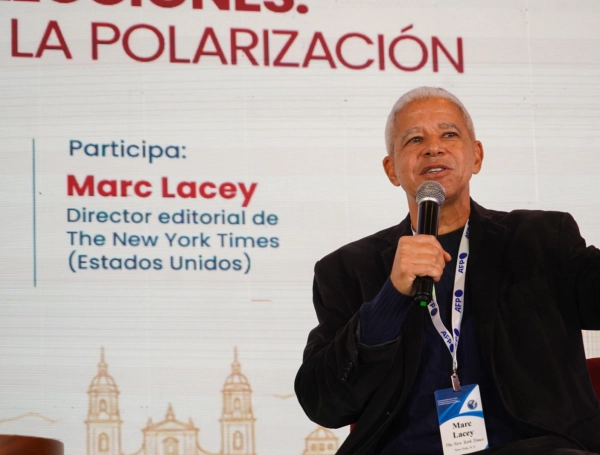
High-Profile Keynotes: The assembly featured prominent voices, including Marc Lacey, managing editor of The New York Times, who dissected the friction between media, power, and polarization ahead of major U.S. elections; and renowned Colombian photojournalist Jesús Abad Colorado, who offered a sobering look at memory, violence, and the human cost of armed conflict.
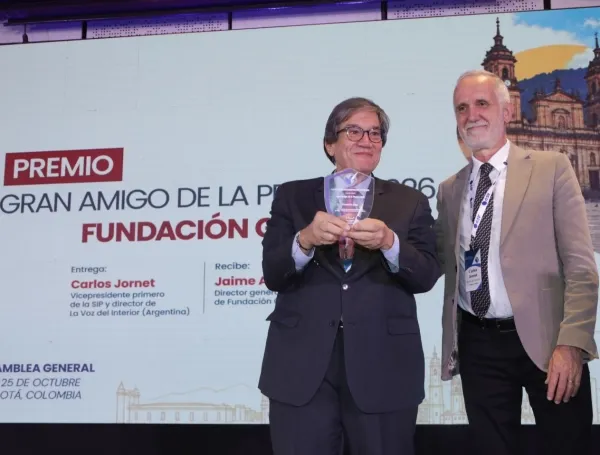
Prestigious Honors: The assembly served as a stage to formally recognize champions of free expression, awarding the Gran Premio Chapultepec 2026 to the Constitutional Chamber of Costa Rica and the Gran Amigo de la Prensa 2026 award to Jaime Abello, co-founder of the Gabo Foundation.
Chronology of the Second Day: Panels, Debates, and Keynotes
The second day of the assembly unfolded through a tightly paced schedule of masterclasses, panel debates, and keynote addresses that kept attendees engaged from dawn until dusk.
Morning Sessions: AI and Geopolitical Tensions
The day’s proceedings commenced with a forward-looking masterclass titled "Artificial Intelligence at the Service of Investigative Journalism." Led by Ron Suskind, founder of Source Base.ai, and moderated by María Lorente, Agence France-Presse’s (AFP) director for Spain and Portugal, the session illustrated how algorithms can be harnessed ethically to unearth complex financial crimes and process massive document leaks.
This technological focus was immediately balanced by a macro-political analysis in the session "United States Heading Toward Elections: Power, Press, and Polarization." Marc Lacey of The New York Times provided a deeply reflective examination of how the fracturing of the American political consensus impacts global media trust, noting that the polarization of audiences creates immense friction for objective reporting.
Midday Debates: Disinformation, Platforms, and Democracy
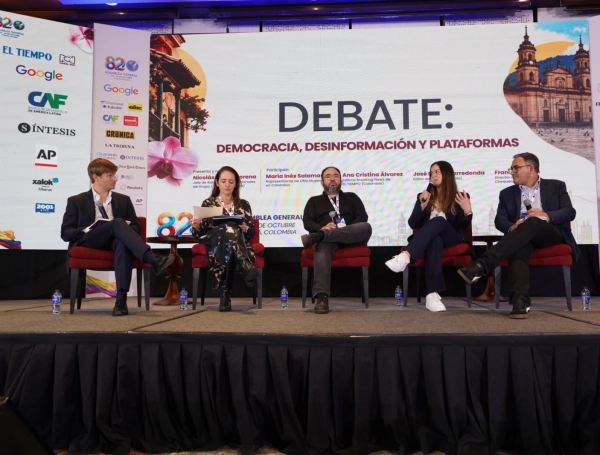
As the morning bled into the afternoon, attention shifted toward the immediate threats facing digital newsrooms. One of the day’s most anticipated panels, "Democracy, Disinformation, and Platforms," featured Ana Cristina Álvarez, Breaking News editor at EL TIEMPO. Moderated by the head of institutional relations for Grupo Clarín, the panel also included Franco Piccato, executive director of Chequeado; José Luis Peñarredonda, editor at CLIP; and María Inés Salamanca, representative of UN Women in Colombia.
The panel dissected how social media algorithms amplify toxic polarization and how synthetic media accelerates the spread of fake news.
"Artificial intelligence is indispensable, but the role that we journalists play remains fundamental," Álvarez stated during the debate, emphasizing that human judgment cannot be outsourced to code.
Afternoon Reflections: Memory, Conflict, and Exile
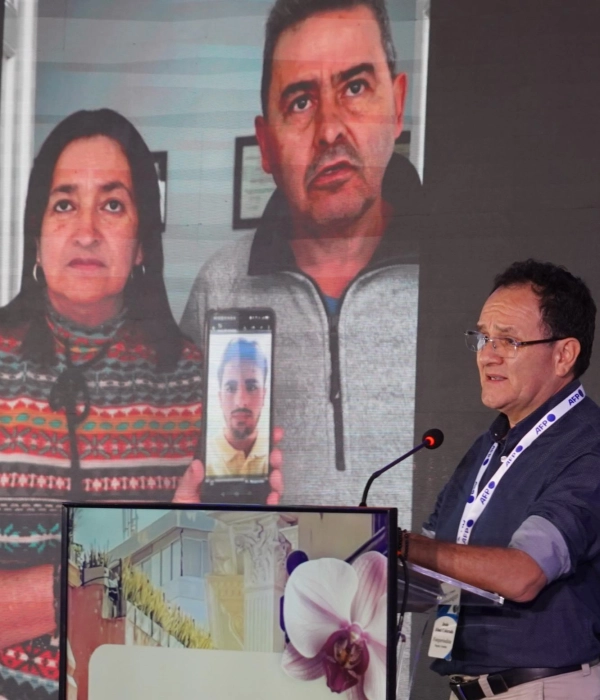
The emotional weight of the assembly shifted in the afternoon as the focus turned to the physical realities of reporting from conflict zones. Jesús Abad Colorado delivered a powerful presentation titled "Memory in Images: The Colombian Conflict Through the Lens," displaying decades of harrowing photographic work that documented the victims, resilience, and tragedies of Colombia’s internal war.
Following Abad Colorado’s address, panels such as "Journalism Under Siege: Exile and Forced Displacement" laid bare the dangerous realities faced by reporters who are forced to flee their homelands due to cartel violence, authoritarian crackdowns, or corrupt state actors. The day concluded with strategic insights on AI integration delivered by Alejandro Lladó, chief strategy officer of Dos al Cubo.
Supporting Data and Institutional Perspectives
The urgency of the discussions at the Hilton Bogotá was underscored by a sobering reality: institutional guardrails protecting the press are fraying across the hemisphere.
According to data and thematic analyses presented throughout the panels, newsrooms face a dual crisis: a collapse of traditional revenue models driven by platform monopolies, and a coordinated legislative and rhetorical offensive by political actors seeking to discredit independent reporting.
Panelists noted that generative AI tools, while offering efficiency, have drastically lowered the barrier to entry for bad actors looking to flood the public sphere with deepfakes and coordinated disinformation campaigns. Concurrently, regional data highlighted a steady increase in legal harassment, strategic lawsuits against public participation (SLAPPs), and physical threats directed at journalists operating outside major metropolitan centers.
Official Responses and Major Recognitions
A defining highlight of the assembly was the formal presentation of two of the journalism world’s most prestigious accolades.
The Gran Premio Chapultepec 2026
Pierre Manigault, president of the IAPA, conferred the Gran Premio Chapultepec 2026 upon Fernando Castillo Vázquez, president of the Constitutional Chamber of Costa Rica, honoring the judicial body’s steadfast defense of freedom of the press.
In his address, Manigault praised Costa Rica’s historical democratic pedigree while issuing a stark warning about institutional fragility:
"For decades, Costa Rica has been a benchmark in our hemisphere for its democratic institutions, respect for civil liberties, and the rule of law. However, democratic traditions do not sustain themselves. They endure because institutions are willing to defend them, particularly when rights are put to the test… The Constitutional Chamber has repeatedly demonstrated the essential role that an independent judiciary plays in protecting freedom of expression."
Accepting the award, Castillo Vázquez offered a sobering assessment of the continental landscape. He warned that press freedom faces unprecedented assaults from political movements intent on imposing monolithic thought and persecuting independent voices. Crucially, he argued that judicial rulings alone are insufficient to stem the tide.
"It is necessary for civil society, political parties with a democratic vocation, and non-governmental organizations to develop short- and long-term strategies that allow for the preservation of independent journalism," Castillo Vázquez asserted. He called for the urgent creation of an international network dedicated to defending independent media.
The Gran Amigo de la Prensa 2026 Award
In a separate ceremony, Carlos Jornet, first vice president of the IAPA and director of La Voz del Interior, presented the Gran Amigo de la Prensa 2026 award—a tradition maintained since 1954—to Jaime Abello, co-founder and general director of the Gabo Foundation.
Jornet lauded Abello’s decades-long vocation of fostering journalistic excellence, rigorous ethics, and continuous professional development through the initiatives of the Gabo Foundation since 1994.
In a visionary and deeply resonant acceptance speech, Abello dissected the trilemma facing modern media: the dizzying acceleration of AI, the corrosive impact of disinformation, and the aggressive political offensives targeting the press.
"The challenges we face will not be solved solely by defending what we have built," Abello told the assembly. "We also need to ask ourselves what journalism the world of tomorrow requires and what responsibilities we must assume to make it possible."
Abello urged the press to reclaim human criteria, deep listening, rigorous investigation, and ethical grounding as non-negotiable pillars of the profession. Furthermore, he issued a call to action for cross-border collaboration:
"We need a journalism that does not limit itself to denouncing what works poorly, but is capable of explaining, connecting, opening conversations, and pointing toward possibilities… Latin America has much to contribute to this transformation of journalism."
Implications for the Future of the Fourth Estate
As the 82nd General Assembly transitions into its final days—culminating in the delivery of the main IAPA Grand Prize for Press Freedom and the Excellence in Journalism awards—the overarching implications of the Bogota summit are clear.
Technological Adaptation vs. Ethical Integrity: The newsrooms of the Americas must rapidly integrate artificial intelligence into their workflows to remain competitive and investigative-ready, but they must do so under strict ethical frameworks that preserve human verification and editorial judgment.
The Necessity of Cross-Border Solidarity: As authoritarian regimes and populist leaders increasingly coordinate tactics to suppress information, independent media outlets can no longer rely solely on national legal protections. Establishing transnational networks of legal, financial, and security support is now a matter of survival.
Restoring Public Trust Through Constructive Journalism: Echoing Jaime Abello’s sentiments, the future of journalism lies not just in adversarial watchdog reporting, but in explanatory, constructive storytelling that combats public cynicism and offers pathways to understanding complex societal shifts.
The debates at the Hilton Bogotá have made one reality indisputable: while the tools of the trade are evolving from ink and paper to algorithms and neural networks, the fundamental mission of the press—to comfort the afflicted, afflict the comfortable, and illuminate the truth—remains the bedrock upon which democratic societies ultimately stand or fall.
BOGOTÁ — In a nation where academic rigor and grassroots resilience often battle formidable odds against structural adversity, the pursuit of truth and community survival remains the beating heart of societal progress. The historic Museo…
By Edwin Caicedo Environment and Health Journalist Published: October 5, 2026 Main Facts For generations, conventional marine biology held a straightforward view of sea turtle migration: these ancient mariners drifted passively along the vast oceanic…
By Edwin Caicedo Environmental and Health Journalist Updated: September 10, 2026 Main Facts: The Human Face of Devastation in Las Terrazas One month after a powerful 7.4-magnitude earthquake shook Colombia’s Chocó department, the city of…