
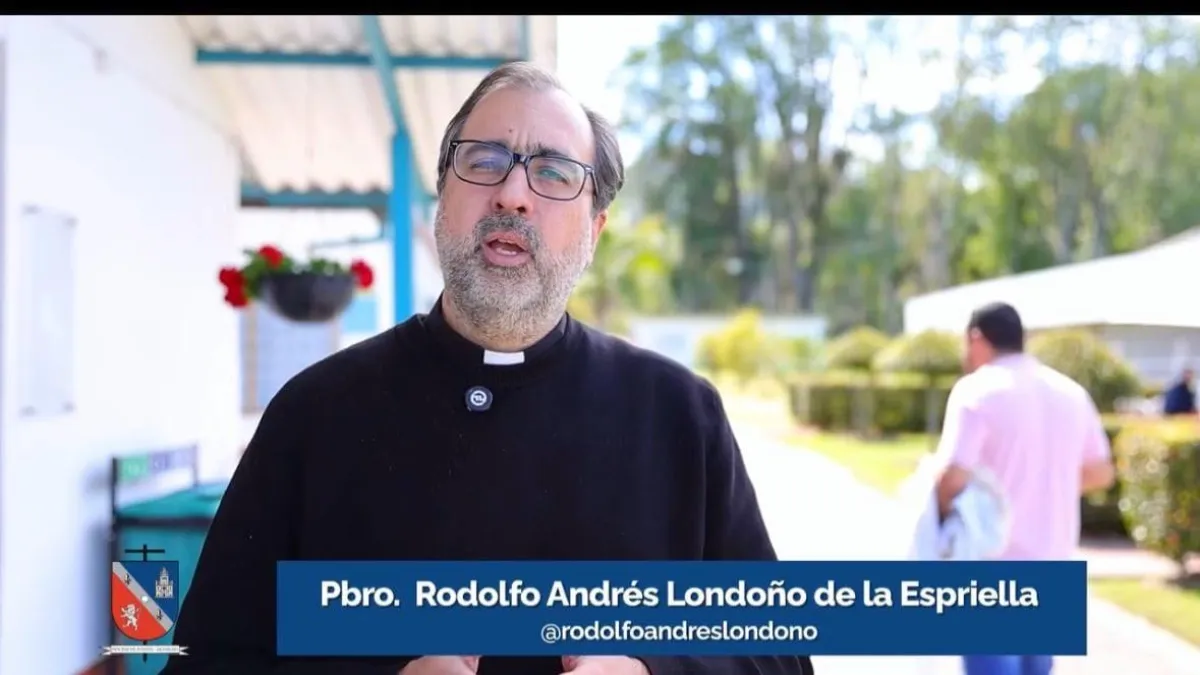
BOGOTÁ — In a swift and unexpected administrative pivot, the administration of President Abelardo de la Espriella has reversed the appointment of the priest and lawyer Father Rodolfo Andrés Londoño de la Espriella as the presidential representative to the higher governing councils of five of Colombia’s most prominent public universities.
Stepping into the high-profile role is Camilo Andrés Noguera Abello, a seasoned academic administrator, attorney, and the newly appointed director of Defensores de la Patria (Defenders of the Homeland), the political party founded by President de la Espriella.
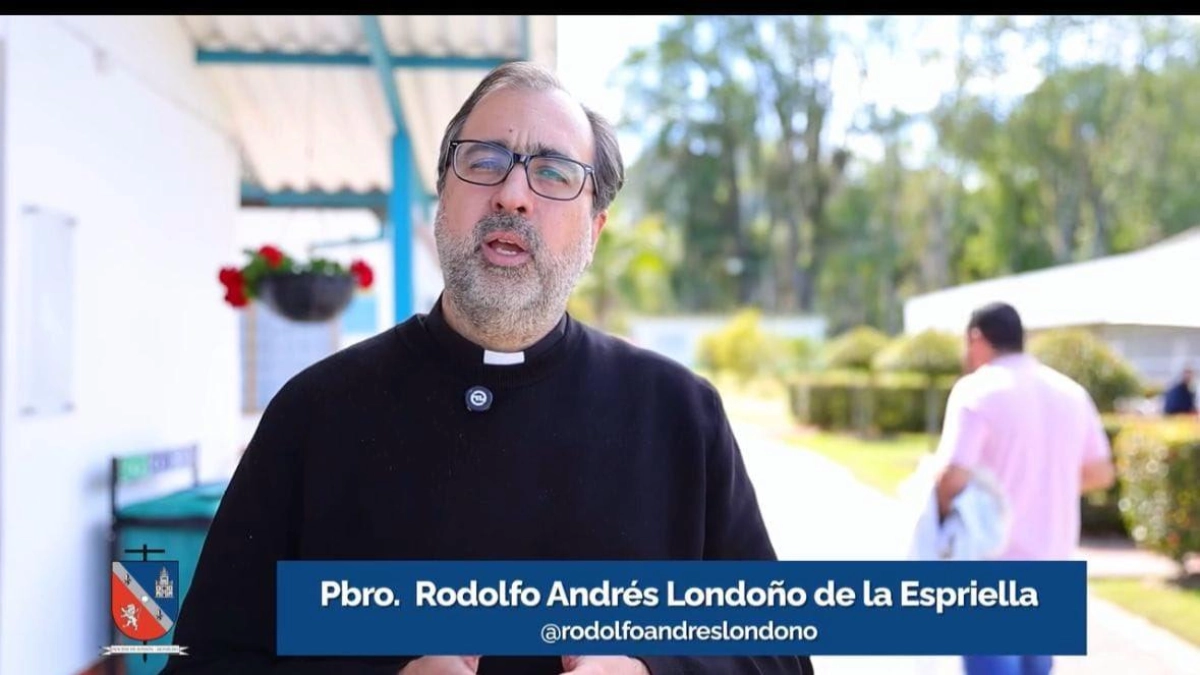
The abrupt transition highlights a significant reshuffle within key institutional oversight positions, sparking discussions across academic and political circles regarding the administration’s strategy for higher education governance.
Main Facts
The administrative overhaul was officially formalized through Decree 1371, issued on September 9, 2026. Signed by the then-Minister of Education, Viviane Morales, the decree brought an immediate end to the tenure of Father Londoño de la Espriella.

Remarkably, Londoño’s initial appointment had been sealed only 15 days prior under Decree 1310 on August 25, 2026. The sudden reversal left observers questioning the underlying friction or strategic realignment that prompted the quick exit.
The scope of the presidential representative’s portfolio is vast and influential. The affected institutions comprise:

- The National University of Colombia (Universidad Nacional de Colombia)
- The National Pedagogical University (Universidad Pedagógica Nacional)
- The University of Antioquia (Universidad de Antioquia)
- The University of Valle (Universidad del Valle)
- The University of the Atlantic (Universidad del Atlántico)
As the highest administrative and decision-making bodies within these public universities, the Superior Councils (Consejos Superiores Universitarios) wield enormous authority. They are tasked with selecting university rectors, approving institutional budgets, shaping academic statutes, and defining long-term strategic directions. Consequently, having a trusted presidential representative on these boards ensures direct alignment between national executive policy and public higher education administration.
Chronology of Events
To understand the rapid trajectory of this administrative maneuver, it is essential to trace the sequence of events over recent weeks:

- August 25, 2026: President Abelardo de la Espriella’s administration issues Decree 1310, officially naming Father and lawyer Rodolfo Andrés Londoño de la Espriella as the executive branch’s representative across the superior councils of five major public universities.
- Late August 2026: The newly formed political movement Defensores de la Patria—founded by President de la Espriella—officially secures its legal status (personería jurídica) from electoral authorities. In the wake of this milestone, Camilo Andrés Noguera Abello is tapped to lead the political collective as its national director.
- September 9, 2026: Barely two weeks after Londoño’s appointment, Minister of Education Viviane Morales signs Decree 1371. This new legislative instrument officially revokes Londoño’s designation and simultaneously names Camilo Andrés Noguera Abello as the new presidential delegate to all five university boards.
- October 2026: Details of the decree emerge publicly, triggering intense scrutiny regarding the rapid turnover and the deepening ties between the executive branch’s political apparatus and university governance structures.
Supporting Data and Profiles of Key Figures
While the executive branch has yet to issue a detailed public rationale for the personnel swap, an examination of the backgrounds of both figures offers insight into the evolving administrative priorities of the current government.
The Outgoing Delegate: Father Rodolfo Andrés Londoño de la Espriella
Father Londoño de la Espriella combines a background in canon and civil law with ecclesiastical duties. His brief 15-day tenure as the administration’s educational liaison is notable for its brevity. While religious figures have historically participated in various civic and academic boards in Colombia, placing a priest in high-level oversight roles across five secular, state-funded institutions had already drawn quiet scrutiny from academic syndicates and student organizations before his removal.

The Incoming Delegate: Camilo Andrés Noguera Abello
Camilo Andrés Noguera Abello brings a robust background in higher education administration combined with emerging political credentials.
- Academic Background: Noguera Abello is a Juris Doctor graduate of the prestigious Universidad Sergio Arboleda, an institution where he spent the vast majority of his professional career climbing through administrative ranks.
- Institutional Experience:
- In the early 2000s, he served as the sub-secretary of the Universidad Sergio Arboleda’s Santa Marta branch before ascending to the role of General Secretary for the same campus.
- By 2021, his responsibilities expanded significantly when he was appointed Vice-Rector for the Caribbean Region, overseeing the university’s operations and administrative expansion across both Santa Marta and Barranquilla.
- Political Ascent: Noguera’s transition into frontline national politics occurred rapidly. Following the official recognition of Defensores de la Patria in August 2026, he was chosen to direct the party, binding his administrative profile directly to the political project spearheaded by President de la Espriella.
Official Responses and Transparency
As of the publication of this report, neither the Ministry of Education nor the Casa de Nariño (the presidential palace) has released an official communiqué detailing the precise motivations behind the revocation of Father Londoño’s appointment.

Standard administrative decrees in Colombia often bypass detailed justifications unless structural legal conflicts arise. However, the lack of explicit context has left room for interpretation among political analysts, student unions, and faculty associations.
Critics from academic sectors frequently emphasize the importance of autonomy within public institutions of higher learning, raising questions about whether placing political party directors at the helm of university oversight boards risks politicizing academic environments. Conversely, defenders of the administration argue that the executive branch holds full constitutional prerogative to delegate representatives who reflect its overarching political and administrative vision.

Implications for Public Higher Education in Colombia
The placement of Camilo Andrés Noguera Abello—a key political ally and party director—into the supreme governing boards of five foundational universities carries profound implications:
- Alignment of Executive and Academic Agendas: With Noguera directing Defensores de la Patria and simultaneously sitting on the boards of the National University, Universidad de Antioquia, Universidad del Valle, Universidad Pedagógica, and Universidad del Atlántico, the executive branch ensures absolute ideological and administrative synchronization. This could streamline federal funding negotiations or structural reforms promoted by the de la Espriella administration.
- Concerns Over University Autonomy: Academic communities across Colombia historically value institutional autonomy—a principle enshrined to protect universities from partisan political interference. The swift substitution of a religious figure with a direct political party leader has reignited debates regarding the boundaries between state executive power and university self-governance.
- Administrative Efficiency: Given Noguera’s extensive two-decade background in university management at Universidad Sergio Arboleda, the administration has opted for a technocrat with deep knowledge of higher education bureaucracy, even if his current allegiances are explicitly tied to the ruling party.
As these universities navigate ongoing fiscal challenges, curricular updates, and upcoming leadership selections, all eyes will remain on how Noguera Abello exercises his decisive vote across these five crucial governing councils.