By Andrés Felipe Bejarano Bejarano
Redacción Últimas Noticias / International Desk
Published: September 27, 2026
Main Facts
In a high-stakes security breach that rattled Brazil’s correctional system, two high-profile international fugitives—a Colombian national and a Dutch citizen, both wanted by Interpol and convicted of grave crimes—orchestrated a daring escape from the Joaquim Ferreira de Souza Penitentiary. The facility is situated within the sprawling, high-security Gericinó prison complex in the neighborhood of Bangu, located in the volatile western zone of Rio de Janeiro.
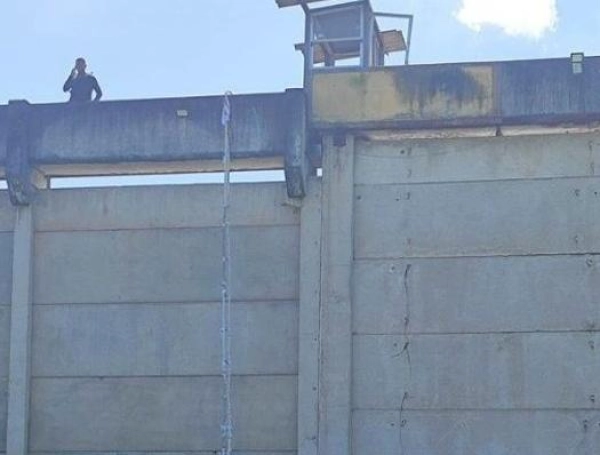
The breakout occurred on Saturday, September 26, 2026. According to official reports released by the State Secretariat for Penitentiary Administration of Rio de Janeiro (Seppen), the inmates successfully neutralized a correctional officer on duty, seized his service firearm, and utilized a makeshift rope fashioned from bedsheets to scale down the prison’s perimeter walls.

Despite the meticulous planning involved in breaching the prison’s internal security, the fugitives’ freedom was short-lived. A rapid and coordinated response by security forces thwarted their bid for permanent liberty. Both men were tracked down and recaptured just hours later, still within the vast perimeter of the Gericinó correctional complex. Authorities confirmed that the prison guard who was subdued during the initial assault sustained no physical injuries, though he remains a central figure in an ongoing internal investigation.
The recaptured inmates—identified as Gerel Lusiano Palm, often dubbed "The Dutchman," and Juan Esteban Avendaño Pérez—are not ordinary offenders. Both men carry heavy criminal backgrounds, feature prominently on Interpol’s Red Notice lists, and have long been targets of international law enforcement agencies, including the United States Drug Enforcement Administration (DEA) and federal authorities across multiple continents.
Chronology of the Escape and Recapture
The sequence of events unfolded rapidly in the early hours of Saturday, September 26, turning a routine shift at the Joaquim Ferreira de Souza Penitentiary into a critical security emergency.

1. The Assault on the Guard Tower
The escape plot hinged on exploiting vulnerabilities in the prison’s perimeter surveillance. According to preliminary findings released by Seppen, Palm and Avendaño Pérez targeted a correctional officer stationed in a watchtower located at the rear of the prison facility. Moving with stealth and coordination, the two inmates ambushed the guard, overpowering him before he could trigger an alarm or deploy defensive measures.
2. Weapon Seizure and Perimeter Breach
Once the officer was successfully immobilized, the prisoners stripped him of his service firearm. Armed with the stolen weapon and leveraging the tactical advantage of controlling a strategic post, the men initiated the physical phase of their escape. Lacking standard mountaineering or escape tools, the pair manufactured a makeshift rope by tightly braiding and knotting prison bedsheets together. Securing the anchor point near the guard tower, they descended the sheer structure, dropped past the outer barriers, and successfully cleared the physical footprint of the Joaquim Ferreira de Souza unit.
3. The Manhunt Within Gericinó
The escape triggered an immediate red alert within the correctional complex. Given the notoriety of the inmates, Seppen, in coordination with specialized units of the Military Police of Rio de Janeiro, mobilized an immediate containment protocol. Rather than managing to slip away into the labyrinthine favelas or urban sprawl surrounding Bangu, the fugitives found their movement restricted by the multilayered security architecture of the Gericinó complex itself.

Utilizing tracking teams, perimeter sweeps, and rapid-response units, law enforcement saturated the surrounding administrative and auxiliary zones of the prison grounds. Within hours of the initial alarm, security forces cornered and recaptured both Gerel Lusiano Palm and Juan Esteban Avendaño Pérez without exchanging gunfire, bringing an abrupt end to their brief bid for freedom.
Biographies and Criminal Profiles of the Fugitives
The gravity of Saturday’s security breach is underscored by the high-risk profiles of the two men involved. Both Palm and Avendaño Pérez represent significant transnational threats, having established operational roots in South America while evading justice systems across Europe and North America.
Gerel Lusiano Palm: "The Dutchman"
Gerel Lusiano Palm’s criminal trajectory spans multiple jurisdictions, making him one of the most closely watched foreign nationals detained in Brazil in recent years. Known within intelligence circles as "The Dutchman," Palm’s downfall in Brazil initially came on a July afternoon in 2021, when agents of the Brazilian Federal Police cornered him in a heavily fortified luxury apartment situated in the upscale beachfront neighborhood of Barra da Tijuca.
Palm’s name was already etched into international law enforcement databases via an Interpol Red Notice. Judicial authorities in the Netherlands had previously convicted him in absentia—or handed down sentences stemming from severe criminal proceedings—totaling 20 years of imprisonment. His primary convictions in his homeland involve charges of attempted homicide and the illegal possession of firearms, reflecting a violent history tied to European organized crime syndicates.
However, Palm’s legal nightmares extended far beyond European borders. At the time of his 2021 arrest and subsequent detention in Rio de Janeiro, he was simultaneously hunted by the United States Drug Enforcement Administration (DEA). American authorities flagged Palm for his alleged role in international cocaine trafficking networks that utilized South American transit corridors to funnel narcotics into North America and Europe.
While awaiting formal extradition proceedings in a Brazilian cell, Palm remained a persistent security challenge. Brazilian Federal Police units had previously opened separate investigations into alleged plots orchestrated by Palm’s associates to obstruct his eventual extradition to the Netherlands, illustrating the deep financial and logistical resources at his disposal.

Juan Esteban Avendaño Pérez: The Colombian Assassin and Narco-Associate
The second fugitive, Colombian national Juan Esteban Avendaño Pérez, boasts a similarly grim criminal record rooted in both domestic violence and transnational narcotics trafficking. Avendaño Pérez was captured by Brazilian authorities in December 2022 during a high-risk police operation inside the Muzema favela, a volatile urban sector in the western zone of Rio de Janeiro heavily influenced by local militias and criminal factions.
In his native Colombia, Avendaño Pérez had already been tried, convicted, and sentenced to a staggering 40 years behind bars for a heinous crime: the targeted assassination of a police officer committed in 2010. Fleeing justice in Colombia, Avendaño Pérez managed to cross international borders, eventually embedding himself within the criminal underworld of Rio de Janeiro.
Beyond his murder conviction, intelligence dossiers compiled by international investigators identified Avendaño Pérez as an active and trusted operative within a powerful Colombian drug-trafficking organization that maintained strategic operational alliances with Brazilian criminal factions. Like his Dutch co-conspirator, Avendaño Pérez was the subject of an active Interpol Red Notice, designating him as a high-value international target prior to his arrest in the Muzema favela and his subsequent placement in Rio’s prison system.

Official Responses and Institutional Reactions
The swift unraveling of the prison break has placed intense scrutiny on the operational readiness and structural integrity of Brazil’s penitentiary infrastructure.
Immediately following the recaptures, the State Secretariat for Penitentiary Administration of Rio de Janeiro (Seppen) issued a series of formal statements detailing the parameters of the incident. Seppen confirmed that while the escape exposed critical vulnerabilities—specifically regarding the security of peripheral watchtowers and guard-to-inmate ratios—the rapid deployment of emergency protocols prevented the fugitives from clearing the outer boundaries of the Gericinó complex.
Furthermore, Seppen announced the launch of an exhaustive internal administrative investigation. Internal affairs investigators have been tasked with reconstructing the exact timeline of the assault on the guard tower, assessing whether internal protocols were strictly followed, and determining if the inmates received any form of inside assistance from corrupt correctional personnel. The fact that two high-value international prisoners—both acutely aware that their freedom meant facing decades-long foreign prison sentences or extradition—were positioned near a vulnerable perimeter point has raised profound institutional concerns.

Legal experts and human rights monitors in Brazil have also pointed out that the incident underscores the systemic strain facing Rio de Janeiro’s penitentiary system, which frequently grapples with overcrowding, understaffing, and the presence of sophisticated transnational criminals capable of corrupting or overwhelming institutional defenses.
Broader Implications and Transnational Security Concerns
The attempted breakout at the Joaquim Ferreira de Souza Penitentiary is far more than a localized jailbreak; it serves as a stark indicator of the evolving nexus between local Latin American correctional facilities and global organized crime.
1. The Vulnerability of South American Prisons to Transnational Cartels
Brazil, and Rio de Janeiro in particular, has increasingly become a sanctuary—or a holding pen—for high-profile international fugitives seeking to blend into local criminal networks. Transnational criminals such as Palm and Avendaño Pérez often possess vast financial reserves, enabling them to corrupt low-wage prison guards, forge tactical alliances with domestic prison factions (such as the Comando Vermelho or local militias), and meticulously plan complex escapes. The ease with which these two men overcame a physical guard post highlights the immense challenge prison administrators face when housing inmates whose connections extend across multiple continents.

2. Complications for Extradition and International Justice
Both Palm and Avendaño Pérez are subjects of intense multi-jurisdictional legal battles. For Palm, his ongoing detention in Brazil was the final barrier preventing his transfer to Dutch authorities to serve his 20-year sentence, while also leaving open the possibility of a future extradition request from the United States under DEA pressure. For Avendaño Pérez, his presence in a Brazilian maximum-security facility was the interim step before confronting Colombian authorities demanding the fulfillment of his 40-year murder sentence.
Had their escape succeeded, it would have dealt a severe blow to international law enforcement cooperation agreements between Brazil, the Netherlands, the United States, and Colombia. The successful recaptures restore a semblance of order to these stalled judicial processes, ensuring that both men remain accessible to foreign extradition requests once local Brazilian legal hurdles are cleared.
3. Security Overhauls at Gericinó
In the wake of the incident, pressure is mounting on regional authorities to overhaul security protocols within the Gericinó complex. Security analysts suggest that housing high-risk, Interpol-red-notice inmates in standard maximum-security wings requires heightened technological surveillance, including thermal imaging, enhanced drone patrols, and strictly reinforced perimeter defenses that do not rely solely on single-guard watchtowers.

As investigations led by Seppen and federal authorities continue to probe the inner workings of the September 26 escape, the episode stands as a sobering reminder of the constant vigilance required to keep transnational organized crime behind bars. For now, Gerel Lusiano Palm and Juan Esteban Avendaño Pérez find themselves back where they started—confined behind prison walls, their brief, sheet-roped illusion of freedom permanently shattered.