By Editorial Staff
September 25, 2026
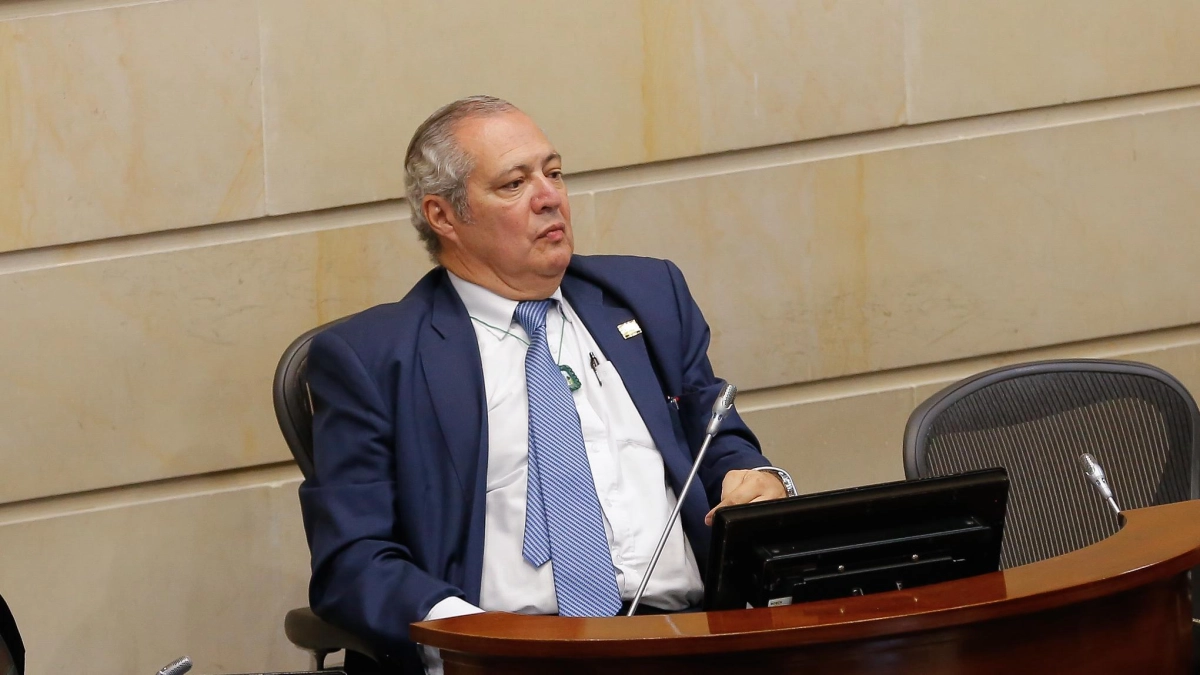
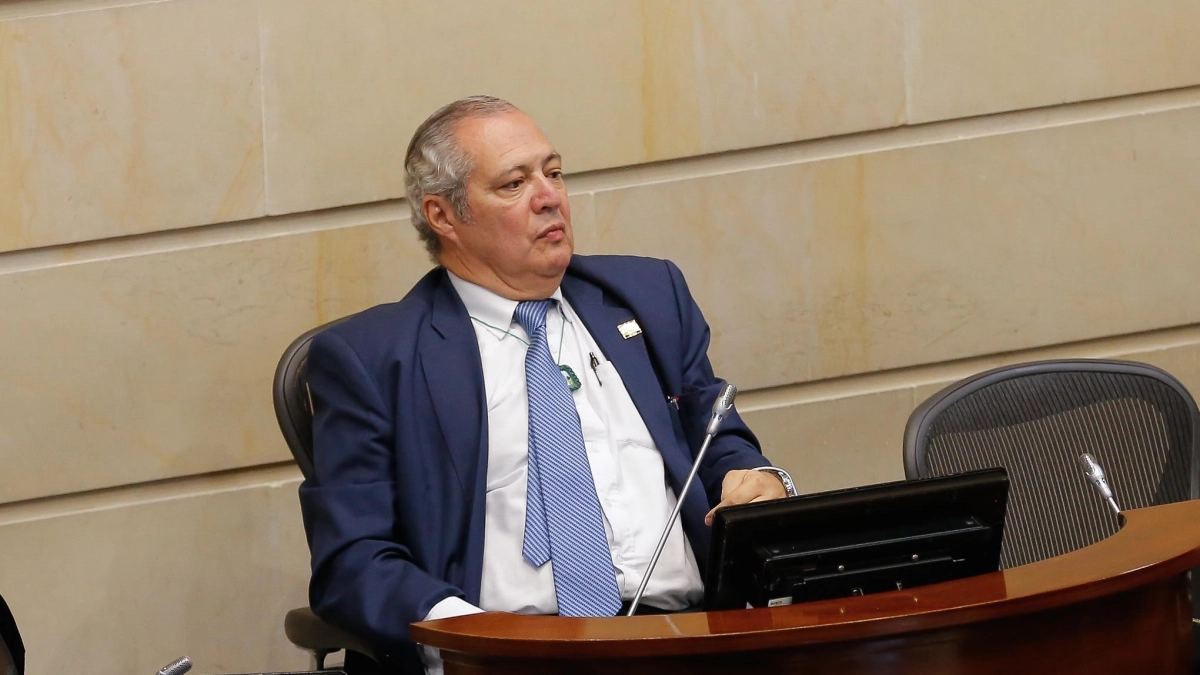
In a landmark ruling that marks a significant chapter in the ongoing legal saga of the National Unit for Disaster Risk Management (UNGRD), the Colombian Council of State officially declared the "political death" of former Senate President Iván Leonidas Name. The decision, handed down this Friday, September 25, confirms the loss of his political investiture due to findings of influence peddling, further cementing the severe consequences of the corruption scandal that has shaken the foundations of the Colombian legislative branch.
The ruling comes at a time when Name is already in state custody, facing a separate, high-stakes criminal process before the Supreme Court of Justice. The Council of State’s determination is not merely symbolic; it represents the final administrative condemnation of his conduct while serving as one of the most powerful figures in the country.
The Core Allegations: The 3,000 Million Peso Connection
The legal proceedings that led to this decision are rooted in the explosive testimony provided by Sneyder Pinilla, the former subdirector of the UNGRD. According to the documents reviewed by the Council of State, Pinilla testified before both the Office of the Prosecutor General and the Supreme Court of Justice regarding a sophisticated scheme designed to divert public funds for political favors.
Pinilla’s testimony detailed a direct order from his then-superior, Olmedo López, the former director of the UNGRD. According to the account, López instructed Pinilla to secure 4 billion pesos in liquid assets. Of this total, 3 billion pesos were allegedly earmarked for delivery to Iván Leonidas Name, who at the time presided over the Colombian Senate.
The Council of State concluded that the evidentiary burden—comprising financial records, testimonies, and corroborated communication logs—was sufficient to prove the "objective elements of the cause of influence peddling." The tribunal found that Name had leveraged his institutional position to sway administrative processes within the UNGRD for illicit personal and political gain.

A Chronology of the UNGRD Scandal
To understand the gravity of the ruling against Iván Name, one must contextualize the timeline of events that brought the UNGRD, once a pillar of humanitarian aid, into the center of a national corruption investigation.
- Mid-2023: Initial irregularities emerge regarding the allocation of contracts within the UNGRD, specifically concerning the procurement of equipment for emergency response.
- Early 2024: Sneyder Pinilla and Olmedo López face mounting pressure as oversight bodies begin to flag discrepancies in the execution of the 2023 budget.
- April 2024: The scandal explodes into the public sphere. Pinilla begins cooperating with judicial authorities, identifying several high-profile political figures, including Iván Name and former House Speaker Andrés Calle, as recipients of illicit funds.
- May–July 2024: The Supreme Court of Justice formally opens investigations into the implicated legislators. Name asserts his innocence, claiming the accusations are a "political persecution" orchestrated by the executive branch.
- Late 2024 – Early 2025: As evidence mounts, the Council of State initiates the pérdida de investidura (loss of investiture) process. This administrative action is independent of the criminal trial but carries the permanent penalty of political incapacitation.
- September 2026: The Council of State delivers its final verdict. Iván Name is officially stripped of his political status, ending his career in public office permanently.
The Mechanics of Influence Peddling
The judicial analysis conducted by the Council of State focused on the abuse of authority. In the Colombian legal system, the loss of investiture is a severe sanction reserved for the most egregious breaches of ethics by elected officials.
The court noted that the "traffic of influence" was not merely a passive act but a calculated utilization of the Senate Presidency to ensure that specific contracts within the UNGRD favored entities associated with the scheme. By allegedly ensuring that the flow of public resources was conditioned upon his own political interests, Name violated the constitutional duty of loyalty to the state.
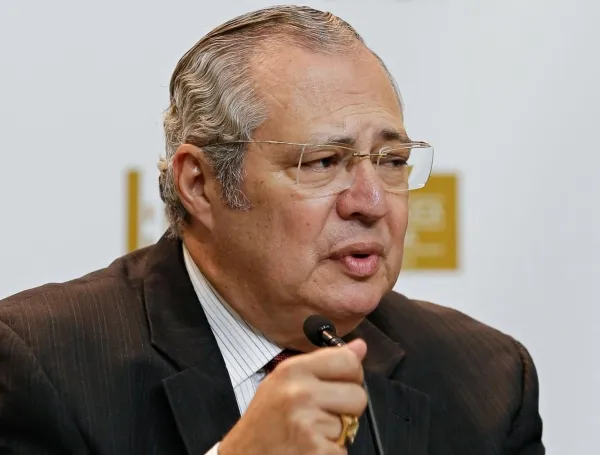
The ruling emphasizes that public officials are custodians of the public trust. The court argued that when a high-ranking official like the President of the Senate uses their influence to secure private payments, the damage to the democratic institution is irreparable. Consequently, the "political death" serves as a prophylactic measure to protect the sanctity of the legislature.
Official Responses and Legal Defense
Throughout the process, the legal team representing Iván Name has maintained a stance of total denial. In previous statements, the former senator characterized the testimonies of Pinilla and López as "a web of lies" spun by individuals seeking to negotiate reduced sentences with the Prosecutor’s Office.
"My client has been a victim of a coordinated campaign to smear his reputation and undermine the opposition," a spokesperson for his legal team noted during the initial stages of the trial. "There is no physical evidence, no paper trail, and no financial proof that links Senator Name to the movement of these funds."

However, the Council of State’s ruling suggests that the "legal incorporation of evidence" provided by the prosecution was far more robust than the defense anticipated. The magistrates pointed to the consistency of the testimonies from multiple sources within the UNGRD as a deciding factor.
For its part, the Office of the Prosecutor General has used the Council of State’s decision as a bolster for its criminal case. Prosecutors argue that the administrative finding of influence peddling provides a strong precedent for the pending criminal charges of bribery and conspiracy to commit a crime, which carry potential prison sentences.
The Broader Implications for Colombian Politics
The removal of Iván Name from the political sphere has sent shockwaves through the Colombian Senate. It signals a shift in how the judiciary approaches corruption within the legislative branch.

1. Erosion of Parliamentary Immunity
Historically, Colombian legislators have benefited from a sense of impunity, particularly when navigating the intersection of political maneuvering and state contracting. This ruling serves as a warning that the Council of State is willing to utilize the pérdida de investidura mechanism with increasing frequency to purge the legislature of compromised actors.
2. A Blow to the Political Establishment
Name was a cornerstone of the traditional political class. His downfall suggests that the "old guard" of Colombian politics is increasingly vulnerable to the shifting tides of accountability, particularly when those individuals are exposed by the very bureaucrats they once controlled.
3. Institutional Trust
The UNGRD scandal has significantly diminished public trust in the state’s capacity to manage disaster relief. By removing a key figure associated with the corruption, the judiciary aims to restore a measure of credibility to the government. However, experts argue that the damage to the institutional image will take years to repair, as the public remains skeptical of the integrity of the procurement processes that led to this disaster.

Future Outlook: What Happens Next?
With the declaration of political death, Iván Name is barred from ever holding public office again. This effectively terminates his political career and mandates his focus shift entirely to his criminal defense before the Supreme Court.
Legal analysts suggest that if the Supreme Court reaches a guilty verdict in the criminal proceedings, Name could face a significant term of imprisonment. The ruling from the Council of State has effectively stripped him of his political platform, leaving him to face the judicial system as a private citizen.
As the case continues, the focus of the judiciary will now shift toward recovering the stolen assets. The 4 billion pesos mentioned in the testimony represent only a fraction of the total funds alleged to have been embezzled from the UNGRD, and the hunt for the remaining capital remains a priority for the Prosecutor General.

The case of Iván Name serves as a stark reminder of the fragile state of public integrity in Colombia. As the nation watches, the judiciary continues to process the remnants of a scandal that has fundamentally altered the political landscape, setting a precedent that no office, however high, is immune to the reach of the law.
This is a developing story. Stay tuned for further updates on the criminal trial of Iván Name and the ongoing investigations into the UNGRD corruption network.