TECHNOLOGY — The automation of everyday domestic chores has long been the holy grail of consumer robotics. For decades, science fiction has promised mechanical assistants capable of seamlessly integrating into human households, folding laundry, making beds, and tidying living spaces without requiring complex programming or prior spatial mapping. Today, that vision has taken a monumental leap forward.
The robotics company Figure has officially unveiled the capabilities of Helix 2.5, an advanced humanoid neural network designed to execute everyday household chores entirely from scratch, operating autonomously within completely unfamiliar environments without prior site-specific training.
Main Facts: The Breakthrough of Helix 2.5
The core innovation behind Helix 2.5 lies in its "zero-shot" adaptability—its ability to perform successfully in real-world spaces where it has never collected data before. Traditional robotic systems rely heavily on precise, pre-mapped environments, requiring engineers to painstakingly scan rooms, program specific coordinates, and define object boundaries. Helix 2.5 shatters this paradigm.
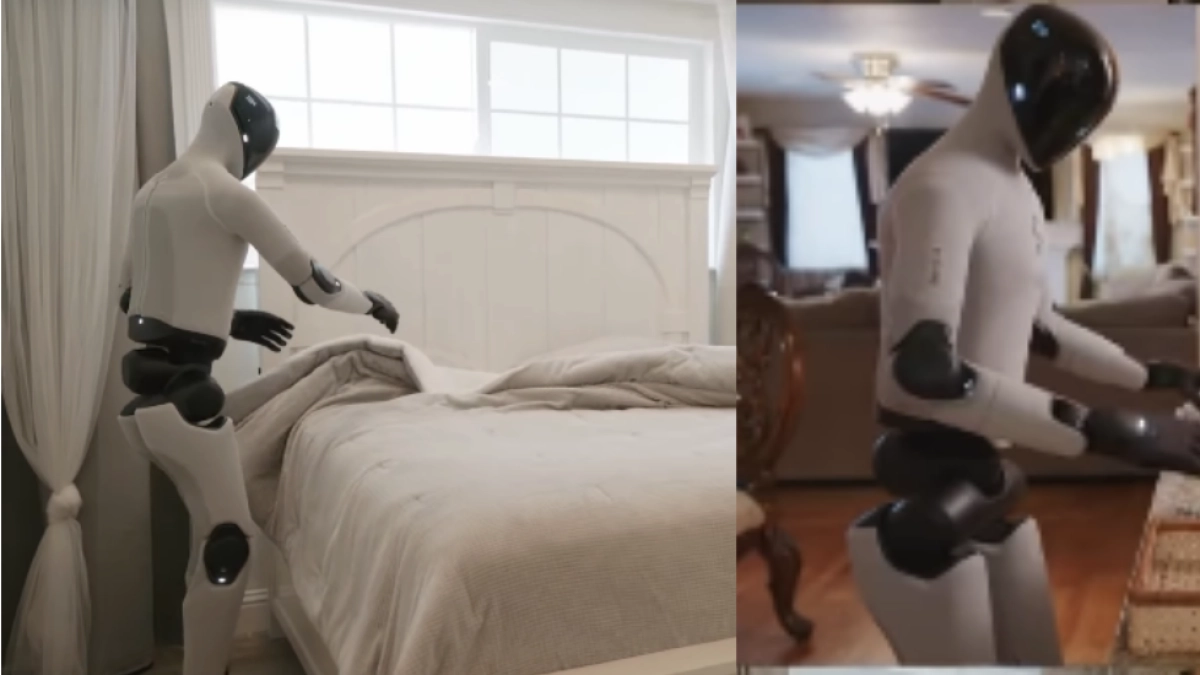
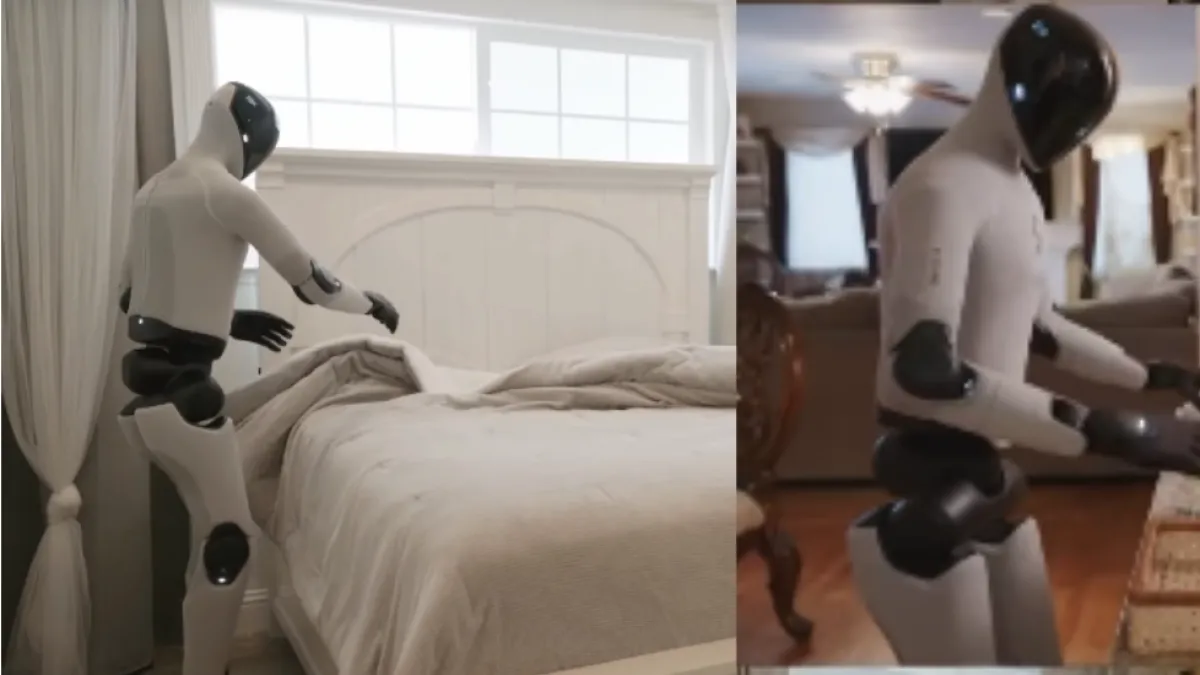
Recently, the system underwent rigorous evaluation across 30 real residential homes situated in the San Francisco Bay Area. Crucially, these were spaces where no prior data had ever been gathered for the model. Rather than forcing homeowners to alter their living arrangements or rely on custom props, the humanoid automaton worked dynamically using existing sofas, beds, and household layouts, successfully navigating unforeseen objects and novel spatial configurations.
To achieve this level of cross-environment autonomy, Helix 2.5 was pre-trained on Index, a proprietary dataset centered entirely on complex human behavior. The integration of this foundational knowledge base proved transformative, elevating the robot’s zero-shot success rate from a meager 9 percent—typical of older models without such pre-training—to an impressive 56 percent.
Drawing from this robust foundational model, Figure’s engineers successfully derived three complex, full-body behaviors:

- Folding towels and linens: Handling soft, deformable fabrics with adaptive grip pressure.
- Tidying living rooms: Recognizing, gathering, and storing scattered objects.
- Making beds: Smoothing out sheets, positioning pillows, and aligning heavy duvets.
Chronology: From Factory Floors to Living Room Autonomy
The journey toward generalized domestic robotics has accelerated rapidly over the last several years, marked by a deliberate transition from structured industrial environments to unstructured, chaotic human living spaces.
Phase 1: Industrial and Structured Logistics (Helix 02)
Before the advent of Helix 2.5, Figure laid its technological groundwork with predecessor models such as the Helix 02. This iteration proved capable of coordinating full-body control during long-duration, repetitive tasks—such as unloading industrial dishwashers or executing up to 200 hours of continuous logistics operations. However, Helix 02 suffered from a major limitation: it required extensive, localized data collection in the exact physical spaces where it was expected to work. It could not generalize its skills to a new environment without retraining.
Phase 2: The Shift to Human Behavior Data (The Index Dataset)
Recognizing that human homes are infinitely variable, Figure shifted its research and development strategy toward behavioral pre-training. Instead of training robots to understand rooms, the company trained them to understand human actions. By compiling the Index dataset—a massive repository of human movement, interaction, and object manipulation—the engineers created a generalized cognitive backbone.

Phase 3: The Bay Area Residential Trials
In late 2026, Figure deployed Helix 2.5 into 30 unmapped residential homes in the Bay Area. Operating under strict, unyielding experimental rules, the humanoid robots were tasked with proving their mettle in unscripted environments. Any human intervention required for safety or correction resulted in an immediate test failure. Despite these strict conditions, the robots demonstrated unprecedented adaptability, successfully generalizing their pre-trained skills to unfamiliar furniture layouts, lighting conditions, and floor textures.
Supporting Data: Rigorous Testing and Scaling Laws
To substantiate the capabilities of Helix 2.5, Figure established strict performance criteria before initiating the residential trials. The experimental parameters left no room for ambiguity:
- Making the Bed: Both pillows and both upper corners of the duvet were required to reach the top third of the mattress, with the fabric stretched entirely smooth. The robot was allotted a strict maximum time limit of one minute per pillow and one minute per side of the blanket.
- Tidying the Living Room: The humanoid was tasked with locating, collecting, and depositing between 13 and 15 scattered toys from the floor into a designated storage basket, with a one-minute time limit per retrieved item.
To maintain absolute scientific integrity, the toys, garments, and bedding used during the trials were quarantined prior to testing. An independent artificial intelligence verification system, backed by human auditors, confirmed that none of these specific items were included in the robot’s initial training datasets.
The First Scaling Law of Human-to-Robot Transfer
Beyond physical task execution, Figure’s research into data volume yielded a monumental theoretical breakthrough. The company experimented by scaling up the pre-training data volume by a factor of eight.
The results demonstrated a smooth, highly predictable decrease in error rates. Engineers were able to forecast the robot’s performance with an astonishing four-decimal-place accuracy before training even began. Industry analysts have hailed this discovery as the first empirically proven scaling law of human-to-robot transfer, suggesting that generalized robotics will follow a predictable Moore’s Law-style trajectory akin to large language models (LLMs).
Official Responses and Technological Insights
The architectural triumph of Helix 2.5 relies heavily on advanced self-correction mechanisms. In earlier iterations, if a robot made an error—such as creating an imperfect fold in a blanket or misjudging the distance to a pillow—it would often stall or require manual reset.

Helix 2.5 introduces dynamic spatial reasoning. If the automaton detects an imperfect fold or an uneven sheet boundary during bed-making, it is programmatically capable of executing corrective sub-routines: taking strategic steps backward, altering its posture, or walking entirely around the bed to approach the problem from a different angle.
Engineering leads at Figure emphasize that the reduction in required adaptation data is the true hallmark of this release. Helix 2.5 achieved equal or superior performance compared to older models while consuming only half the adaptation data, proving that foundational behavioral models drastically reduce the computational and logistical overhead of deploying robots into new markets.
Implications: The Future of Humanoid Robotics in Society
The successful deployment of Helix 2.5 in unmapped residential environments signals far-reaching economic, social, and technological implications.

1. The Commercialization of Domestic Assistance
For decades, consumer robotics has been dominated by specialized, single-purpose devices like robotic vacuum cleaners or automated pool skimmers. Humanoid robotics bridges the gap to a truly general-purpose assistant. As companies like Figure refine their scaling laws and reduce adaptation data requirements, the commercial viability of household humanoids moves rapidly from speculative science fiction to near-future reality.
2. Labor Markets and the Care Economy
Beyond household chores, the underlying technology powering Helix 2.5—generalized zero-shot learning in unstructured human environments—has profound implications for commercial sectors facing labor shortages. Warehousing, eldercare, hospitality, and retail environments rely on the same fundamental dexterity and spatial adaptability required to fold laundry or tidy a living room. A robot that can figure out how to clean an unfamiliar home can equally learn to assist in hospital rooms or hotel corridors.
3. Ethical, Safety, and Privacy Considerations
As autonomous humanoids enter private residences, questions surrounding data privacy, physical safety, and socio-economic access will inevitably take center stage. Because robots like Helix 2.5 must perceive, map, and interpret human living spaces in real-time, robust cybersecurity frameworks will be mandatory to prevent unauthorized data harvesting or remote interference. Furthermore, the initial high cost of advanced humanoid hardware means early adoption will likely be limited to affluent demographics, raising broader questions about equitable access to labor-saving automation.

Conclusion
Figure’s Helix 2.5 represents a watershed moment in the evolution of artificial intelligence and physical robotics. By successfully bridging the gap between pre-trained human behavioral datasets and real-world, unmapped domestic environments, the company has proven that generalized household automation is no longer a distant horizon. As scaling laws continue to govern robotic learning with mathematical precision, the day when humanoid assistants become standard household appliances draws ever closer.