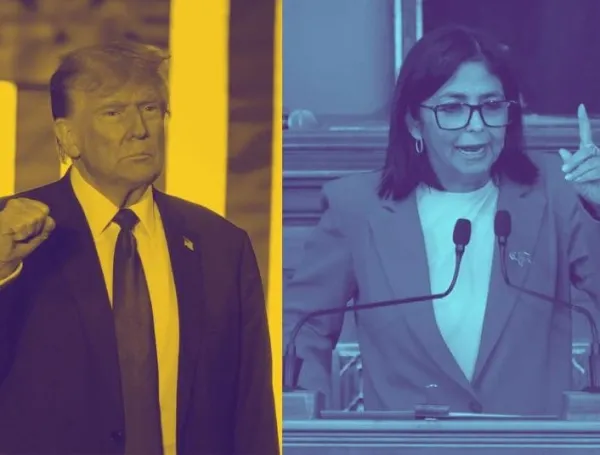
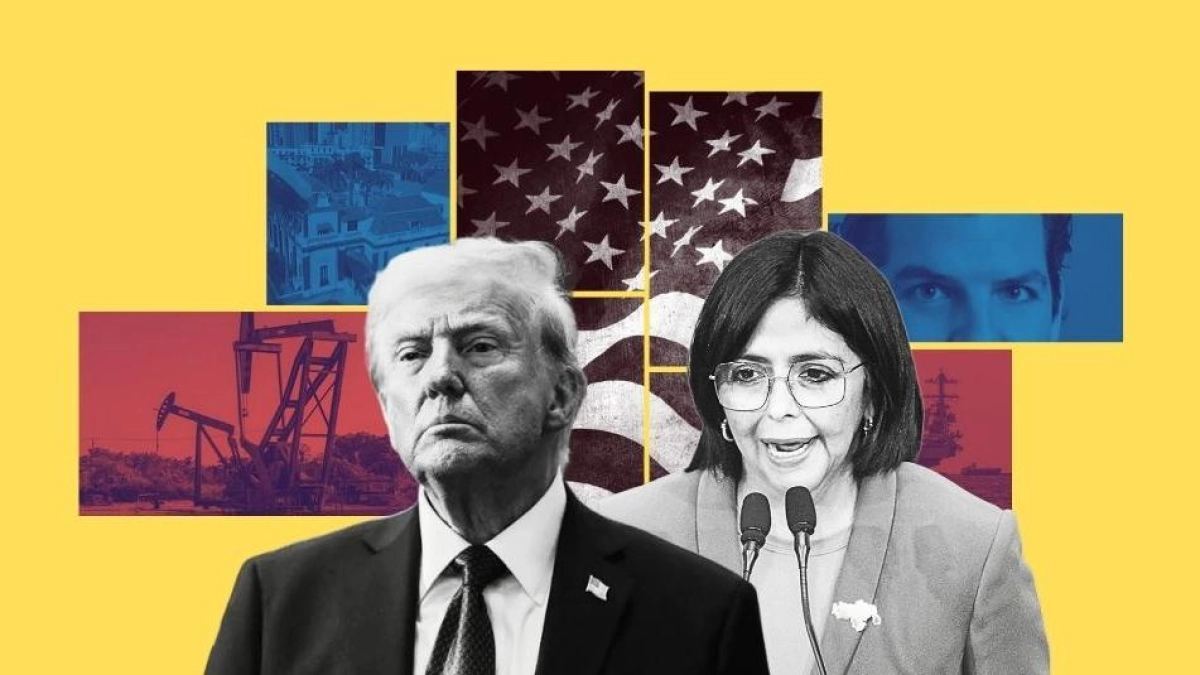
INTERNATIONAL DESK — In a geopolitical realignment that underscores a sweeping transformation across South America, U.S. President Donald Trump officially removed Venezuela from Washington’s annual list of nations failing to meet their international counter-narcotics obligations. Published on Wednesday, September 16, 2026, by the U.S. Department of State, the Presidential Determination on Major Illicit Drug Transit or Drug-Producing Countries for Fiscal Year 2027 marks the first time in over two decades that Caracas has been absolved from direct punitive designation regarding state-level non-compliance.
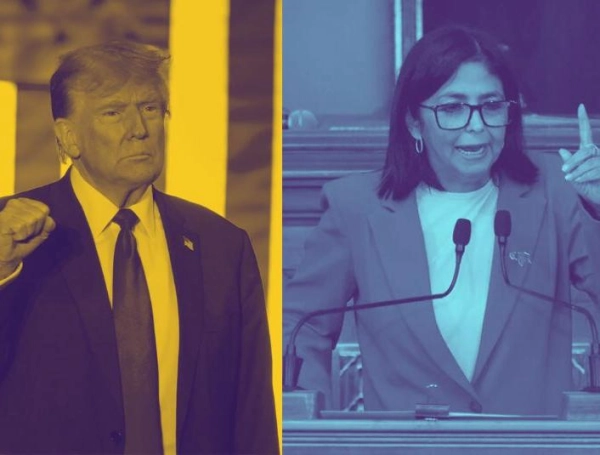
The decision reflects a dramatic warming of diplomatic and operational ties between Washington and the interim administration led by Venezuelan acting president Delcy Rodríguez. While Venezuela remains categorized broadly as a "major transit or drug-producing country"—a designation shared with dozens of nations globally—its removal from the core non-compliance blacklist signals a major diplomatic reward for the post-Maduro political architecture now taking shape in the Caribbean nation.
Main Facts: A Paradigm Shift in U.S.–Venezuela Relations
The announcement on September 16, 2026, upends more than two decades of rigid, adversarial policy between the United States and Venezuela. For 21 consecutive years, Washington routinely certified that Caracas was an active impediment to regional drug control, pointing to high-level state complicity in transnational trafficking syndicates.
The rationale behind this year’s reversal, according to the White House, hinges entirely on the removal of former strongman Nicolás Maduro.
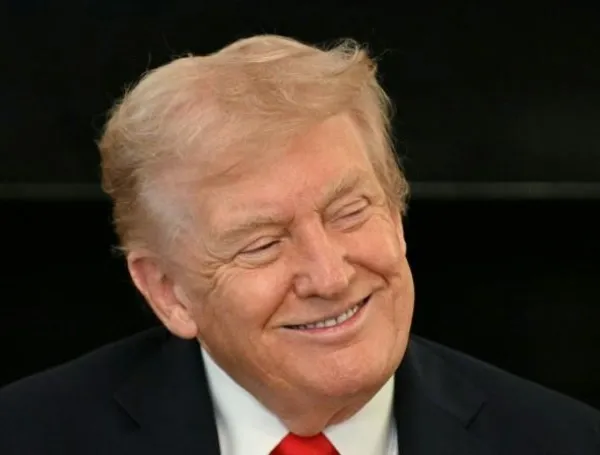
"Thanks to the detention and removal, by my administration, of the former illegitimate dictator and drug trafficker Nicolás Maduro, we are already seeing the results of a growing cooperation with the country’s interim government against the cartels," President Trump stated in the official evaluation document.
Key elements of the administration’s policy shift include:
Removal from the Non-Compliance List: Venezuela is no longer classified as a nation that has "demonstrably failed" to uphold international counter-narcotics agreements.
Retention as a Transit Nation: Venezuela remains on the broader registry of major transit and production countries—a status shared by 23 nations, including Mexico, Colombia, Peru, and China.
Acknowledgment of Interim Leadership: The White House explicitly credited acting president Delcy Rodríguez with initiating a "drastic change of course" and delivering measurable progress in dismantling domestic drug-trafficking networks.
The Regional Security Context: The policy adjustment coincides with aggressive U.S.-led military campaigns in the Caribbean and Pacific, alongside the expansion of the "Shield of the Americas" anti-cartel coalition.
Chronology of Events: From Adversarial Rupture to Pragmatic Engagement
To understand the weight of the September 2026 determination, it is necessary to examine the rapid sequence of events that reshaped the northern coast of South America over the preceding twenty-four months:
2005–2024 (The Maduro Era): For nearly two decades, Washington consistently slapped Venezuela with annual determinations citing systemic government and military involvement in drug trafficking, leading to severe economic sanctions and international isolation.
2025 (The Turning Point): Following escalating regional tensions and intensified U.S. interdiction campaigns in Caribbean waters—which saw unprecedented military operations against suspected drug vessels—the geopolitical landscape shifted. The Maduro regime collapsed under a combination of internal pressures and targeted international law enforcement actions.
Early 2026 (The Interim Government and Delcy Rodríguez): Delcy Rodríguez assumed leadership of the interim government, immediately signaling a willingness to cooperate with Washington on intelligence-sharing and security protocols. High-level diplomatic contacts between U.S. officials, including Secretary of State Marco Rubio, and Venezuelan authorities established a framework for bilateral cooperation.
August 2026: Strategic alignments solidified as the Trump administration continued pressing its hemispheric anti-cartel initiatives. Concurrently, nations like Peru formally joined the "Shield of the Americas" security pact, aligning South American militaries with U.S. strategic objectives.
September 16, 2026: The Department of State releases the Fiscal Year 2027 Presidential Determination, officially dropping Venezuela from the non-compliance blacklist while maintaining strict benchmarks for ongoing cooperation.
Supporting Data: The Global Narcotics Landscape for FY 2027
While Venezuela’s exclusion from the blacklist dominated headlines, the broader Department of State document detailed a complex, shifting panorama of narcotics production and transit across the Western Hemisphere and beyond.
The Non-Compliance "Blacklist"
Out of the 23 countries identified as major drug-producing or transit hubs for FY 2027, the White House singled out four nations for having "demonstrably failed" to meet their international obligations:
Afghanistan
Birmania (Myanmar)
Bolivia
Colombia
The Status of Colombia and the Andean Region
Colombia’s inclusion on the non-compliance list highlights friction between Washington and the historical trajectory of Andean coca cultivation. According to the White House assessment, Colombia has "not yet had time to return to the path prior to the government of Gustavo Petro."
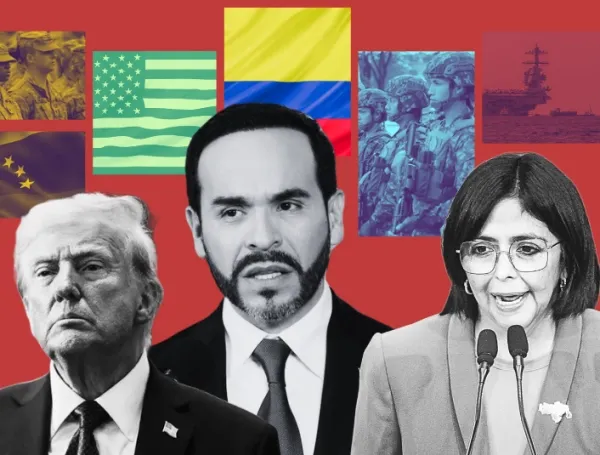
However, the tone regarding Bogotá was notably conditional rather than absolute. The White House noted that the recent democratic election of conservative President Abelardo De La Espriella has opened the door to a rapid reset in bilateral security dynamics.
"If, as expected, it advances in the aggressive eradication of coca and the dismantling of its narcoterrorist networks over the coming year, I will consider lifting the condition of a country that has demonstrably failed," Trump noted in the text. "Colombia is in a position to resume its place as our primary security partner in the hemisphere."
Despite being placed on the non-compliance list, Washington confirmed that the continuation of foreign assistance to Colombia, Bolivia, and Birmania remains "vital to the national interests of the United States."
Official Responses and Diplomatic Reactions
The removal of Venezuela from the narcotics blacklist elicited sharply contrasting reactions across the international community, reflecting the deep polarization surrounding the post-Maduro political transition.
Washington’s Perspective
The White House framed the decision as a pragmatic validation of results-based diplomacy. U.S. officials emphasized that punitive measures must evolve when structural changes on the ground yield tangible operational benefits. By rewarding the interim administration of Delcy Rodríguez, Washington aims to incentivize further dismantling of the cartels that once utilized Venezuelan territory with institutional impunity.
However, U.S. officials maintained a clear caveat. The determination explicitly notes that Washington expects "continuous and quantifiable progress by the interim Government in dismantling narcoterrorist groups and in interrupting the traffic of drugs through Venezuela toward the United States."
Reactions in Latin America
In Caracas, the interim administration welcomed the move as an international acknowledgment of stabilization efforts and institutional reform. Proponents of the Rodríguez-led transition argued that normalization of security ties is an essential prerequisite for economic recovery and foreign investment.
Conversely, regional observers and human rights advocates expressed caution. Critics point out that while state-level drug policy cooperation has improved, the broader framework of U.S. regional intervention—particularly the intense maritime interdiction campaigns in the Caribbean and Pacific—remains deeply controversial.
Implications: The "Shield of the Americas" and Regional Security
The September 16 determination cannot be viewed in isolation; it is a core component of President Trump’s broader security architecture for the Western Hemisphere, anchored by the Shield of the Americas alliance.
The Militarization of Counter-Narcotics
Since 2025, the U.S. military and law enforcement agencies have executed an aggressive campaign against suspected drug-smuggling vessels ("narcolanchas") across the Caribbean Sea and the Pacific Ocean. Public records and regional reports indicate that these operations have resulted in at least 215 fatalities.
These tactics have drawn intense scrutiny from international bodies. Organizations such as the United Nations and various human rights NGOs have repeatedly denounced the maritime operations, characterizing certain engagements as extrajudicial actions conducted outside standard due process and international maritime law.
Expansion of the Anti-Cartel Alliance
Despite human rights concerns, the security pact has systematically expanded. Driven by shifting political tides across South America—exemplified by political transitions in countries like Peru, Ecuador, and Colombia—regional governments have increasingly integrated their military and intelligence apparatuses with Washington’s strategic mandates.
The inclusion of Venezuela into a cooperative framework—even while remaining under observation as a transit zone—signals that geopolitical pragmatism has superseded ideological rigidity in Washington’s drug war strategy. By peeling Caracas away from its historical status as an isolated hostile state, the White House has reinforced a unified hemispheric front aimed at degrading transnational cartels.
Looking Ahead
As Fiscal Year 2027 approaches, all eyes will remain on the efficacy of the intelligence-sharing and interdiction pacts forged between Washington and the interim Venezuelan government.
For Caracas, the challenge lies in proving that the removal from the U.S. blacklist is justified by permanent structural reforms rather than temporary political expediency. For Washington, the balancing act will involve maintaining pressure on transnational trafficking networks while navigating the volatile political landscapes of the Andean and Caribbean regions. Ultimately, the success of this historic policy pivot will be measured not by diplomatic declarations, but by the tangible reduction of illicit drug flows reaching international markets.
Genoa, Italy – The untimely death of Alice Ferrari, an 11-year-old girl, who tragically drowned after her hair became entangled in a swimming pool’s suction system, has ignited a fierce debate in Italy, prompting swift…
New York, NY – July 18, 2026 – In a move that could ignite an unprecedented diplomatic crisis, New York City Mayor Zohran Mamdani has confirmed that his administration is actively exploring the legal authority…
Washington D.C. — In an escalating political standoff that underscores growing fractures within the conservative coalition, U.S. Representative María Elvira Salazar has issued a direct and scathing critique of President Donald Trump’s immigration agenda. Standing…