
By Ana María Rodríguez Brazón
Correspondent for EL TIEMPO in Caracas
Updated: September 14, 2026
Main Facts
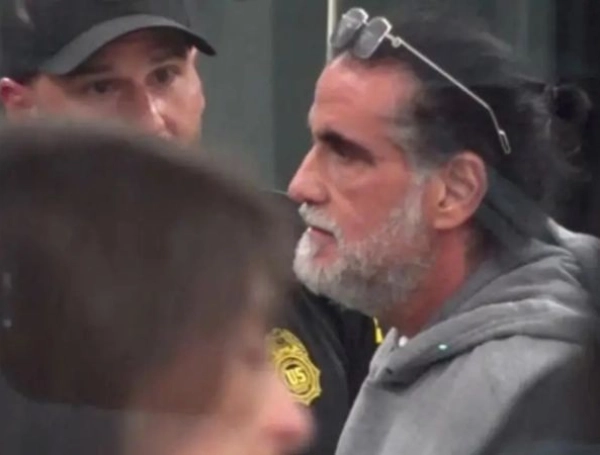
Colombian-born businessman Alex Saab, widely regarded as one of the central architects and primary financial operators within the inner circle of former Venezuelan leader Nicolás Maduro, is scheduled to appear before a federal court in Miami, Florida, to formally change his plea. According to investigative reports from The Associated Press (AP), the 54-year-old businessman is expected to plead guilty to federal money laundering charges.

The upcoming judicial proceeding centers on a sprawling multi-million-dollar conspiracy involving overvalued government contracts designed for the importation of basic food supplies into Venezuela—a program ostensibly created to alleviate widespread hunger under state-subsidized initiatives, but which prosecutors allege was systematically looted.
Saab’s appearance is set before U.S. District Judge Kathleen Williams. While the precise terms, conditions, and scope of the plea agreement negotiated between the U.S. Department of Justice and Saab’s defense counsel remain under strict judicial seal, legal experts anticipate that the move signals a cooperative arrangement.

The case against Saab originated from a long-running federal investigation that mapped out an intricate international web of front companies, fabricated invoices, and shell corporations. Investigators contend that this infrastructure was intentionally utilized to siphon funds from Venezuelan state coffers, exploiting supply chains originating primarily from Mexico and Colombia.
Should Saab follow through with the anticipated guilty plea, it will mark a dramatic new chapter in a high-profile legal saga characterized by complex international diplomacy, shifting geopolitical alliances, and intense friction between Washington and Caracas.
Chronology of a High-Stakes Legal Odyssey
The path leading to Alex Saab’s upcoming court appearance in Miami is marked by a labyrinthine series of arrests, legal appeals, prisoner exchanges, and unexpected deportations that span multiple continents and several years.
- July 2020 (The Initial Arrest): Alex Saab is arrested during a refueling stop in Cape Verde while traveling on a private jet. His arrest is executed pursuant to an Interpol Red Notice issued at the request of the United States, which seeks his extradition on money laundering charges linked to Venezuelan state contracts.
- October 2021 (Extradition to the U.S.): Following a protracted and politically charged legal battle in the courts of Cape Verde—during which the Maduro administration fiercely defends Saab, bestowing upon him the status of a "diplomatic envoy"—he is successfully extradited to the United States and transferred to Miami to face federal charges.
- December 2023 (The Presidential Pardon and Release): In a surprise diplomatic maneuver, the administration of U.S. President Joe Biden grants Saab clemency, releasing him as part of a high-stakes prisoner swap. In exchange, the Venezuelan government frees several detained American citizens. Saab returns to a hero’s welcome in Caracas, where he is publicly embraced by the socialist leadership.
- May 2026 (The Return to American Custody): Despite his previous release, U.S. federal prosecutors continue developing parallel investigative leads regarding his financial network. Under mounting diplomatic and strategic pressure from Washington—and following a surprising reversal under the administration of Delcy Rodríguez—Caracas deports Saab back to the United States, where he is immediately taken back into custody by federal agents.
- September 2026 (The Imminent Plea Change): Facing renewed prosecution and a tougher legal reality, Saab prepares to formally change his plea to guilty before Judge Kathleen Williams in a Miami federal court, setting the stage for potential cooperation with U.S. authorities.
Supporting Data and Financial Architecture
To fully grasp the magnitude of the legal proceedings against Alex Saab, it is necessary to examine the mechanics of the financial operations he allegedly directed. Federal prosecutors in the Southern District of Florida have spent years compiling financial intelligence detailing how state resources were allegedly diverted.
According to court filings and investigative journalism reports, Saab’s enterprise revolved primarily around the Local Committees for Supply and Production (CLAP) program. Established by the Venezuelan government to distribute subsidized food boxes to impoverished families amid severe shortages, the program quickly became a lucrative vehicle for graft.
- Overvaluation Margins: Investigators uncovered evidence that basic foodstuffs—such as corn, rice, and cooking oil—were purchased internationally through a network of shell companies at market rates, but billed to the Venezuelan government at markups ranging from 100% to upwards of 300%.
- Global Shell Networks: Funds were allegedly routed through financial institutions in multiple jurisdictions, including Antigua and Barbuda, the United Arab Emirates, and European banking centers, before being laundered through real estate and commercial holdings in the United States and elsewhere.
- Fictitious Importation: Documentation obtained by U.S. investigators revealed that many shipments invoiced through Saab-linked entities never materialized, while others delivered goods of vastly inferior quality compared to what had been contracted and paid for by public funds.
This vast accumulation of illicit capital not only enriched individuals within the Venezuelan regime’s upper echelons but also contributed directly to the structural collapse of the country’s public distribution networks, leaving millions of Venezuelan citizens without adequate nutritional support during periods of extreme economic crisis.
Official Responses and Diplomatic Reactions
The impending plea hearing has triggered cautious statements and strategic positioning from governmental actors across the hemisphere.
- The U.S. Department of Justice: Federal prosecutors have maintained a disciplined public silence regarding the specifics of the sealed plea agreement. However, Department of Justice officials have repeatedly emphasized their commitment to pursuing transnational corruption, asset recovery, and money laundering schemes that exploit the U.S. financial system.
- The Venezuelan Government: The administration in Caracas has responded with strategic distance. Unlike his initial arrest in 2020—when the state apparatus mobilized a massive domestic and international propaganda campaign labeling Saab a persecuted diplomat—his deportation in May 2026 and subsequent legal vulnerabilities have been met with muted official commentary. Observers suggest that the current Venezuelan leadership, navigating its own complex transition and seeking diplomatic normalization, is keen to avoid anchoring its political stability to Saab’s personal legal liability.
- Legal Defense Perspective: Saab’s defense attorneys have declined to elaborate on the motivations behind the change of plea, though legal analysts note that entering a guilty plea typically signals an effort by the defendant to secure sentence reductions through cooperation or the provision of actionable intelligence to prosecutors.
Implications: The Domino Effect on Regional Geopolitics and Ongoing Cases
The most consequential aspect of Alex Saab’s anticipated guilty plea extends far beyond his personal legal jeopardy. Observers and legal experts suggest that his willingness to alter his plea could unlock a treasure trove of sensitive information regarding the inner workings of the Venezuelan state.

1. Potential Impact on New York Federal Cases
The information Saab possesses is of acute interest to federal prosecutors in New York, where Nicolás Maduro and other high-ranking members of the Venezuelan hierarchy face federal indictments related to narco-terrorism, drug trafficking, and corruption. By detailing the financial pipelines, illicit enrichment strategies, and loyalty networks that sustained the regime, Saab could provide prosecutors with the corroborating evidence needed to solidify cases against top-tier targets.
2. A Shifting Geopolitical Landscape
This legal development occurs against the backdrop of a profound realignment in U.S. foreign policy toward Venezuela. The administration of Donald Trump has increasingly prioritized strategic interests, regional security, and the stabilization or exploitation of Venezuela’s immense petroleum reserves. Cooperation from a figure as deeply embedded in the regime’s financial history as Saab gives Washington significant leverage in ongoing diplomatic and economic negotiations.

3. Strengthening Regional Security Frameworks
Furthermore, Saab’s cooperation comes at a time when the United States, Colombia, and Venezuela are exploring unprecedented avenues of regional security cooperation. Efforts to dismantle transnational criminal syndicates, curb drug trafficking routes, and pressure armed groups operating along the porous borders—such as the ELN—depend heavily on cutting off their financial lifelines. Insights gleaned from Saab’s disclosures regarding illicit finance could accelerate these cross-border anti-crime initiatives.
As Tuesday’s hearing in Miami approaches, the international community watches closely. What began as a routine business venture in Barranquilla has culminated in a multi-jurisdictional legal showdown that could reshape the political and judicial landscape of the entire region.