
Introduction: A Deadly Toll in the Cauca Valley
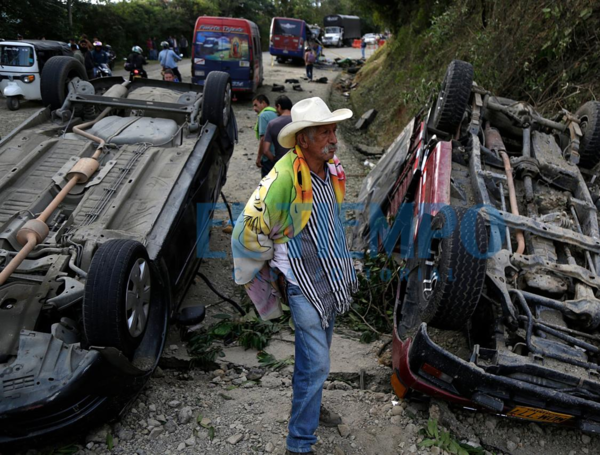
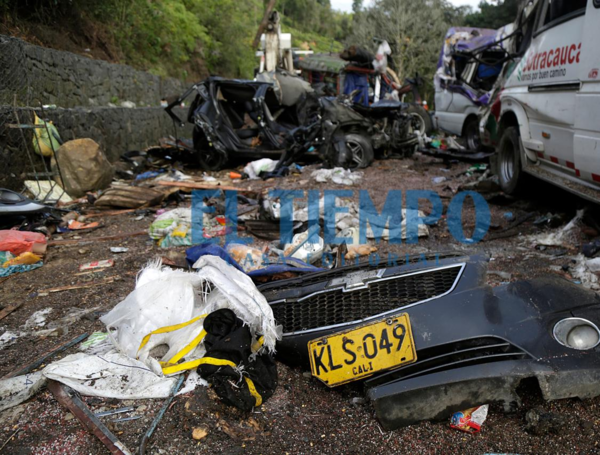
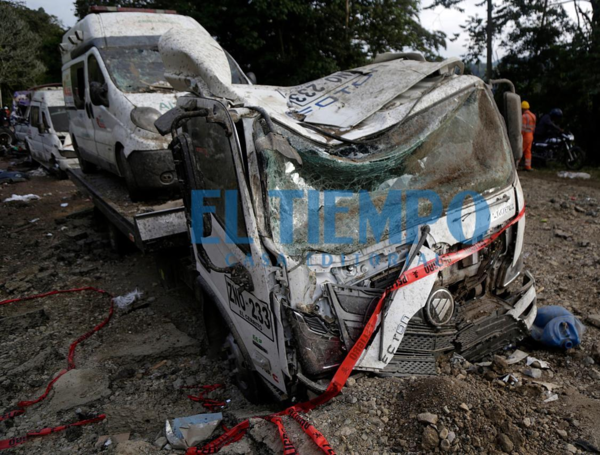
The environmental movement in Colombia has been plunged into mourning and deep uncertainty following a brutal terrorist attack on April 25, 2026. The incident, which occurred in the sector of the Cajibío Tunnel in the southwestern department of Cauca, resulted in the tragic deaths of two dedicated public servants from the Corporación Autónoma Regional del Cauca (CRC).
The attack, part of a broader, horrific act of violence that claimed the lives of at least 14 individuals, has sparked a national outcry from environmental authorities. The Association of Autonomous Regional Corporations and Sustainable Development (Asocars) has issued a stinging condemnation of the violence, warning that the current security vacuum is rendering the essential task of environmental protection not only difficult but lethal.

The Tragic Loss: A Personal and Institutional Blow
The victims of this tragedy were not merely government employees; they were pillars of their communities. Patricia Mosquera, a valued official at the Patía Territorial Directorate, was a celebrated leader of the Movimiento Social de Mujeres Afropatianas. Her death represents a devastating blow to social activism and environmental governance in the region. Alongside her, Jarol Jair Bojorge, a professional in the CRC’s internal control department, lost his life while serving the public.
Their deaths have highlighted the vulnerability of civil servants who, by the nature of their work, must traverse some of the most dangerous and conflict-ridden territories in the country. The loss of these two professionals has left a void in the CRC and has sent a chilling message to the thousands of environmental workers across Colombia who operate under the constant shadow of armed groups.

Chronology of the Violence
The security situation in the Cauca and Valle del Cauca departments has been deteriorating for months, characterized by a steady escalation of attacks by illegal armed groups.
- Mid-April 2026: Reports of increased military movement and territorial skirmishes between non-state armed groups and security forces begin to circulate throughout the Cauca corridor.
- April 25, 2026: The violent incident occurs near the Cajibío Tunnel. Explosives were deployed in a targeted attack, which resulted in at least 14 civilian and state-official deaths.
- April 26, 2026: Asocars formally condemns the attack, issuing a public statement that moves beyond condolences to demand an immediate structural change in the protection of environmental authorities.
- Present: The regional environmental sector remains in a state of high alert, with many field operations suspended as the government faces mounting pressure to address the loss of state control in rural areas.
Supporting Data: The High Cost of Conservation
The crisis facing the CRC is emblematic of a national trend. According to data released by Asocars, over 70% of the staff employed by the various Autonomous Regional Corporations (CARs) across Colombia perform operational, on-the-ground tasks. These roles are essential for the administration and conservation of natural resources, yet they place these individuals in direct, sustained contact with territories where the state’s presence is contested.
The "environmental frontier" in Colombia has become a battlefield. As criminal economies—such as illegal mining, deforestation for land grabbing, and illicit crop cultivation—expand, the role of the environmental authority has shifted from regulator to potential target. When the state attempts to enforce environmental laws, it frequently finds itself in direct opposition to the interests of armed factions that thrive on environmental destruction.
Official Responses and Institutional Outcry
The response from the leadership of the environmental sector has been both firm and desperate. Yesid González Duque, executive director of Asocars, did not mince words in his assessment of the security landscape.
"We reject this terrorist attack and the broader wave of violence that our country, particularly Cauca and Valle del Cauca, is suffering," González Duque stated. "These regions have become the theater of cruel attacks that degrade not only the population but the very foundations of our institutional framework."
González Duque emphasized that the inability to guarantee safety for personnel is, in effect, a paralysis of the state’s environmental mandate. "It is evident that there are no conditions currently in place to carry out our mission of administering and conserving natural resources," he added.

Ángelo Bacci Hernández, president of the board of directors of Asocars and director of the Corporación Autónoma Regional del Canal del Dique (Cardique), has called for an urgent national consensus. Bacci Hernández’s plea is directed at the National Government, the judiciary, and oversight bodies, urging them to "shield" the regional entities and the local communities from the encroaching violence. He argues that the environmental authorities cannot be expected to act as the sole line of defense in regions where the rule of law has been systematically eroded.
The Implications: A Threat to National Sovereignty
The assassination of these officials has broader, systemic implications for Colombia.
1. Erosion of State Presence
In many rural areas, the environmental official is the most visible representative of the state. When these individuals are targeted, it effectively signals the total withdrawal of the state’s influence. This creates a vacuum that is swiftly filled by illegal armed groups, who then dictate the terms of land use, water rights, and biodiversity management.
2. Environmental Degradation
Without the ability to monitor, sanction, or regulate, the environment becomes an open-access resource for criminal exploitation. The lack of security directly correlates to an increase in illegal deforestation, the poisoning of water sources through illicit mining, and the loss of protected wildlife habitats.
3. The Human Rights Crisis
The incident underscores the extreme risk faced by environmental human rights defenders. When the state cannot protect its own employees, the risk for community-based activists—who lack the institutional protection that (in theory) should accompany a government badge—is exponentially higher.
Toward a New Security Paradigm for Environmental Workers
As the dust settles on the tragedy in Cajibío, the demand for a new security paradigm is becoming deafening. The current approach, which relies on standard public security protocols, is clearly insufficient for the specific risks faced by environmental conservationists.

Experts suggest that the government must adopt a multi-layered approach:
- Specialized Protection Protocols: Creating secure transit corridors and localized risk-assessment tools for CAR officials working in "red zones."
- Inter-Institutional Coordination: Bridging the gap between environmental agencies and the Ministry of Defense to ensure that environmental operations are protected by intelligence-led security measures.
- Community-State Pacts: Strengthening the relationship between environmental authorities and local communities, creating a collective buffer against the influence of armed groups.
Conclusion: A Call to Action
The death of Patricia Mosquera and Jarol Jair Bojorge must serve as a turning point. If the government fails to address the lack of security for those tasked with protecting the nation’s natural wealth, it is not just losing valuable public servants; it is forfeiting the future of the Colombian environment.

Asocars has made it clear: the environmental sector is willing to continue its work, but it cannot do so in the face of indiscriminate terror. The ball is now in the court of the national administration. Whether the government can reclaim control in regions like the Cauca will determine if these officials died in vain, or if their sacrifice will spark the necessary political will to restore safety to the front lines of conservation.
The environmental community remains in mourning, but there is a growing resolve to ensure that the voice of those who defend the earth is not silenced by the sound of gunfire. The challenge for the coming months is to move from rhetoric to reality, ensuring that the protection of the environment is treated as a matter of national security, and that those who serve the land are finally given the protection they deserve.