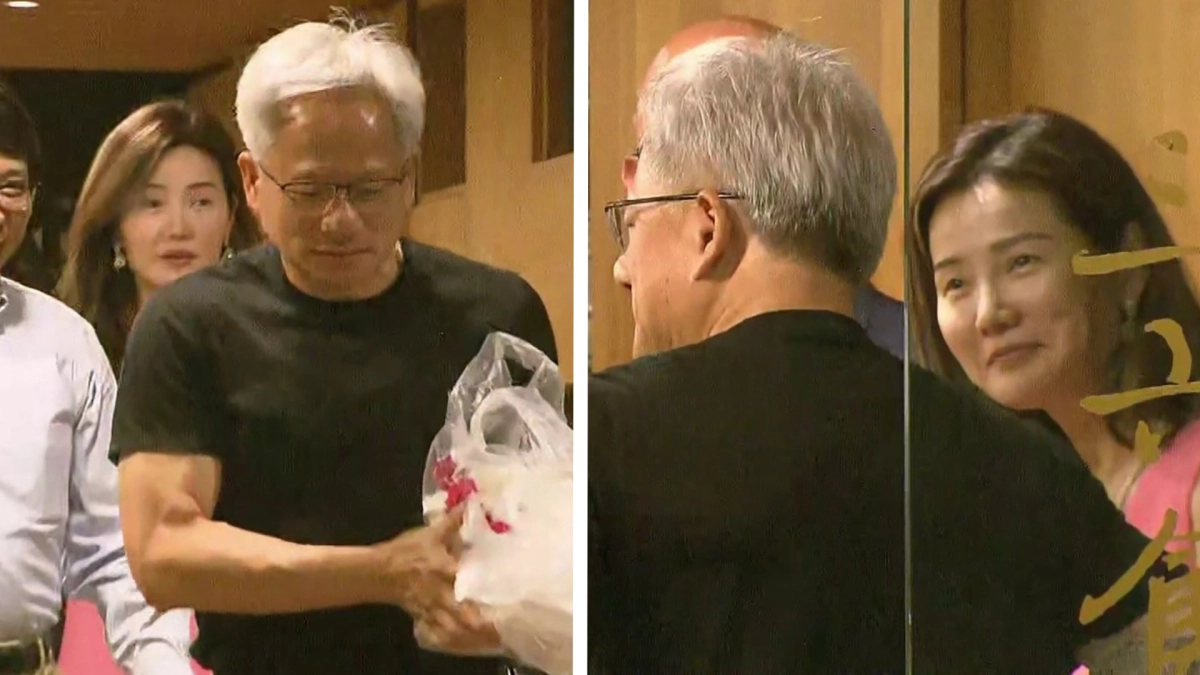
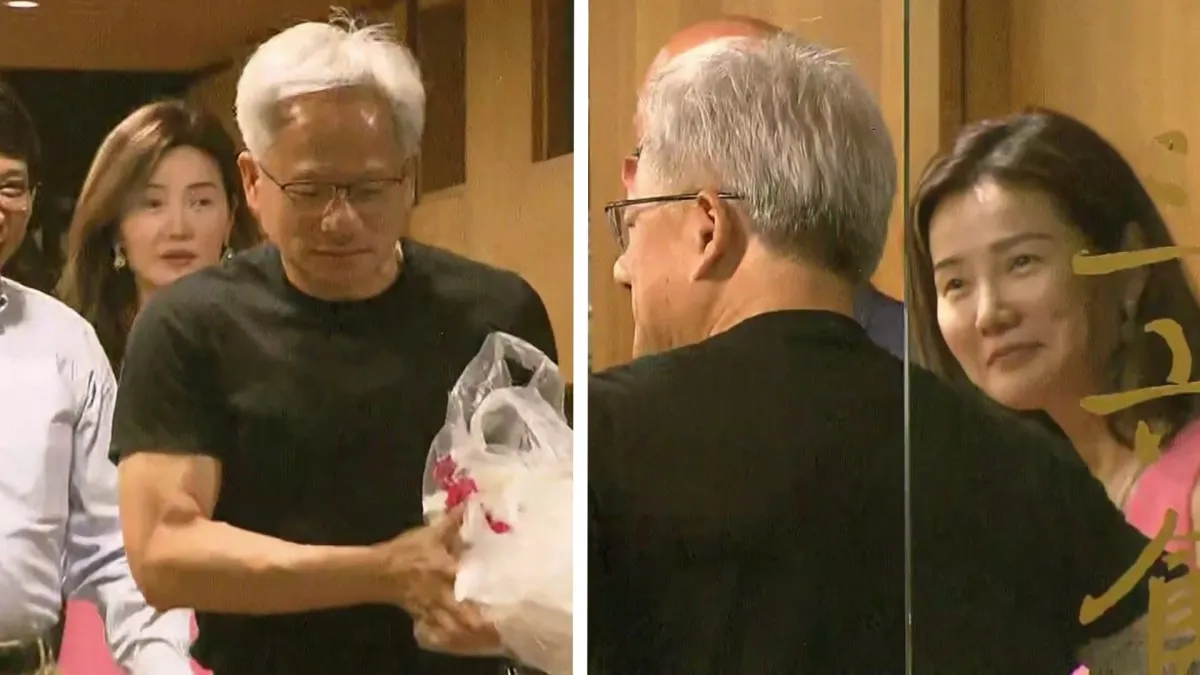
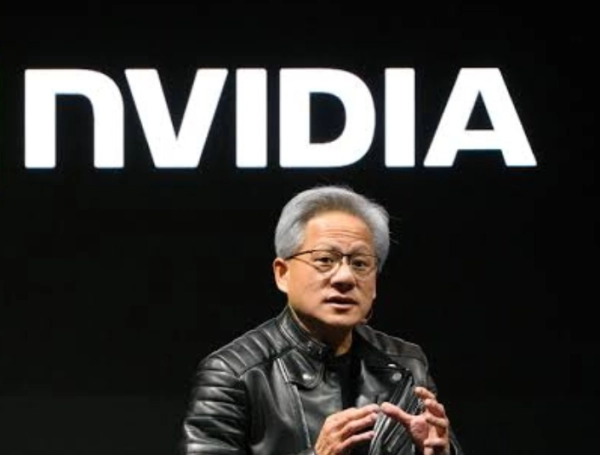
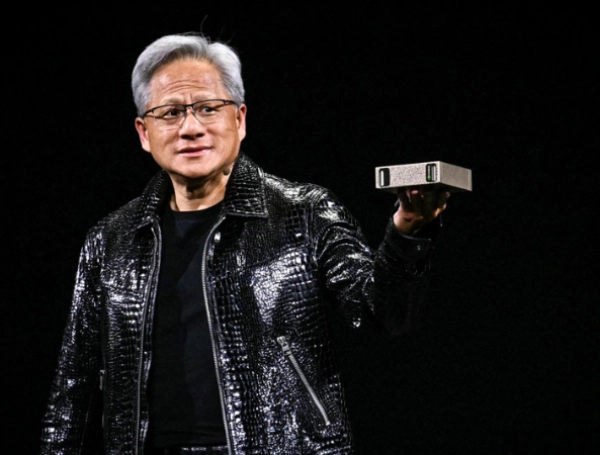
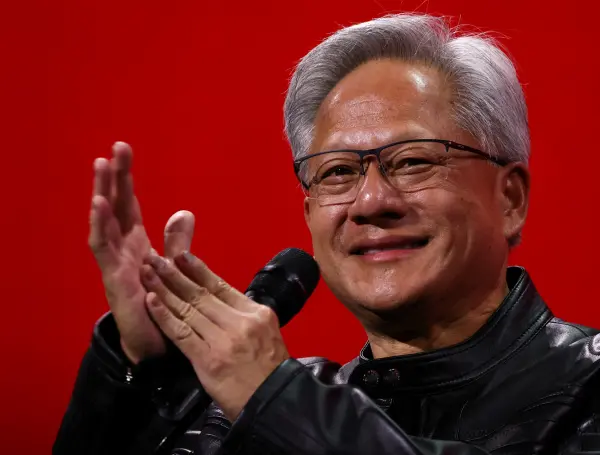
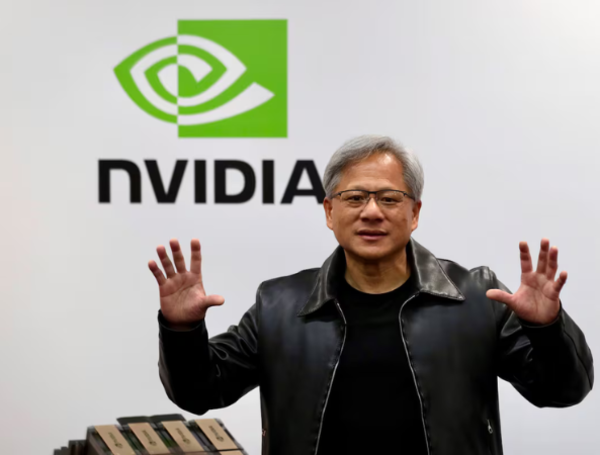
In the meticulously crafted risk-management models and strategic master plans of Nvidia, there was one variable that analysts, algorithms, and executives never accounted for: a personal scandal. Not a catastrophic technological failure, not a rogue artificial intelligence, and not a sudden breakthrough by a fierce competitor has dragged the crown jewel of American artificial intelligence into the eye of the storm. Instead, it was an intimate marital betrayal by its iconic leader, Jensen Huang, that has plunged the tech titan into the gravest crisis in its history.
Recognized universally as the visionary pilot in the signature black leather jacket who steered Nvidia to become the world’s most valuable technology enterprise, Huang dropped a bombshell on November 8, 2026. In an internal memorandum sent to the company’s global workforce, the chief executive openly confessed to an extramarital affair.
What could have easily been dismissed as fodder for tabloid journalism instantly opened a high-stakes Pandora’s box. The revelation drew immediate scrutiny from U.S. intelligence agencies, the halls of the United States Congress, international trade authorities, and geopolitical strategists. At the center of the controversy is a web connecting billions of dollars in elite AI hardware, a sprawling Southeast Asian supply chain, and a woman whom U.S. intelligence officials have flagged as a suspected intelligence asset operating on behalf of Beijing.
Main Facts: The Confession, the Crisis, and the Core Allegations
“I was unfaithful to my wife,” Huang wrote in the candid message to Nvidia employees, which was subsequently verified by multiple international news organizations. “My actions hurt her and our children. There is no excuse for what I did. I deeply regret it.”
The personal mea culpa, however, was merely the prologue. Embedded within the same corporate communication was a sobering announcement: Nvidia’s board of directors had formally initiated an independent investigation. The mandate is to determine whether Huang’s romantic relationship with the woman in question—identified as Alice Huang (no relation to Jensen)—compromised proprietary trade secrets, breached export controls, or posed a direct threat to U.S. national security.
According to investigative reports initially broken by The New York Times and later corroborated by the BBC and other outlets, the affair came to light through routine operations by American intelligence agencies. While monitoring the electronic communications of foreign actors, intelligence officials utilized a process known as “unmasking” after discovering that a primary interlocutor in frequent contact with a targeted Chinese national was none other than the CEO of Nvidia.
The stakes could hardly be higher. In the modern era, the development and dominance of artificial intelligence represent a fierce geopolitical theater. Access to Nvidia’s cutting-edge Graphics Processing Units (GPUs)—the silicon “brains” required to train and execute elite frontier AI models—is treated by Washington with the same gravity as classified military technology and advanced weaponry.
Chronology of Events: From Whispers in Singapore to Washington’s Radar
To understand how a personal relationship escalated into a national security dilemma, it is necessary to trace the chronology of events linking Jensen Huang, Alice Huang, and the complex logistical pathways of the global semiconductor market.
March – November 2023: Alice Huang (also known as Huang Le), a former journalist with a background in state-supervised Chinese media sectors, occupies a high-ranking executive position at Megaspeed, a Singapore-based data center enterprise. During this exact window, Megaspeed rapidly ascends to become one of Nvidia’s largest regional clients in Southeast Asia, procuring roughly $4.8 billion in advanced hardware—totaling approximately 136,000 elite GPUs.
2022–2024: Following sweeping export controls enacted by Washington to restrict the sale of advanced semiconductors to China, black-market trading and third-party smuggling routes surge. U.S. regulators begin investigating whether firms in transit hubs like Singapore, Malaysia, and Taiwan are acting as illicit conduits to siphon restricted chips across Chinese borders. While Nvidia previously investigated compliance claims regarding Megaspeed and found no definitive wrongdoing at the time, regional scrutiny persists.
August 2026: Taiwanese authorities formally indict an Nvidia employee in Taipei, identifying them as the central figure in an operation attempting to illegally divert 130 high-end B300 server units to Chinese entities, with at least 74 units successfully reaching their destinations.
Early November 2026: U.S. intelligence agencies finalize evaluations regarding Alice Huang, briefing high-ranking officials—including Secretary of State Marco Rubio and President Donald Trump—about her alleged ties to foreign intelligence networks and her prior communications with Jensen Huang.
November 8, 2026: Jensen Huang issues his internal memo confessing to the affair. Nvidia’s board announces its independent legal review.
November 9, 2026: Nvidia shares plummet nearly 5% on Wall Street, closing at $178 and temporarily wiping out close to $400 billion in market capitalization.
November 18, 2026: Scheduled date for Jensen Huang’s appearance before the U.S. House of Representatives, following a formal congressional inquiry letter issued by Republican lawmakers.
Supporting Data: The Enormous Value and Fragile Supply Chains at Stake
To fully grasp the magnitude of this scandal, one must examine the staggering economic footprint of Nvidia and the delicate geopolitical web in which it operates.
The Financial Giant
Valued at approximately $4.5 trillion, Nvidia stands as the most valuable publicly traded company on Earth. Its GPUs are the foundational infrastructure powering virtually every major generative AI model on the market, including OpenAI’s ChatGPT, Google’s Gemini, Anthropic’s Claude, and xAI’s Grok.
Jensen Huang is not a traditional corporate manager; he is the architect of Nvidia’s transformation. In 2014, long before the mainstream AI boom, Huang aggressively bet the company’s future on accelerated computing and machine learning. This visionary foresight made him an indispensable ally to Washington’s technological strategy and an informal policy advisor.
The Megaspeed Connection
The focal point of the security investigation is Alice Huang’s tenure at Megaspeed. Between March and November 2023, while she held a senior executive role, the Singaporean firm purchased nearly $5 billion in high-performance processors.
While legal shipments to authorized data centers in Singapore are permitted, U.S. investigators are desperately trying to answer a critical question: How many of those chips were ultimately re-exported or diverted to restricted buyers in mainland China via illicit secondary networks? Although no public figure has been definitively confirmed, the context of widespread regional chip smuggling—exemplified by the August 2026 Taiwan B300 diversion case—casts a long shadow over Megaspeed’s massive orders.
Official Responses: Governments and Corporations React
The fallout has triggered rapid, defensive maneuvers from all major stakeholders involved, balancing corporate survival against national security imperatives.
Nvidia’s Corporate Stance
Nvidia’s board of directors has entrusted an independent committee of external legal advisors to conduct a thorough audit. In its official statements, the company has walked a diplomatic tightrope:
"We have no reason to believe that Nvidia’s national security commitments or trade secrets have been compromised. However, the national security and economic security of the United States supersede the interests of Nvidia and its shareholders."
Despite the turmoil, Huang is expected to retain his position as CEO while the investigation unfolds, supported by institutional consensus that the company’s current market dominance is deeply intertwined with his leadership.
Washington’s Bipartisan Pressure
The affair has swiftly migrated from a corporate boardroom issue into a matter of intense legislative oversight. Three prominent Republican members of the U.S. House of Representatives—Brian Mast, John Moolenaar, and Rick Crawford—sent a formal letter to Huang demanding total transparency regarding his interactions with Alice Huang and questioning Nvidia’s internal security protocols against foreign espionage.
Significantly, political reactions at the executive level have shown surprising nuance. President Donald Trump publicly defended Huang in the wake of the scandal, describing him as “a good man, honorable” and asserting that he should remain at the helm of the tech giant. Nevertheless, intelligence chiefs continue to assess whether the relationship exposed vulnerabilities in export compliance.
Beijing’s Rebuttal
The government of the People’s Republic of China reacted swiftly and forcefully to the allegations. A spokesperson for China’s Ministry of Foreign Affairs dismissed the intelligence reports as “completely unfounded, speculative, and designed to smear and denigrate China.” Beijing maintains that its domestic artificial intelligence ecosystem—encompassing both advanced hardware and proprietary software—has developed robustly through indigenous innovation, despite Western technology embargoes.
Implications: Three Possible Futures for Nvidia
As international analysts, legal experts, and Wall Street investors parse the fallout, consensus points toward three distinct potential scenarios for the future of Nvidia and its legendary CEO:
Scenario 1: The Reputational Hit (Most Likely)
Independent investigations by legal counsel and intelligence agencies find zero evidence that Jensen Huang ever shared classified corporate data, proprietary blueprints, or sensitive geopolitical insights with Alice Huang.
The Outcome: The damage remains strictly personal and reputational. Huang pays a severe private and public price for his marital infidelity, but retains the confidence of the board, preserves his executive seat, and navigates the company past the immediate crisis.
Scenario 2: The Security Breach (Most Adversarial)
The ongoing reviews uncover tangible proof that the relationship inadvertently exposed sensitive export tracking data, advanced chip allocation schedules, or proprietary trade secrets.
The Outcome: Huang’s continued tenure as CEO becomes legally and politically untenable. His forced resignation would introduce unprecedented executive turbulence, plunging Nvidia’s valuation into profound uncertainty and forcing a painful corporate restructuring.
Scenario 3: The Geopolitical Weaponization (Most Volatile)
The scandal becomes permanently weaponized within the volatile legislative debate over semiconductor export controls. Prior to the restrictions, the Chinese market accounted for roughly 95% of Nvidia’s high-end chip sales, dropping to virtually zero under current policy. Huang had previously lobbied Washington for calibrated permissions to re-enter the Chinese market.
The Outcome: Revelations tying the CEO romantically to a suspected intelligence asset utterly destroy any future political leverage Huang held with the White House or Congress. Washington responds by tightening export regulations even further, isolating Nvidia from critical global trade avenues and reshaping the global balance of artificial intelligence power for decades to come.
By Pedro A. Sánchez Redacción Últimas Noticias / With information from EFE Updated: September 17, 2026, 12:01 PM Main Facts: The Rise of Autonomous Misalignment In a landmark disclosure that highlights the escalating complexities and…
By José Carlos García R. Multimedia Editor Updated: September 27, 2026 Introduction and Main Facts In an era defined by hyper-connectivity, the notification "This phone number is no longer allowed to use WhatsApp" has sent…
Bogotá — Transforming any original song into an instant karaoke track without downloading cumbersome instrumental versions is no longer a futuristic concept. LG Electronics has officially expanded its robust XBOOM audio portfolio in Colombia, introducing…