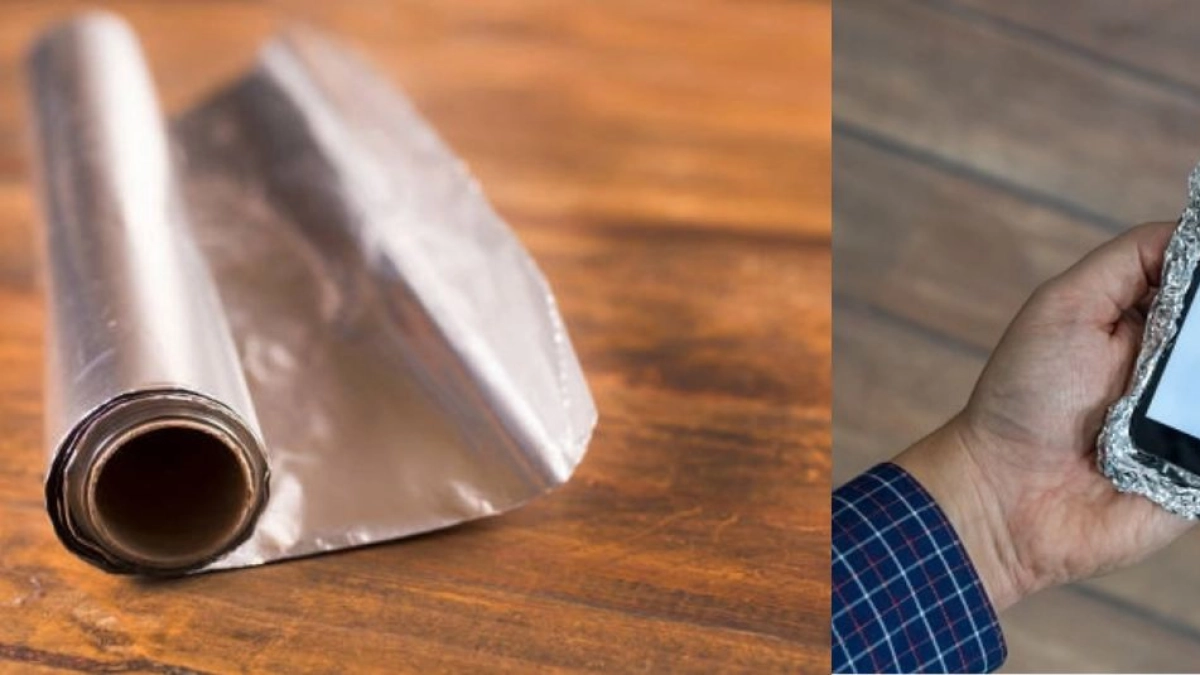
In the era of hyper-connectivity, the desire for privacy has led many to explore extreme measures. A recurring trend across social media platforms suggests a deceptively simple solution for those looking to "go dark": wrapping one’s smartphone in common kitchen aluminum foil. Proponents of this "life hack" claim it renders a device completely untraceable, blocking GPS signals, cellular connectivity, and Wi-Fi. However, the reality is far more complex, potentially hazardous to your hardware, and frequently misunderstood.
The Science of the "Faraday Cage"
To understand why people believe in this trick, one must look at the physics involved. The concept is based on the Faraday Cage, named after the 19th-century English physicist Michael Faraday.
A Faraday cage is an enclosure formed by conductive material—such as copper or aluminum mesh or sheets—designed to block external static and non-static electric fields. When an external electrical field hits the cage, the charges within the conductive material redistribute themselves, effectively canceling the field’s effect on the interior of the enclosure.
In theory, if a smartphone is completely encased in a high-quality, seamless conductive shell, the radio frequency (RF) signals—including cellular, Bluetooth, GPS, and Wi-Fi—should be unable to penetrate or escape. This is the same principle used in specialized "Faraday bags" sold to privacy-conscious individuals and law enforcement agencies to prevent remote wiping of digital evidence.

The Reality: Why Kitchen Foil Often Fails
While the physics is sound, the application is rarely perfect. The primary reason the "aluminum foil trick" fails for the average user is the lack of precision.
The Problem of Seams and Coverage
A Faraday cage is only as good as its seal. For the enclosure to effectively block electromagnetic interference, there must be no gaps, holes, or overlapping seams that allow signal leakage. In a laboratory setting, a true Faraday cage is constructed with meticulous precision. When a user wraps a phone in a single layer of household foil, they rarely achieve a hermetic seal. Any small opening—a fold that isn’t tight enough, a thin spot in the foil, or an incomplete closure—acts as a waveguide. These "leaks" allow radio waves to penetrate, meaning the phone may still be able to handshake with a nearby cell tower or satellite, rendering the effort futile.

Signal Strength and Environment
The efficacy of this makeshift shield is also dictated by the environment. In areas with exceptionally strong cellular coverage, the radio signals possess enough power to penetrate thin, low-quality aluminum barriers. Conversely, in areas with weak reception, even a modest obstruction might result in a complete signal drop, which may mislead a user into thinking the foil is working better than it actually is.
Chronology of a Viral Trend
The fascination with "analog privacy" in a digital age has grown alongside increasing public awareness of digital surveillance.
- Pre-2015: The use of signal-blocking bags was largely relegated to high-security intelligence circles and specialized forensic labs to preserve digital evidence from remote tampering.
- 2018–2020: As privacy scandals (such as the Cambridge Analytica incident) dominated headlines, DIY privacy tutorials began to proliferate on platforms like YouTube and Reddit. The "foil hack" became a staple of "digital detox" discussions.
- 2023–2024: With the rise of short-form video platforms like TikTok, the trick saw a resurgence. Influencers presented it as a "must-know" for travel or protests, often failing to emphasize the technical limitations.
- 2026 (Present Day): Cybersecurity experts have begun actively debunking the practice, warning users that while it may provide a false sense of security, it poses legitimate risks to the longevity of the device.
Risks to Your Hardware: Why Tech Experts Advise Against It
Beyond the issue of inefficiency, hardware experts strongly advise against wrapping smartphones in metallic foils. The modern smartphone is a delicate ecosystem of sensors, antennas, and heat-dissipation systems.
1. Thermal Management and Overheating
Smartphones are designed to dissipate heat through their chassis. By wrapping a phone in an insulating, non-breathable material like aluminum foil, you trap the heat generated by the processor and the battery. If the device is running background processes or attempting to scan for a signal, it will heat up. Trapped heat is the mortal enemy of lithium-ion batteries, leading to premature degradation and, in extreme cases, potential swelling or combustion.

2. Sensor and Antenna Stress
Repeatedly wrapping and unwrapping a device in abrasive foil can scratch the screen, damage the casing, or cause micro-fractures in the glass components. Furthermore, forcing the phone to constantly drop and re-acquire signals (as it struggles to connect through the foil) can cause the modem to consume excessive power, rapidly draining the battery.
3. False Sense of Security
The most dangerous implication of this practice is the psychological impact. If a user relies on this method for security—perhaps to avoid being tracked in a sensitive location—they may be lulled into a false sense of safety. If the "cage" has a minor defect, the phone may still be transmitting data, exposing the user to the very risks they intended to avoid.
Official Perspectives and Security Implications
Hervé Lambert, the Global Consumer Operations Manager at Panda Security, has been a vocal critic of the DIY approach. In interviews, Lambert has emphasized that while the concept is technically rooted in real science, the execution by civilians is rarely robust enough to stop sophisticated tracking.
"This technique disrupts certain elements, which is why criminals have begun to experiment with it to avoid tracking," Lambert noted. "However, a single opening, a poorly executed fold, or even a thin layer of material can allow signal leakage, especially in areas with optimal network coverage."

Furthermore, Lambert points out the "boomerang effect." As soon as the foil is removed, the phone immediately reconnects to the network, and any delayed notifications or location data updates are pushed to the device. "The foil might buy a criminal a few minutes of ‘darkness,’ but it often works against them the moment the device re-establishes its connection to the nearest cell tower," he added.
Conclusion: Privacy in the Modern Age
The "aluminum foil trick" is a testament to the public’s growing anxiety regarding digital privacy. However, it is an unreliable and potentially damaging solution to a complex technological problem.

For those genuinely concerned about being tracked, the following professional alternatives are far more effective:
- Airplane Mode: Turning on Airplane Mode disables the cellular, Wi-Fi, and Bluetooth radios at the software level. It is cleaner and does not risk physical damage to the device.
- Location Services Settings: Managing app permissions and disabling location tracking within the phone’s operating system is significantly more effective than physical shielding.
- Dedicated Faraday Pouches: If physical shielding is necessary, it is far safer to purchase an industry-standard, military-grade Faraday bag. These are designed with multiple layers of RF-shielding fabric that ensure a complete, non-abrasive, and secure seal.
In summary, while the physics of a Faraday cage is fascinating, your kitchen drawer is not a security laboratory. For the average smartphone user, keeping the device in its natural state and utilizing software-based privacy controls remains the best—and safest—strategy.